
Bitcoin Node Requirements Calculator
Estimate Your Bitcoin Node Requirements
Based on Bitcoin's 2025 specifications (450 GB blockchain, 10 Mbps upload minimum)
Results will appear here
Enter your specifications to see if your device can run a Bitcoin full node.
You can run a Bitcoin node!
With your current specs, you can run a Bitcoin full node. Your setup meets all requirements.
- Storage:
- Upload Speed:
- Daily Bandwidth:
Estimated initial sync time:
Node requirements not met
Your device doesn't meet all requirements for a Bitcoin full node. Consider:
- Adding at least more GB storage
- Upgrading to Mbps upload speed
- Increasing daily bandwidth to GB
Alternative: Consider using a lightweight SPV wallet instead.
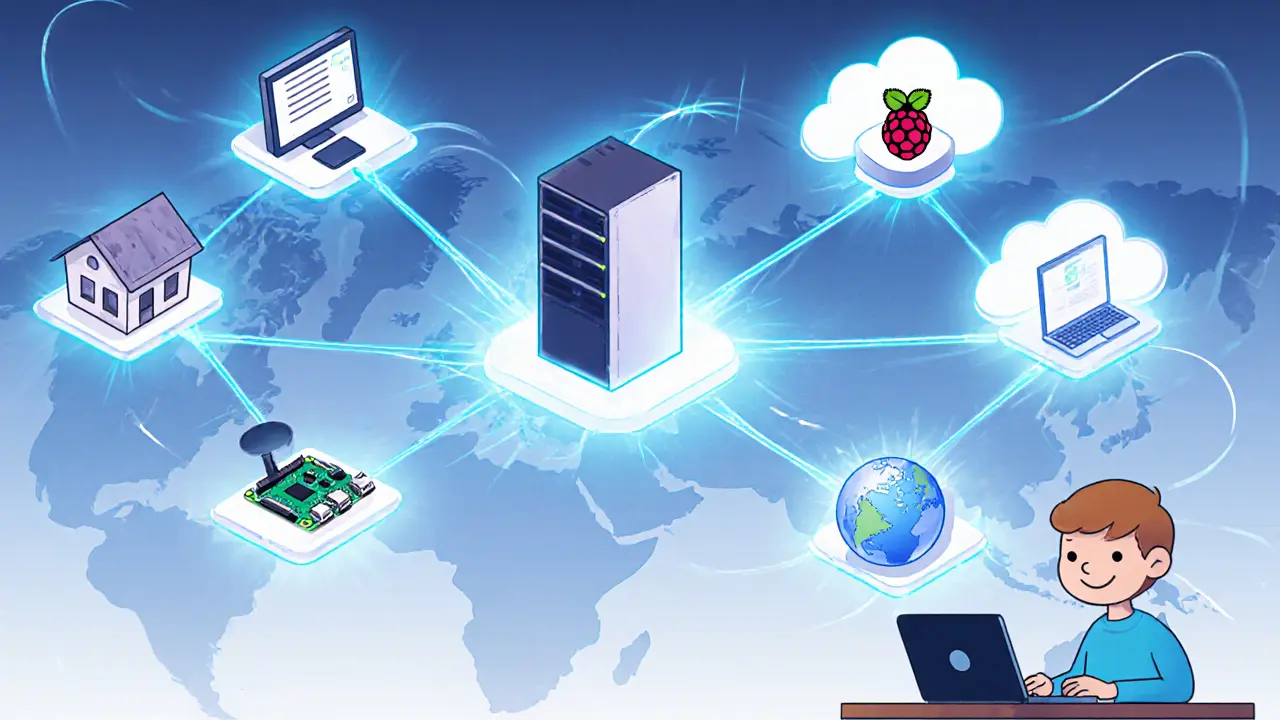
Bitcoin doesn’t run on servers owned by banks, governments, or tech giants. There’s no central computer holding all the money or deciding who gets paid. Instead, it runs on a Bitcoin P2P network-a global web of ordinary computers, all working together without a boss. This is what makes Bitcoin different from anything that came before it.
What Is a Bitcoin Node?
Every device connected to the Bitcoin network is called a node. These aren’t fancy supercomputers. They’re often just home PCs, Raspberry Pis, or cloud servers running free, open-source software like Bitcoin Core. Each node talks directly to other nodes-no middlemen. When you send Bitcoin, your transaction doesn’t go to a bank. It goes to your local node, which then passes it along to others until it reaches miners and gets added to the blockchain. There are two main types of nodes: full nodes and SPV nodes. Full nodes download and verify every single block and transaction ever made on Bitcoin. They check if the rules are followed-like whether someone is spending money they actually own. These nodes store the entire blockchain, which as of 2025 is around 450 GB. That’s a lot of data, but it’s what keeps the system honest. If a node tries to cheat-say, by accepting a fake transaction-the other full nodes will reject it. No exceptions. SPV nodes, or Simplified Payment Verification nodes, are lighter. They don’t store the whole blockchain. Instead, they connect to full nodes and ask for proof that a transaction is real. These are used by mobile wallets like BlueWallet or Electrum. They’re faster and use less space, but they trust other nodes a little more. That’s the trade-off: convenience over total control.How Do Nodes Find Each Other?
When you turn on a Bitcoin node for the first time, it doesn’t know who to talk to. It’s like showing up at a party where you don’t know anyone. How does it find people? Bitcoin solves this with a smart, layered system. First, it checks nine DNS seed servers. These aren’t owned by one company-they’re run by different people around the world. Each one returns a list of active Bitcoin node IP addresses. If one server goes down, the others still work. If two go down, the rest still keep the network alive. If the DNS seeds fail-which is rare-the node falls back to a list of hard-coded IP addresses built into the Bitcoin Core software. These are known as seed nodes. They’re long-running, reliable machines that have been part of the network for years. Even if every DNS seed vanished tomorrow, your node could still connect through these backup addresses. Some users go further. They manually add trusted peers using a config file. Others use Tor or I2P to hide their IP address and avoid censorship. That’s important in countries where Bitcoin is restricted. The network doesn’t care how you connect-it just needs you to be listening.How Transactions and Blocks Spread
When you send Bitcoin, your wallet broadcasts the transaction to the nodes you’re connected to. Those nodes check it: Is the signature valid? Did the sender have the coins? Is it a double-spend? If everything checks out, they pass it along to their own peers. Within seconds, the transaction reaches hundreds or thousands of nodes. Miners pick up these transactions and bundle them into blocks. Once a miner finds a valid block-after solving a tough math puzzle-they broadcast it to the network. Every full node then verifies the block. They check the math, the transactions, the timestamp, everything. If even one thing is wrong, the block gets thrown out. This is where Bitcoin’s security comes from. No single miner or node can change history. To rewrite a block, you’d need to control more than half the network’s computing power-and even then, full nodes would reject your fake chain. The system is designed so that honesty is easier and cheaper than cheating. The network also uses a privacy feature called Dandelion++. Instead of broadcasting a transaction to everyone at once, it first sends it to one random node, which then passes it to another, and so on. Only after a few hops does it spread widely. This makes it harder for outsiders to trace where a transaction came from.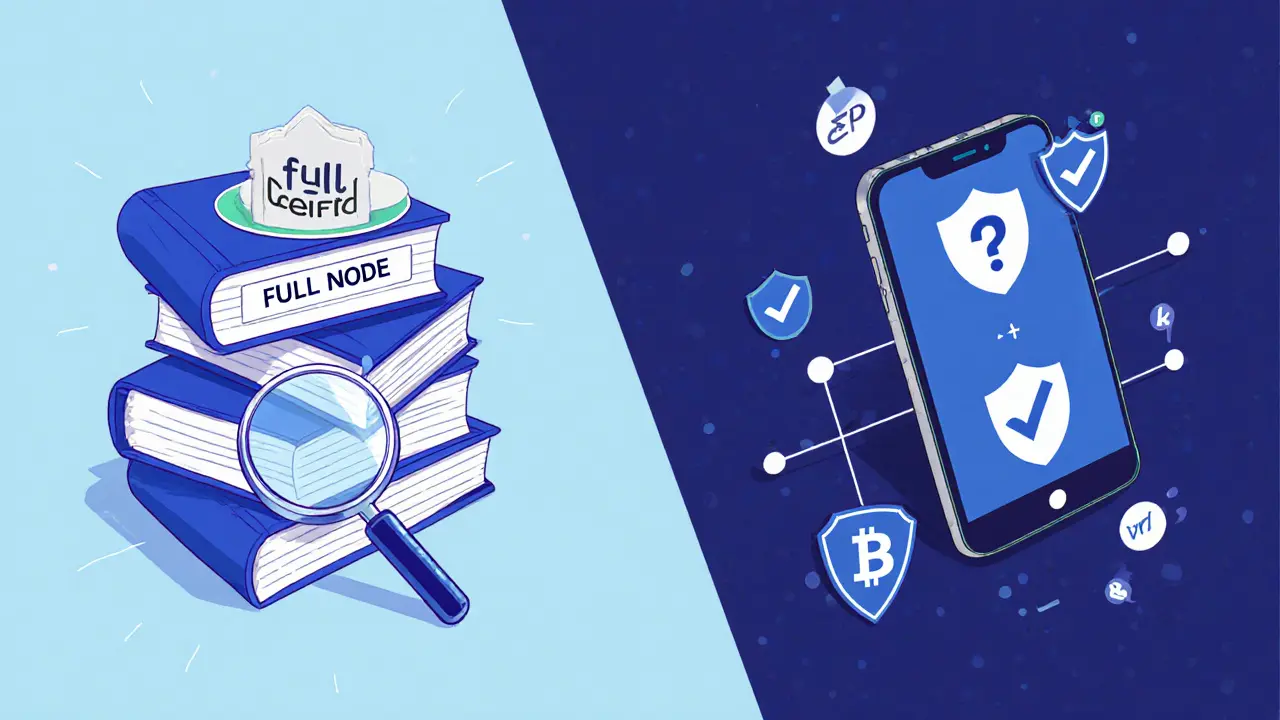
Why This Design Matters
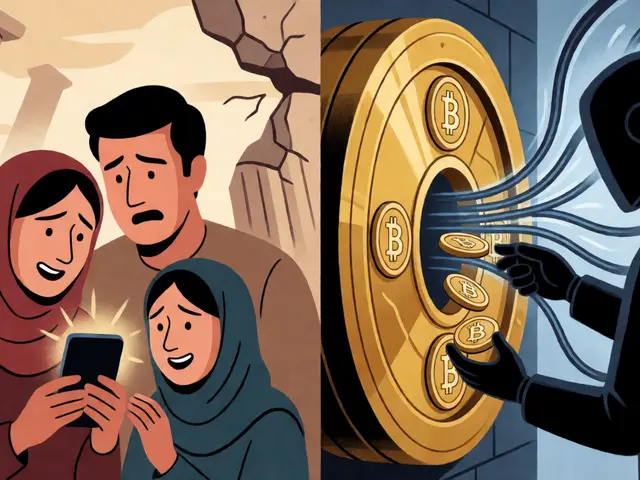
Most financial systems rely on central points of control. Banks, payment processors, clearinghouses-they’re all single points of failure. If one goes down, payments stop. If one gets hacked, millions of accounts are at risk. If one gets pressured by a government, it can freeze accounts or block transactions. Bitcoin’s P2P network has none of that. There’s no central server to shut down. No CEO to bribe. No database to hack. Even if 90% of the nodes disappeared overnight, the remaining 10% would still keep the network running. New nodes would join, fill the gaps, and the system would recover. This is why Bitcoin has survived 15+ years of crashes, bans, hacks, and skepticism. It wasn’t built to be fast or cheap-it was built to be unbreakable. And it is.What It Takes to Run a Full Node
Running your own full node isn’t hard, but it’s not casual either. You need:- At least 500 GB of free storage (the blockchain keeps growing)
- A reliable internet connection with at least 10 Mbps upload speed
- Several gigabytes of data per day for syncing and relaying
- Time-initial sync can take 1-7 days depending on your hardware

Challenges and Trade-Offs
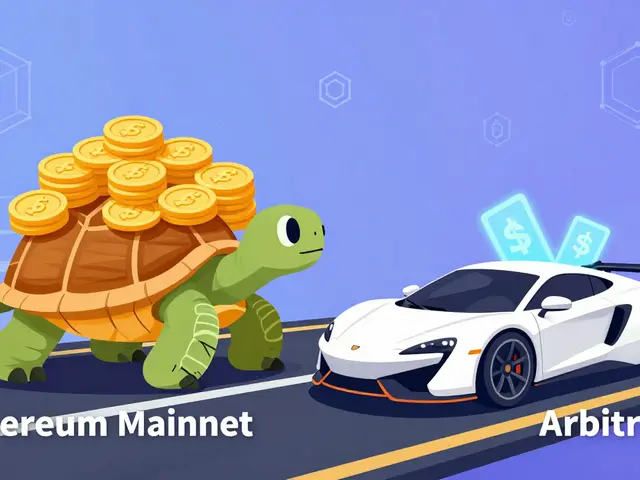
The P2P network isn’t perfect. It’s slow compared to Visa or PayPal. A single transaction can take minutes to confirm. During busy times, fees rise because miners prioritize higher-paying transactions. That’s why the Lightning Network was created-a second layer that handles small payments off-chain, then settles the final balance on Bitcoin’s main network. Bandwidth and storage are also growing pains. The blockchain doubles roughly every four years. In 2025, it’s 450 GB. In 2030, it could be over 1 TB. Not everyone can keep up. But that’s okay. The network doesn’t need every user to run a full node. It just needs enough to keep it honest. Some governments try to block Bitcoin by filtering IP addresses or shutting down exchanges. But because the network is decentralized and uses Tor, I2P, and other privacy tools, it keeps adapting. You can’t shut down a network that lives on millions of devices.What This Means for You
You don’t need to run a node to use Bitcoin. But understanding how it works changes how you see it. It’s not just digital money. It’s a new kind of infrastructure-built by code, maintained by strangers, and protected by math. If you care about financial freedom, censorship resistance, or just want to know what you’re really using, running a full node is the most direct way to participate. It’s not a luxury. It’s the foundation. The Bitcoin P2P network isn’t just a technical marvel. It’s a social one. Thousands of people, scattered across the world, choosing to run software that makes them part of something bigger. No permission needed. No gatekeepers. Just a shared belief that money shouldn’t be controlled by a few.Can I run a Bitcoin node on my laptop?
Yes, you can run a Bitcoin node on a modern laptop, but it’s not ideal for long-term use. You’ll need at least 500 GB of free storage and a stable internet connection. The initial sync can take days, and your laptop will be busy downloading and verifying blocks. If you shut it down often, you’ll slow down the network. For serious use, a dedicated device like a Raspberry Pi or old desktop is better.
Do I need to download the whole blockchain to use Bitcoin?
No. Most users use lightweight wallets (SPV nodes) that connect to full nodes and only download block headers to verify transactions. This uses far less space and bandwidth. But if you want to verify transactions yourself without trusting anyone, you need a full node and the full blockchain.
What happens if all DNS seeds go down?
The Bitcoin network won’t collapse. Nodes have a backup list of hard-coded IP addresses built into the software. Even if all DNS seeds failed, new nodes could still connect through these known peers. The system is designed with multiple fallbacks to prevent single points of failure.
How does Bitcoin prevent fake transactions?
Every full node checks every transaction against the blockchain’s rules. It verifies digital signatures, ensures coins haven’t been spent before, and confirms the sender has enough balance. If a transaction breaks any rule-even slightly-it’s rejected. No node can accept a fake transaction unless the entire network agrees, which is impossible without controlling over 50% of the network’s power.
Why is the Bitcoin P2P network more secure than banks?
Banks rely on centralized servers. If one server is hacked, corrupted, or shut down, your money can be frozen or stolen. Bitcoin has no central server. Thousands of independent nodes validate everything. To compromise Bitcoin, you’d need to hack or control most of them at once-which is practically impossible. Its security comes from distribution, not secrecy or authority.
Can governments shut down Bitcoin’s P2P network?
No, not completely. Bitcoin runs on millions of devices worldwide. Even if a country blocks access, users can still connect through Tor, I2P, or mesh networks. Nodes can communicate via satellite, radio, or even USB drives. The network is designed to survive censorship. Shutting it down would require shutting down the entire internet-and even then, copies of the blockchain exist everywhere.
What’s the difference between a full node and a miner?
A full node validates transactions and blocks but doesn’t create them. A miner solves complex math problems to create new blocks and earn Bitcoin rewards. Miners usually run full nodes too, but not all full nodes mine. You can run a full node just to verify your own transactions-no mining needed.
How often does the Bitcoin network update?
Bitcoin Core, the main software, gets regular updates-usually every few months. These are mostly bug fixes, performance improvements, and privacy enhancements. Major changes like Taproot require consensus from the whole network. If most nodes upgrade, the change activates. If not, it’s rejected. This ensures no single group can force changes on everyone.
Comments (5)

- Ian Esche
- November 27, 2025 AT 20:45 PM
Bitcoin’s P2P network? Nah, it’s just a glorified peer-to-peer file-sharing system with a cult following. You think this is revolutionary? Back in the day, Napster moved music without a central server too. The only thing ‘unbreakable’ here is the ego of the people who think they’re building the next world order with code. Meanwhile, your node is using more electricity than your entire household AC unit.

- Felicia Sue Lynn
- November 29, 2025 AT 17:59 PM
There’s a quiet poetry in the way Bitcoin operates-not as currency, but as a silent covenant among strangers. Each node, whether running on a Raspberry Pi in a basement or a cloud server in Reykjavik, becomes a verse in an unspoken contract: ‘I will verify, if you will too.’ No authority, no hierarchy, no promises beyond the math. It’s not about money. It’s about trust without a middleman-a social architecture built on cryptographic humility. We’ve forgotten how to do that in the age of algorithms and influencer endorsements.

- Christina Oneviane
- November 29, 2025 AT 18:42 PM
Oh wow, so the ‘unbreakable’ network is just a bunch of nerds running software on laptops while the real world burns? Cute. You know what else was ‘decentralized’? The 2008 financial collapse. No one was in charge, and yet somehow everyone still lost everything. Bitcoin’s just the same chaos with better branding and a higher price tag.

- fanny adam
- November 30, 2025 AT 12:12 PM
It is imperative to note that the DNS seed infrastructure, while ostensibly decentralized, is controlled by a handful of entities with known affiliations to venture capital firms and blockchain incubators. The hard-coded seed nodes, though numerous, are not cryptographically authenticated by public key signatures in the peer discovery protocol-leaving room for Sybil attacks and man-in-the-middle spoofing. Furthermore, the Dandelion++ protocol, while ostensibly enhancing privacy, introduces a single-hop relay vulnerability that could be exploited by state-level adversaries with global packet inspection capabilities. The blockchain’s growth rate, exceeding 1 TB by 2030, will inevitably lead to centralization of full nodes due to hardware cost barriers-contradicting the foundational premise of decentralization. This system is not secure. It is merely statistically resilient until a coordinated attack vector is discovered.

- Eddy Lust
- December 2, 2025 AT 04:43 AM
man i just run a node on my old laptop and it’s wild how quiet it is. like, no ads, no notifications, just this little thing humming away verifying the whole history of bitcoin like it’s the most normal thing in the world. i don’t care if it’s ‘revolutionary’ or not-i just like knowing that when i send btc, it’s not some corp’s database saying ‘okay sure, here’s your money.’ it’s just… math. and people. and my dumb router. kinda beautiful, honestly. also i spelled ‘bitcoin’ wrong like 3 times in this comment. sue me.