
Imagine losing your life savings not because of a market crash, but because someone tricked you into signing a digital document that looked completely normal. Now scale that up to billions of dollars. This is the reality facing the cryptocurrency ecosystem today. The threat isn't just random hackers looking for quick cash; it's a state-sponsored machine designed to fund nuclear weapons programs by stealing digital assets.
The architect of this chaos is the Lazarus Group, also known as Hidden Cobra or APT38. Operated by North Korea's Reconnaissance General Bureau (RGB), this group has become the world's most prolific thief of crypto assets. They don't just hack systems; they manipulate people and processes with terrifying precision. In early 2025 alone, they executed attacks totaling over $1.7 billion, shattering previous records and exposing critical weaknesses in how we secure our digital wealth.
The Anatomy of the $1.5 Billion Bybit Heist
To understand how bad things can get, you have to look at the February 21, 2025, attack on Bybit. It wasn't a brute-force code break. It was a masterclass in social engineering combined with technical manipulation. The attackers didn't smash down the front door; they waited for someone inside to open it for them.
The operation unfolded in four distinct phases:
- Initial Access via Phishing: Attackers sent spear-phishing emails to key Bybit personnel. These weren't generic spam messages. They were tailored to look like legitimate internal communications or job offers, designed to bypass initial suspicion.
- Wallet Manipulation: Once inside the network, the hackers targeted the exchange's cold wallet infrastructure. Cold wallets are offline storage devices meant to be unhackable. However, moving funds from cold to hot (online) wallets requires human interaction and software interfaces. The attackers focused on this transition point.
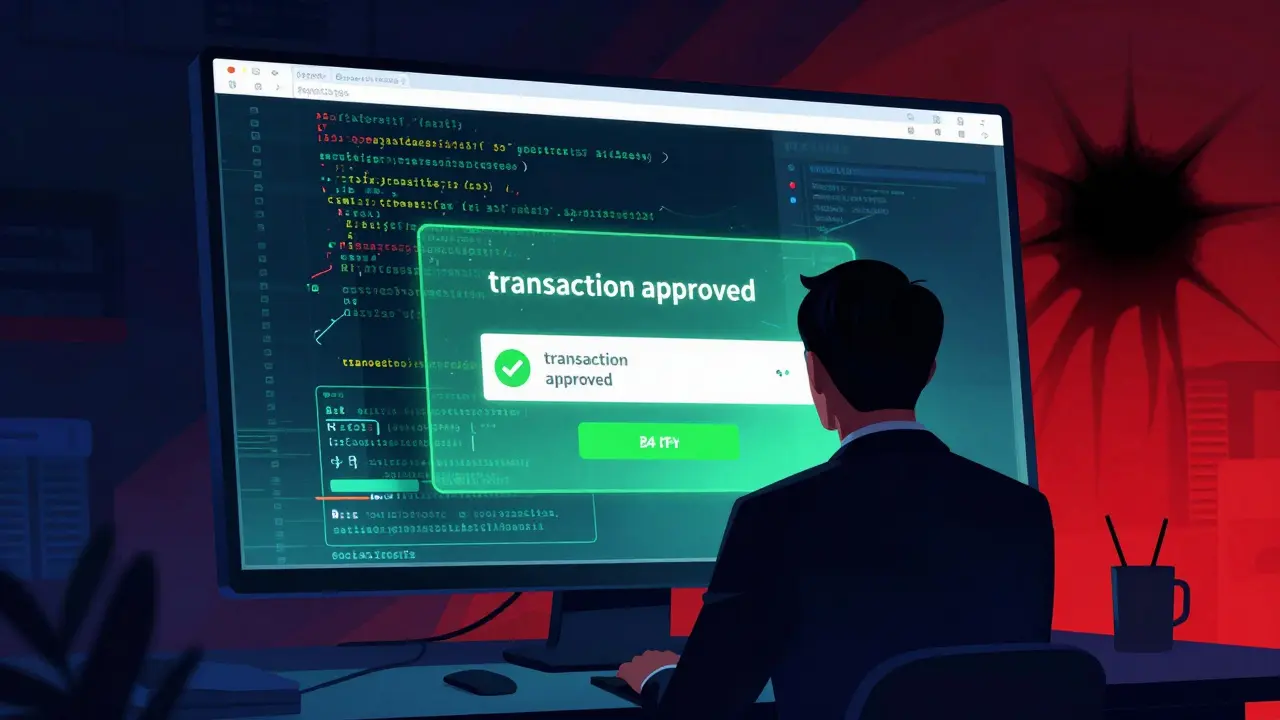
- The Frontend Swap: This is where the real trickery happened. When Bybit CEO Ben Zhou attempted to authorize a routine transaction using the Safe Wallet interface, he was looking at a manipulated screen. The hackers had injected malicious code into the frontend software. The transaction details displayed on the screen said one thing (a standard transfer), but the underlying code being signed said another (transfer everything to the attacker's address).
- Exfiltration and Laundering: Within minutes, approximately 401,000 Ethereum tokens, worth roughly $1.46 billion, vanished. The group then moved these funds through decentralized exchanges, converting some to Bitcoin and Dai to obscure the trail before letting the dust settle.
This incident proved that even multi-signature wallets-security measures requiring multiple people to approve a transaction-are vulnerable if the interface displaying the transaction is compromised. You can verify the signature, but if you're signing the wrong thing, the security fails.
A Relentless Campaign: Beyond Bybit
The Bybit heist was not an isolated event. Between June and September 2025, the Lazarus Group demonstrated an operational tempo that overwhelmed industry defenses. They hit five major targets in just 104 days:
| Target | Date | Estimated Loss | Methodology |
|---|---|---|---|
| Bybit | Feb 21, 2025 | $1.5 Billion | Social Engineering + Frontend Manipulation |
| Atomic Wallet | June 2025 | $100 Million | Supply Chain Compromise |
| Alphapo | July 2025 | $60 Million | Phishing & Credential Theft |
| Stake.com | August 2025 | $41 Million | Malware Injection |
| CoinsPaid | September 2025 | $37.3 Million | API Exploitation |
| CoinEx | Sept 12, 2025 | $54 Million | Cross-Chain Mixing |
What makes this campaign particularly dangerous is the cross-contamination of funds. Blockchain analysis firms like Elliptic observed that money stolen from Stake.com was mixed with funds from Atomic Wallet. Proceeds from CoinEx were sent to addresses previously used to launder Stake.com assets. This strategy creates a tangled web that confuses law enforcement algorithms and makes tracking the final destination of the stolen capital nearly impossible.

Evolution of Tactics: From Email to Supply Chains
Gone are the days when Lazarus relied solely on clumsy email attachments. Their toolkit has evolved to target the very software developers and security researchers who build the crypto infrastructure.
A subgroup known as TraderTraitor specializes in supply chain attacks. They create seemingly legitimate cryptocurrency trading applications. Users download these apps, trusting their reputation. However, these apps contain hidden "update" mechanisms. At a specific trigger time, the app connects to a command-and-control server and downloads a second-stage payload. This payload often includes the MANUSCRYPT remote access trojan (RAT). Unlike simple data stealers, MANUSCRYPT is designed to harvest system information, execute arbitrary commands, and specifically hunt for private keys stored in memory or on disk.
Social engineering has also shifted platforms. Instead of just email, hackers now pose as recruiters on LinkedIn. They target security professionals, building genuine rapport over weeks or months. Once trust is established, the phishing attack becomes much harder to detect. This was seen in the 2022 Ronin Network breach, where a fake job offer PDF led to the compromise of Axie Infinity’s systems, resulting in a $620 million loss. The same psychological principles apply today, just with more sophisticated tools.
Why Traditional Security Fails Against State Actors
You might wonder why multi-factor authentication (MFA) and cold storage aren't enough. The answer lies in the difference between protecting against opportunistic criminals and defending against a nation-state.
Traditional cybersecurity focuses on perimeter defense: firewalls, antivirus, and access controls. Lazarus Group operates on the assumption that perimeters will eventually be breached. Their goal is persistence and privilege escalation. They spend months lying dormant in a network, mapping out relationships, and identifying high-value targets like wallet signers.
Furthermore, they exploit the "human element" of cryptographic security. Multi-signature wallets require humans to review and approve transactions. If the human is deceived by a manipulated user interface (as seen in the Bybit case), the cryptographic security is irrelevant. The math works perfectly, but the input was wrong. This highlights a critical vulnerability: we often secure the backend database but neglect the frontend application layer where users interact with the system.

Defending Your Assets: Practical Steps
If you are an individual holding significant crypto assets, or if you work for an exchange, here are concrete steps to mitigate these risks:
- Verify Transaction Details Offline: Never rely solely on the screen display of a wallet app. Use independent blockchain explorers to verify the recipient address and amount before signing. Compare the raw transaction hash with what you expect.
- Segment Privileges: For organizations, ensure that no single employee has full access to move large sums. Implement strict separation of duties. The person who initiates a transfer should not be the same person who approves it.
- Monitor for Anomalous Behavior: Deploy endpoint detection and response (EDR) solutions that can identify unusual process injections or unexpected network connections from trading applications. Look for signs of the MANUSCRYPT RAT or similar tools.
- Security Awareness Training: Train employees to recognize advanced social engineering tactics. This includes recognizing fake recruiters on professional networks and verifying the authenticity of urgent requests from superiors.
- Use Hardware Security Modules (HSMs): For institutions, consider HSMs that provide tamper-evident hardware protection for private keys, reducing the risk of software-based extraction.
The Bigger Picture: Sanctions and Survival
Understanding Lazarus Group requires understanding their motivation. They are not motivated by profit in the traditional sense. They are motivated by survival. International sanctions have choked North Korea's economy. Cybercrime has become their primary source of foreign currency. According to the Center for Strategic and International Studies, these operations generate hundreds of millions of dollars annually, directly funding the regime's military and nuclear programs.
This means the attacks will not stop. In fact, as sanctions tighten, the pressure on Lazarus to succeed increases. They view cryptocurrency not just as a target, but as a strategic resource. The pseudonymous nature of blockchain transactions allows them to operate with a level of impunity that would be impossible in traditional banking.
The cryptocurrency industry faces an existential challenge. We built a system based on transparency and decentralization, but it is being exploited by centralized, opaque state actors. Addressing this requires more than better passwords. It demands a fundamental rethinking of how we design security architectures, prioritizing resilience against insider threats and sophisticated social engineering over simple perimeter defense.
Who is behind the Lazarus Group?
The Lazarus Group is a state-sponsored hacking collective operated by North Korea's Reconnaissance General Bureau (RGB). They act as the digital arm of the North Korean government, primarily tasked with generating revenue to fund the country's nuclear weapons program and circumvent international economic sanctions.
How did Lazarus Group steal $1.5 billion from Bybit?
They used a combination of spear-phishing and frontend manipulation. Hackers gained access to Bybit's internal systems and infected the Safe Wallet interface. When executives authorized a transaction, the screen showed a legitimate transfer, but the underlying code redirected the funds to the attackers' wallets. This allowed them to bypass multi-signature security checks.
What is TraderTraitor malware?
TraderTraitor is a subgroup of Lazarus Group that uses supply chain attacks. They distribute malicious cryptocurrency trading applications that appear legitimate. These apps contain hidden update mechanisms that download secondary payloads, such as the MANUSCRYPT remote access trojan, which steals credentials and private keys.
Can I recover my crypto if it is stolen by Lazarus Group?
Recovery is extremely difficult. Lazarus Group uses sophisticated laundering techniques, including cross-chain mixing and rapid conversion to other assets. While some funds were recovered from the Bybit heist through collaboration with blockchain analysts, most stolen assets are irretrievable once moved through their complex network of wallets.
Why are multi-signature wallets not enough to prevent these heists?
Multi-signature wallets protect against unauthorized access to keys, but they do not protect against deception. If the user interface displaying the transaction is compromised (frontend swap), the signer may unknowingly approve a malicious transaction. The cryptography works correctly, but the human input is manipulated.

Categories
Popular Articles


Mar 15 2026



Dec 10 2025