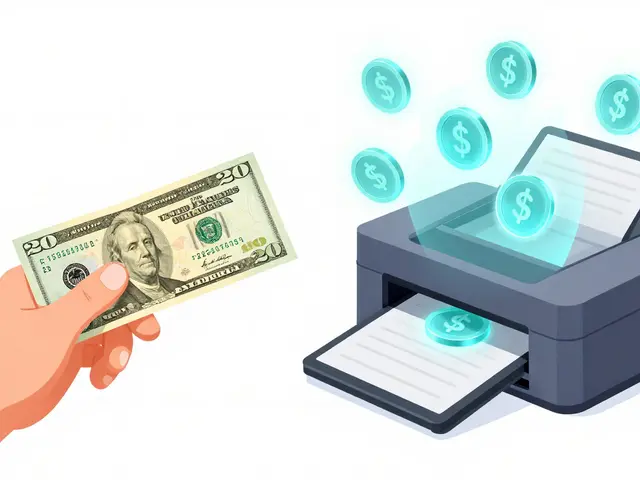

Fraxswap on Arbitrum isn’t just another decentralized exchange. It’s a piece of the Frax Finance puzzle - a system built to keep the FRAX stablecoin steady while letting users trade with near-zero fees and lightning-fast speeds. But here’s the problem: if you’re looking for a clear, up-to-date review of Fraxswap on Arbitrum, you won’t find much. Most reviews out there talk about Uniswap or SushiSwap on Arbitrum. Fraxswap? Barely mentioned. That doesn’t mean it’s not worth your time. It just means you need to dig deeper.
What Is Fraxswap?
Fraxswap is the trading engine behind Frax Finance. While most DEXs like Uniswap let you swap any tokens, Fraxswap was built first and foremost for FRAX - the fractional-algorithmic stablecoin that’s backed partly by USDC and partly by code. If you’re trading FRAX, USDC, or FXS (Frax’s governance token), Fraxswap is designed to make that smoother, cheaper, and more efficient than other platforms. It launched on Ethereum in 2021 and expanded to Arbitrum in late 2022. Why Arbitrum? Because Ethereum’s gas fees were killing DeFi activity. Arbitrum cut those fees by 90% and made transactions finish in under 5 seconds. For a stablecoin-focused DEX like Fraxswap, that’s not a luxury - it’s a necessity.How Fraxswap on Arbitrum Works
Fraxswap uses a version of concentrated liquidity - the same tech Uniswap V3 popularized. That means liquidity providers can pin their funds to specific price ranges instead of spreading them out. This boosts capital efficiency. If you’re adding liquidity to the FRAX/USDC pool, you’re not just throwing money into a big bucket. You’re targeting the exact price range where most trading happens. That’s smart. Stablecoins don’t swing wildly. FRAX stays pegged to $1. So Fraxswap lets LPs earn more fees by focusing their liquidity where it matters most. And because it’s on Arbitrum, those trades cost pennies - not dollars. You also get native integration with FXS, Frax’s governance token. Holders of FXS can get fee discounts, vote on protocol changes, and even earn rewards through staking. It’s not just a swap tool - it’s part of a larger financial ecosystem.Fees: Are They Really Free?
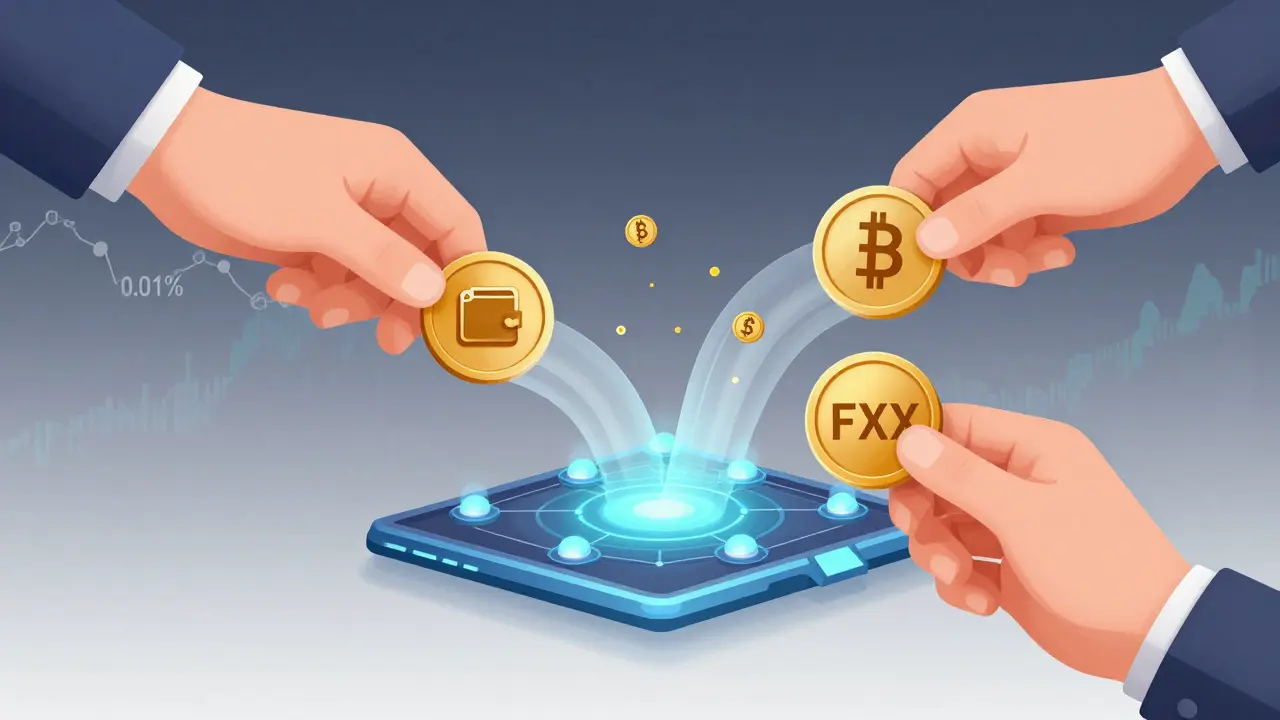
Some sites claim Fraxswap has 0% trading fees. That’s misleading. Like all AMMs, Fraxswap charges a standard 0.01% to 0.05% fee on trades - far below Uniswap’s 0.3%. But here’s the catch: those fees aren’t paid to the platform. They go directly to liquidity providers. The protocol itself takes no cut. That’s unusual. Most DEXs keep a small portion of fees for treasury growth. Fraxswap doesn’t. That’s because it’s designed to reward LPs, not the protocol. If you’re trading FRAX or FXS, you’re paying less than you would on any centralized exchange - and your fee goes to someone who’s helping keep the market liquid. No hidden fees. No maker-taker tiers. Just simple, transparent pricing.Liquidity and Volume
As of early 2026, Fraxswap on Arbitrum holds around $420 million in total value locked (TVL). That’s not as big as Uniswap’s $2.1 billion on Arbitrum, but it’s solid for a niche DEX. The FRAX/USDC pool alone handles over $150 million in daily volume. That’s enough to handle large trades without major slippage. The second most traded pair is FXS/ETH. That’s telling. It shows people aren’t just using Fraxswap to trade stablecoins - they’re using it to move in and out of the Frax ecosystem. FXS is volatile, but its price is tied to the health of FRAX. If FRAX stays pegged, FXS has value. That’s why traders use Fraxswap to hedge or speculate on the system’s stability. Compare that to ArbSwap or LFGSwap - both have lower TVL and far less daily volume. Fraxswap isn’t the biggest, but it’s one of the most actively used DEXs on Arbitrum for stablecoin and governance token trading.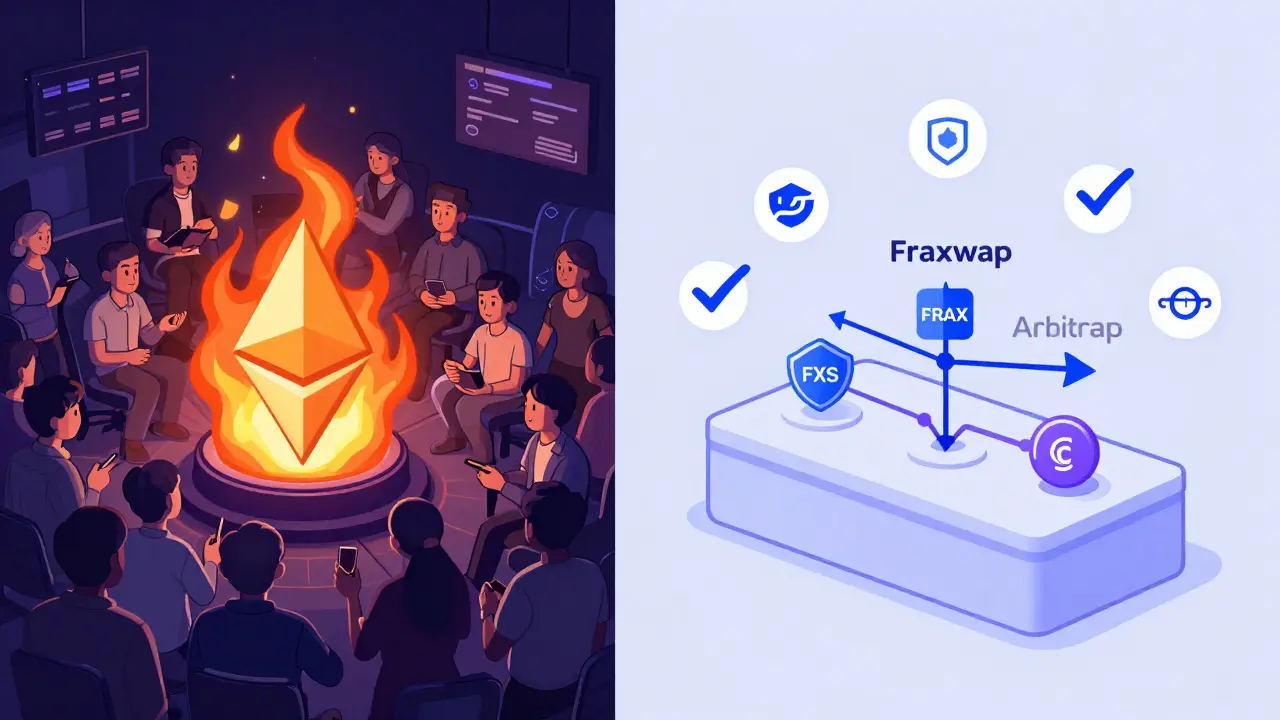
Security and Audits
Frax Finance has been audited by top firms: CertiK, PeckShield, and OpenZeppelin. All audits covered the core smart contracts, including the Arbitrum deployment. No critical vulnerabilities were found. The code is open-source and live on Arbitrum’s block explorer. The protocol also uses a multi-sig wallet for emergency stops - a feature most DEXs don’t have. If something goes wrong - say, a flash loan attack or oracle failure - the team can pause trading and freeze withdrawals. That’s not ideal for a fully decentralized system, but it’s a practical safety net. For a stablecoin platform, it’s a feature, not a flaw. No rug pulls. No anonymous devs. Sam Kazemian, the founder, has been public since 2020. He’s appeared on podcasts, published whitepapers, and even testified before a U.S. congressional subcommittee on stablecoins. That kind of transparency is rare in DeFi.User Experience: Is It Easy to Use?
The interface is clean. No clutter. No ads. Just a simple swap screen, liquidity tabs, and a dashboard for staking FXS. It works with MetaMask, Coinbase Wallet, and other EVM wallets. Connect, pick your tokens, and swap. There’s no KYC. No sign-up. No email. That’s standard for DEXs, but Fraxswap makes it even easier. If you’ve used Uniswap, you’ll feel right at home. The only difference? The fees are lower, and the pools are optimized for stablecoins. Mobile users might notice one hiccup: the site doesn’t have a dedicated app. But since it’s a web-based DEX, you don’t need one. Just open your wallet browser and go to fraxswap.com. It loads fast on Arbitrum, even on slower phones.How Fraxswap Compares to Other Arbitrum DEXs
| Feature | Fraxswap | Uniswap V3 | SushiSwap | ArbSwap |
|---|---|---|---|---|
| Trading Fees | 0.01% - 0.05% | 0.01% - 0.30% | 0.10% - 0.30% | 0.20% |
| TVL (Arbitrum) | $420M | $2.1B | $850M | $120M |
| Best For | FRAX, FXS, stablecoins | General trading | High-volume altcoins | Low-liquidity tokens |
| Special Features | FXS rewards, concentrated liquidity for stablecoins | Wide token selection | Yield farming, SUSHI staking | Simple UI, low fees |
| Security Audits | CertiK, PeckShield, OpenZeppelin | CertiK, Trail of Bits | CertiK, Quantstamp | None public |

Who Should Use Fraxswap on Arbitrum?
You should use Fraxswap if:- You trade FRAX, FXS, or other Frax ecosystem tokens regularly
- You want the lowest possible fees on stablecoin swaps
- You’re a liquidity provider and want to maximize yield on stablecoin pools
- You care about transparency and audited code
- You’re already using Arbitrum and want a DEX that’s built for your needs
- You only trade new, low-volume tokens (use SushiSwap or ArbSwap instead)
- You need a mobile app (there isn’t one)
- You want a platform with flashy yield farming rewards (Fraxswap focuses on core trading, not gamified incentives)
What’s Next for Fraxswap?
Frax Finance is working on a few upgrades. One is cross-chain liquidity pooling - letting users deposit FRAX on Ethereum and instantly use it on Arbitrum without bridging. Another is integrating with Layer 3 chains like zkSync and Starknet. That could make Fraxswap the first DEX to offer seamless multi-layer trading. They’re also testing a new oracle system to reduce FRAX’s reliance on Chainlink. If successful, it could make FRAX even more resilient during market crashes. None of this is live yet. But the roadmap is public. And unlike some DeFi projects, Frax Finance doesn’t make empty promises. They build. They test. They ship.Final Verdict
Fraxswap on Arbitrum isn’t flashy. It doesn’t have a billion-dollar marketing budget. It doesn’t have celebrity endorsements. But it works. It’s secure. It’s efficient. And if you’re trading stablecoins or governance tokens in the Frax ecosystem, it’s the best tool you’ll find. The lack of reviews online isn’t because it’s bad - it’s because most people still don’t know about it. If you’re serious about DeFi and want to avoid overpaying for swaps, give Fraxswap a try. Connect your wallet. Swap FRAX for USDC. See how little you pay in fees. Then compare it to Uniswap. You’ll understand why it’s quietly becoming the go-to for serious stablecoin traders.Is Fraxswap on Arbitrum safe to use?
Yes. Fraxswap has been audited by CertiK, PeckShield, and OpenZeppelin. Its smart contracts are open-source and live on Arbitrum’s public blockchain. The protocol also has an emergency multi-sig pause function to prevent exploits. While no system is 100% risk-free, Fraxswap has one of the strongest security track records among Arbitrum DEXs.
What are the trading fees on Fraxswap?
Fraxswap charges between 0.01% and 0.05% per trade, depending on the token pair. That’s 5 to 30 times lower than Uniswap’s standard 0.3%. These fees go directly to liquidity providers - not to the protocol. There are no hidden fees or maker-taker tiers.
Can I earn rewards by providing liquidity on Fraxswap?
Yes. Liquidity providers on Fraxswap earn a share of trading fees. If you provide liquidity to FRAX/USDC or FXS/ETH pools, you’ll receive a proportional cut of every trade made in those pools. There are no additional yield farming rewards or token emissions - the rewards come solely from trading fees.
Do I need FXS to use Fraxswap?
No. You can swap tokens on Fraxswap without holding FXS. But if you do hold FXS, you get a discount on trading fees and can vote on protocol upgrades. FXS is not required to use the platform, but it adds value for active users.
How does Fraxswap compare to Uniswap on Arbitrum?
Uniswap has more liquidity and supports more tokens, but Fraxswap is cheaper and faster for FRAX and FXS trades. If you’re swapping stablecoins or Frax ecosystem tokens, Fraxswap is more efficient. If you’re trading obscure altcoins, Uniswap is better. They serve different purposes.
Is there a mobile app for Fraxswap?
No, there is no official Fraxswap mobile app. But the website works perfectly in mobile browsers like MetaMask or Coinbase Wallet. You don’t need an app - just connect your wallet and use the site directly.
Fraxswap on Arbitrum doesn’t scream for attention. But if you’re looking for a quiet, reliable, and low-cost way to trade stablecoins and governance tokens, it’s one of the best-kept secrets in DeFi.

Comments (7)

- Ramona Langthaler
- January 26, 2026 AT 10:26 AM
fraxswap? more like fraxscam lmao. 0.01% fees my ass. theyre just siphoning liquidity from usdc pools while pretending to be 'decentralized'. anyone who uses this is either a bot or a sucker. dont trust code that needs a multi-sig to 'pause' - thats centralized control dressed up in web3 pajamas.

- Sunil Srivastva
- January 27, 2026 AT 06:13 AM
Actually, this is one of the cleanest DEX write-ups I've seen in a while. Fraxswap really is underrated. The concentrated liquidity for stablecoins is genius - you're not wasting capital like on Uniswap where 90% of your liquidity sits unused. And yes, fees go straight to LPs, not some treasury. That's rare. If you're trading FRAX or FXS, this is hands-down the best option on Arbitrum. No fluff, just efficiency.

- Devyn Ranere-Carleton
- January 28, 2026 AT 07:55 AM
wait so fraxswap dont have a mobile app? but u can use it in meta mask? so its like... a website? but not an app? why does that feel like a bug not a feature? also why is the tvl so low if its so good? someone explain this to me im confused

- Kevin Thomas
- January 28, 2026 AT 18:44 PM
Listen up, newbies. If you're still using Uniswap for FRAX/USDC swaps, you're literally throwing money away. Fraxswap isn't just better - it's the only sane choice. Lower fees, faster trades, optimized for stablecoins. And yes, the multi-sig is a feature, not a flaw. You think you want pure decentralization until your $50k FRAX pool gets drained by a flash loan. Then you'll thank the devs for the pause button. Stop chasing hype. Use the tool that actually works.

- Robert Mills
- January 28, 2026 AT 21:45 PM
THIS IS THE DEX WEVE BEEN WAITING FOR!!! 🚀🔥 Just swapped 10k FRAX for USDC - paid like $0.80 in fees. Uniswap wouldve charged me $30. Game over. Fraxswap wins. 🙌

- Jerry Ogah
- January 29, 2026 AT 10:29 AM
I knew it. I KNEW IT. This is exactly what happens when you let tech bros run finance. They call it 'efficiency' but it's just a velvet rope for the elite. Only the Frax loyalists get the low fees? What about the rest of us? And don't give me that 'transparent founder' nonsense - Sam Kazemian is just another crypto guru playing god with our money. This isn't DeFi. It's feudalism with smart contracts.

- Andrea Demontis
- January 30, 2026 AT 12:27 PM
The real question isn't whether Fraxswap is better than Uniswap-it's whether the entire stablecoin model is philosophically sound. FRAX is a hybrid: part collateral, part algorithm. That means its stability is contingent on market psychology, oracle reliability, and the willingness of LPs to absorb volatility. The fact that it works at all is a minor miracle. But when you look deeper, you realize that Fraxswap isn't just a DEX-it's a social contract made visible through code. It reflects a belief that markets can self-correct without centralized oversight, even when the underlying asset is a synthetic dollar. That’s why the multi-sig exists-not as a backdoor, but as a failsafe for a system that knows it's inherently fragile. We're not just trading tokens here. We're testing the limits of trustless finance. And honestly? I'm impressed it hasn't broken yet.