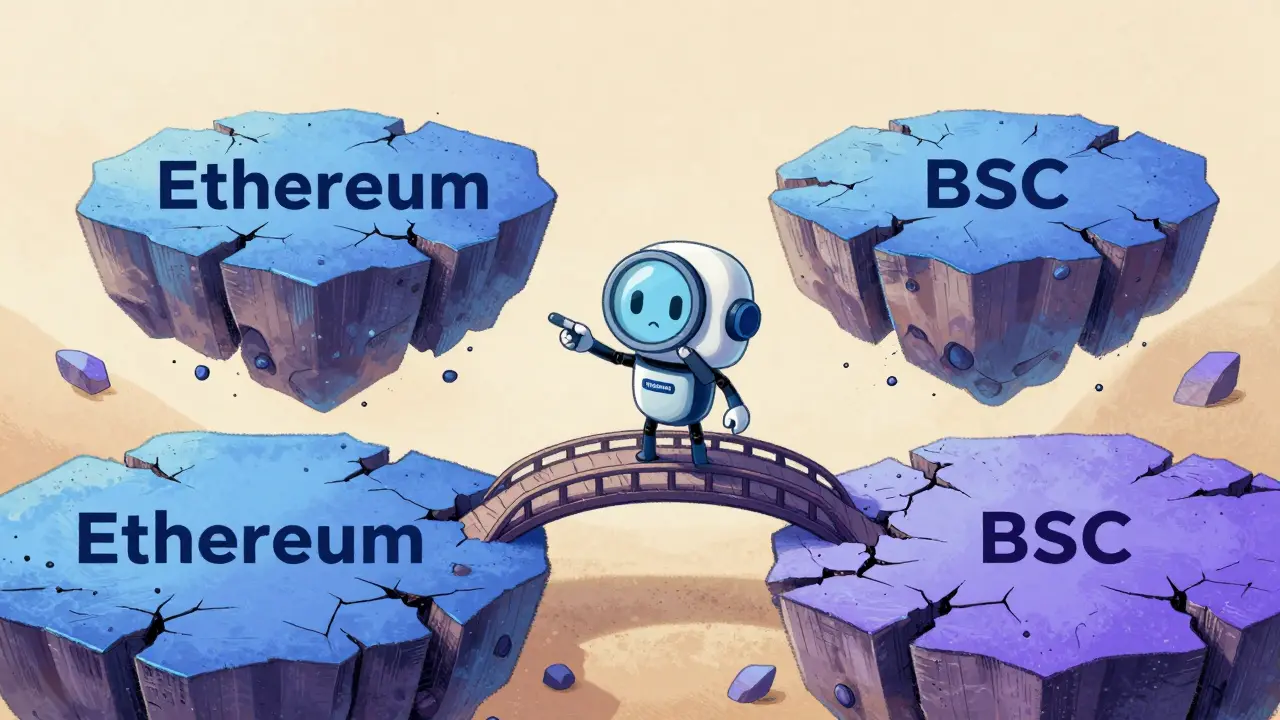

Trading cryptocurrency used to be simple. You went to a centralized exchange, bought your coins, and moved on. Now, the landscape is fragmented. Liquidity is scattered across dozens of protocols, and finding the best price feels like hunting for a needle in a haystack. Enter DegenSwap, a decentralized exchange aggregator launched in 2024 that promises to optimize gas fees and routing across Ethereum and Binance Smart Chain. The platform claims to solve the fragmentation problem by acting as an "aggregator of aggregators," pulling liquidity from giants like 1inch, SushiSwap, and Curve.
But does it actually work? Or is it just another new entrant with big promises and thin liquidity? We broke down the numbers, tested the interface, and looked at the real-world performance of DegenSwap to see if it’s ready for serious traders or if it’s still too early.
What Exactly Is DegenSwap?
DegenSwap isn’t a traditional exchange where you deposit funds into a wallet controlled by the company. It is a Decentralized Exchange (DEX) that operates entirely on-chain. Instead of holding your assets, it connects your digital wallet directly to various liquidity pools. The unique selling point here is its architecture. Most DEXes route trades through one or two sources. DegenSwap routes through multiple existing aggregators.
Think of it this way: if 1inch is a travel site that compares flights, DegenSwap is a site that compares multiple travel sites to find the absolute cheapest ticket. It supports two major networks: Ethereum and Binance Smart Chain (BSC). This cross-chain capability is crucial because many users hold assets on both chains and hate the friction of bridging them manually just to trade.
The platform raised $3 million in funding to build this infrastructure. That’s not nothing, but in the world of DeFi, where competitors raise hundreds of millions, it puts DegenSwap in the underdog category. They are betting that their fee optimization algorithms will attract users tired of high slippage and gas costs on older platforms.
The Reality Check: Liquidity and Volume
Here is where things get tricky. A DEX is only as good as its liquidity. If there aren’t enough buyers and sellers, you can’t make large trades without moving the price against yourself. This is called slippage.
As of late 2025 and entering 2026, DegenSwap struggles with low volume. Data shows 24-hour trading volumes often hitting $0.00 on certain pairs. For context, major exchanges process billions daily. DegenSwap sits in the 15th percentile for volume, meaning 85% of other exchanges handle more traffic. When we looked at specific pairs like ATH/WDEGEN, we saw tiny volumes-around $42-and periods of inactivity lasting over three hours.
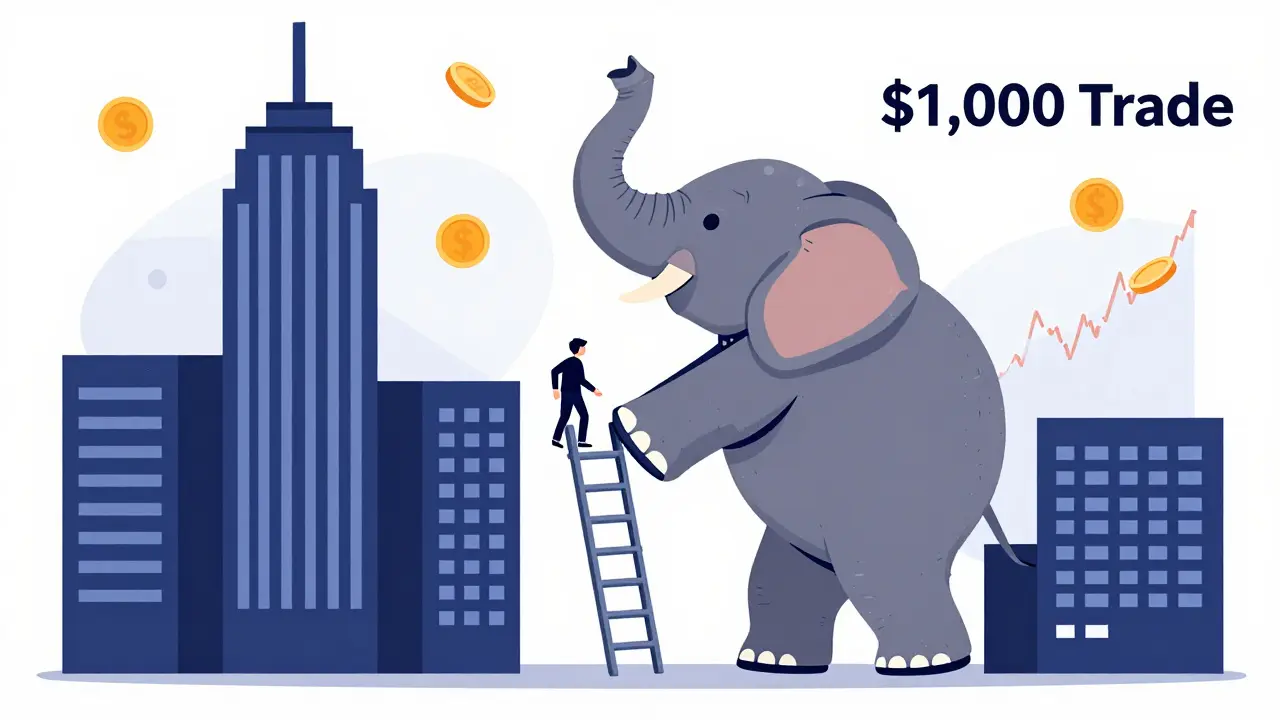
This lack of depth means the order book is thin. On the primary trading pair, the spread was recorded at 0.66%. While that sounds small, the liquidity depth was only about $155 on either side of a 2% price move. If you try to trade $1,000 worth of tokens here, you will likely suffer massive slippage. The price you see quoted will not be the price you get.
| Feature | DegenSwap | Uniswap | 1inch |
|---|---|---|---|
| Type | Aggregator of Aggregators | AMM DEX | DEX Aggregator |
| Liquidity Depth | Low ($155 avg per side) | Very High | High |
| Supported Chains | Ethereum, BSC | Multi-chain (10+) | Multi-chain (15+) |
| User Base | Niche / Early Adopters | Mainstream | Growing |
| Fees | Variable (Gas Optimized) | Standard Protocol Fees | Protocol + Gas |
Fee Structure and Gas Optimization
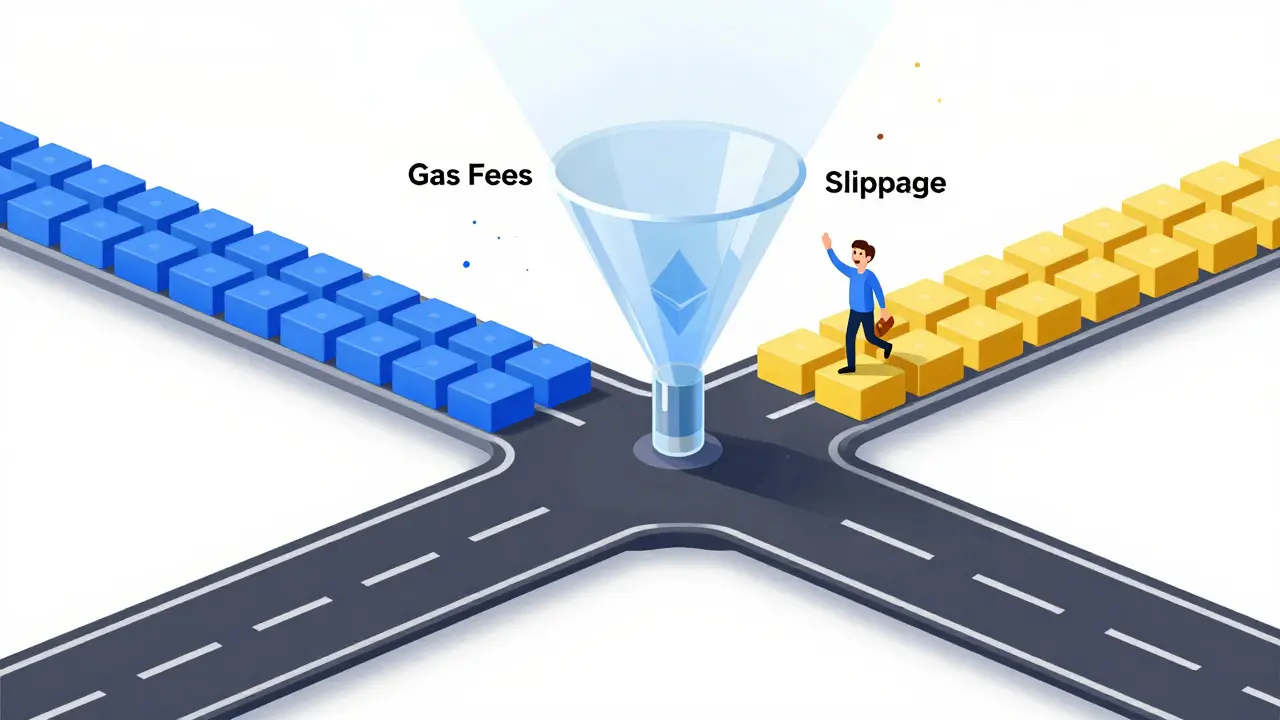
DegenSwap’s main pitch is cost savings. They claim 100% gas and fee optimization. In theory, this is great. On Ethereum, gas fees can eat up 10-20% of small trades. By splitting orders across different chains and using efficient routing, DegenSwap aims to reduce this overhead.
However, optimization doesn’t mean free. You still pay network gas fees. If Ethereum is congested, your transaction will still cost dollars, regardless of which interface you use. The benefit comes when DegenSwap finds a route on BSC that is cheaper than executing the same trade on Ethereum. For micro-trades, this could save you money. For larger trades, the lack of liquidity negates the fee savings because you lose value to slippage.
Unlike centralized exchanges, DegenSwap does not charge market-making fees or offer margin trading. This keeps the model simple but also limits the tools available for advanced traders who rely on leverage.
The DSWAP Token and Price Predictions
Every DeFi protocol has a governance or utility token. For DegenSwap, it’s DSWAP. As of September 2025, DSWAP traded around $0.032, showing significant volatility. It swung between highs of $0.078 and lows of $0.052 in single weeks. This volatility makes it a risky hold.
Analysts have mixed feelings. Conservative estimates from Coinbase suggest a price near $0.04 SGD by 2026, implying flat growth. More optimistic models, assuming Bitcoin continues its historical bull run, project DSWAP could reach $0.71 or even $2.51 if it captures a fraction of Bitcoin’s growth trajectory. But these are speculative scenarios. Currently, there is no strong fundamental driver pushing the price up other than general market sentiment.
You cannot buy DEGEN or DSWAP directly on centralized exchanges like Binance. You must use the Binance Web3 Wallet or connect a personal wallet like MetaMask to DegenSwap. This adds a layer of complexity for beginners who are used to clicking "Buy" on a familiar app.
User Experience and Security
Security in DeFi is non-custodial, meaning you control your keys. This is safer in terms of avoiding exchange hacks (like FTX), but riskier if you make a mistake. DegenSwap relies on smart contracts. While they haven’t suffered any major reported exploits, the codebase is young. Always audit your transactions before signing.
The user interface is clean but sparse. Because there are so few active pairs, the "Top Gainers" and "New Listings" sections are often empty. There is no customer support team. If you get stuck, you’re on your own or relying on community Discord channels. This is standard for DeFi but frustrating for newcomers.
Documentation is limited. If you don’t already know how to set up a wallet, approve tokens, and manage gas limits, DegenSwap will be a steep learning curve. It is not designed for retail investors who want a hand-holding experience.
Who Should Use DegenSwap?
DegenSwap is not for everyone. Here is who might benefit:
- DeFi Veterans: Users who understand gas dynamics and want to experiment with new aggregation strategies.
- Cross-Chain Traders: People frequently moving between Ethereum and BSC who want a unified view.
- Small Trade Speculators: Those making tiny trades where gas optimization matters more than liquidity depth.
Who should avoid it?
- Large Investors: The liquidity is simply not deep enough for six-figure trades.
- Beginners: The lack of support and complex setup process will lead to errors.
- Stability Seekers: The low volume and volatile token price make it a shaky foundation for long-term holdings.
Final Verdict
DegenSwap is an interesting experiment in the crowded DeFi space. Its concept of aggregating aggregators is sound, and the focus on Ethereum and BSC addresses a real need for cross-chain efficiency. However, execution is lagging behind ambition. The low liquidity, minimal trading volume, and lack of user adoption make it a risky choice right now.
If you are curious, start with very small amounts. Test the gas savings on minor swaps. Do not put significant capital into DSWAP tokens or large trades on the platform until liquidity improves. For most traders, established players like Uniswap or 1inch remain the safer, more reliable options. DegenSwap has potential, but it hasn’t proven itself yet.
Is DegenSwap safe to use?
DegenSwap is non-custodial, meaning you retain control of your funds via your private wallet. However, as a newer platform with lower liquidity and less extensive security audits compared to industry leaders, it carries higher inherent risks. Always verify contract addresses and start with small amounts.
Can I buy DSWAP tokens on Binance?
No, you cannot buy DSWAP directly on the centralized Binance exchange. You must use the Binance Web3 Wallet feature or connect a compatible wallet like MetaMask to the DegenSwap platform to acquire tokens via decentralized swapping.
Why is the trading volume so low on DegenSwap?
DegenSwap is a relatively new entrant (launched in 2024) and has not yet attracted a large user base or significant liquidity providers. Low volume results in fewer trades and thinner order books, leading to higher slippage for users.
Does DegenSwap support margin trading?
No, DegenSwap does not currently offer margin trading or leverage features. It operates strictly as a spot trading aggregator for swapping tokens between wallets.
Which blockchains does DegenSwap support?
Currently, DegenSwap primarily supports Ethereum (ETH) and Binance Smart Chain (BSC). It aggregates liquidity from protocols operating on these two networks to optimize trade routing.