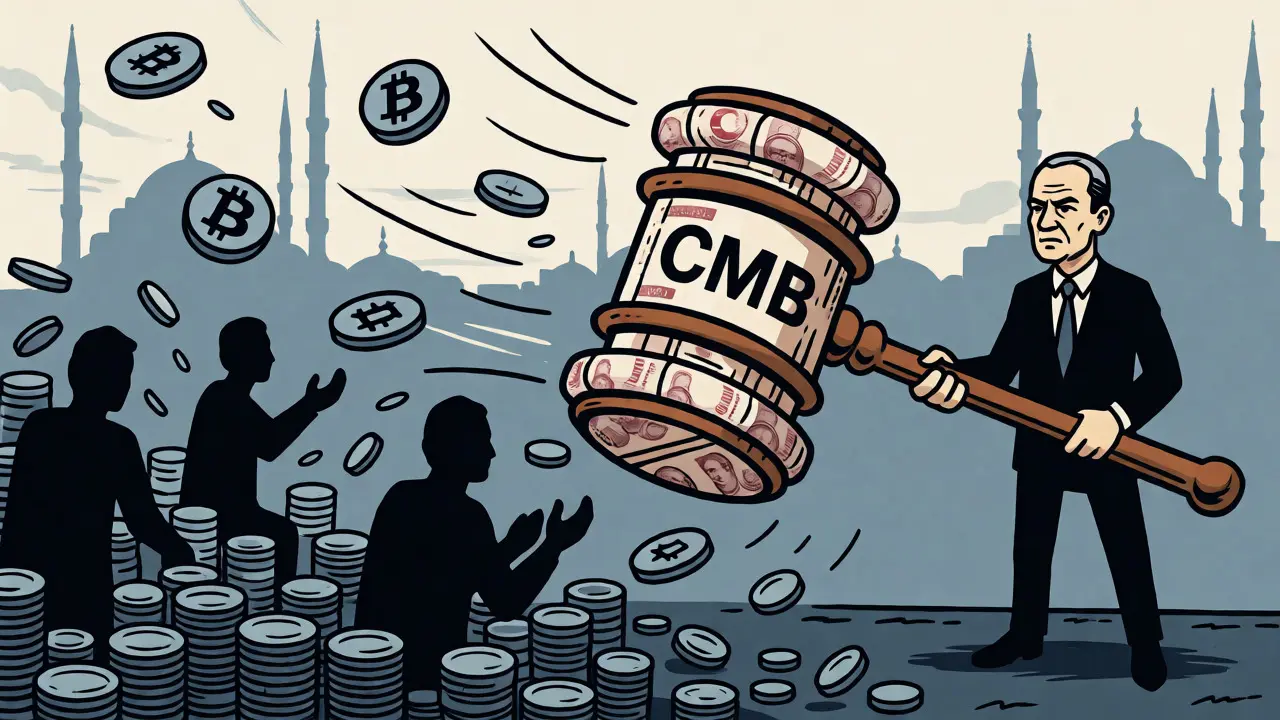

You want to run a crypto exchange in Turkey? Good luck with the paperwork. The days of operating in a gray area are over. Since early 2025, the Capital Markets Board (CMB) has tightened its grip on the market, forcing every serious player to get licensed or get out. If you're eyeing this lucrative but volatile market, you need to know exactly what it takes to survive the regulatory gauntlet.
This isn't just about filling out forms. It's about proving you have deep pockets, ironclad compliance systems, and a willingness to submit to intense scrutiny. The Turkish government wants control, not chaos. Here is the breakdown of how to navigate the licensing framework for crypto exchanges in Turkey.
The New Legal Reality: What Changed?
For years, Turkey was a crypto haven because the rules were vague. That changed when the Official Gazette published two critical communiqués in March 2025. These documents didn't just suggest best practices; they created hard law. The Communiqué I (III-35/B.1) set the ground rules for who can operate as a Crypto Asset Service Provider (CASP). The Communiqué II (III-35/B.2) detailed the operational nitty-gritty, including capital requirements and risk management.
Before this, many platforms operated without formal authorization. Now, if you don't have a license from the CMB, you are technically illegal. The authorities aren't bluffing. In July 2025, they blocked 46 unlicensed exchanges, including big names like PancakeSwap. This wasn't a warning shot; it was a purge. If you plan to enter the market now, assume that enforcement will only get stricter.
Who Can Apply? Entity Structure Matters
You can't just start an exchange from your laptop. You must establish a specific type of legal entity. The law requires you to form a joint-stock company. Your shares must be issued in cash and registered by name. This means no anonymous shareholders hiding behind shell companies. The regulators want to know exactly who owns the platform.
The distinction between types of providers is crucial for your capital planning. A standard trading platform has different requirements than a custodial service. If you hold customer assets, you face higher hurdles. Let's look at the financial barriers.
| Provider Type | Minimum Paid-in Capital (TRY) | Approximate USD Value* | Key Constraint |
|---|---|---|---|
| Crypto Trading Platform | 150,000,000 | $4.1 Million | Must be fully paid in cash |
| Custodial Service Provider | 500,000,000 | $13.7 Million | Higher liquidity reserves required |
*USD values based on approximate exchange rates in late 2025/early 2026. Rates fluctuate significantly.
Why so high? The Turkish Lira has faced inflation pressures for years. By setting capital floors in TRY, the state ensures that only financially stable entities can play. If you are a foreign operator, expect these numbers to feel heavy compared to jurisdictions like Estonia or Malta.
The Application Process: A Marathon, Not a Sprint
Getting approved takes time. Legal experts report that preparing a comprehensive application usually takes six to twelve months. This isn't bureaucracy for the sake of it. The CMB conducts a "fit-and-proper" test on everyone involved.
- Shareholder Integrity: Founders must have clean legal records. Any history of fraud or financial misconduct is an instant red flag.
- Management Qualifications: Your board members need proven experience in finance or tech. They must demonstrate they understand the risks of digital assets.
- Operational Readiness: You need to show your office, your servers, and your staff before you launch. You can't promise future infrastructure; it must exist.
Foreign applicants face extra hurdles. Non-resident CASPs cannot actively market their services within Turkish territory unless they have a local presence. This restricts growth strategies for international brands wanting to tap into Turkey's young, tech-savvy population.

Ongoing Costs: It’s Not Just About the License Fee
Once you get the license, the bill doesn't stop coming. There is no fixed one-time licensing fee mentioned in the primary texts, but there are recurring costs that sting. Licensed platforms must pay an annual fee equal to 1% of their total income (excluding interest) to the CMB. Another 1% goes to TUBITAK, the Scientific and Technological Research Council of Türkiye.
So, you are giving up 2% of your gross revenue annually. For a high-volume exchange, that is a massive sum. Plus, you have to fund your compliance team. You need dedicated risk managers, cybersecurity experts, and transaction monitoring specialists. These aren't optional hires; they are mandatory under the new framework.
AML and KYC: The Compliance Trap
Turkey aligns closely with global Anti-Money Laundering (AML) standards, but it adds local teeth through the Financial Crimes Investigation Board (MASAK). MASAK holds the power to freeze accounts linked to suspicious activity without prior court approval. Imagine waking up to find your exchange's bank accounts frozen overnight. That is the reality for non-compliant operators.
Your Know-Your-Customer (KYC) protocols must be rigorous. Identity verification is mandatory for any transaction exceeding 15,000 TRY (roughly $425). But don't think you can skip checks below that threshold. Real-time reporting is required for all transactions. Your system must capture canceled and unexecuted trades too. Why? Because patterns matter more than individual completed deals.
Penalties for slipping up are severe. We're talking fines that eat into profits or, worse, license revocation. One bad audit can shut down your business. Therefore, investing in top-tier compliance software isn't an expense; it's insurance.

Payment Prohibition: The Elephant in the Room
Here is a critical constraint that confuses many newcomers. While you can trade crypto, you cannot use it for payments. The Central Bank of Turkey (TCMB) banned cryptocurrency as a medium of exchange back in 2021, and that ban remains firmly in place in 2026. You cannot buy coffee with Bitcoin in Istanbul.
This restriction shapes the entire market. Exchanges function primarily as investment vehicles, not payment processors. Users buy crypto to hedge against inflation or speculate on price movements. They do not spend it directly. This limits the utility case for local users but keeps the demand for trading volume high due to economic instability.
Market Context: Is It Worth It?
Despite the restrictions, Turkey remains attractive. The population is young and digitally native. High inflation drives people toward digital assets as a store of value. After the crackdown on unlicensed exchanges, the remaining licensed players enjoy reduced competition. Customers trust regulated platforms more, leading to higher deposit volumes.
However, political volatility adds risk. Recent detentions of exchange founders have raised eyebrows in the industry. Some critics argue that regulation is sometimes used as a tool for broader political leverage. If you enter this market, you need robust legal counsel who understands both the technical regulations and the political climate.
Practical Steps for Applicants
If you are ready to apply, here is your checklist:
- Form a Joint-Stock Company: Ensure shares are registered by name and fully paid in cash.
- Raise Capital: Secure at least 150 million TRY for trading or 500 million TRY for custody.
- Hire Local Experts: Engage Turkish fintech lawyers. Bilingual support is essential for communicating with the CMB.
- Build Infrastructure: Set up real-time transaction monitoring systems compatible with MASAK reporting standards.
- Prepare Documentation: Compile internal control policies, cybersecurity audits, and shareholder background checks.
- Submit to CMB: Expect a review period of several months. Be responsive to requests for additional information.
Navigating the Turkish crypto exchange licensing process requires patience and precision. It is not for the faint of heart. But for those who succeed, the reward is access to a resilient market with loyal customers who value security over speed.
Can foreign crypto exchanges operate in Turkey without a local license?
Generally, no. Foreign exchanges targeting Turkish residents must obtain a license from the Capital Markets Board (CMB). Non-resident providers face strict limitations on active marketing and often require a local corporate presence to comply with the 2025 regulations. Operating without a license risks being blocked by authorities, as seen in the July 2025 enforcement actions.
What is the minimum capital required to open a crypto exchange in Turkey?
The minimum paid-in capital is 150 million Turkish Lira (approximately $4.1 million USD) for a standard crypto trading platform. However, if you offer custodial services (holding user funds), the requirement jumps to 500 million Turkish Lira (approximately $13.7 million USD). This capital must be fully paid in cash upon establishment.
Are cryptocurrencies legal tender in Turkey?
No. While buying, selling, and holding cryptocurrencies is legal and regulated, using them as a direct method of payment for goods and services is prohibited by the Central Bank of Turkey. This ban has been in effect since 2021 and continues into 2026. Crypto functions primarily as an investment asset in the Turkish market.
How long does the crypto exchange licensing process take in Turkey?
The process typically takes between 6 to 12 months. This timeline includes preparing corporate structures, developing compliance infrastructure, conducting fit-and-proper tests for management, and undergoing review by the Capital Markets Board. Delays often occur if documentation regarding shareholder integrity or technical systems is incomplete.
What are the ongoing tax and fee obligations for licensed exchanges?
Licensed exchanges must pay an annual fee equivalent to 2% of their total income (excluding interest). This is split evenly: 1% goes to the Capital Markets Board (CMB) and 1% to TUBITAK (Scientific and Technological Research Council of Türkiye). Additionally, standard corporate taxes and VAT on service fees apply according to general Turkish tax laws.
Categories
Popular Articles