

Crypto Remittance Calculator: Save Money Sending to Bolivia
Send Money to Bolivia More Affordably
Bolivia lifted its cryptocurrency ban in 2024. Now you can send money using stablecoins like USDT (Tether) or USDC, which are often faster and cheaper than traditional services.
Since June 2024, Bolivia has legalized cryptocurrency with a regulatory framework. Only licensed platforms are legal for crypto transactions. The Central Bank of Bolivia now uses stablecoins for official cross-border payments.
Enter an amount and select a payment method to see savings
Current Regulation: Only licensed platforms are legal for crypto transactions in Bolivia. The Central Bank of Bolivia requires all Virtual Asset Service Providers (VASPs) to be registered and licensed. Always use verified platforms to avoid scams.
For nearly a decade, Bolivia was one of the few countries in the world that made it illegal to use, trade, or even hold cryptocurrency. The Central Bank of Bolivia banned all digital assets in 2014, calling them a threat to financial stability. By 2020, that ban was reinforced with a new resolution, sending a clear message: no Bitcoin, no Ethereum, no stablecoins - not even for remittances or online payments. People in Bolivia who wanted to use crypto had to risk fines, account freezes, or worse. But that all changed in 2024.
The Ban Was Real - and It Was Strict
The 2014 prohibition wasn’t a suggestion. It was law. The Central Bank of Bolivia (BCB) didn’t just discourage crypto - it criminalized it. Banks couldn’t process crypto transactions. Exchanges couldn’t operate. Even holding Bitcoin in a wallet could trigger scrutiny. The government’s reasoning was simple: they wanted to protect the boliviano, control capital flows, and avoid what they saw as unregulated financial chaos. But the ban had unintended consequences. Bolivians started using underground networks to send money across borders. Families relied on informal channels to receive remittances from relatives abroad. Some turned to cash couriers or barter systems. Others used foreign bank accounts or prepaid cards to bypass the system. The ban didn’t stop crypto use - it just made it harder, riskier, and more expensive.The Turning Point: June 26, 2024
On June 26, 2024, Bolivia flipped the script. Resolution No. 82/2024 officially lifted the ban. No more fines. No more fear. Crypto was legal again. And it wasn’t just a half-measure - the government moved fast to build a framework around it. Within months, they introduced Resolution No. 019/2025 in April, which formally recognized virtual assets and virtual asset service providers (VASPs). Then, in May 2025, Supreme Decree No. 5384 gave the sector a full legal backbone. Suddenly, crypto companies could apply for licenses. Exchanges could register. Wallet providers could operate legally. The Central Bank didn’t just allow crypto - it started using it.The Central Bank Started Using Stablecoins
One of the most surprising moves came in March 2025: the Central Bank of Bolivia began using USD-pegged stablecoins for cross-border payments and remittances. That’s right - the same institution that once called crypto dangerous was now using it to move money between countries. Why? Because the boliviano is unstable. Inflation has hovered around 4% to 6% annually, and access to U.S. dollars is limited for ordinary people. Stablecoins offered a way to preserve value without needing a foreign bank account. For families sending money from Spain or the U.S. back to La Paz, stablecoins became faster and cheaper than Western Union or bank wires. This wasn’t just symbolic. It was practical. And it signaled a deep shift in how the government viewed digital assets - not as a threat, but as a tool.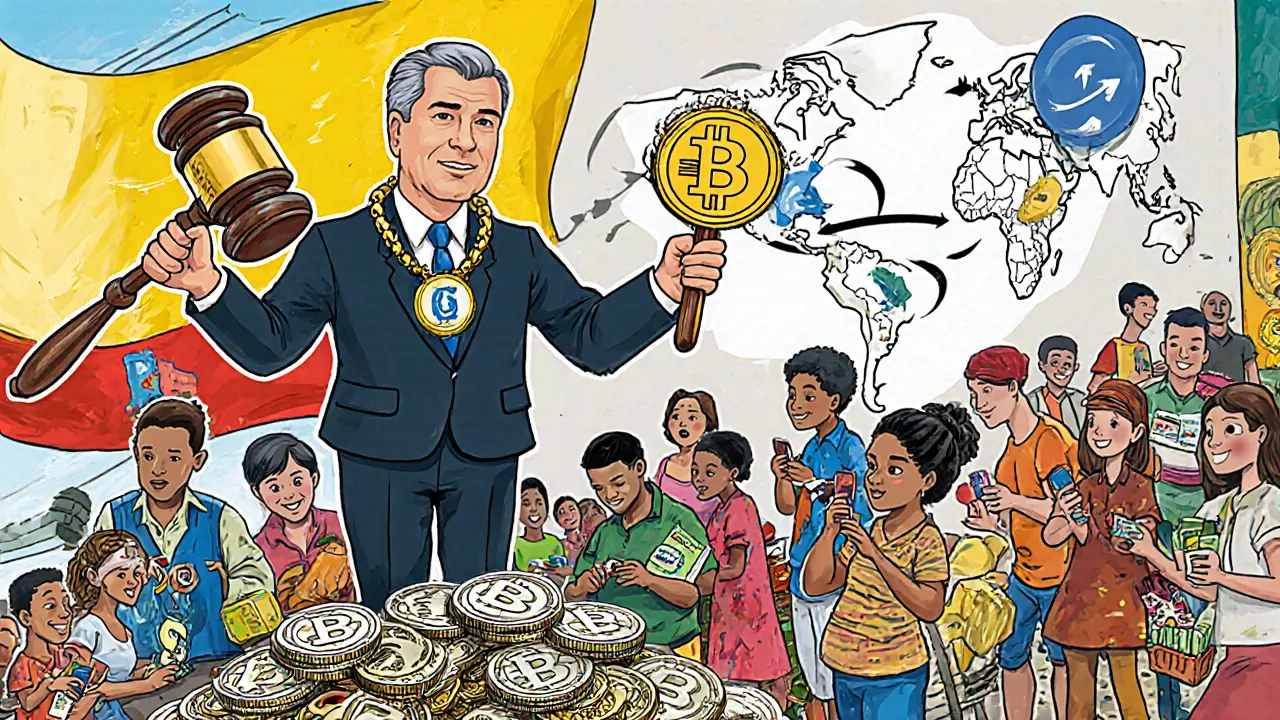
Adoption Skyrocketed - And So Did Demand
The numbers don’t lie. In the first half of 2025, virtual asset transactions in Bolivia hit $294 million. That’s more than five times what it was before the ban was lifted. One platform, Meru, saw its Bolivian user base grow by 6,600% in just one year. That’s not growth - that’s a flood. People weren’t just buying Bitcoin to speculate. They were using it for real needs:- Stablecoins for daily remittances and savings
- Bitcoin for international transfers
- Altcoins for trading on global exchanges
Bolivia Isn’t Alone - But It’s Doing It Differently
Other Latin American countries have taken different paths. Argentina and Brazil have embraced crypto with loose regulation. Colombia has a licensing system. But Bolivia stands out because it went from zero to regulated in less than a year. Even more unique? Bolivia signed a Memorandum of Understanding with El Salvador in early 2025. Not to copy their model - but to learn from it. The agreement lets both countries share tools for tracking crypto fraud, analyzing blockchain data, and training regulators. It’s the first time two nations have cooperated directly on crypto oversight. Meanwhile, countries like Algeria doubled down on bans. Bolivia chose to adapt. That contrast tells you everything about where the region is headed.What’s Next for Crypto in Bolivia?
The government isn’t slowing down. Public awareness campaigns are rolling out in schools, banks, and local offices. Officials are drafting rules to prevent scams, protect consumers, and ensure transparency. The goal? To build a system that encourages innovation without risking financial stability. Crypto exchanges are opening offices in Santa Cruz and Cochabamba. Local fintechs are building apps that let people pay bills or buy groceries with crypto. Even small vendors in El Alto are starting to accept USDT. The big question now isn’t whether crypto will survive in Bolivia - it’s how fast it will grow. Analysts predict the country could become a regional hub for regulated digital asset services, especially for cross-border payments in high-inflation economies.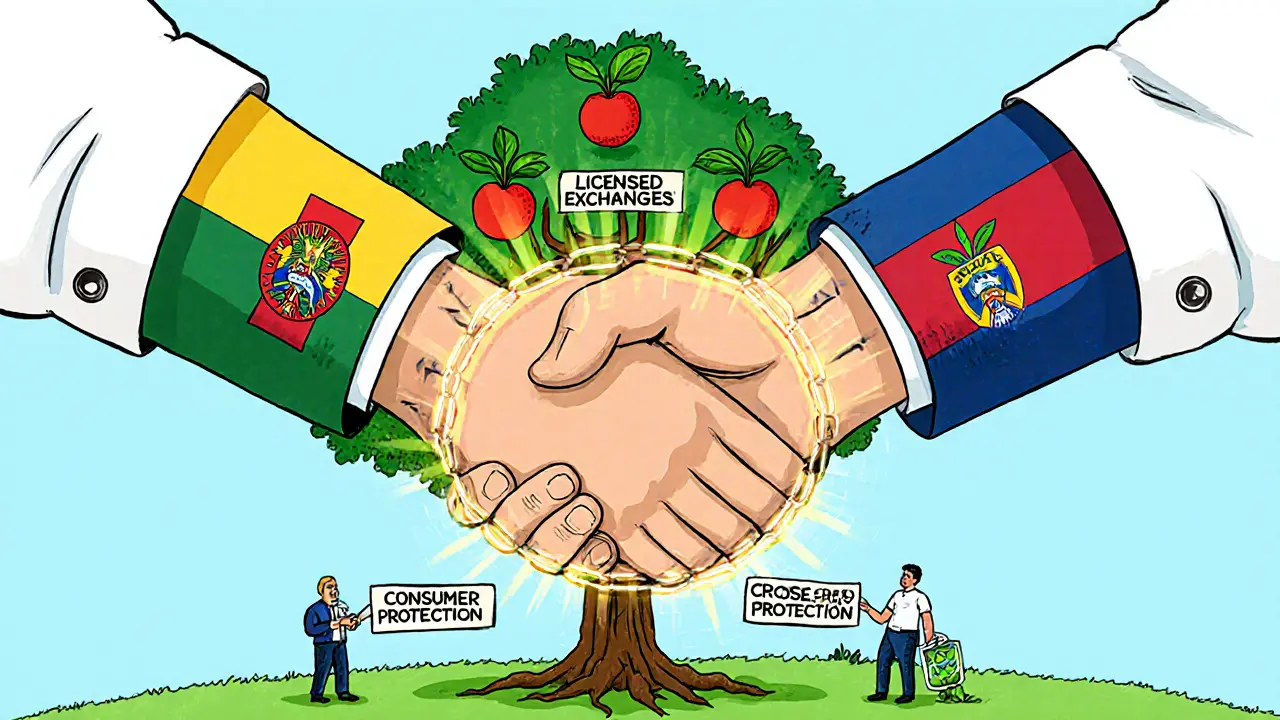
Is It Safe? What About Scams?
With rapid adoption comes risk. Some users are still getting burned by fake exchanges or phishing apps. The government knows this. That’s why licensing is mandatory now. Only registered VASPs can operate legally. Unlicensed platforms are being shut down. The Central Bank also advises users to:- Only use licensed platforms
- Never share private keys
- Start small - test with small amounts first
- Report suspicious activity to BCB
Why This Matters Beyond Bolivia
Bolivia’s story isn’t just about one country changing its mind. It’s proof that even the most rigid crypto bans can be reversed - and that people will find ways to use digital money when traditional systems fail. It shows that regulation doesn’t have to mean control. It can mean clarity. And it proves that when governments stop fighting innovation and start working with it, adoption follows naturally. For other countries stuck in the same old debate - crypto is either a threat or a revolution - Bolivia offers a third way: pragmatic, measured, and user-driven.Final Thoughts
The complete cryptocurrency prohibition in Bolivia lasted ten years. It didn’t stop people from using crypto - it just pushed it underground. When the ban was lifted, demand exploded. People didn’t need to be convinced. They just needed the freedom to act. Today, Bolivia isn’t just allowing crypto. It’s shaping how it works. The Central Bank uses stablecoins. The law protects users. The market chooses the tools. And the country is now on track to become one of Latin America’s most thoughtful crypto economies. The lesson? Prohibition doesn’t kill demand. It just delays it - and makes it more dangerous. When you remove the ban, you don’t just unlock technology. You unlock trust.Was cryptocurrency ever completely illegal in Bolivia?
Yes. From May 6, 2014, until June 26, 2024, Bolivia had a complete legal ban on all cryptocurrency activities. The Central Bank of Bolivia prohibited banks, exchanges, and individuals from using, trading, or holding digital assets. Violations could lead to fines or legal action. This ban was reaffirmed in 2020 before being fully lifted in 2024.
When did Bolivia lift its cryptocurrency ban?
Bolivia officially lifted its cryptocurrency ban on June 26, 2024, with Resolution No. 82/2024. This marked the end of a decade-long prohibition and opened the door for legal crypto operations, including exchanges, wallets, and service providers.
Is Bitcoin legal in Bolivia today?
Yes. Bitcoin and all other cryptocurrencies are fully legal in Bolivia as of mid-2024. The government no longer bans ownership or use. Instead, it regulates service providers through licensing and oversight to ensure security and transparency.
Can I use crypto to send money to Bolivia?
Yes. Many Bolivians now use USD-pegged stablecoins like USDT or USDC to receive remittances from abroad. These are faster and cheaper than traditional wire transfers. Licensed crypto platforms in Bolivia support these transactions, and the Central Bank even uses stablecoins for official cross-border payments.
What’s the difference between Bolivia’s crypto policy and El Salvador’s?
El Salvador made Bitcoin legal tender in 2021, meaning businesses had to accept it as payment. Bolivia took a different path: it didn’t make any crypto legal tender. Instead, it created a regulatory framework that lets people use crypto freely - but doesn’t force businesses to accept it. Bolivia focuses on licensing providers and protecting users, while El Salvador pushed mass adoption through government mandates.
Are crypto exchanges operating legally in Bolivia now?
Yes, but only licensed ones. Since April 2025, all virtual asset service providers (VASPs) must be registered and licensed by the Central Bank of Bolivia. Unlicensed exchanges are illegal and subject to shutdown. This ensures users can identify trustworthy platforms and reduces fraud risk.
How has the public reacted to the new crypto rules?
The reaction has been overwhelmingly positive. User adoption surged - one platform saw a 6,600% increase in users within a year. People appreciate the ability to send money cheaply, save in stablecoins, and access global markets. Some users still call for stronger consumer protections as the market grows, but overall, support for the change is strong.
What role did the Central Bank of Bolivia play in this change?
The Central Bank of Bolivia was once the main enforcer of the crypto ban. But after 2024, it became the architect of the new system. It issued licensing rules, began using stablecoins for official payments, signed international cooperation agreements, and launched public education efforts. Its shift from blocker to builder was central to the country’s crypto transformation.
Comments (9)

- Steve Savage
- December 2, 2025 AT 17:51 PM
It's wild how often governments think they can outsmart human behavior. You ban something people actually need, and all you do is drive it underground. Bolivia didn't 'change its mind'-it finally caught up with reality. People weren't asking for permission. They were just finding ways to survive.
Now that it's legal, the real test isn't adoption-it's whether the system can stay fair when the sharks show up.

- Joe B.
- December 3, 2025 AT 13:46 PM
Let’s be real-this isn’t some noble policy shift. It’s pure panic. The boliviano’s been hemorrhaging value for years, remittances were collapsing, and the black-market crypto networks were outperforming state banks. The Central Bank didn’t ‘embrace innovation’-they got outmaneuvered by their own citizens.
And now they’re trying to rebrand their failure as foresight. Cute. Stablecoins for cross-border payments? Sure. But mark my words: within 18 months, they’ll be back to ‘monitoring suspicious activity’ and slapping compliance burdens on every small exchange. This isn’t freedom-it’s regulation with a smiley face.

- Rod Filoteo
- December 3, 2025 AT 22:49 PM
Y’all think this is legit? 😏
Big Finance didn’t just ‘allow’ crypto-they *engineered* this. The Central Bank using USDT? That’s not innovation, that’s a backdoor to dollarize Bolivia without the U.S. even having to lift a finger. This is how they quietly kill the boliviano. You think people are using crypto to send money home? Nah. They’re using it because their savings are being erased by inflation-and now the Fed’s ghost is running the ATM.
And don’t get me started on that ‘MOU with El Salvador.’ That’s not cooperation-that’s a surveillance pact. Blockchain tracking? They’re building the ultimate financial prison. They just made it look like freedom.
Wake up. This isn’t liberation. It’s a soft coup.
🇵🇱 #CryptoIsTheNewDollar

- Layla Hu
- December 4, 2025 AT 20:48 PM
I’m glad people can finally send money home without paying 10% in fees. My cousin in Cochabamba used to wait weeks for cash couriers. Now she gets USDT in minutes. That’s real progress.
But I’m still nervous about the scams. My friend lost $2k to a fake exchange last month. Licensing helps, but most people don’t know how to check if a platform is registered. They just see ‘official’ and click ‘deposit.’
Education needs to be everywhere-not just in La Paz.

- Nora Colombie
- December 6, 2025 AT 03:54 AM
Of course Bolivia flipped. They’ve been broke for decades. Now they’re begging for crypto to save them? Pathetic. The U.S. didn’t ban crypto because we’re scared-we did it because we know how dangerous it is for sovereign control. Bolivia just gave up its economic sovereignty for a few faster remittances.
What’s next? Letting Amazon mint its own currency? At least in the U.S., we still have a dollar. Bolivia’s now just a node in a global financial ghost network. Sad.

- Greer Dauphin
- December 7, 2025 AT 02:20 AM
Wait… so the same bank that called Bitcoin a ‘threat’ is now using USDT to move money? 😂
That’s like a cop who spent 10 years hunting drug dealers… then opens a dispensary.
Anyway, props to the Bolivians for just using crypto anyway. That’s the real story. The government didn’t lead. People did. And when you stop fighting the tide, you might just learn how to surf.
Also-6600% growth? That’s not a trend. That’s a damn revolution with Wi-Fi.

- Bhoomika Agarwal
- December 8, 2025 AT 07:26 AM
Bolivia didn’t ‘change’-they got tired of being laughed at. Imagine: a country that banned Bitcoin but still uses WhatsApp to send cash through strangers in buses. 😭
Now they’re playing catch-up with stablecoins like it’s 2020? Honey, we were doing that in India five years ago. At least Bolivia’s finally not pretending the world doesn’t exist.
But don’t act like this is genius. It’s just damage control with a fancy press release.

- Katherine Alva
- December 9, 2025 AT 06:52 AM
It’s beautiful how the most rigid systems collapse not from outside pressure, but from internal necessity.
Bolivia’s ban didn’t fail because crypto was too powerful-it failed because people were too human. They needed to feed their families. They needed to save. They needed connection.
And when the system denies those things, it doesn’t win. It just becomes irrelevant.
Now the government’s trying to rebuild trust-not by forcing control, but by letting people use what works. That’s not policy. That’s humility.
❤️

- Nelia Mcquiston
- December 11, 2025 AT 05:58 AM
The most interesting part isn’t the legalization. It’s the quiet pivot: from fear to framework.
Most countries either ban crypto or go full El Salvador. Bolivia did neither. They didn’t force adoption. They didn’t demonize it. They just created space-for people, for platforms, for protection.
It’s the first time I’ve seen a government treat crypto not as a threat to be crushed, but as a tool to be shaped. Not perfect. Not ideal. But honest.
Maybe the future isn’t about which coins win. Maybe it’s about which systems let people breathe.