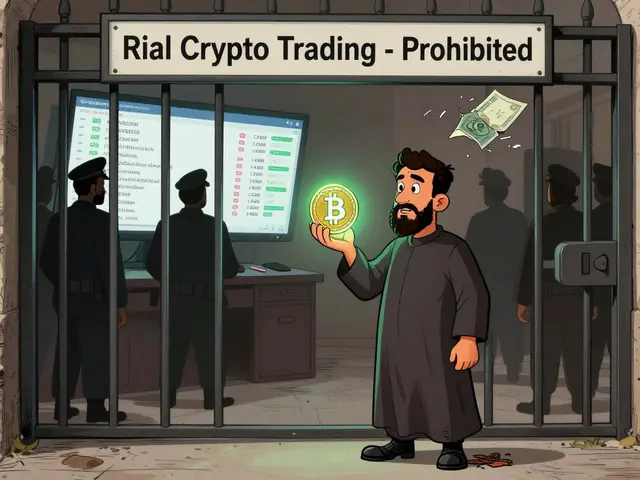

Imagine you run a small electronics shop in Moscow. A customer walks in with a bag of cash and wants to pay for a laptop using Bitcoin. You smile, ready to make the sale, but then you remember the news from late 2025. If you accept that payment today, your bank account could be frozen within days. In Russia, the answer to whether businesses can legally accept cryptocurrency is not a simple yes or no. It depends entirely on where the money is coming from and how big your company is.
As of July 2026, the legal landscape is sharply divided. For domestic transactions-selling goods or services to other Russian residents-cryptocurrency is effectively banned as a payment method. However, for international trade, especially with countries outside Western sanctions, it has become one of the few viable options left. This split reality creates a complex maze for business owners who need to navigate strict regulations without falling afoul of the law.
The Domestic Ban: Why You Can't Pay Your Grocer in Crypto
To understand why your local bakery cannot accept Ethereum, we have to look at how the state views digital assets. Under Federal Law No. 259-FZ, known as the "On Digital Financial Assets" law, cryptocurrencies are recognized as property, similar to stocks or real estate. They are not considered money. This distinction is crucial because it means they lack the status of legal tender.
The Bank of Russia (CBR) has been very vocal about this. During a strategic session in October 2025, First Deputy Governor Vladimir Chistyukhin made it clear: all crypto transactions between Russian residents outside specific experimental frameworks should carry criminal penalties. The goal is to protect the ruble's dominance in the domestic economy. If regular people start paying for bread and rent in Bitcoin, the central bank argues, it threatens financial stability.
The consequences for breaking this rule are severe. Advertising that you accept crypto can lead to administrative fines ranging from 50,000 to 300,000 rubles under Article 15.25 of the Administrative Offenses Code. But the real danger comes from the banking system. In June 2025, a Moscow-based electronics retailer called TechnoPoint had its accounts frozen for 45 days after accepting Bitcoin payments. The bank flagged the unusual activity, Rosfinmonitoring stepped in, and the business ground to a halt while audits were conducted. For most small and medium-sized enterprises (SMEs), such a disruption is fatal.
The International Exception: Navigating Sanctions via Crypto
If domestic use is off-limits, why is there so much talk about crypto in Russia? The answer lies in international trade. Following the tightening of Western sanctions, traditional SWIFT transfers became difficult or impossible for many Russian companies. In response, the government amended Federal Law No. 115-FZ in 2024 to legalize cross-border cryptocurrency settlements.
This exception was designed to help Russian exporters get paid by foreign partners who might also want to avoid traditional banking channels. Finance Minister Anton Siluanov confirmed this shift in October 2025, stating that proper legislative regulation was needed to restore order to the sector and maintain foreign economic activity. Today, cryptocurrency represents about 4.7% of Russia's total cross-border trade volume, with monthly transactions reaching over 1 trillion rubles ($12.6 billion).
However, this isn't a free-for-all. Only certain types of businesses can participate, and only through a highly regulated channel known as the Experimental Legal Regime (ELR). This framework allows authorized entities to settle international contracts in crypto, but it keeps the rest of the population out.
Who Qualifies? The High Bar of the ELR
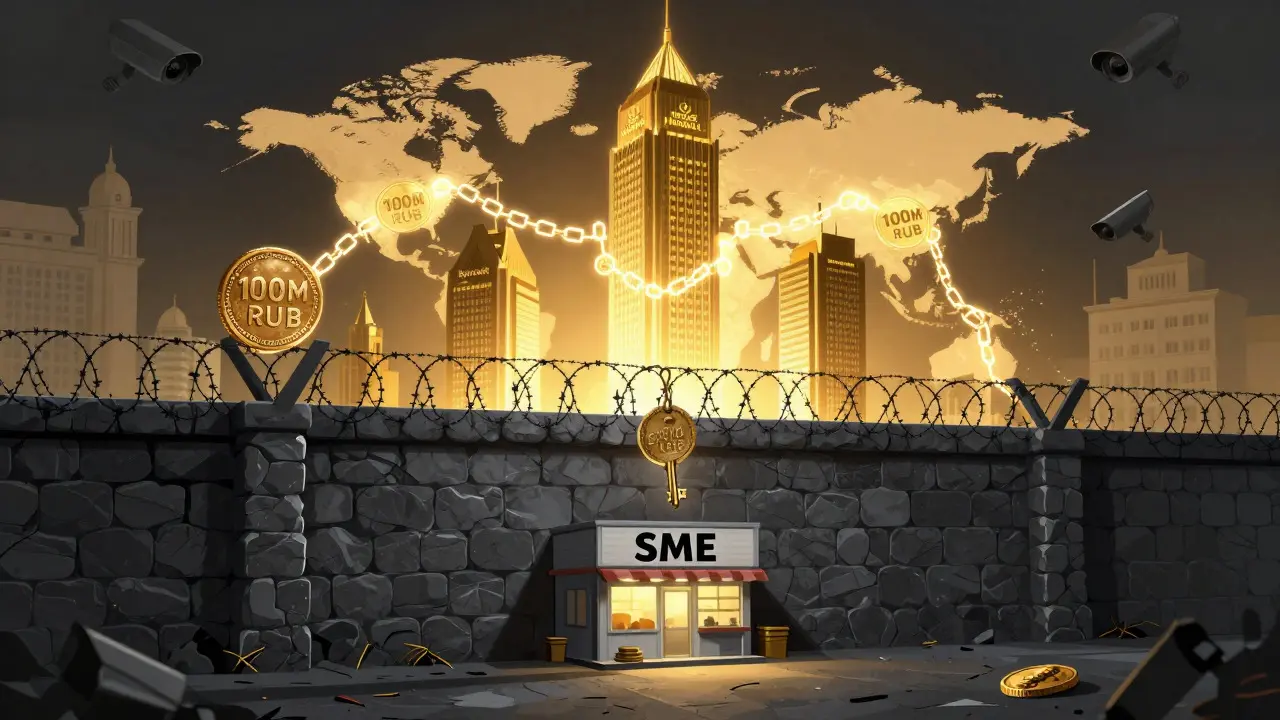
You might think that if you have a registered LLC, you can sign up for the ELR. Think again. The barriers to entry are intentionally high. As of late 2025, only 247 companies participated in the program. These are mostly large corporations in extractive industries like oil, gas, and metals. Companies like Rosneft and Norilsk Nickel have successfully used the system to settle exports.
To qualify, a business must register as a "qualified investor." This requires:
- Minimum capital of ₽100 million (approx. $1.24 million) in securities and deposits.
- Verified annual income of at least ₽50 million (approx. $620,000).
- Registration with Rosfinmonitoring as a virtual asset service provider.
These requirements exclude 99.8% of Russian businesses. A typical SME simply does not have the balance sheet to meet these criteria. According to a November 2025 report by the Russian Union of Industrialists and Entrepreneurs, 89% of surveyed SMEs stated they could not realistically meet the capital requirements. This has led critics to describe the system as "regulatory capture," benefiting only state-connected or massive private entities while leaving smaller players behind.
Technical Hurdles: How Payments Actually Work
For those few companies that do qualify, the process is far from plug-and-play. You cannot just download a wallet app and start receiving funds. The infrastructure is tightly controlled by the Central Bank.
First, transactions are limited to specific blockchain networks approved by the CBR. As of November 2025, only Bitcoin (BTC), Ethereum (ETH), and Ripple (XRP) are permitted. Second, businesses must integrate with licensed wallet providers. There are currently 17 approved entities, including Finversity and BitRiver. These providers implement mandatory Know Your Customer (KYC) protocols and dual-factor authentication.
Every transaction is monitored. The Central Bank uses a blockchain analytics system that processes over 1.2 million transactions daily. If a business receives a payment exceeding 600,000 rubles ($7,400), it must report the details to the Unified State Information System (ESIS) within five business days. Starting January 1, 2026, tax authorities will cross-reference these reports directly with banking data, making it nearly impossible to hide income.
| Feature | Domestic Transactions | International (ELR) |
|---|---|---|
| Legal Status | Prohibited as payment | Permitted for qualified investors |
| Allowed Coins | N/A | BTC, ETH, XRP only |
| Reporting Threshold | N/A | >600,000 RUB per transaction |
| Penalty for Violation | Fines, account freezing, criminal liability | Exclusion from ELR, heavy fines |

The Cost of Compliance
Even if you meet the financial qualifications, the cost of setting up a compliant crypto payment system is steep. Implementing the required technology involves a seven-stage process that can take up to 112 days on average. You need to install approved blockchain analytics software, which costs at least 1.2 million rubles ($14,800) annually. You also need to conduct quarterly compliance audits, costing around 350,000 rubles ($4,300) each.
Total setup costs range from 3.8 to 7.2 million rubles ($47,000-$89,000), depending on transaction volume. For a large exporter, this is a manageable expense compared to the benefit of getting paid. For a mid-sized trading firm, it’s a significant burden. Many companies report false positives in their blockchain analytics, requiring manual verification that adds 2-3 days to processing times. While the system has improved since early 2025, delays remain a common complaint.
What Does the Future Hold?
The regulatory environment in Russia is fluid. There are signs that the government may relax some restrictions in the coming years. In November 2025, the Ministry of Finance and the Central Bank discussed potentially abandoning the strict "superqual" investor classification in favor of a tiered system with lower thresholds. Deputy Finance Minister Ivan Chebeskov hinted that the initial concept was too rigid.
Additionally, there is talk of expanding the list of approved cryptocurrencies beyond the current trio. If the ELR proves successful in maintaining export revenues, analysts predict a 40% chance that domestic crypto payment permissions could expand by 2027. However, the Central Bank remains cautious. Deputy Governor Chistyukhin warned that any expansion must be slow to avoid threatening financial stability.
For now, the message is clear: if you are a small business owner in Russia, keep your crypto in your personal wallet and stick to rubles for sales. If you are a major exporter dealing with sanctioned partners, the ELR offers a lifeline, provided you can afford the compliance overhead. The gap between these two realities defines the current state of crypto in Russia.
Can I accept Bitcoin for my online store in Russia?
Generally, no. Unless your business qualifies for the Experimental Legal Regime (ELR) and is conducting international trade, accepting Bitcoin for domestic sales is illegal. Doing so can result in frozen bank accounts, fines, and potential criminal charges. The Bank of Russia prohibits crypto as a payment method for goods and services within the country.
Which cryptocurrencies are legal for business use in Russia?
Only three cryptocurrencies are currently approved for business transactions under the ELR: Bitcoin (BTC), Ethereum (ETH), and Ripple (XRP). All other altcoins are excluded from the official regulatory framework for commercial settlements as of late 2025.
How much does it cost to join the ELR?
The initial setup costs range from 3.8 to 7.2 million rubles ($47,000-$89,000). This includes licensing, integration with approved wallet providers, and implementation of mandatory blockchain analytics software. Annual maintenance costs include at least 1.2 million rubles for software and quarterly audits.
What happens if a small business accepts crypto illegally?
Small businesses face immediate risks including administrative fines of 50,000 to 300,000 rubles, freezing of bank accounts, and tax audits. In severe cases, particularly involving large volumes or suspected money laundering, criminal penalties may apply. Cases like TechnoPoint show that account freezes can last for weeks, disrupting operations.
Will the rules change in 2026?
While the core ban on domestic payments remains, 2026 brings stricter monitoring. Tax authorities will integrate data with financial institutions to track crypto flows more effectively. There is also ongoing discussion about lowering the capital requirements for the ELR, but no final decision has been made yet.