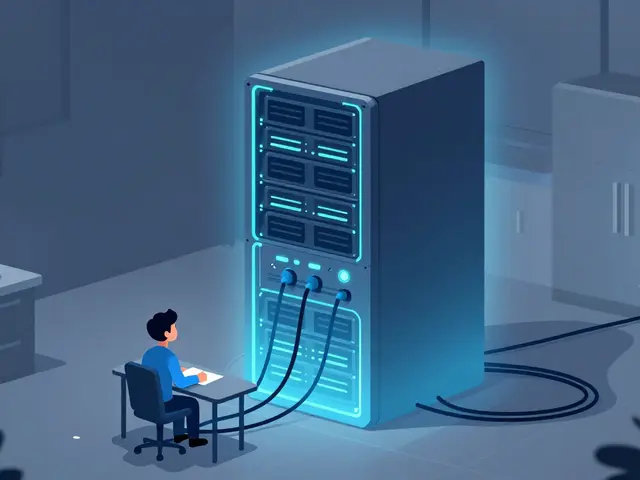

Ever wondered if you could prove a document existed at a specific second without paying a human notary to stamp a piece of paper? That is exactly what Silent Notary is a decentralized notarization service that uses blockchain technology to create immutable proof of digital events and documents. Also known as the UBSN token ecosystem, it aims to turn your smartphone into a legal evidence tool by removing the middleman and replacing them with an algorithm.
How Silent Notary Actually Works
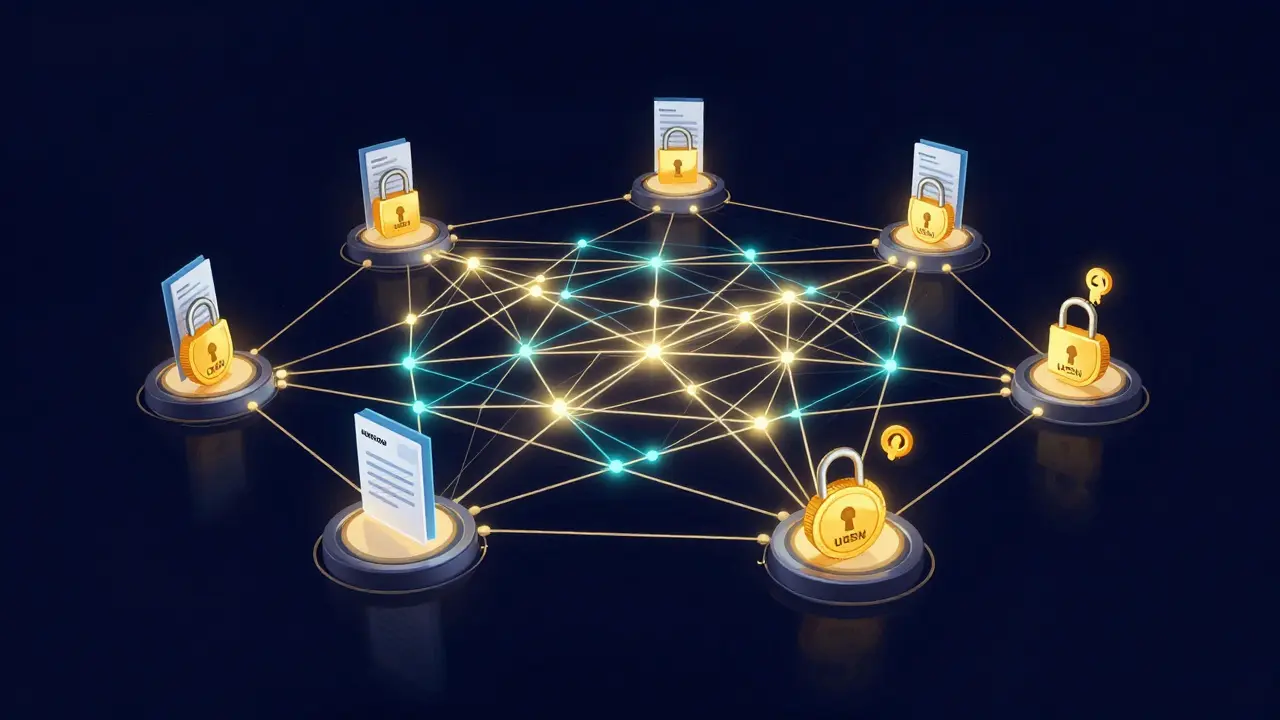
Traditional notarization relies on a trusted person verifying a signature. Silent Notary flips this on its head. It uses a distributed network of independent nodes to double-check and timestamp information. Think of it like the old days when people clipped newspaper articles to prove something happened on a certain date, but instead of paper, it uses a global digital ledger that cannot be edited or deleted.
The backbone of this system is the UBIX.Network is a specialized blockchain infrastructure utilizing a Directed Acyclic Graph (DAG) distributed registry system. Unlike a linear chain, a DAG allows for faster processing and more flexibility. Users can create their own registries within this network, which is a huge plus for businesses that need to store specific types of notarized transactions without mixing them with unrelated data.
Understanding the UBSN Token
The UBSN token is the native cryptocurrency that powers the Silent Notary ecosystem, facilitating transactions and providing the utility needed to access notarization services. If you want to use the platform to secure a document, the token acts as the fuel for that process.
From a technical standpoint, UBSN isn't just trapped on its own network. It has a smart contract address on the Ethereum network (0x86efc496dca70bcfd92d19194290e8457a375773), meaning you can hold it in common wallets like MetaMask. However, the tokenomics are a bit complex. Depending on which data source you trust, the maximum supply is cited around 190 billion tokens, though circulating numbers vary wildly between tracking platforms.
The Reality of UBSN Market Performance
If you are looking at UBSN crypto coin from an investment perspective, you will notice something strange: the price data is all over the place. For example, as of late 2025, CoinGecko might show one price while CoinStats shows another that is significantly lower. This usually happens when a coin has very low liquidity-meaning there aren't many people buying and selling it-so a few trades on a small exchange can swing the reported price drastically.
| Metric | CoinGecko Observation | CoinStats Observation | TradingView Trend |
|---|---|---|---|
| Approx. Price | ~$0.055 | ~$0.0000064 | High Volatility |
| Supply View | 190B Max Supply | ~159B Circulating | 186.46B Total |
| Market Sentiment | Outperforming Global | Low Liquidity | Bearish Indicators |
Most of the trading happens on smaller exchanges like Probit. Because it isn't listed on giants like Binance or Coinbase, it's a high-risk asset. You might see a 40% jump in a week, followed by a sharp drop. Technical indicators, such as the 14-day RSI (Relative Strength Index), often hover around 38, which suggests the coin is flirting with "oversold" territory, but the general mood among investors remains one of "Extreme Fear."
Practical Uses for Digital Notarization
So, who actually uses this? It's not just for lawyers. Anyone who needs a "digital receipt" of a moment in time can benefit. Imagine a freelance designer who wants to prove they finished a project by a deadline, or a company that needs to timestamp an internal memo to prevent future disputes. By using a smartphone app, they can create a record that is synchronized across multiple network nodes, making it nearly impossible to fake.
The system is designed for 100% protection against event falsification. By removing the need for a physical office visit and a human witness, the process becomes instant and available anywhere in the world. This shifts the trust from a person's reputation to the mathematical certainty of the Distributed Ledger Technology is a digital system for recording the transaction of assets in which the transactions are recorded in a decentralized way.
Risks and Red Flags to Consider
While the tech is interesting, there are clear warning signs. The first is the lack of a clear, public roadmap. Many projects in the crypto space thrive on transparency, but Silent Notary's official communication focuses more on how the service works rather than where the token is going. When you combine this with the massive price discrepancies across platforms, it's clear that the market for UBSN is fragmented.
Additionally, the 50-day and 200-day simple moving averages (SMA) often show the token underperforming compared to longer-term trends. For a regular person, this means the coin is currently in a downtrend. Unless the team can drive mass adoption of the notarization app, the token remains a speculative gamble rather than a stable investment.
Is Silent Notary (UBSN) a safe investment?
UBSN is considered a high-risk asset. It suffers from low liquidity, extreme price volatility, and significant data discrepancies across tracking platforms. Technical analysis often shows bearish signals, so extreme caution is advised.
How do I use the UBSN token?
The token is used to power the decentralized notarization services on the UBIX.Network. You can hold it in Ethereum-compatible wallets like MetaMask since it has an ERC-20 smart contract.
What makes Silent Notary different from a regular digital signature?
While a digital signature proves who signed a document, Silent Notary proves exactly when the document existed and that it hasn't been altered since, using a distributed network of nodes for verification rather than a single central authority.
Where can I trade UBSN?
Trading is limited compared to major coins. Most activity has been observed on smaller exchanges such as Probit. Always check for current listings as exchange availability can change.
What is the maximum supply of UBSN?
Reports vary, but some platforms list the maximum supply cap at 190 billion tokens, while others suggest a circulating supply closer to 160-186 billion tokens.
Next Steps for Users
If you are a developer or a business owner, the best way to evaluate Silent Notary is to test the actual notarization service. See if the DAG-based registry fits your specific needs for document timestamping. For those interested in the token, start by verifying the current price on multiple platforms to understand the volatility you are stepping into.
If you find that your wallet isn't recognizing the token, ensure you are using the correct Ethereum contract address and that your wallet is configured for the UBIX network if you are moving outside of the Ethereum ecosystem. Given the low liquidity, avoid placing large market orders that could cause massive slippage; limit orders are your best friend here.
Comments (6)

- vijendra pal
- April 10, 2026 AT 09:31 AM
Bro you missed the most imporant part!! 🚀 DAG is way faster then normal blockchain and its why UBSN is gonna moon soon!! Just need more people to use the app 📈🔥💎

- Sharhonda Walker
- April 10, 2026 AT 17:32 PM
Just a heads up for anyone tryin to trade this... always use limit orders. I've seen too many people get wrecked by slippge on Probit because there isnt enough volume. Its a total trap if you just hit market buy.

- Manisha Sharma
- April 11, 2026 AT 18:32 PM
Typical westerners tryng to explain basic blockchain lol. The DAG system is basically a manifestation of non-linear progression which is far too complex for the average mind to grasp. Its obvious that Indian devlopers would handle this tech better anyway. Most of you just follow the hype without understanding the ontollogy of the ledger. Truly pathetic that people still struggle with basic decentralized concepts in 2025. Just stay in your lanes and let the real intellectuals handle the crypto space while you chase your little 40% jumps. Its almost funny how desperate the global market is for a shred of real innovation while ignoreing the actual math behind the nodes.

- Sonya Bowen
- April 12, 2026 AT 16:05 PM
The shift from human trust to mathematical certainty is a profound transition. It redefines authenticity in the digital age.

- Taylor Meadows
- April 12, 2026 AT 17:17 PM
I can feel the desperation in these comments. You're all just chasing ghosts in a machine. This coin is a void that will swallow your money because you lack the spiritual discipline to see the red flags clearly. You think a DAG saves you? It's just another cage for your greed.

- Suzanne Robitaille
- April 13, 2026 AT 17:44 PM
Oh, the tragedy of such beautiful potential being marred by such chaotic market data! It's almost Shakespearean to see a tool for truth trapped in a sea of price discrepancies. I simply cannot wrap my head around how a project can be so technically promising yet so financially unstable. It's like a gorgeous painting left out in the rain. We must tread carefully, for the line between innovation and illusion is thinner than a digital signature!