

Imagine waking up one day to find that owning Bitcoin is as illegal as possessing contraband. For millions of Algerians, this isn't a hypothetical scenario-it's their current legal reality. While the rest of the world debates how to regulate digital assets, Algeria has taken a different path: total prohibition. But here’s the twist most people miss. The ban didn’t start with a bang in 2025; it began with a whisper in 2018. Understanding Algeria crypto ban requires looking back at the vague Financial Law of 2018, which set the stage for today’s harsh criminal penalties.
You might think a law from eight years ago is ancient history. In the fast-moving world of blockchain, it usually is. But in Algeria, the 2018 legislation was the seed that grew into a dense forest of restrictions. It prohibited buying, selling, and using virtual currencies but left out the details on enforcement. This ambiguity created a gray market where savvy users continued trading despite the technical ban. Fast forward to July 2025, and the government slammed the door shut with Law No. 25-10. This new statute doesn't just regulate crypto; it criminalizes almost every interaction with it, from mining to merely holding a wallet.
The 2018 Foundation: Ambiguity Breeds Uncertainty
When the Financial Law of 2018 passed, it was a blunt instrument. It declared cryptocurrencies illegal tender and banned their use in transactions. However, it lacked teeth. There were no clear fines, no specific prison sentences defined for individual users, and little guidance on how authorities would police the internet. This gap allowed a vibrant, albeit underground, crypto community to thrive. People used stablecoins to hedge against inflation and bypass strict capital controls, treating the 2018 ban as a suggestion rather than a rule.
This period wasn't about freedom; it was about survival. With high inflation eroding the value of the Algerian Dinar, digital assets offered an escape hatch. But because the law was so poorly defined, enforcement was sporadic. You could buy Bitcoin on a peer-to-peer platform without immediately worrying about the police knocking on your door. That changed dramatically. The 2018 law established the principle of illegality, but it failed to establish the machinery of punishment. That machinery arrived later, built on the foundation laid by those initial, ambiguous clauses.
Law No. 25-10: The Hammer Falls
In July 2025, the Algerian government enacted Law No. 25-10, published in the Official Journal. Local media called it a "thunderbolt," and for good reason. This law eliminated all remaining ambiguity. It explicitly prohibits the issuance, purchase, sale, possession, and use of virtual assets. It even bans advertising and content creation related to crypto. If you run a YouTube channel explaining blockchain basics, you are now technically operating in a legal minefield.
The scope of this prohibition is staggering. It targets active traders, passive holders, miners, and influencers. The law treats a person who buys $50 worth of Ethereum exactly like someone running a local exchange service. Both face criminal liability. This zero-tolerance approach signals that the state views digital assets not as a financial tool to be managed, but as a threat to national sovereignty that must be eradicated.
| Feature | 2018 Financial Law | 2025 Law No. 25-10 |
|---|---|---|
| Legal Status | Banned usage, but vague enforcement | Total criminal prohibition |
| Possession | Not explicitly penalized | Criminal offense |
| Penalties | Unclear / Administrative risks | Prison (2 months - 1 year) & Fines |
| Advertising | Restricted | Explicitly banned |
| Mining | Not specified | Prohibited activity |
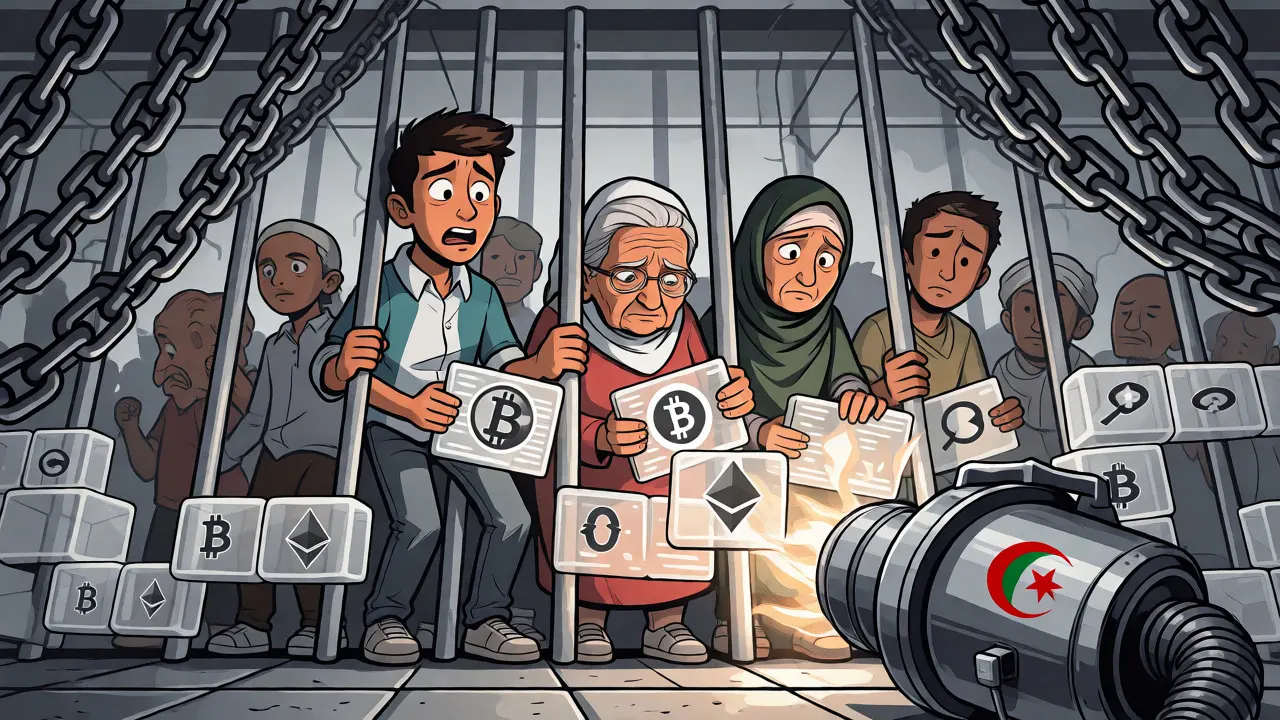
Who Is Actually Punished? The Penalty Structure
Let’s get concrete about the risks. Under the current regime, if you’re caught violating the law, you face prison time ranging from two months to one year. The fines are equally severe, spanning from 200,000 to 1,000,000 Algerian Dinars. At current exchange rates, that top fine translates to roughly $7,700 USD. For many Algerians, that’s a significant portion of annual income.
These penalties apply universally. Whether you are a tech-savvy developer creating a new token or a grandmother holding onto some Bitcoin she bought years ago, the law makes no distinction based on intent or volume. The inclusion of "possession" as a crime is particularly aggressive. It means simply having a private key stored on your phone can theoretically lead to prosecution. This contrasts sharply with jurisdictions like the UAE or Bahrain, which have embraced crypto with regulatory frameworks designed to integrate it into the mainstream economy.
Why So Harsh? Sovereignty and Security Concerns
Why would a country choose isolation over integration? The official justification centers on monetary sovereignty. The Algerian government insists that the Dinar must remain the sole legal tender. They argue that cryptocurrencies undermine this status by offering alternative stores of value and payment methods outside state control. Furthermore, the Bank of Algeria and other financial authorities cite concerns about money laundering and terrorist financing. By banning crypto entirely, they aim to close loopholes that allow capital flight and untraceable transactions.
Energy consumption also plays a role. Cryptocurrency mining requires massive amounts of electricity. Given Algeria’s subsidized energy sector, the government worries that decentralized mining operations strain infrastructure without contributing to the tax base. Additionally, global pressure from the Financial Action Task Force (FATF) regarding anti-money laundering standards likely influenced the decision to opt for a complete ban rather than complex regulation. For regulators, a ban is easier to enforce than a nuanced licensing system.
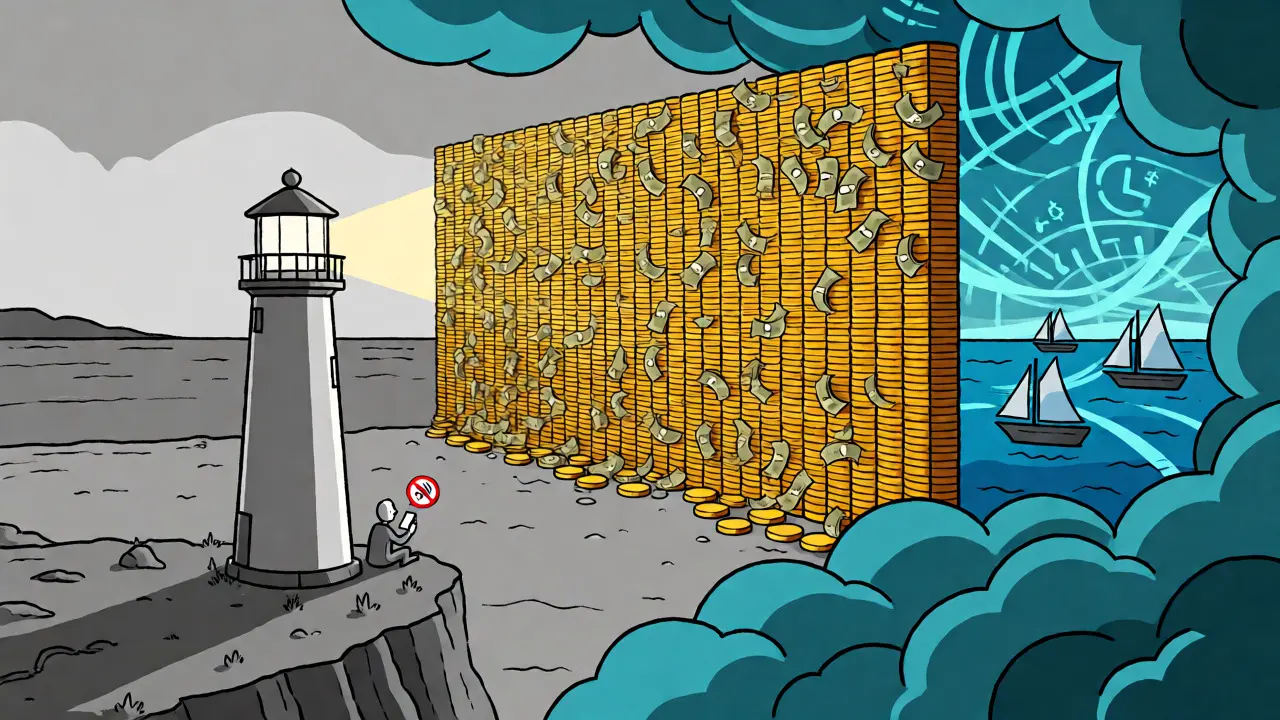
Enforcement: A Multi-Agency Net
How do they catch you? The enforcement mechanism involves several agencies working in tandem. The Bank of Algeria oversees the financial system, ensuring banks don’t facilitate crypto transactions. The Banking Commission monitors institutional compliance. Judicial authorities handle prosecutions, while security forces conduct digital and physical monitoring. This multi-agency approach creates a comprehensive surveillance network.
Unlike the 2018 era, where enforcement was patchy, the 2025 law provides clear legal grounds for action. Authorities can now seize assets, freeze accounts linked to crypto exchanges, and prosecute individuals with confidence. The coordination between these bodies suggests a serious commitment to rooting out digital asset usage, moving beyond mere legislative statements to active policing.
The Impact on Users and the Future Outlook
For the average Algerian, the impact is profound. Many relied on crypto to navigate strict capital controls and protect savings from inflation. Now, those avenues are closed. The dream of borderless finance has hit a solid wall. Educational content creators face uncertainty, as discussing investment strategies could fall under the ban on promotion. This chills innovation and keeps the population disconnected from global financial trends.
Looking ahead, maintaining this stance will be challenging. As neighbors like Morocco and Tunisia explore regulated frameworks, Algeria risks economic isolation. Cross-border trade and remittances may become more complicated if partners adopt digital settlement layers. While the law is rigid now, history shows that total prohibitions often drive markets underground rather than eliminating them. The question remains: Can Algeria sustain a black market for digital assets without stifling its own technological progress?
Is it still possible to use crypto in Algeria after the 2025 law?
No, the 2025 Law No. 25-10 strictly prohibits the use of cryptocurrencies as a means of payment or investment. Any transaction involving digital assets is considered illegal, carrying potential prison sentences and heavy fines.
What are the specific penalties for holding Bitcoin in Algeria?
Individuals convicted of crypto-related offenses, including simple possession, face prison sentences ranging from two months to one year. Fines range from 200,000 to 1,000,000 Algerian Dinars (approximately $1,540 to $7,700 USD).
Did the 2018 Financial Law already ban crypto?
Yes, the 2018 Financial Law introduced the first formal ban on purchasing, selling, and using virtual currencies. However, it lacked clear penalty structures and enforcement mechanisms, leading to widespread non-compliance until the stricter 2025 legislation.
Can I advertise my crypto business in Algeria?
No, the 2025 law explicitly prohibits the promotion or advertising of cryptocurrencies in any form. This includes social media posts, blog articles, and traditional media advertisements related to digital assets.
Which agencies enforce the crypto ban in Algeria?
Enforcement is coordinated by multiple agencies, including the Bank of Algeria, the Banking Commission, judicial authorities, and security services. These bodies monitor financial transactions, investigate violations, and prosecute offenders.