
Remember the early days of crypto airdrops? They were often chaotic, poorly documented, and felt like lottery tickets bought with your social media dignity. AdEx Network, a blockchain-based advertisement exchange founded in 2017, ran one such campaign that stands out for its clarity and community focus. If you are digging into the history of AdEx Network airdrops, specifically the major CoinMarketCap partnership, you are likely looking for more than just "did I win?" You want to know how it worked, what happened to those tokens, and where the project is heading now in late 2026.
This isn't just about nostalgia. Understanding past distributions helps you gauge how AdEx treats its community today, especially as they pivot toward AI-driven DeFi tools. Let's break down the specifics of the ADX airdrop, the mechanics behind it, and why this old event still matters for anyone holding or eyeing the ADX token.
The CoinMarketCap Partnership: What Actually Happened
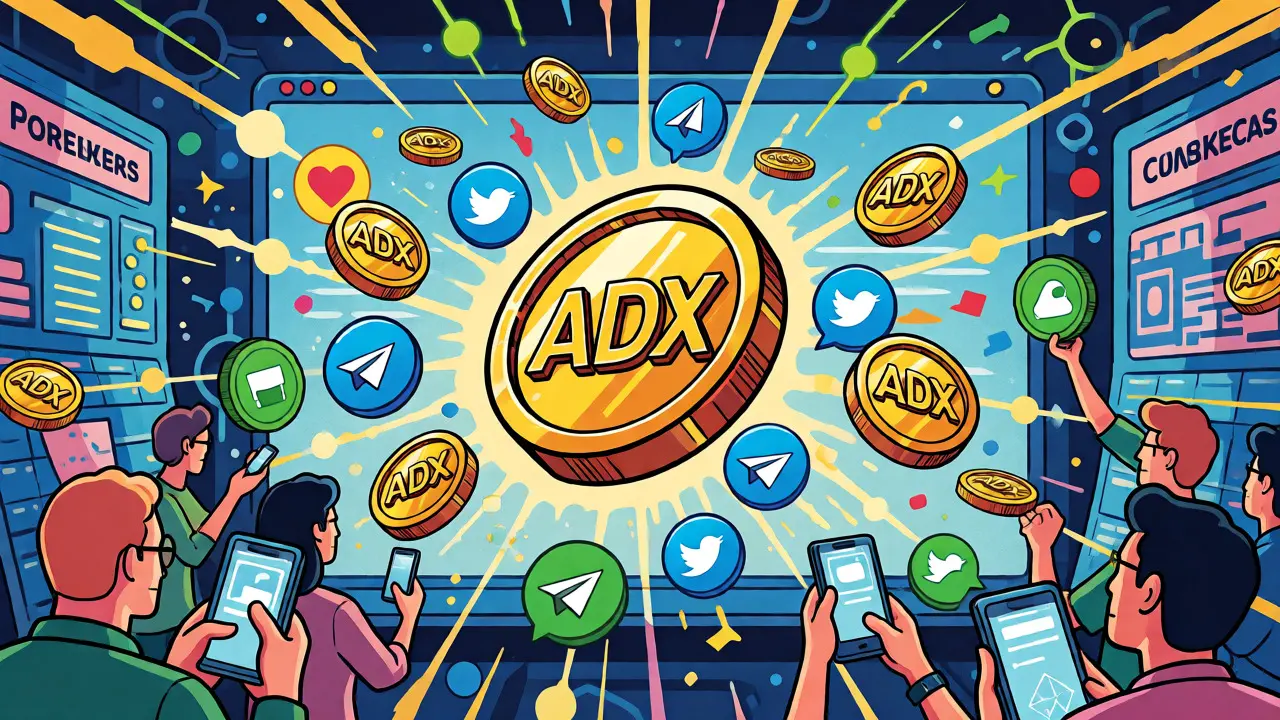
In mid-2021, AdEx Network teamed up with CoinMarketCap for a targeted airdrop campaign. This wasn't a random spray-and-pray situation. It was structured, limited, and required actual effort from participants. The goal? Distribute 30,000 ADX tokens to 300 lucky winners. That breaks down to 100 ADX per person if you hit the jackpot.
To qualify, you had to jump through a few specific hoops. These weren't arbitrary; they were designed to build a real community footprint:
- Join the Telegram chat: Participants needed to enter the official AdEx Network Telegram group.
- Follow on Twitter: Following both @adex_network and @AdexWallet was mandatory.
- Add to Watchlist: You had to add ADX to your personal watchlist on CoinMarketCap.
The campaign wrapped up quickly. Winners were announced on August 6, 2021, and the tokens landed in wallets by August 10. That’s a four-day turnaround from announcement to delivery. For context, many modern airdrops take months or even years to distribute. This speed signaled that AdEx wanted to reward engagement efficiently without leaving users hanging.
Why AdEx Ran an Airdrop Back Then
You might wonder why an established project like AdEx needed an airdrop in 2021. At that time, digital advertising was struggling with transparency issues. AdEx’s core mission was to fix this by creating a trustless marketplace where advertisers and publishers could interact directly. The ADX token served as the utility layer for these transactions.
The airdrop wasn't just free money. It was a marketing tool to onboard new users who understood the value proposition. By requiring social tasks, AdEx ensured recipients were genuinely interested in the platform. They weren't just dumping tokens; they were seeding their ecosystem with engaged stakeholders. This approach contrasts sharply with today's trend of farming airdrops through bot-like activity.
| Feature | AdEx CMC Airdrop (2021) | Typical Modern Airdrop (2025-2026) |
|---|---|---|
| Total Tokens Distributed | 30,000 ADX | Often millions or billions |
| Number of Winners | 300 | Tens of thousands to millions |
| Distribution Method | Random selection among qualified entrants | Points systems, tiered rewards, retroactive snapshots |
| Time to Claim | 4 days post-announcement | Weeks to months |
| Requirement Type | Social engagement (Twitter, Telegram) | On-chain activity, volume, staking |

Where Is AdEx Now? The Pivot to DeFAI
Fast forward to late 2026. AdEx Network has evolved far beyond simple ad exchanges. They’ve embraced the DeFAI (Decentralized Finance + Artificial Intelligence) narrative with their product, AURA. If you held onto your ADX from that 2021 airdrop, you’re now part of a much more complex ecosystem.
AURA acts as a personal AI agent for Web3 users. It doesn’t just track prices; it monitors your wallet, suggests strategies, and even hunts for airdrops. Yes, the platform that once gave away tokens now uses AI to help you find other projects’ airdrops. This meta-shift shows how AdEx has adapted to user needs. They realized that people don't just want ads; they want yield and opportunities.
The launch of AURA in 2025 included exclusive NFTs for early testers. These weren't just JPEGs; they unlocked premium features within the AI agent. This strategy mirrors the community-building aspect of the old airdrops but adds utility. Instead of just holding a token, you hold access to smarter financial tools.
How ADX Works Today: Staking and Visibility
One key change since the 2021 airdrop is how ADX is used within the AdEx ecosystem. Previously, it was primarily for paying publishers. Now, it plays a role in visibility and security within the AURA recommendation engine.
Projects can stake ADX to boost their visibility in AURA’s recommendations. But here’s the catch: it’s not pay-to-win in the traditional sense. The staking acts as a security guarantee. Low-quality or malicious projects can’t just throw money at the system to get seen. Their offerings must align with user interests, verified by the AI’s evaluation logic. This creates a meritocratic layer that protects users from spammy airdrop farms.
For holders, this means ADX has dual utility: governance and economic signaling. As AURA expands to support chains like BNB Smart Chain and Mantle, the demand for ADX for staking purposes could fluctuate based on ecosystem growth. Keep an eye on the hackathons and developer grants too. In late 2025, AdEx ran a month-long hackathon with $12,000 in prizes, showing they are actively investing in building on top of their infrastructure.

Should You Expect More ADX Airdrops?
If you are asking whether another massive ADX airdrop is coming soon, manage your expectations. The 2021 model of large-scale, social-task-based giveaways is becoming rare. Most token supplies are already circulating. With 144 million ADX tokens in circulation out of a 150 million total supply, there isn't much room for massive new emissions without diluting existing holders.
Instead of direct ADX airdrops, look for indirect benefits. Participating in the AURA ecosystem, testing new features, or contributing to developer SDKs might earn you rewards in the form of future governance rights or partner tokens. The focus has shifted from "free coins" to "earned access."
Also, keep an eye on partnerships. While the CoinMarketCap deal was huge, future collaborations might involve smaller, niche platforms. These could offer better odds for active community members rather than the general public. Check the official AdEx channels regularly, as they tend to announce these opportunities via Telegram first.
Practical Takeaways for Current Holders
If you missed the 2021 airdrop, don't sweat it. The landscape has changed. Here’s how to position yourself in the current AdEx ecosystem:
- Engage with AURA: Use the demo version. Connect your wallet and see how the AI interprets your portfolio. Feedback loops here often lead to early rewards.
- Monitor Staking Opportunities: If you hold significant ADX, consider if staking for visibility makes sense for any projects you are involved with.
- Watch for Developer Events: Hackathons and bounties are the new airdrops. Building or testing tools for AdEx often yields better long-term returns than passive holding.
- Verify Sources: Scams love airdrops. Always check the official AdEx website or verified Twitter handles before connecting your wallet to any "claim" portal.
The story of AdEx is one of adaptation. From fixing ad fraud to powering AI agents, the project has stayed relevant by listening to its community. The 2021 airdrop was a snapshot of that commitment to engagement. Today, that same spirit lives on in their DeFAI initiatives.
Did everyone who applied for the 2021 AdEx airdrop receive tokens?
No. Only 300 winners were selected from all eligible participants who completed the required social tasks. Each winner received 100 ADX tokens. The selection was random among qualified entries.
Is there a current live airdrop for AdEx Network in 2026?
As of late 2026, there is no major open airdrop campaign similar to the 2021 CoinMarketCap partnership. However, users engaging with the AURA product and participating in developer events may earn rewards or early access privileges.
What is the total supply of ADX tokens?
The total supply of ADX tokens is capped at 150 million units. Approximately 144 million are already in circulation, meaning most of the supply has been distributed to the market.
Can I claim the old 2021 AdEx airdrop now?
Generally, no. The distribution window closed in August 2021. Unclaimed tokens from that period were likely returned to the treasury or redistributed according to the terms set at the time. Always check the official AdEx support channels for any exceptional cases.
How does AURA relate to AdEx airdrops?
AURA is an AI-powered tool developed by AdEx that helps users find and optimize for various crypto airdrops across different blockchains. While it doesn't necessarily give away ADX itself, it helps users maximize their eligibility for other projects' airdrops, integrating AdEx's tech into the broader airdrop economy.

Categories
Popular Articles