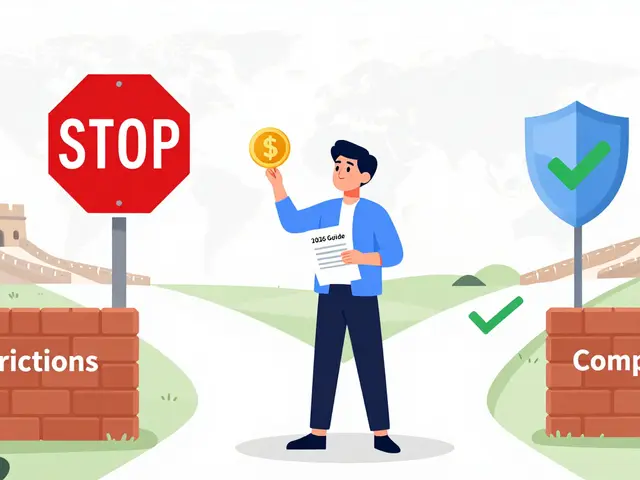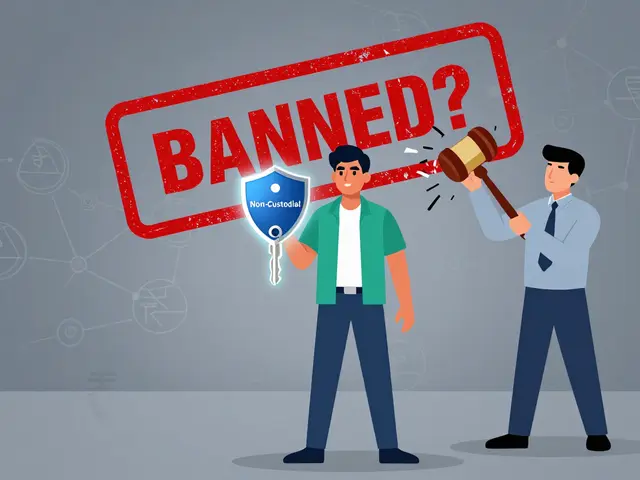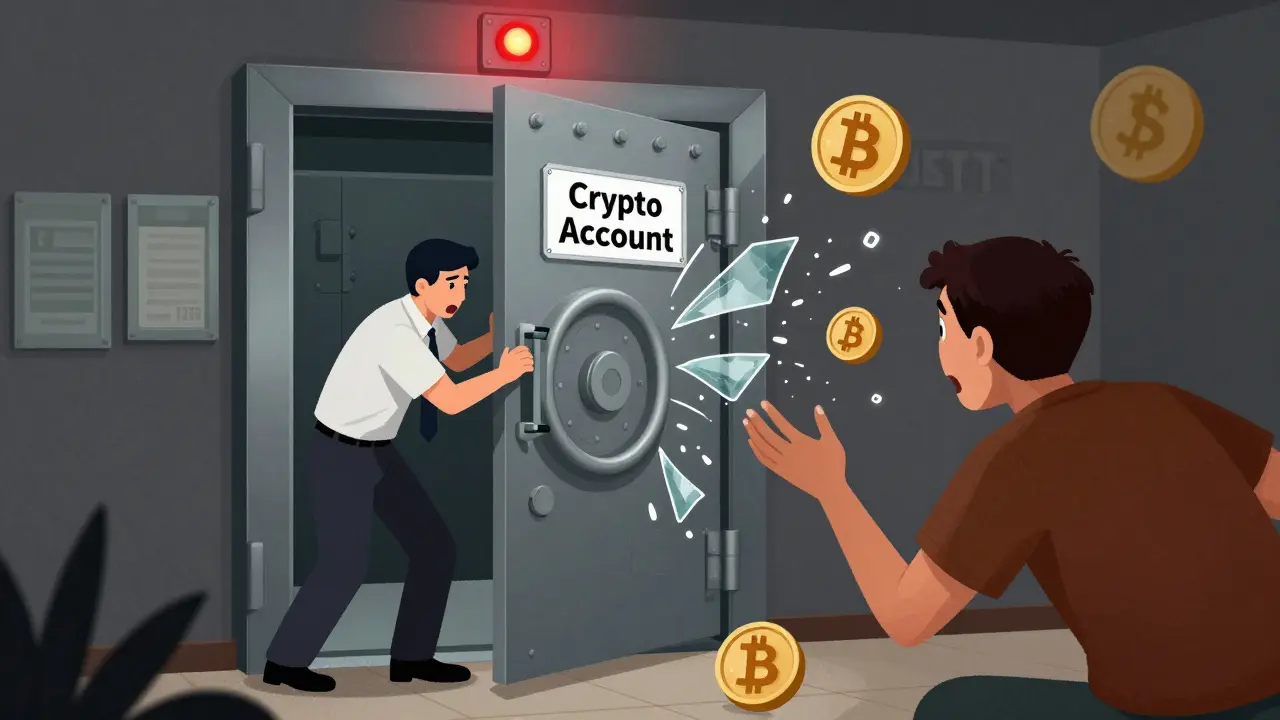

If you’re holding or trading cryptocurrency in Myanmar, your bank account could vanish overnight - no warning, no appeal, no second chance. This isn’t a threat from a sci-fi movie. It’s real policy, enforced since 2024 by the Central Bank of Myanmar (CBM). The message is clear: crypto is illegal, and using it comes with serious consequences.
Why Myanmar Banned Crypto Completely
Myanmar’s government doesn’t just discourage cryptocurrency - it treats it like a criminal act. Under the Central Bank of Myanmar Law, only the CBM has the right to issue currency. That means anything else, including Bitcoin, Ethereum, or even Tether (USDT), is considered an illegal form of money. This isn’t about controlling technology. It’s about controlling money flow. After the 2021 military takeover, the country’s economy collapsed. The kyat lost more than half its value. People lost access to their savings. Banks froze accounts. With no reliable way to send money abroad or protect their wealth, many turned to crypto. But instead of adapting, the CBM doubled down. They saw crypto as a threat to their control over the financial system - and they moved fast to shut it down.Account Closure Is the First Strike
The CBM doesn’t start with jail time. They start with your bank account. If you’re caught sending or receiving crypto - even once - your account gets closed. No notice. No hearing. Just locked. And it’s not just your main account. If you have multiple accounts at the same bank, they’ll shut them all. Some people have reported losing access to their salary accounts, savings, and even business accounts tied to their personal ID. This isn’t theoretical. In May 2024, the CBM issued a public notice specifically naming cryptocurrency transactions as grounds for immediate account closure. They didn’t say "maybe" or "possibly." They said they would do it. And they’ve followed through. People have lost access to their life savings because they bought USDT on a peer-to-peer app to pay for medical care abroad.It Gets Worse: Fines and Jail Time
Account closure is just the beginning. Under Myanmar’s Anti-Money Laundering Law and Financial Institutions Law, crypto-related activities can lead to criminal charges. That means fines - sometimes tens of thousands of dollars - or prison. The exact sentence depends on the case, but reports from inside the country show people have been jailed for months just for facilitating crypto trades between friends. The CBM has targeted specific coins: Bitcoin (BTC), Ethereum (ETH), Litecoin (LTC), and especially USDT. Why USDT? Because it’s stable. It doesn’t swing in value like Bitcoin. That makes it perfect for sending money across borders without the kyat crashing. But that’s exactly why the government hates it. USDT is the backbone of Myanmar’s underground economy.How They Catch You
You might think you’re safe if you use a VPN or trade on Telegram. You’re not. The CBM works with banks and telecom providers to track suspicious activity. If you transfer money from your bank account to a crypto seller on Facebook Marketplace, that transaction leaves a digital trail. Banks flag transfers to known crypto wallets. Telecom companies report unusual messaging patterns on Telegram. Even if you use cash to buy crypto from someone in person, if that person gets caught, your name could come up in their phone records or bank logs. The CBM also monitors public posts. People who advertise crypto trading on social media - even just saying "I buy USDT" - have been tracked down. One case in Mandalay in late 2024 led to the arrest of three people who ran a small crypto exchange from their home. They were charged under the Financial Institutions Law and sentenced to two years in prison.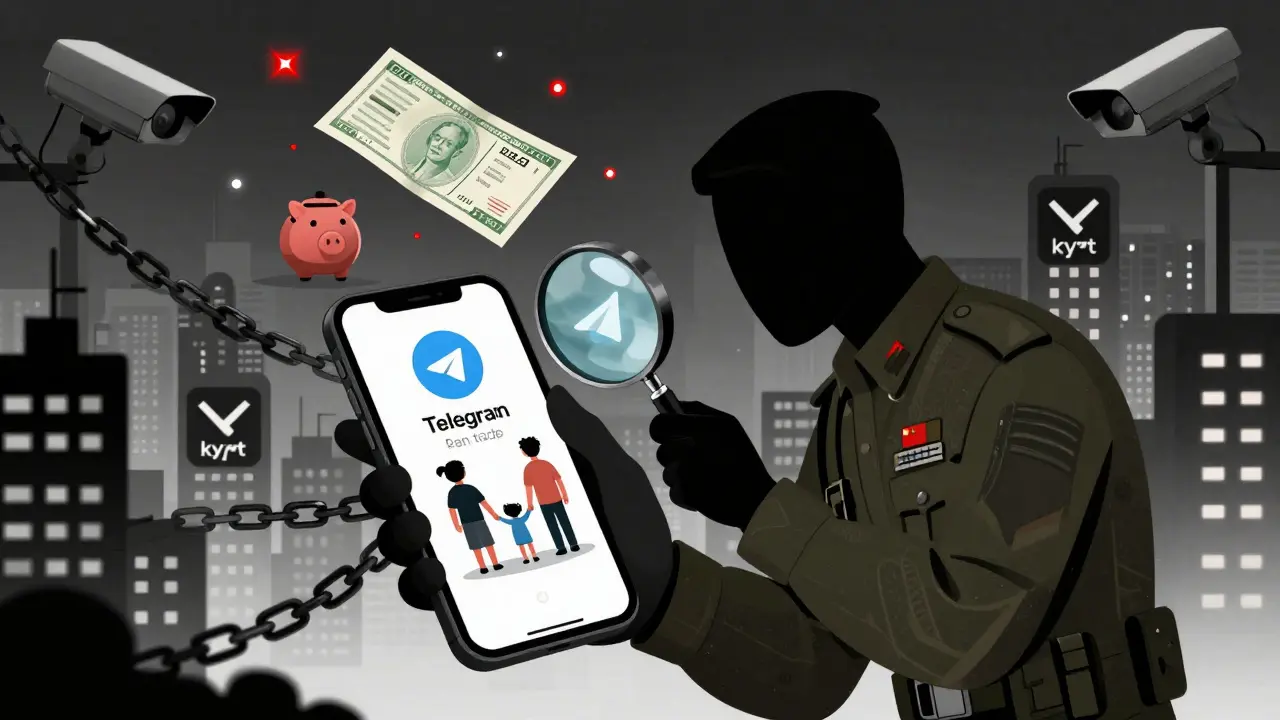
What About the Opposition’s Legal Tender Move?
In 2021, the National Unity Government (NUG), which controls parts of rural Myanmar, declared USDT legal tender in the areas they govern. This was a direct challenge to the military junta’s control over money. For people living under NUG rule, using crypto is a form of resistance. But here’s the catch: the CBM doesn’t recognize the NUG. So if you’re in a region controlled by the junta - which covers most of the country - using USDT is still illegal, no matter what the NUG says. This creates a dangerous gray zone. Someone might buy USDT in a rebel-held area, then travel to Yangon to pay rent. If their bank account is checked, they could be flagged for illegal currency conversion. There’s no safe way to move crypto across these lines.The Rise of the Underground Crypto Economy
Despite the risks, crypto hasn’t disappeared. It’s gone deeper. Peer-to-peer trading on Telegram has exploded. Traders use encrypted groups, fake names, and cash meetups to avoid detection. Some use offshore exchanges like Binance or OKX, but even those aren’t safe. If you link your Myanmar bank account to an offshore wallet, the CBM can still trace the money flow. Crypto mining has also gone underground. Farmers in Shan State have turned barns into mining farms, running rigs on diesel generators to avoid power grid detection. But these operations are risky. One mine in Taunggyi was raided in 2025. The owner got five years in prison. His equipment was destroyed. His family lost their home when the bank seized their assets.What’s Next? The Digital Kyat
While crypto is banned, the CBM is quietly building its own digital currency - the digital kyat. In June 2025, they formed a special committee to develop it. This isn’t blockchain. It’s not decentralized. It’s a government-controlled digital version of the kyat, with full tracking and surveillance built in. This tells you everything you need to know: the government doesn’t want you to have financial freedom. They want you to have their version of financial control. The digital kyat will let them monitor every transaction, freeze accounts remotely, and cut off access to anyone they label a threat.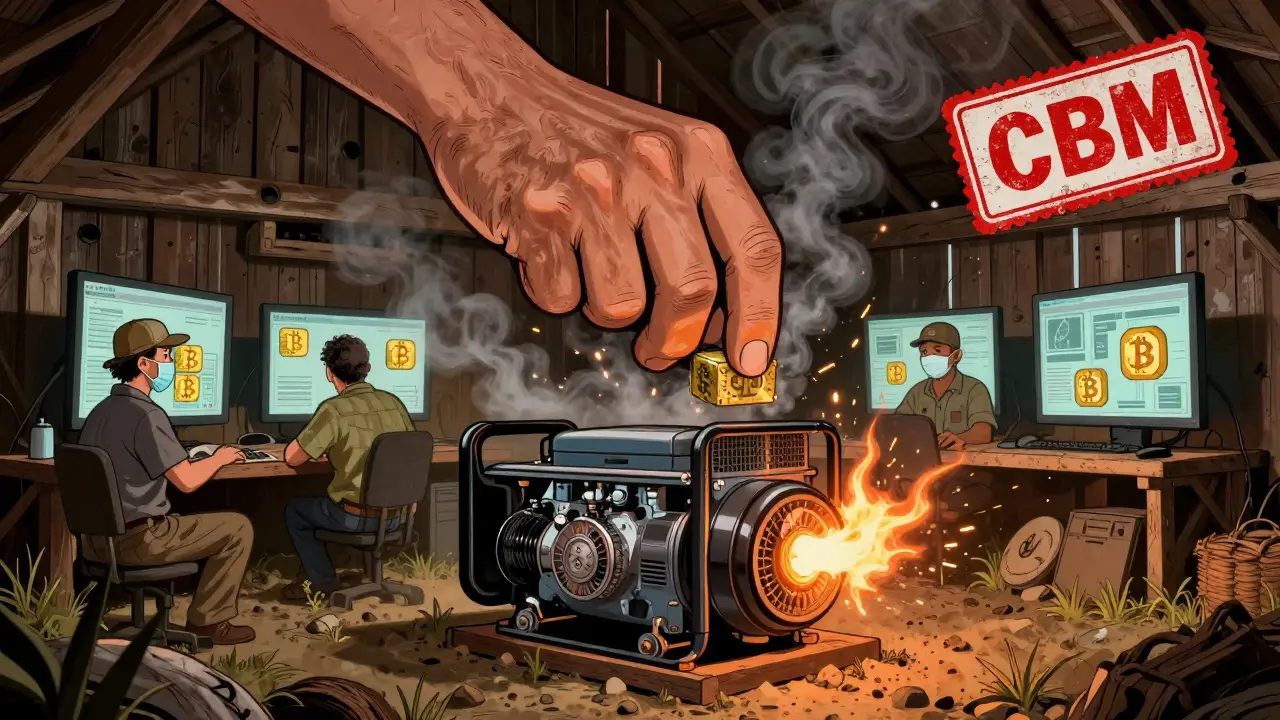
Who’s Most at Risk?
You’re not safe if you:- Use crypto to send money to family overseas
- Buy USDT to protect savings from kyat inflation
- Trade crypto on Facebook, Telegram, or WhatsApp
- Work for a crypto exchange - even as a customer support rep
- Accept crypto as payment for goods or services
What Should You Do?
If you’re in Myanmar and holding crypto, your options are limited - and risky.- Do not move crypto to a bank account. That’s a direct trigger.
- Do not advertise or promote crypto anywhere online.
- Do not use your real name or phone number on crypto platforms.
- Do not assume your VPN or encrypted app makes you invisible.
Why This Matters Beyond Myanmar
Myanmar’s crackdown is one of the most extreme examples of crypto prohibition in the world. But it’s not unique. Countries like China, Nigeria, and Egypt have also cracked down hard. What’s happening in Myanmar shows how authoritarian regimes use financial control as a tool of power. Crypto isn’t just about money - it’s about freedom. And governments that fear losing control will do anything to stop it. For now, the message in Myanmar is simple: if you touch crypto, you risk everything - your money, your freedom, your future.Is it illegal to own cryptocurrency in Myanmar?
Yes. While owning crypto isn’t explicitly mentioned in the law, the Central Bank of Myanmar treats any holding, trading, or transferring of digital currencies as illegal financial activity. Simply possessing crypto - even if you never traded it - can trigger account closure if authorities find evidence of past transactions.
Can I use USDT to send money to family outside Myanmar?
No. Sending USDT abroad is considered illegal currency conversion under Myanmar’s Foreign Exchange Management Law. Even if you’re sending money to a relative for medical care or education, the CBM will treat it as a violation. Bank accounts linked to such transactions have been closed, and individuals have faced criminal charges.
What happens if my bank account is closed for crypto activity?
Your account will be frozen immediately, with no appeal process. You’ll lose access to all funds in that account. If you have multiple accounts at the same bank, they’ll likely be closed too. You may also be reported to law enforcement for further investigation. Reopening the account is nearly impossible.
Has anyone gone to jail for crypto in Myanmar?
Yes. Multiple cases have been documented since 2024. In 2025, a man in Yangon was sentenced to 18 months in prison for operating a small crypto exchange through Facebook. Others have received two- to five-year sentences for mining or facilitating trades. Charges are typically filed under the Anti-Money Laundering Law or Financial Institutions Law.
Can I open a new bank account after mine was closed for crypto?
It’s extremely difficult. Banks in Myanmar share customer data through a central system. Once flagged for crypto activity, your name is added to a watchlist. Most banks will refuse to open an account for you, even years later. Some people have tried using fake IDs or relatives’ names, but this carries its own legal risks.
Is the digital kyat the same as cryptocurrency?
No. The digital kyat is a government-controlled digital currency, not a decentralized cryptocurrency. Unlike Bitcoin or USDT, it will be fully traceable, centrally managed by the CBM, and subject to government restrictions. It’s designed to replace cash and crypto - not to offer financial freedom.
Are crypto miners still active in Myanmar?
Yes, but underground. Some miners operate in remote areas using diesel generators and hidden rigs. These operations are risky - raids have happened, and arrests have followed. Many miners have moved to Thailand or Laos, where regulations are less strict. The risk of prison or asset seizure makes mining in Myanmar extremely dangerous.
Can I use crypto to pay for goods or services in Myanmar?
No. Accepting crypto as payment for any good or service is considered illegal under Myanmar’s Financial Institutions Law. Even if the transaction is small or between friends, it can trigger bank account closure and legal action. The CBM has explicitly warned against all forms of crypto-based commerce.
What if I bought crypto before the ban?
If you bought crypto before the 2024 enforcement crackdown and never traded or transferred it since, you may not be targeted immediately. But if authorities discover your holdings - through bank records, phone data, or social media - you can still be penalized. Holding crypto is not safe, even if you’re not actively using it.
Is there any way to legally use cryptocurrency in Myanmar?
No. There is no legal pathway to use, trade, or hold cryptocurrency in Myanmar under the current regime. All forms of crypto activity are banned under multiple laws, and the CBM has shown zero tolerance. The only exception is the state’s own digital kyat, which is not a cryptocurrency and will be strictly controlled.
Comments (8)

- Rachel Stone
- January 29, 2026 AT 17:54 PM
so the government wants to control your money but won't even let you use something that doesn't need them to approve every dollar you move? classic.

- Richard Kemp
- January 30, 2026 AT 02:22 AM
i read this and just thought about my grandma who lost her savings when the bank froze her account last year. she never even touched crypto. just happened to have the same name as someone who did. sad.

- Gurpreet Singh
- January 31, 2026 AT 22:10 PM
this is why so many from my village in Punjab are moving to Thailand now. at least there you can send money home without risking jail. the fear here is real, and it's not just about money-it's about survival.

- Pamela Mainama
- February 2, 2026 AT 06:11 AM
it's terrifying how fast people can lose everything for trying to protect what little they have.

- laurence watson
- February 2, 2026 AT 17:54 PM
i keep thinking about the people who use crypto just to pay for their kid's medicine overseas. they're not criminals. they're parents trying to do the right thing in a broken system. and now they're being treated like traffickers. that's not justice, that's cruelty wrapped in policy.

- Elizabeth Jones
- February 4, 2026 AT 10:06 AM
the irony is thick enough to spread on toast. the state bans decentralized money because it threatens control, then builds its own centralized digital currency that can track, freeze, and punish every transaction. the only difference between crypto and the digital kyat? one lets you opt out. the other makes you a subject. we're not fighting over technology-we're fighting over autonomy.

- Edward Drawde
- February 5, 2026 AT 10:31 AM
lol so if i buy usdt to save my cash from collapsing i go to jail? cool cool. guess i'll just keep my money under the mattress like a 19th century peasant. at least then the cops can't trace my pillow.

- Nickole Fennell
- February 6, 2026 AT 00:49 AM
I JUST READ THIS AND MY HEART STOPPED. MY COUSIN IN YANGON GOT HER ACCOUNT CLOSED LAST MONTH. SHE WAS SENDING MONEY TO HER SISTER IN CANADA FOR CANCER TREATMENT. THEY TOOK EVERYTHING. NO WARNING. NO CHANCE TO EXPLAIN. SHE'S STILL SLEEPING ON HER FRIEND'S FLOOR. THIS ISN'T GOVERNANCE. THIS IS TERRORISM WITH A BANK STATEMENT.