
Bitcoin is the king of digital assets, but for years, it sat on a throne that didn't quite fit in the modern decentralized finance (DeFi) world. You could hold Bitcoin, but you couldn't easily lend it, borrow against it, or use it as collateral on Ethereum without jumping through massive technical hoops. Enter Wrapped Bitcoin (WBTC), an ERC-20 token on the Ethereum blockchain that maintains a strict 1:1 peg with Bitcoin's value. Think of WBTC as Bitcoin's passport to the Ethereum ecosystem. It allows you to keep your exposure to Bitcoin's price action while unlocking access to thousands of financial applications that only work on Ethereum.
Launched in January 2019 by Kyber Network, Ren Protocol, and BitGo, WBTC was built to solve a specific problem: interoperability. Bitcoin and Ethereum speak different languages and run on incompatible protocols. WBTC bridges this gap. As of late 2024, it represented roughly 72% of all wrapped Bitcoin solutions, with a market cap hovering around $5.2 billion. But if you're thinking about using it, you need to understand not just what it is, but how it works, who holds your coins, and why the landscape shifted dramatically in August 2024.
How WBTC Actually Works
The magic of WBTC lies in its custodial model. When you want to turn regular Bitcoin into WBTC, you aren't just swapping tokens on an exchange. You are depositing real Bitcoin into a secure vault, and in return, a smart contract mints an equivalent amount of WBTC on Ethereum. This process involves three key players:
- Merchants: These are the front-end interfaces like CoinList or RenBridge. They handle user interaction and mandatory KYC/AML checks.
- Custodians: These entities hold the actual Bitcoin in cold storage. Originally, BitGo was the sole custodian. Since August 2024, the model shifted to include BiT Global to enhance decentralization.
- Users: You, holding the WBTC in your Ethereum wallet, ready to deploy it in DeFi protocols.
When you redeem WBTC back to Bitcoin, the reverse happens. You burn the WBTC tokens, the merchant verifies the transaction, and the custodian releases the original Bitcoin to your address. Every single WBTC token is supposed to be fully backed by Bitcoin held in custody. You can even verify this yourself via proof-of-reserves dashboards on wbtc.network. It’s transparent, at least in theory.
Why Use WBTC Instead of Regular Bitcoin?
If you’re happy holding Bitcoin in a hardware wallet, you might wonder why bother wrapping it. The answer is utility. Bitcoin’s blockchain is slow and limited in smart contract capability. Ethereum’s blockchain is fast and programmable. By converting BTC to WBTC, you gain access to the entire DeFi suite on Ethereum.
For example, on platforms like Aave or Compound, you can supply WBTC as collateral to borrow stablecoins like USDC or DAI. This lets you get cash flow from your Bitcoin holdings without selling them. If Bitcoin goes up, you still own the asset; if you need liquidity, you have it. Another common use case is yield farming. Protocols like Uniswap allow you to provide liquidity using WBTC pairs, earning trading fees in return. According to recent data, about 41% of retail users utilize WBTC specifically for yield farming, while 33% use it for liquidity provision.
| Feature | Bitcoin (BTC) | Wrapped Bitcoin (WBTC) |
|---|---|---|
| Blockchain | Bitcoin Network | Ethereum Network (ERC-20) |
| Transaction Speed | ~10 minutes per block | ~15 seconds per block |
| Smart Contracts | Limited (Script-based) | Full Turing-complete support |
| DeFi Compatibility | Low (requires bridges) | High (native integration) |
| Custody Risk | Self-custody possible | Relies on centralized custodians |
The Custodian Controversy: What Changed in 2024?
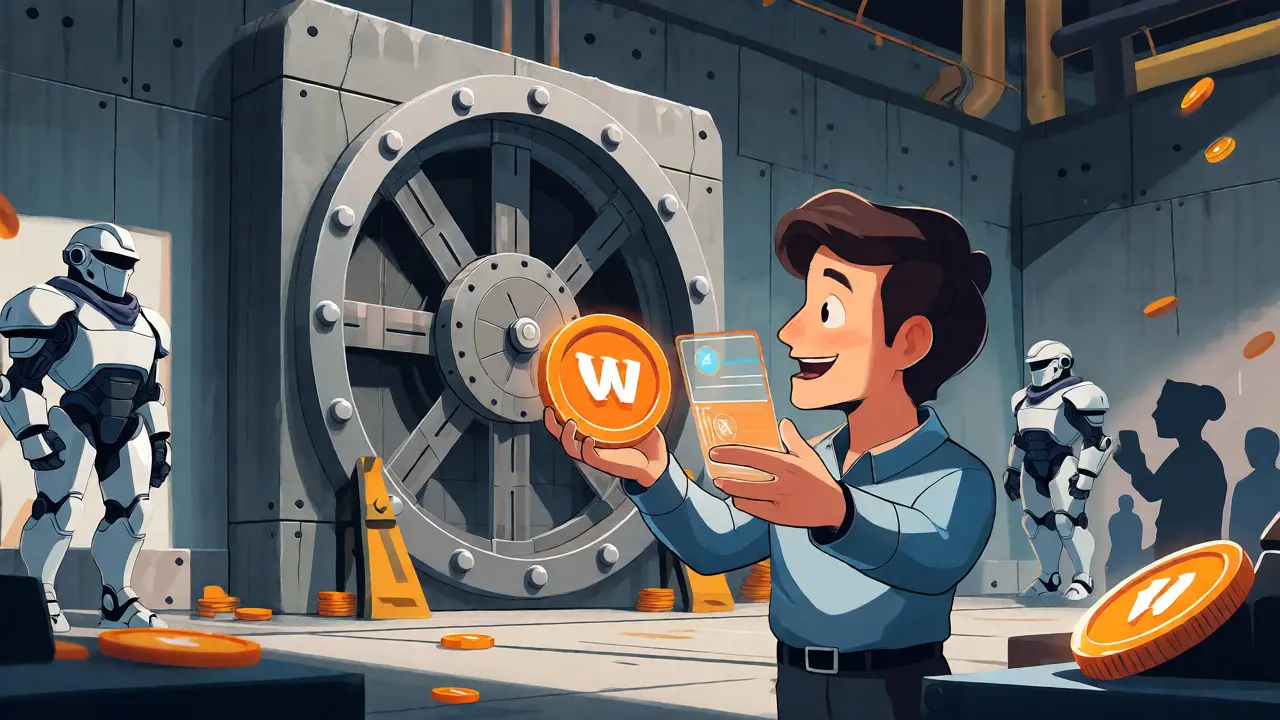
You cannot talk about WBTC today without addressing the elephant in the room: the custodian change. For years, BitGo served as the primary custodian, holding the Bitcoin backing WBTC. In August 2024, the WBTC DAO announced a transition to a shared custody model involving BiT Global. This wasn't just a minor update; it triggered a significant community backlash.
Why the outrage? Because WBTC’s value proposition relies heavily on trust. Users trust that the Bitcoin exists and that the custodian won't lose it. Moving from BitGo-a well-known, regulated entity-to BiT Global raised questions about transparency and security. Diogo Monica, President of Anchorage Digital, criticized the move in October 2024, stating that replacing BitGo without sufficient community consultation undermined trust assumptions. The market reacted swiftly, with WBTC’s market capitalization dropping temporarily by 12.7%. While the dust has settled, this event highlighted the centralization risk inherent in WBTC’s design.
Alternatives to WBTC: Who Else Wraps Bitcoin?
WBTC isn't the only player anymore. The controversy opened the door for competitors. Two major alternatives have emerged:
- cbBTC (Coinbase Wrapped Bitcoin): Backed by Coinbase, cbBTC gained rapid traction, capturing about 18% of the market share by November 2024. It appeals to users who prefer the institutional credibility of Coinbase over the DAO structure of WBTC.
- tBTC (Threshold Network): This solution takes a different approach. Instead of a centralized custodian, tBTC uses multi-party computation (MPC). No single entity holds the keys. It’s more decentralized but currently has fewer integrations than WBTC.
So, which one should you choose? If you prioritize maximum liquidity and broad compatibility across 150+ DeFi apps, WBTC is still the leader. If you distrust centralized custodians and want a truly decentralized solution, tBTC is worth investigating. If you already use Coinbase and want seamless integration with their ecosystem, cbBTC is a strong contender.

How to Buy and Use WBTC
Getting started with WBTC is straightforward if you’re familiar with Ethereum wallets like MetaMask. Here’s the typical workflow:
- Acquire Bitcoin: Buy BTC on an exchange like Coinbase or Binance.
- Choose a Merchant: Go to a platform like CoinList or RenBridge. Note that most require KYC verification, which takes about 27 minutes on average.
- Deposit BTC: Send your Bitcoin to the merchant’s designated address.
- Mint WBTC: Once confirmed, the merchant triggers the minting process. You’ll receive WBTC in your Ethereum wallet. This usually takes under an hour.
- Deploy in DeFi: Connect your wallet to Aave, Uniswap, or Compound and start lending, borrowing, or providing liquidity.
Be aware of gas fees. Since WBTC lives on Ethereum, every transaction costs ETH. During network congestion, fees can spike. A common mistake is underestimating these costs. Use tools like Etherscan’s Gas Tracker to time your transactions during off-peak hours (typically 2:00-6:00 UTC) to save money.
Risks and Limitations
WBTC is powerful, but it’s not risk-free. The biggest risk is counterparty risk. Unlike native Bitcoin, where you control your private keys, WBTC relies on custodians. If the custodian fails, gets hacked, or faces regulatory issues, your WBTC could lose its peg. The September 2024 SEC enforcement action against a WBTC merchant for unregistered securities offerings also signals growing regulatory scrutiny. If regulators classify wrapped tokens as securities, it could impact 78% of current use cases.
Additionally, there’s the risk of de-pegging. While rare, if demand for WBTC drops sharply or if confidence in the custodian wanes, the price might deviate from Bitcoin’s price. Always monitor the peg before making large moves.
Is WBTC safe to hold long-term?
WBTC is generally considered safe for short-to-medium term DeFi activities due to its high liquidity and established history. However, for long-term holding, many investors prefer native Bitcoin in self-custody because WBTC introduces custodial risk. If you plan to hold for years without interacting with DeFi, native BTC is safer. If you need yield or liquidity, WBTC is acceptable provided you monitor custodian health.
Can I convert WBTC back to Bitcoin instantly?
Not instantly. The redemption process requires burning WBTC on Ethereum and waiting for the custodian to release Bitcoin on the Bitcoin network. This typically takes between 30 minutes to several hours, depending on Bitcoin network congestion and the merchant’s processing speed. Recent updates aim to reduce this via Lightning Network integration, but it’s not instantaneous yet.
Does WBTC pay dividends or interest?
No, WBTC itself does not pay interest. It is simply a representation of Bitcoin. However, when you deposit WBTC into DeFi protocols like Aave or Compound, those protocols may pay you interest for lending out your WBTC. The yield comes from borrowers paying interest, not from the WBTC token itself.
What happens if the custodian goes bankrupt?
If the custodian holding the Bitcoin backing WBTC goes bankrupt, WBTC holders become creditors. In theory, they have a claim on the Bitcoin reserves. However, legal proceedings could take months or years, and there’s no guarantee of full recovery. This is the primary argument against centralized wrappers like WBTC compared to decentralized alternatives like tBTC.
Which wallets support WBTC?
Since WBTC is an ERC-20 token, it is compatible with any wallet that supports Ethereum and ERC-20 tokens. This includes MetaMask, Trust Wallet, Ledger, Trezor, and Coinbase Wallet. Ensure you are sending WBTC to an Ethereum address, not a Bitcoin address, to avoid losing funds.
Comments (1)

- Alvin Sunderland
- September 19, 2026 AT 13:11 PM
Oh, here we go again with the 'interoperability' fairy tale!! The narrative is always so neat, so tidy, but do you really think BitGo and BiT Global are independent entities?? I smell a rat... a big, fat, centralized rat!!
The fact that they swapped custodians without a proper on-chain audit trail screams cover-up. Why did the market drop 12.7%? Because people woke up!!! They realized that WBTC is just an IOU from a bank in disguise, wrapped in blockchain jargon to fool the masses into thinking it's decentralized. It’s not! It never was! And now, with the SEC sniffing around like sharks after blood, this whole $5 billion house of cards could collapse overnight. You’re not holding Bitcoin; you’re holding a promise from a corporation that can freeze your assets at any moment. Wake up sheeple!!!