
You’ve probably seen the buzz around UFORIKA and its native token, FORA. It promises a story-driven 3D metaverse where you can own assets, stake for rewards, and explore a virtual universe. But before you buy in, there’s a big catch: the project is shrouded in mystery. Who built it? When does the game actually launch? And why do major exchanges like Binance refuse to list it?
This article cuts through the marketing fluff to give you a clear, evidence-based look at what UFORIKA actually is. We’ll cover the technology, the confusing tokenomics, the security audit findings, and the serious risks you need to know about as of late 2026.
The Core Concept: More Than Just a Coin
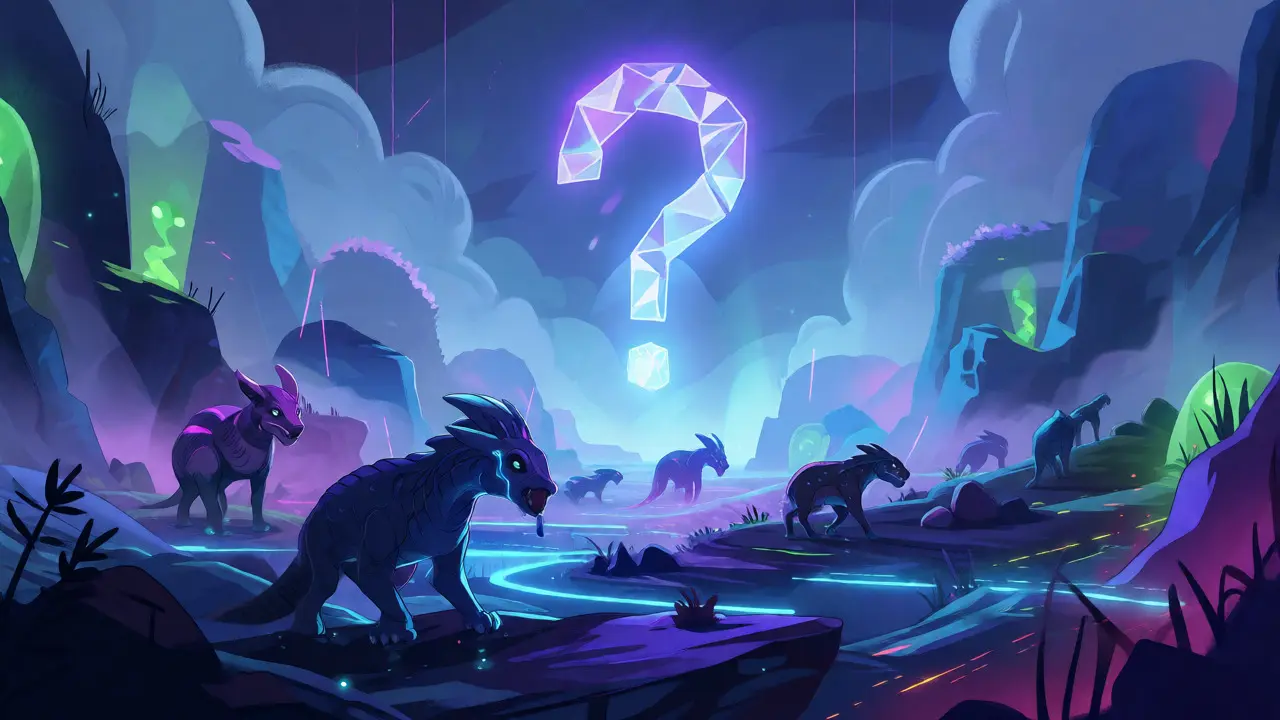
UFORIKA isn’t trying to be the next Bitcoin or Ethereum. It’s positioned as a Web3 gaming ecosystem on the Polygon network. The idea is to build a massively multiplayer online (MMO) experience with virtual reality elements. Players are meant to interact with genetically engineered creatures called "Kholtaks" and participate in an open-world narrative.
The FORA token serves as the fuel for this engine. According to the official documentation, holding FORA allows you to:
- Buy and sell digital assets and virtual real estate.
- Participate in governance decisions.
- Earn passive rewards through staking.
- Access exclusive in-game experiences.
However, a critical distinction needs to be made here. While the vision is ambitious, the current state of UFORIKA is largely theoretical. As of October 2026, there is no widely available, fully functional game that has generated significant organic user traffic. Most of the value proposition rests on future delivery rather than present utility.
Tokenomics: The Numbers Behind FORA
If you’re looking for clear financial data, UFORIKA presents a challenge. The token is an ERC-20 standard asset deployed on Polygon, with a contract address of 0x081c280cD5C1c934DbAfc97A2aB2e596FfE7DFC4. Always verify this address character-for-character on PolygonScan before sending any funds.
The maximum supply is capped at 7 billion FORA tokens. This is a massive number, which often signals high inflationary pressure unless carefully managed by burn mechanisms. Here is where things get murky: different data aggregators report wildly different circulating supplies.
| Data Source | Reported Circulating Supply | Status |
|---|---|---|
| CoinMarketCap | ~738 million | Self-reported by project |
| Gate.io | ~883 million | Exchange listing data |
| Blockworks | ~620 million | Third-party aggregator |
| Bitget | 0 | Inconsistent reporting |
These discrepancies aren't just typos; they suggest a lack of transparent on-chain verification for distribution events. Without a clear breakdown of how many tokens are held by the team, advisors, or locked in treasuries, it’s hard to gauge true market depth. The project’s website mentions three staking pools but fails to name them or specify their lock-up periods. They advertise "up to 100% APY," but without knowing the pool mechanics, this figure should be treated as a promotional maximum, not a guaranteed return.
Security and Audit Findings
One of the few solid pieces of independent evidence for UFORIKA is a security audit conducted by Omniscia. This firm reviewed the Fora.sol and Lockup.sol smart contracts.
The audit wasn’t perfect. Omniscia identified several issues, including inefficiencies and missing best practices. More importantly, they flagged a significant centralization concern in the Lockup contract. The auditor noted that the design was "wholly centralized," meaning a single entity had control over key functions. While the team remediated most code issues, they stated that some centralization was intentional.
A crucial detail for investors: the final audit revealed an owner-only burn function. This allows the token owner to burn tokens from their own balance. While this doesn’t let them arbitrarily burn *your* tokens, it gives the team a powerful lever to manipulate supply dynamics unilaterally. You don’t have to trust the team’s word on this; you can inspect the ownership status directly on PolygonScan.
Market Status and Liquidity Risks
Here is the harsh reality for FORA holders in 2026: liquidity is thin. Major tier-1 exchanges like Binance and Crypto.com do not list FORA for trading. If you check their sites, you’ll see a price of $0 or "not tradable."
Instead, FORA trades primarily on smaller platforms like Gate.io. The 24-hour volume often hovers around $1,000 to $12,000 depending on the day and source. This low volume creates two major problems:
- Slippage: Buying or selling even a moderate amount can significantly move the price against you.
- Exit Difficulty: If you want to cash out quickly, you might not find enough buyers at your desired price.
Because of these factors, FORA is classified as a micro-cap, high-risk asset. It lacks the stability and depth of established cryptocurrencies. Price history reflects this volatility, with an all-time high reported around $0.015 and lows dipping below $0.00006. These swings are typical for speculative tokens with little fundamental backing.
Who Is Behind UFORIKA?
Transparency is a cornerstone of trust in crypto. Unfortunately, UFORIKA scores poorly here. There is no publicly verified founder or named development company leading the project. Some sources describe it as a UK-based startup, but specific creator names remain undisclosed.
This anonymity raises red flags. In the crypto space, anonymous teams are common, but they usually pair that anonymity with strong technical deliverables or active community engagement. UFORIKA currently offers neither. There is no public GitHub repository clearly linked to the project (the similarly named "Ufora" repo belongs to an unrelated Python data science project). There are no verified user counts, audited treasury balances, or dated development roadmaps available in public records.

Practical Steps Before Investing
If you still believe in the vision of a Kholtak-filled metaverse, proceed with extreme caution. Do not rely solely on the official website’s claims. Follow this checklist:
- Verify the Contract: Copy the contract address (
0x081c280cD5C1c934DbAfc97A2aB2e596FfE7DFC4) into PolygonScan. Check the holder concentration. If one wallet holds 50% of the supply, that’s a risk. - Check Liquidity Pools: Use a DEX explorer to see if there is actual liquidity behind the FORA/USDT pair. Low liquidity means high slippage.
- Test Staking: Before committing large sums to staking, try a small deposit. Verify that rewards are actually payable and that withdrawal terms match the advertised conditions.
- Monitor Development: Keep an eye on social channels for proof of work. Are developers pushing code updates? Is the game demo progressing?
Final Verdict: Speculative Bet or Dead End?
UFORIKA (FORA) is a classic example of "promise over product." It combines popular narratives-metaverse, VR, play-to-earn-but lacks the foundational transparency and market traction to justify a conservative investment stance. The existence of a smart contract and a security audit provides some legitimacy, but the centralized control, opaque tokenomics, and lack of major exchange support keep it firmly in the speculative category.
Long-term viability depends entirely on the team delivering a playable, engaging game that attracts non-crypto users. Until then, FORA remains a high-risk asset suitable only for those willing to lose their entire capital.
Is UFORIKA (FORA) listed on Binance?
No, as of October 2026, UFORIKA (FORA) is not listed on Binance. Major exchanges like Binance and Crypto.com display the token as having zero price or being untradable. Trading primarily occurs on smaller exchanges like Gate.io.
What is the total supply of FORA tokens?
The maximum supply of FORA is set at 7 billion tokens. However, the circulating supply is inconsistent across data providers, ranging from approximately 380 million to 880 million depending on the source. On-chain verification is recommended.
Is the FORA smart contract safe?
The contract underwent an audit by Omniscia, which found no critical vulnerabilities but highlighted centralization concerns in the Lockup contract. The team retained owner privileges, including the ability to burn tokens from their own balance. Users should review the audit report for details.
Can I stake FORA for 100% APY?
The project advertises "up to 100% APY," but this is a promotional maximum. Specific staking pools, lock-up durations, and reward schedules are not clearly defined on the official site. Actual returns may vary significantly, and terms should be verified before depositing.
Who founded UFORIKA?
There is no publicly verified founder or named leadership team for UFORIKA. Sources describe it as a UK-based startup, but specific creators remain undisclosed, which limits accountability and transparency.