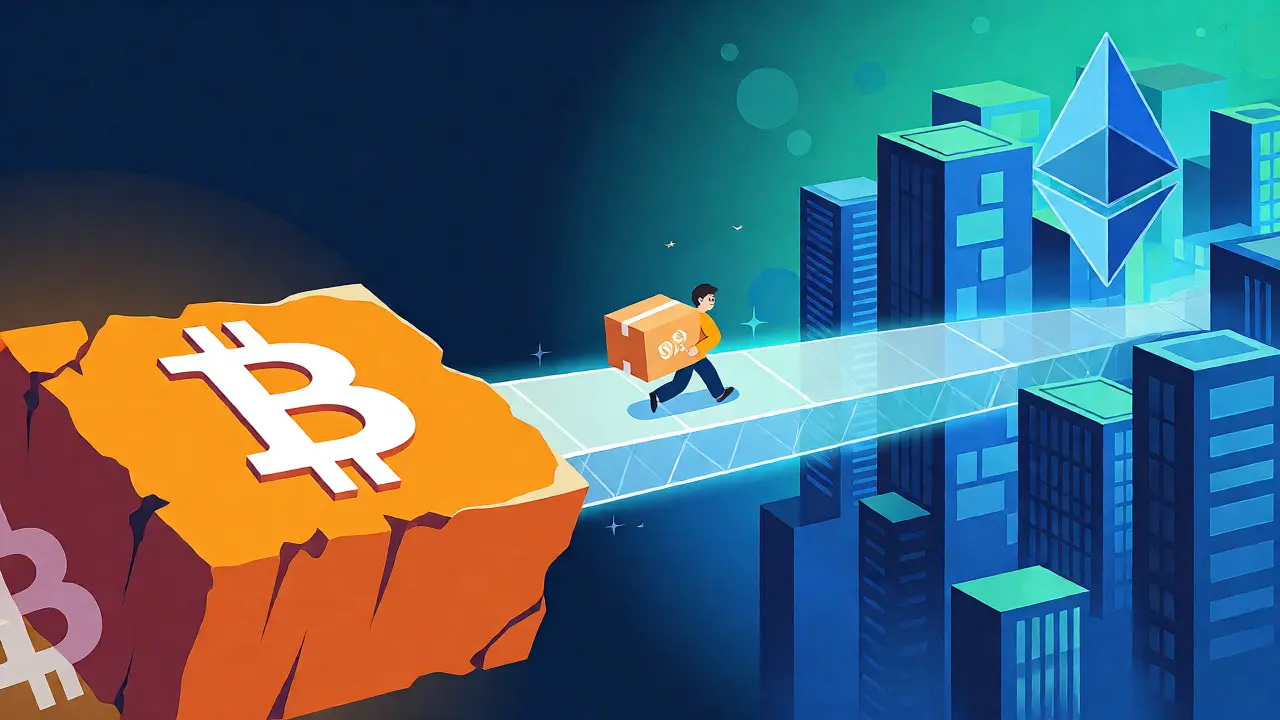

Imagine trying to trade a token minted on Bitcoin using the same smooth interface you use for Ethereum-based coins. That friction has been a major headache for crypto users since the BRC-20 standard emerged in early 2023. Enter BRC-20 DEX, a project attempting to solve this by building a decentralized exchange specifically for these assets. Its native token, BD20, acts as the fuel for this ecosystem, powering transactions, governance, and crucially, a bridge that moves value between Bitcoin and EVM networks like Ethereum and Binance Smart Chain.
If you are wondering whether BD20 is just another speculative meme coin or a serious infrastructure play, you need to look past the price charts. The core value here isn't just trading; it's interoperability. This article breaks down exactly what BD20 is, how its multi-chain architecture works, and why its current market status requires a cautious eye.
The Core Concept: Bridging Bitcoin and DeFi
At its heart, BRC-20 DEX is a decentralized exchange built to support the BRC-20 token standard on Bitcoin while offering liquidity on smart-contract-enabled chains. Unlike traditional exchanges that simply list tokens, this platform focuses on the unique limitations of Bitcoin. BRC-20 tokens are inscribed directly onto the Bitcoin blockchain, meaning they don't have native smart contract capabilities like ERC-20 tokens on Ethereum. This makes them hard to trade in complex DeFi environments.
BD20 solves this by acting as a utility token across multiple networks. It allows users to lock BRC-20 assets on Bitcoin and mirror them on Ethereum or Binance Smart Chain (BNB Chain). This process, known as bridging, lets holders access deeper liquidity pools and yield farming opportunities that exist on EVM-compatible networks. Without this bridge, BRC-20 tokens would remain siloed on Bitcoin, with limited trading options compared to their Ethereum counterparts.
How BD20 Works Across Chains
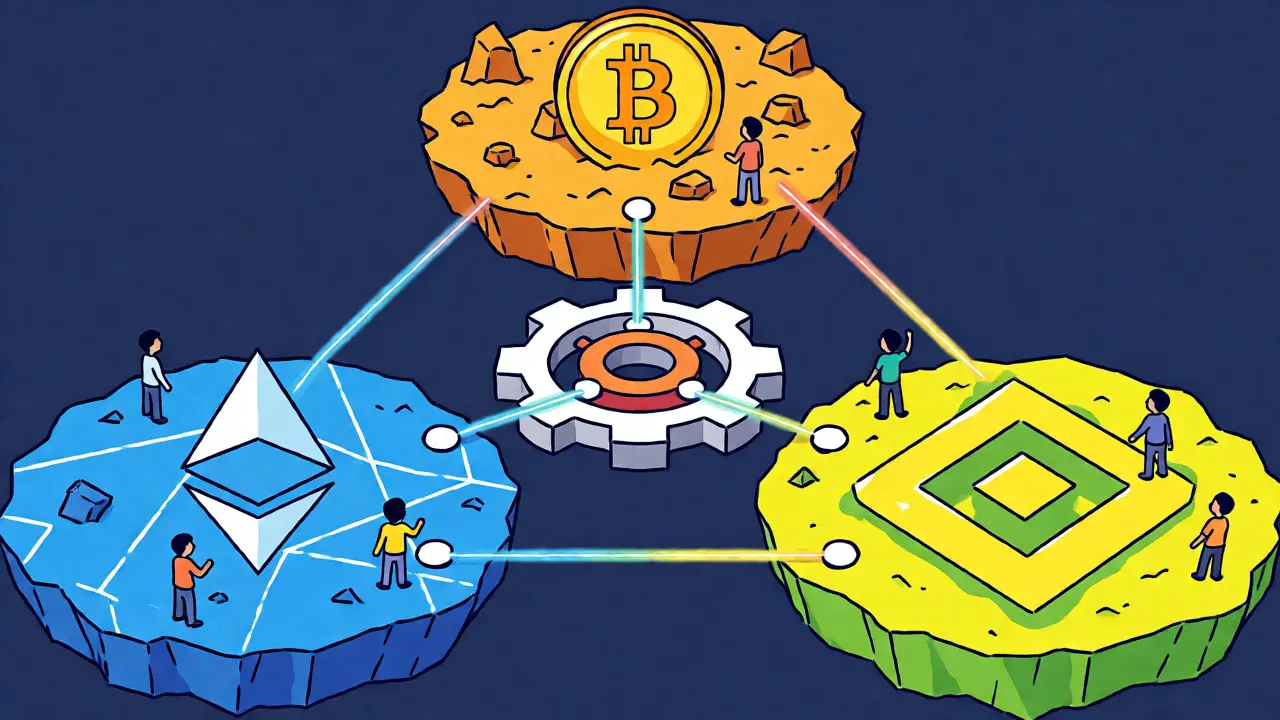
The technical setup of BD20 is more complex than a single-chain token because it exists simultaneously on three different blockchains. Understanding where your tokens live matters because the user experience changes depending on which network you are using.
- Bitcoin Network: Here, BD20 exists as a BRC-20 inscription. You hold it in wallets like UniSat or Xverse. This is the "native" home of the token within the BRC-20 ecosystem.
- Ethereum Network: The ERC-20 version of BD20 was deployed in January 2024. It allows interaction with Ethereum-based DeFi protocols. Users can manage these holdings via MetaMask or Phantom.
- Binance Smart Chain (BNB Chain): BD20 is also available as a BEP-20 token. Trading happens primarily on PancakeSwap, providing fast and cheap swaps for retail traders.
This multi-chain presence means BD20 inherits the security of Bitcoin but the functionality of Ethereum and BNB Chain. However, it also introduces complexity. Moving tokens between these chains requires using the BRC-20 DEX Bridge, a mechanism that locks assets on one side and mints wrapped versions on the other. If you are new to cross-chain bridges, remember that they are often targets for hacks, so verifying the official bridge address is critical.
Tokenomics: Supply, Utility, and Governance
BD20 follows a fixed supply model common among many DeFi tokens. The total maximum supply is capped at 1,000,000,000 (1 billion) tokens. There is no inflationary emission schedule mentioned in the primary data, suggesting all tokens were either pre-mined or issued during the initial launch phases in 2024.
What do you actually do with BD20 besides holding it?
- Transaction Fees: Like most DEX tokens, paying fees in BD20 grants discounts. This incentivizes long-term holding rather than immediate selling.
- Governance: Holders can vote on platform upgrades, fee structures, and new listing proposals. While the voting power distribution details aren't fully public, the token serves as the voice of the community.
- Incentives: Early participants and liquidity providers may receive BD20 rewards, though specific emission rates vary by pool and timeframe.
It is worth noting that detailed breakdowns of team allocations versus community funds are scarce in public reports. This opacity is typical for newer projects but remains a risk factor for investors who prefer transparent vesting schedules.
Market Reality: Liquidity and Exchange Listings
Here is where things get tricky. While BD20 is tracked on major aggregators like CoinGecko and CoinMarketCap, its actual tradability is limited. As of late 2025 and into 2026, top-tier centralized exchanges like Binance and Coinbase list BD20 as "Not Listed" for direct spot trading. You cannot simply buy it with a credit card on these platforms.
Instead, liquidity is concentrated on mid-tier exchanges and decentralized venues:
| Exchange Type | Platform | Pair | Liquidity Status |
|---|---|---|---|
| Centralized (CEX) | Gate.io | BD20/USDT | High (~60-80% of volume) |
| Centralized (CEX) | Bilaxy | BD20/BNB | Moderate (~20-30% of volume) |
| Decentralized (DEX) | PancakeSwap | BD20/WBNB | Low (<10% of volume) |
Price discrepancies between these platforms can be significant. Because liquidity is thin, large trades can cause slippage. For example, price trackers have shown BD20 ranging from $0.000026 to $0.000081 depending on the source and time. This volatility isn't just market sentiment; it reflects fragmented liquidity. Always check the order book depth before executing large orders.
Risks and Considerations Before Investing
Is BD20 a safe bet? Not necessarily. It falls into the category of micro-cap altcoins, which carry inherent risks. First, there is the issue of inconsistent data. Some aggregators report a market cap of zero because circulating supply data hasn't been properly integrated into their APIs. Others show a tiny market cap under $2,000. This lack of clarity makes valuation difficult.
Second, there are no widely publicized independent security audits for the BRC-20 DEX smart contracts. In DeFi, an audit is a basic requirement for trust. Without one, users rely on the reputation of the development team and the stability of the underlying chains (Ethereum, BNB Chain).
Finally, adoption is niche. The BRC-20 ecosystem itself is still maturing. While it grew rapidly in 2023-2024, its long-term dominance over Ethereum's established L2 solutions is unproven. BD20 succeeds only if BRC-20 tokens maintain relevance as a distinct asset class on Bitcoin.
How to Buy and Store BD20
If you decide to add BD20 to your portfolio, the path isn't as simple as clicking "Buy." Since it's not on Binance or Coinbase, you'll likely need to use Gate.io or Bilaxy.
- Step 1: Create an account on Gate.io or Bilaxy and deposit USDT or BNB.
- Step 2: Navigate to the BD20/USDT or BD20/BNB trading pair.
- Step 3: Execute a limit order rather than a market order to avoid high slippage due to low volume.
- Step 4: Withdraw to a self-custody wallet if you plan to interact with the bridge. Use Phantom or MetaMask for the ERC-20/BEP-20 versions, or a Bitcoin Ordinals wallet for the native BRC-20 version.
Storing the token correctly depends on which chain you intend to use. Holding ERC-20 BD20 on an exchange exposes you to counterparty risk, while moving it to a hardware wallet adds security but complicates quick trading.
Can I buy BD20 directly on Binance?
No, as of recent updates, BD20 is listed as "Not Listed" for spot trading on Binance. While Binance tracks the price, you must purchase it on alternative exchanges like Gate.io, Bilaxy, or through decentralized exchanges like PancakeSwap.
What is the difference between BRC-20 BD20 and ERC-20 BD20?
They represent the same asset on different blockchains. BRC-20 BD20 lives on the Bitcoin blockchain and is held in Ordinals wallets. ERC-20 BD20 lives on Ethereum and is held in EVM wallets like MetaMask. They are connected via a bridge that locks tokens on one chain and releases them on the other.
Is BD20 audited?
Public information regarding comprehensive third-party security audits for the BRC-20 DEX smart contracts is limited. Investors should proceed with caution and verify any audit reports directly from the project's official channels before committing significant capital.
Why is the market cap of BD20 reported as zero on some sites?
This usually happens when data aggregators like CoinStats or Binance cannot accurately calculate circulating supply. If the API doesn't recognize the distributed tokens, it defaults to a zero or placeholder market cap, even though the token is actively traded on smaller exchanges.
What is the main utility of the BD20 token?
BD20 is used to pay transaction fees on the BRC-20 DEX (often with a discount), participate in governance votes, and facilitate cross-chain transfers through the platform's bridge mechanism.