
Have you ever wondered if your next viral video or song could pay for itself on the blockchain? That is exactly what Blockprompt promises. It is an AI-native content creation platform that combines generative artificial intelligence with Web3 incentives to help users create and monetize digital media. If you have been hearing whispers about this micro-cap asset in crypto groups, you are likely asking: what is it really worth, and how does it actually work?
The short answer is that Blockprompt (ticker: BLPT) tries to bridge the gap between complex AI tools and everyday creators. Launched on December 22, 2024, by a globally distributed team with backgrounds in AI, blockchain, and design, the project aims to let anyone-not just Web3 natives-generate movies, music, comic books, and other digital assets efficiently. You use the BLPT token to access premium tools, share your work, and earn rewards based on traffic and engagement.
How Blockprompt Works
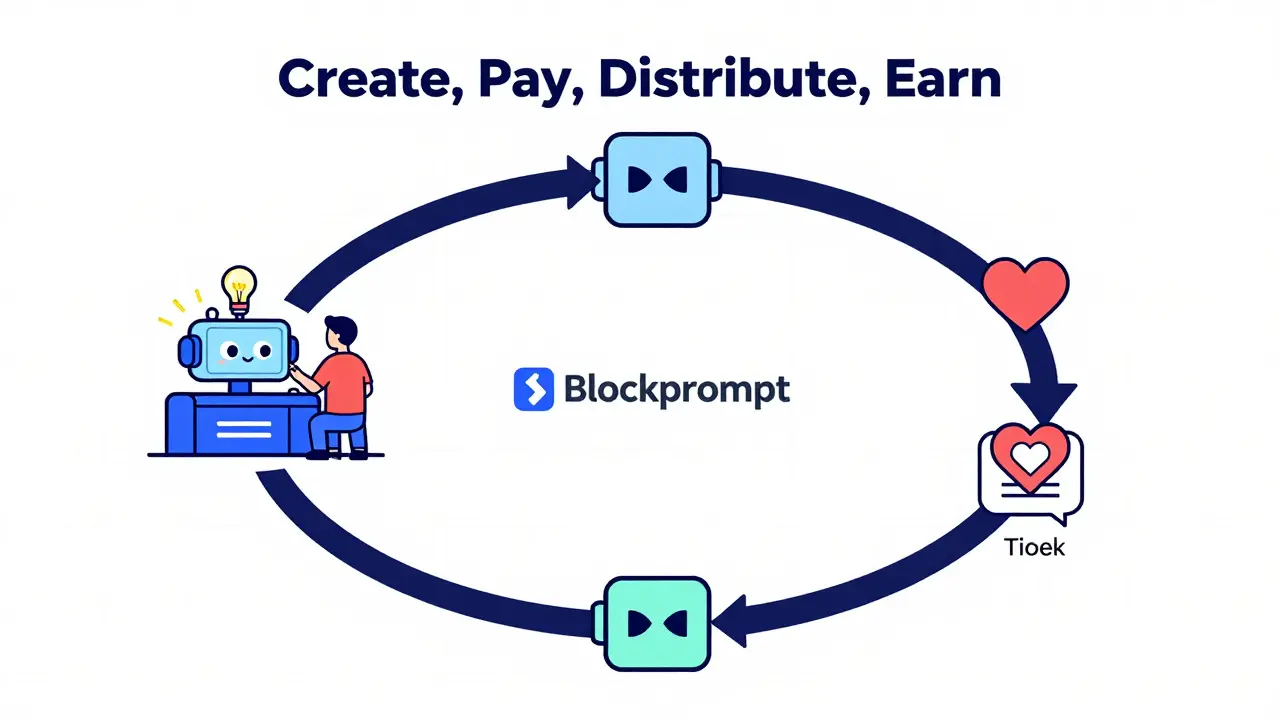
At its core, Blockprompt functions as a hub for AI-generated content. Think of it like a creative studio where the machines do the heavy lifting, but you get paid when people watch or listen. The process generally follows a simple loop:
- Create: Users utilize Blockprompt’s suite of AI-powered tools to ideate, draft, and refine content. This includes visual assets, written narratives, and interactive experiences.
- Pay: Accessing these premium AI generation features requires spending BLPT tokens.
- Distribute: Once created, the content is shared on the Blockprompt platform.
- Earn: Creators receive tokenized rewards based on engagement metrics such as traffic, user interactions, peer reviews, and reputation scores.
This model aligns perfectly with the broader "AI + creator economy + Web3" narrative that has dominated tech discussions since 2023. By integrating a decentralized incentive mechanism directly into the creation process, Blockprompt attempts to solve the age-old problem of artists struggling to monetize their work online.
Tokenomics and Supply Data
When looking at any cryptocurrency, understanding the supply is crucial. For Blockprompt, the data tells a story of extreme scarcity-or perhaps confusion. Most sources agree that the fully diluted total supply is capped at 1,000,000,000 (1 billion) BLPT.
However, the circulating supply figures are wildly inconsistent across major aggregators. CoinMarketCap lists a self-reported circulating supply of roughly 256,830 BLPT. In contrast, platforms like Coinranking show a circulating supply of 1.00 billion BLPT, implying all tokens are in circulation. TradingView has reported both extremes at different times. These discrepancies suggest either stale data feeds, misconfigured contract metadata, or significant liquidity issues.
A portion of the total supply is allocated for ecosystem growth, including creator grants, marketing incentives, and developer support. However, without a detailed public allocation table showing exact percentages for team, investors, or liquidity pools, potential users must exercise caution regarding inflation risks.
| Metric | CoinMarketCap / Crypto.com | Coinranking | TradingView (Snapshot) |
|---|---|---|---|
| Total Supply | 1 Billion | 1 Billion | 1 Billion |
| Circulating Supply | ~256,830 | 1 Billion | Varies (256K to 1B) |
| Fully Diluted Valuation (FDV) | Low (Sub-$30k range) | ~$28,450 | ~$8,950 |
| All-Time High (ATH) | N/A | $0.000510 (Jul 2025) | $0.379 (Jul 2025) |
Market Performance and Risks
If you are considering buying BLPT, you need to understand one thing: this is a nano-cap asset with extreme volatility. Recent market snapshots paint a picture of an illiquid and highly speculative environment.
According to data from mid-2025, Blockprompt reached an all-time high of roughly $0.379 in July 2025. However, prices subsequently crashed. TradingView reported a year-over-year decline of nearly 99.96%, dropping to fractions of a cent (around $0.000008). This kind of drawdown is typical of pump-and-dump patterns or severe illiquidity events common in micro-cap tokens.
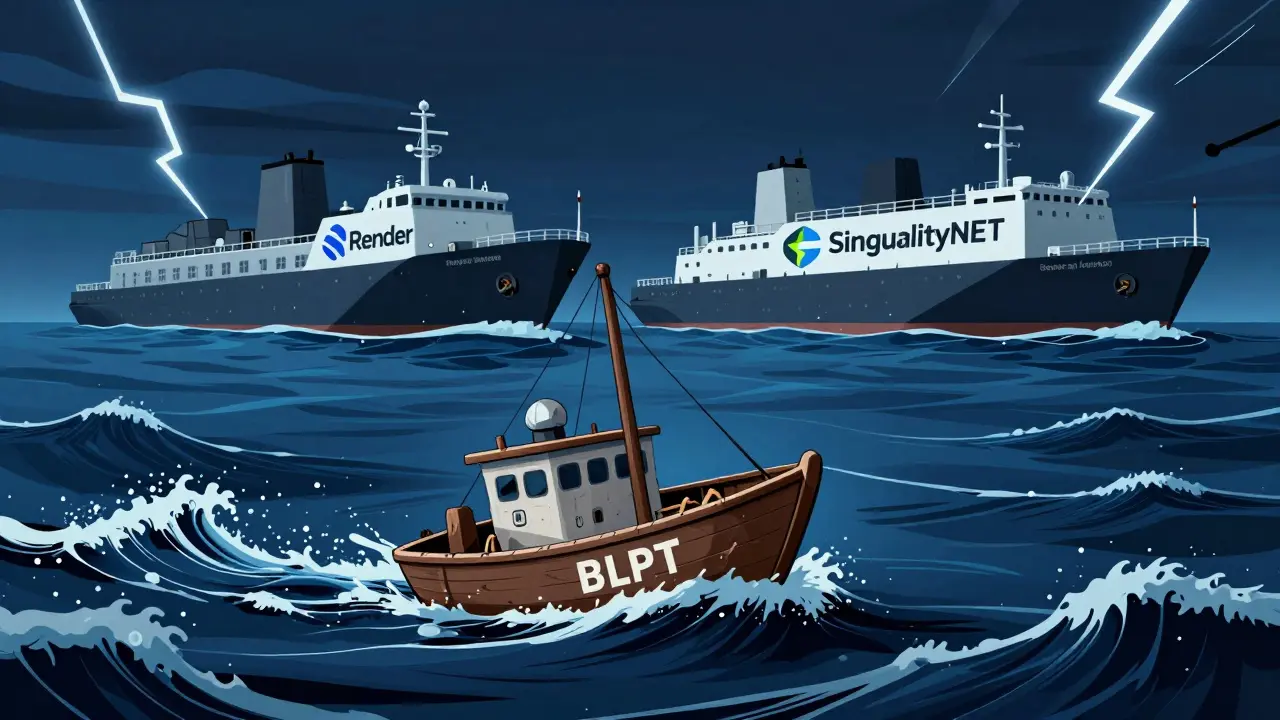
The fully diluted valuation (FDV) hovers between $8,950 and $28,450 depending on the source. To put that in perspective, established AI-crypto projects like Render (RNDR) or SingularityNET (AGIX) have valuations in the hundreds of millions or billions of dollars. Blockprompt operates many orders of magnitude smaller, meaning even small trades can cause massive price swings.
Where to Buy and Trade
You won't find BLPT on major Tier-1 exchanges like Binance, Coinbase, or Kraken. Those platforms have strict listing thresholds that micro-caps rarely meet. Instead, trading activity is concentrated on mid-tier centralized exchanges.
Currently, MEXC Global holds a significant dominance share (around 20%) of the trading volume for BLPT. Phemex also offers guides on how to buy the token, suggesting spot markets or contract products may be available there. Users typically fund accounts with fiat or stablecoins like USDT/USDC, trade for BLPT, and then withdraw to compatible wallets.
Because the base blockchain is not explicitly confirmed in primary documentation, compatibility with specific wallet standards (like ERC-20 on Ethereum or SPL on Solana) remains somewhat opaque. Always verify the contract address before sending funds to avoid losing your assets.
Competitors in the AI-Crypto Space
Blockprompt isn't alone in trying to merge AI and Web3. Here is how it stacks up against better-known alternatives:
- Render (RNDR): Focuses on decentralized GPU rendering power rather than end-user content creation. It has a much larger market cap and established enterprise partnerships.
- SingularityNET (AGIX): Operates as a marketplace for AI services and models, founded by Ben Goertzel. It emphasizes autonomous agents over multimedia generation.
- Audius (AUDIO): Specifically targets music streaming and artist monetization but lacks the integrated generative-AI tools found in Blockprompt.
- Lens Protocol: Provides a decentralized social graph infrastructure but does not natively include AI content generation tools.
Blockprompt's unique selling point is its vertical integration: it combines the AI generator, the content hub, and the tokenized reward system into one stack. However, it lacks the transparency, named founding team members, and independent audits that characterize more mature projects.
Regulatory and Legal Considerations
As of May 2026, the regulatory landscape for crypto and AI is tightening. Blockprompt sits at the intersection of three active legal themes:
- Crypto Asset Regulation: Frameworks like MiCA in the EU and evolving SEC positions in the U.S. impact how utility tokens are treated.
- Securities Laws: If BLPT rewards are marketed as profit expectations, regulators might classify them as securities.
- AI Content Rights: Laws like the EU AI Act raise questions about copyright, attribution, and IP ownership for AI-generated media. Blockprompt claims to preserve ownership through decentralized systems, but specific legal disclaimers are scarce.
Without clear jurisdictional registrations or legal disclosures, users should assume standard high-risk liability. Always consult local regulations before engaging with new crypto platforms.
Final Thoughts
Blockprompt represents an ambitious attempt to tokenize the creative process using artificial intelligence. The concept is sound: lower barriers to entry for creators while providing direct financial incentives via blockchain technology. However, the execution faces significant hurdles. The extreme volatility, inconsistent supply data, lack of named founders, and microscopic market capitalization place BLPT firmly in the "high-risk speculation" category.
If you are a developer interested in testing SDKs or a creator curious about AI-generated comics, the platform offers a unique sandbox. But if you are looking for a stable investment, the current data suggests proceeding with extreme caution. Diversify your portfolio, never invest more than you can afford to lose, and keep an eye on official announcements for clarity on supply mechanics and exchange listings.
Is Blockprompt (BLPT) a safe investment?
No, BLPT is considered extremely high-risk. It is a micro-cap asset with low liquidity, high volatility (over 46% in some periods), and inconsistent supply data. It lacks listings on major regulated exchanges and has experienced severe price drawdowns. Only speculate with funds you are prepared to lose entirely.
Who founded Blockprompt?
The project was launched by a "globally distributed team with backgrounds in AI, blockchain, and design." As of the latest available information, no individual founder names or corporate legal entities have been publicly disclosed, which is a notable gap in transparency compared to larger competitors.
Where can I buy BLPT tokens?
You can currently find BLPT trading pairs on mid-tier centralized exchanges such as MEXC Global and Phemex. It is not listed on top-tier venues like Binance, Coinbase, or Kraken. Always verify the official contract address before trading.
What is the maximum supply of BLPT?
The maximum total supply of Blockprompt is 1,000,000,000 (1 billion) tokens. However, reports on the circulating supply vary wildly between sources, ranging from ~256,000 to 1 billion, indicating potential data feed errors or liquidity constraints.
How do creators earn money on Blockprompt?
Creators generate AI-based content (movies, music, comics) using the platform's tools. They share this content on the Blockprompt hub and earn BLPT rewards based on engagement metrics, including traffic, user interactions, peer reviews, and reputation scores.