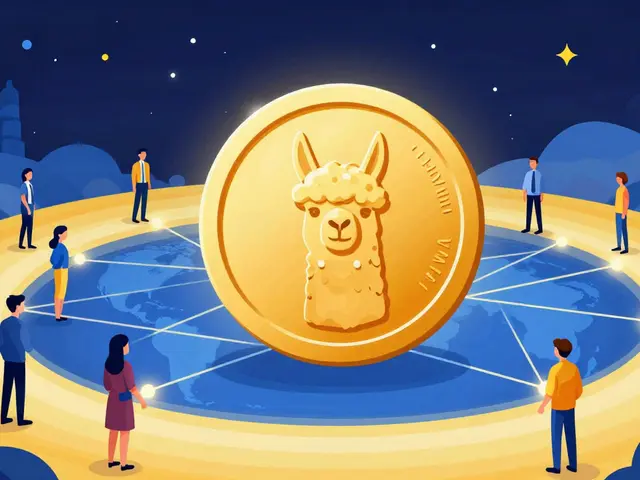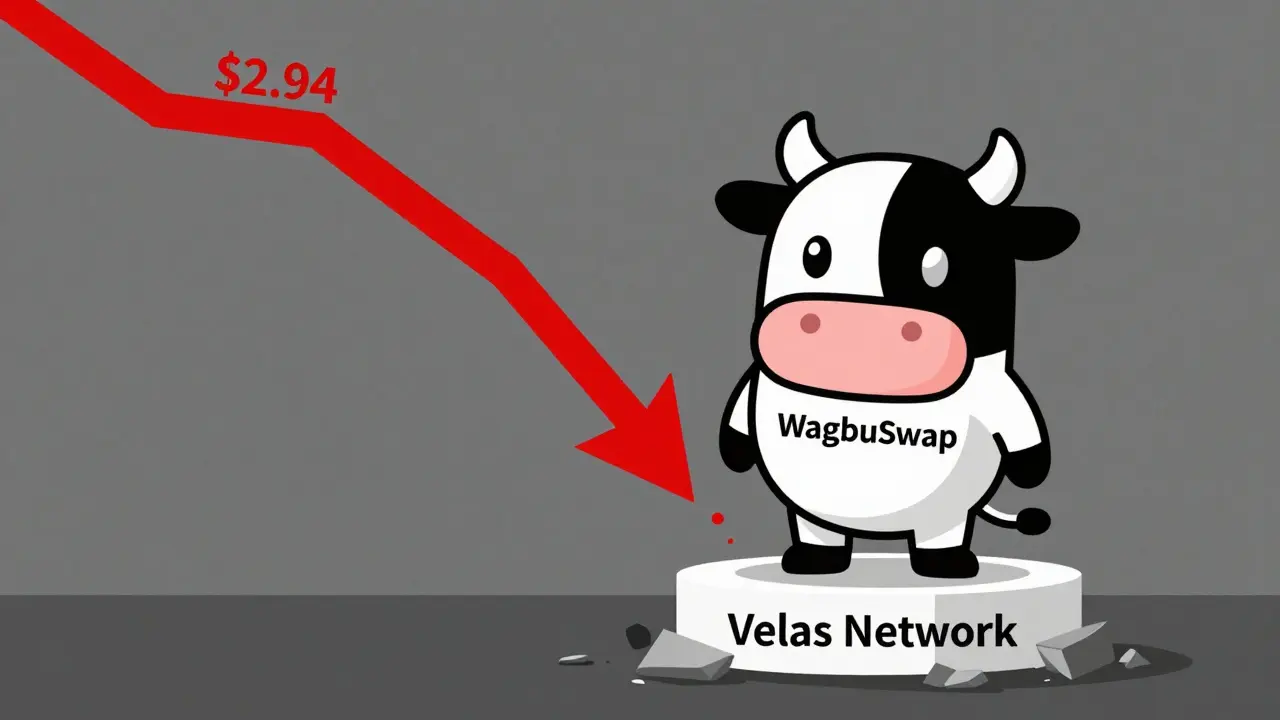

Remember when everyone was talking about WagyuSwap? Back in late 2021, the WAG token hit an all-time high of $2.94. It felt like the next big thing-a decentralized exchange promising lightning-fast speeds on the Velas Network, a blockchain that claimed to combine the best of Ethereum and Solana. Fast forward to July 2026, and the price is hovering around $0.000138. That’s not just a dip; it’s a collapse of over 99% from its peak. If you are looking at WagyuSwap today, you aren’t buying into a rising star. You are looking at a cautionary tale of what happens when hype outpaces utility.
This review isn’t here to sell you on a dream. It’s here to show you the cold, hard data behind the platform. We will look at the technology, the tokenomics, the liquidity crisis, and whether there is any realistic path to recovery for this once-promising project. If you hold WAG tokens or are considering entering the Velas ecosystem, you need to understand exactly where things stand right now.
The Core Concept: Speed vs. Reality
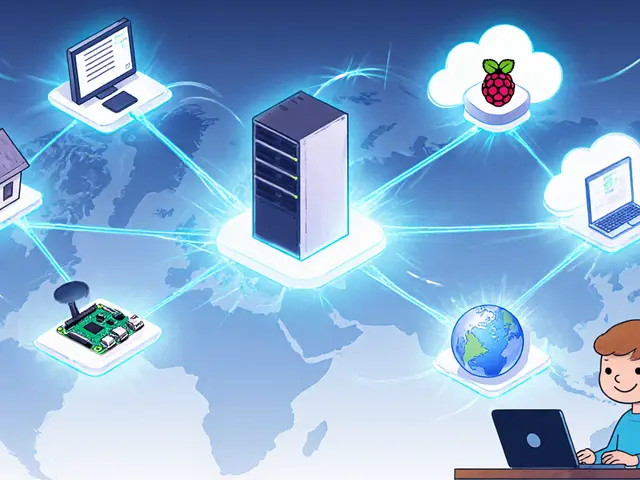
To understand WagyuSwap, you first have to understand its home base: the Velas Networkis a hybrid blockchain protocol designed to offer Ethereum Virtual Machine (EVM) compatibility with transaction speeds comparable to Solana. The pitch was simple and attractive. Developers could write smart contracts using Solidity, just like they did on Ethereum, but users would experience near-instant finality and fees so low they were practically negligible.
WagyuSwap launched as the inaugural decentralized exchange (DEX) on this network. In theory, this gave it a massive head start. Being the "first mover" usually means capturing the early adopters and establishing dominance before competitors arrive. However, in the world of crypto, being first on a new chain doesn’t guarantee success if nobody wants to use that chain. While Uniswap dominates Ethereum and PancakeSwap owns Binance Smart Chain, WagyuSwap has struggled to find a critical mass of users who prefer Velas over these established giants.
The technical promise remains intact. Transactions on Velas are indeed fast and cheap. But speed means nothing if there is no one on the other side of your trade. This brings us to the biggest problem facing WagyuSwap today: liquidity.
The Liquidity Crisis: Why Volume Matters More Than Speed
Liquidity is the lifeblood of any exchange. It refers to the depth of the order books and the amount of capital available for trading. High liquidity means you can buy or sell large amounts of assets without causing significant price swings. Low liquidity means even a small trade can crash or spike the price, making it dangerous for traders.
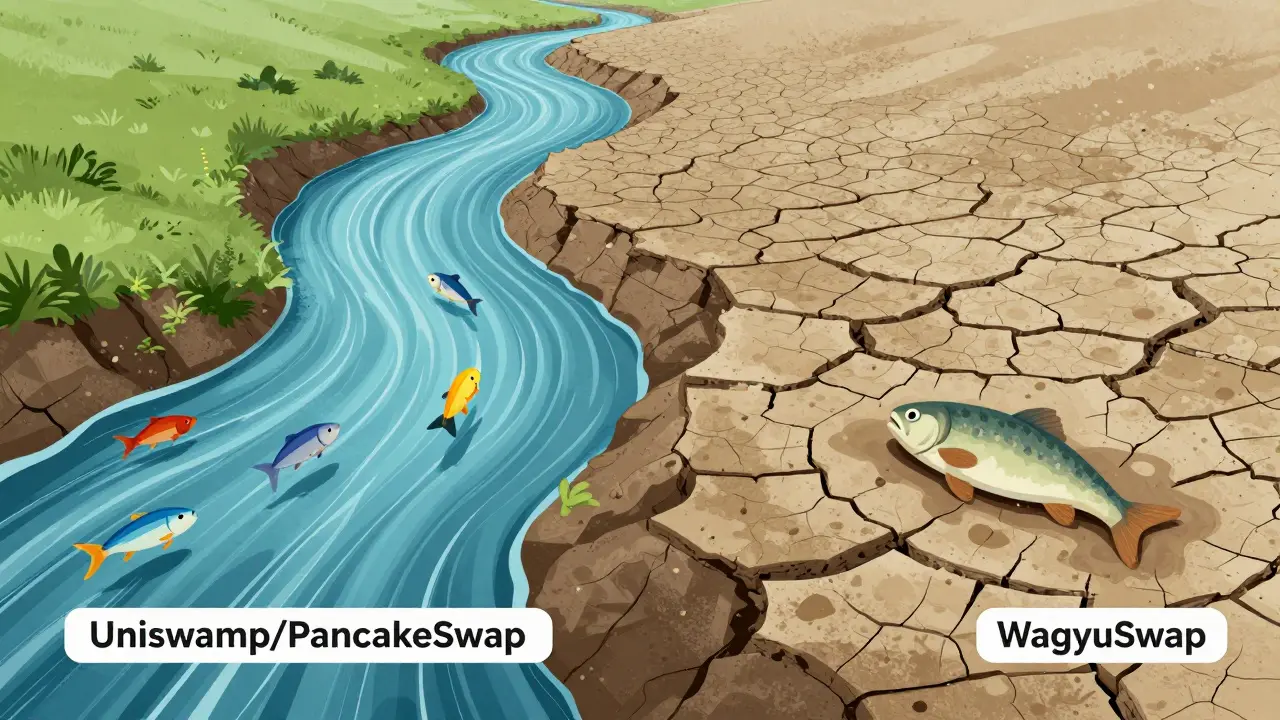
Current data paints a grim picture for WagyuSwap. Recent reports indicate 24-hour trading volumes often drop to zero or remain negligible. When volume hits zero, it means no trades are happening. For a DEX, this is effectively a death spiral. Without traders, there are no fees generated. Without fees, there is less incentive for liquidity providers to keep their funds in the pools. As liquidity drains away, slippage increases, scaring off remaining users.
| Feature | Uniswap (Ethereum) | PancakeSwap (BSC) | WagyuSwap (Velas) |
|---|---|---|---|
| Primary Blockchain | Ethereum L1/L2 | Binance Smart Chain | Velas Network |
| Transaction Cost | High (L1) / Low (L2) | Very Low | Ultra-Low |
| Liquidity Depth | Extremely High | High | Critical Low |
| Daily Volume | $Billions | $Hundreds of Millions | Negligible / Near Zero |
| User Base | Millions | Millions | Minimal / Dormant |
As you can see, while WagyuSwap wins on cost, it loses badly on every metric that actually matters for a functioning market: volume, depth, and user activity. You might save a fraction of a cent on gas fees, but if you can’t execute your trade because the pool is empty, those savings are irrelevant.
Tokenomics and Price Analysis: The WAG Token
The native governance and utility token of the platform is WAGis the native cryptocurrency of the WagyuSwap ecosystem, used for governance, staking, and fee discounts. Understanding the supply dynamics of WAG is crucial to understanding its price behavior.
The maximum supply of WAG is capped at 500 million tokens. Currently, approximately 46.78 million tokens are in circulation. On the surface, a low circulating supply might seem bullish, suggesting scarcity. However, scarcity only creates value if there is demand. With a market capitalization fluctuating between $7,000 and $20,000, WAG ranks outside the top 10,000 cryptocurrencies globally. This places it in the micro-cap category, where prices are highly susceptible to manipulation and extreme volatility.
Price predictions from various analytical firms reflect this uncertainty. Services like LiteFinance and TradingBeasts project conservative movements, with average yearly prices hovering around $0.000123 through 2029. More bearish models, such as those from WalletInvestor, suggest potential declines below current levels. Even optimistic forecasts from 3Commas, which projected a rise to roughly $0.00028 by 2025, represent a tiny fraction of the token’s former glory. The Fear & Greed Index recently showed a reading of 74 ('Greed'), indicating general market optimism, but this sentiment rarely trickles down to dead projects without specific catalysts.
Security and Trust: Is Your Money Safe?
When dealing with decentralized finance (DeFi), security is paramount. WagyuSwap operates on the Velas Network, which utilizes a unique consensus mechanism combining Proof of Authority (PoA) and Delegated Proof of Stake (DPoS). This structure aims to provide faster finality than pure Proof of Work chains like Bitcoin.
However, the security of a DEX depends not just on the underlying blockchain, but on the smart contracts themselves. Have WagyuSwap’s contracts been audited by reputable third-party firms? Public information on recent, comprehensive audits is scarce. In the absence of transparent audit reports, users must assume higher risk. Smart contract vulnerabilities are a leading cause of DeFi hacks. While WagyuSwap hasn’t suffered a widely publicized catastrophic hack in recent years, the lack of active development updates raises concerns about whether security patches are being applied promptly.
Furthermore, the centralization aspect of Velas’s PoA model introduces counterparty risk. If the validating authorities act maliciously or go offline, the network-and by extension, your assets locked in WagyuSwap-could be compromised. Always remember: in DeFi, you are your own bank vault. If the keys are lost or the contract is flawed, there is no customer support line to call.
User Experience: Getting Started on Velas
If you decide to proceed despite the risks, the process involves several steps that differ slightly from mainstream Ethereum-based DEXs. First, you need a wallet compatible with the Velas Network. MetaMask can be configured to interact with Velas by adding the correct RPC endpoints, but dedicated wallets may offer a smoother experience.
Next, you need VELO tokens (the native coin of the Velas Network) to pay for transaction fees. Since WagyuSwap uses WAG for governance and incentives, you will likely need to bridge assets from other chains like Ethereum or BNB Chain to Velas. This bridging process adds complexity and potential points of failure. For a novice trader, navigating cross-chain bridges can be confusing and risky. For sophisticated traders, the extra steps might be worth it if the yields were attractive-but currently, the low volume makes yield farming on WagyuSwap largely unprofitable compared to established platforms.
Alternatives: Where Should You Trade Instead?
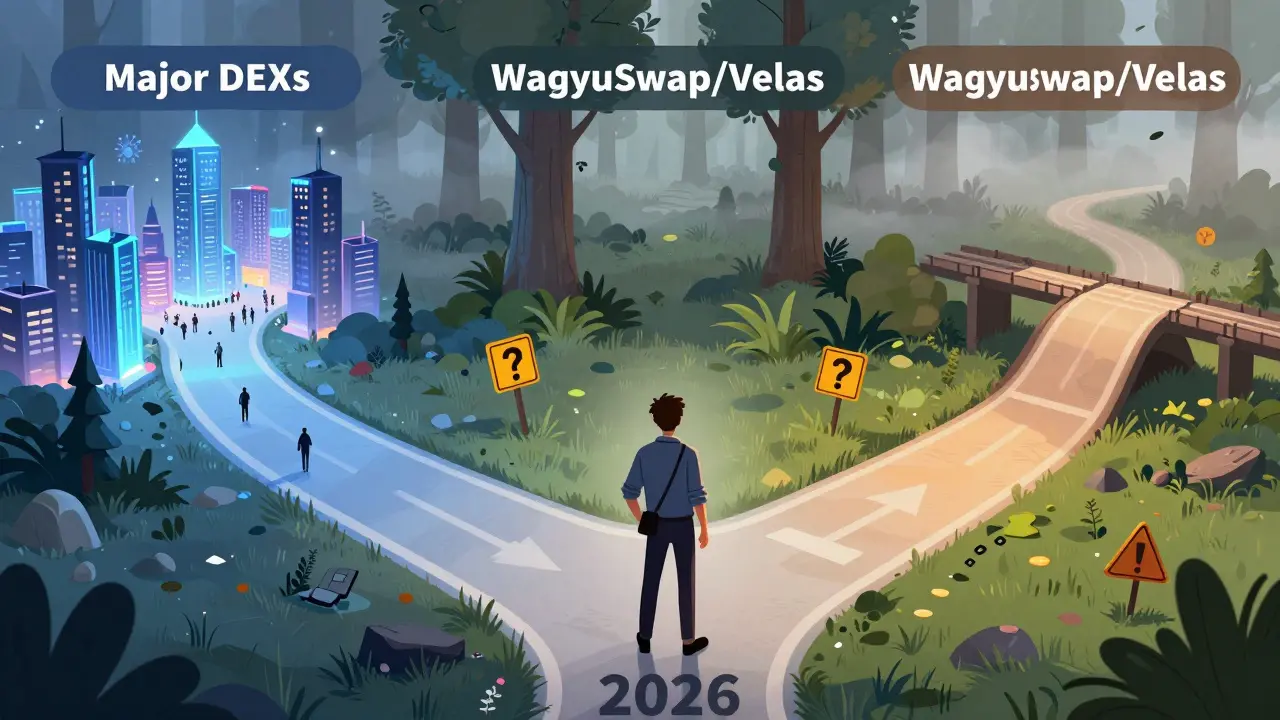
Given the challenges facing WagyuSwap, most traders in 2026 are better served by more liquid alternatives. If you want low fees and fast transactions, consider:
- PancakeSwap: The dominant DEX on Binance Smart Chain. It offers deep liquidity, a wide variety of tokens, and a proven track record.
- Uniswap: The industry standard on Ethereum and its Layer-2 solutions (like Arbitrum and Optimism). While base Ethereum fees can be high, L2 versions offer low costs with immense security and volume.
- Raydium: If you are interested in high-speed networks, Raydium on Solana offers similar speed benefits to Velas but with significantly higher adoption and liquidity.
These platforms benefit from network effects. More users mean more liquidity, which attracts more users. WagyuSwap is stuck in the opposite cycle. Unless the Velas Network undergoes a major resurgence or acquires significant institutional backing, it is unlikely to break out of its current stagnation.
Final Verdict: Proceed with Extreme Caution
Is WagyuSwap a scam? Not necessarily. It appears to be a legitimate project built on functional technology. However, it is a struggling one. The gap between its 2021 hype and its 2026 reality is vast. Investing in WAG today is a speculative bet on a turnaround that shows few signs of happening. The liquidity is too thin, the volume is too low, and the competition is too strong.
For the average investor, the risks far outweigh the potential rewards. You might get lucky if Velas suddenly becomes the next big thing, but the probability is slim. Use WagyuSwap only if you are deeply familiar with the Velas ecosystem, understand the risks of illiquid markets, and are prepared to lose your entire investment. For everyone else, stick to the majors.
What happened to WagyuSwap's price since 2021?
WagyuSwap's WAG token peaked at $2.94 in November 2021 during the broader DeFi boom. Since then, it has declined by over 99%, trading around $0.000138 in 2026. This drop reflects a loss of user interest, dwindling liquidity, and the failure of the Velas Network to capture significant market share against competitors like Ethereum and Solana.
Is WagyuSwap safe to use in 2026?
While the underlying Velas blockchain technology is functional, using WagyuSwap carries high risk due to extremely low liquidity. Low liquidity means high slippage, meaning you may receive significantly fewer tokens than expected when trading. Additionally, limited recent audit information and low developer activity raise security concerns. It is generally safer to use established DEXs with deeper liquidity pools.
What is the Velas Network?
The Velas Network is a hybrid blockchain that combines Ethereum Virtual Machine (EVM) compatibility with a consensus mechanism inspired by Solana. It aims to provide fast transaction speeds and low fees. However, it has struggled to attract developers and users away from more established ecosystems, resulting in lower overall activity compared to major blockchains.
Can I make money trading on WagyuSwap?
It is highly unlikely for the average trader. Profitable trading requires liquidity to enter and exit positions easily. With WagyuSwap's near-zero daily volume, executing trades without significant price impact is difficult. Yield farming opportunities are also minimal due to the lack of trading fees generated by the platform. Speculative betting on the WAG token price is possible but carries extreme risk of total loss.
How do I connect my wallet to WagyuSwap?
You can use wallets like MetaMask by manually adding the Velas Network RPC details. You will need VELO tokens to pay for gas fees on the Velas network. Once connected, you can access the WagyuSwap interface to swap tokens or add liquidity. However, ensure you have verified the official URL to avoid phishing sites, as smaller projects are frequent targets for scams.
Comments (5)

- Nick Wengel
- July 1, 2026 AT 15:14 PM
I remember when everyone was hyping up Velas and WagyuSwap back in the day. It felt like such a fresh idea at the time. Now looking at the numbers, it is just sad to see how much value has vanished. The technology might have been cool on paper, but without people actually using it, nothing really matters. I think we learned that lesson the hard way with so many projects from that era.

- Drew M
- July 3, 2026 AT 14:51 PM
Oh my god, this article is basically reading my diary entries from 2021 😭💔
Can we talk about how absolutely tragic this decline is? 📉 It’s not just a dip, it’s a full-blown funeral for our portfolios! 💀 The audacity of these projects promising 'Solana speeds' and then delivering absolute silence is just rude! 🤬🚫
I mean, seriously, who wakes up in 2026 and decides to trade on a DEX with zero volume? That’s not investing, that’s donating your money to the void! 🕳️💸 The elitist in me just wants to scream at anyone still holding WAG tokens. You are literally holding digital trash now! 🗑️🔥
The liquidity crisis isn't even a crisis anymore, it's a historical fact! 📚 If you want speed, go to Solana or Ethereum L2s where the actual humans are! 🏃♂️💨 WagyuSwap is a ghost town and I am here to mourn the death of hope! 👻🥀 Please stop trying to revive this zombie project, let it rest in peace! ⚰️😴

- Alicia Hull
- July 5, 2026 AT 00:37 AM
This review is incredibly detailed and frankly terrifying for anyone who missed the exit.
I must say, the lack of recent audits is a massive red flag that cannot be ignored. Security is not optional in DeFi, yet WagyuSwap seems to treat it as an afterthought. The comparison table clearly shows that while fees are low, the utility is nonexistent.
It is quite aggressive to suggest that anyone should even consider this platform given the alternatives available. PancakeSwap and Uniswap offer stability that WagyuSwap simply cannot match. The data speaks for itself: zero volume means zero future. One should not gamble their savings on a platform that has effectively ceased to function as a market. This is not speculation; it is financial negligence to ignore these warning signs.

- Hazel Fruitman
- July 6, 2026 AT 22:23 PM
its honestly just greedy ppl who kept buying into this hype train instead of thinking about real utility
i feel bad for the devs who probably worked hard but they built it on sand
the whole crypto space needs more ethics and less get rich quick schemes
WagyuSwap is proof that hype dies fast if u dont have substance
people need to learn from this before jumping on the next big thing

- Autumn Story
- July 8, 2026 AT 12:48 PM
Wow!! This is such a thorough breakdown!!! 🌟
I know it feels really heavy right now,, but maybe there is a silver lining somewhere??? ✨ Not for trading obviously,, but as a learning experience?? 📚
We all made mistakes back then,, and that is okay!!! 💖 Just please be careful moving forward!! Don't let this discourage you from exploring safer options like Uniswap!! 🦄
You deserve better than high slippage and anxiety!! 🙏 Let's focus on positive growth and secure investments going forward!! 🌱💪 Sending good vibes to everyone recovering from this!! 🌈