
Imagine getting paid for your attention. Not just with likes or comments, but with actual tokens that have real market value. That is the core promise behind The HUSL, a blockchain-based platform trying to fix the broken economics of the music industry. Right now, there is a specific opportunity you might miss if you blink: the MEXC Kickstarter airdrop campaign offering 50,000 HUSL tokens. With a reference price of $1.00 per token, this represents a total pool of $50,000 up for grabs.
But before you rush in, you need to understand what you are actually voting on. The HUSL isn't just another speculative crypto project. It launched back in September 2021, founded by CEO Varun Bajaj, and it uses Ethereum smart contracts to connect artists directly with fans. If you are wondering whether this is worth your time and your MX tokens, let's break down exactly how the airdrop works, who benefits, and why this specific collaboration matters for the future of music NFTs.
What Exactly Is The HUSL Platform?
To grasp the value of the airdrop, you first need to know what you are buying into. The HUSL is a decentralized finance (DeFi) ecosystem specifically built for music and digital art. Unlike generic NFT marketplaces like OpenSea, which host everything from pixel cats to profile pictures, The HUSL focuses exclusively on audio. Its goal is simple: remove the middlemen. Traditional streaming platforms take huge cuts, often leaving emerging artists with pennies. The HUSL flips this model by letting artists upload music for free and sell rights directly to listeners.
The technical backbone here is crucial. The platform integrates Chainlink VRF (Verifiable Random Function). Why does this matter? In many reward systems, users worry about rigged algorithms. Chainlink VRF provides cryptographically secure random numbers, ensuring that when rewards or rare NFT drops happen, they are fair and fully auditable. This builds trust, which is the currency of any good marketplace.
Artists retain complete commercial rights to their work. When a user buys a beat or a track as an NFT, they aren't just buying a JPEG; they are often buying stem packs-the individual production elements-and the license to use them. For producers who typically charge $10,000 to $50,000 for these rights on the open market, this democratizes access. You can see high-profile collaborations already happening, including work with members of 808 Mafia such as Pvlace and Gunboi, who have contributed to dozens of Billboard number-one hits.
Breaking Down the MEXC Kickstarter Airdrop
The current buzz centers on the partnership with MEXC Exchange. This isn't a vague "sign up and wait" giveaway. It is a structured Kickstarter-style campaign where users vote using MX tokens. Here is the math: the total reward pool is 50,000 HUSL tokens. At the current reference price of $1.00, that is $50,000 in value distributed among participants.
You don't just get tokens for showing up. The mechanism requires active participation through voting. You must cast a minimum of 10 votes to qualify. There is also a cap: you cannot lock more than 500,000 MX tokens for this specific event. This prevents whales from dominating the entire pool while still rewarding those who believe strongly enough in the project to stake significant capital.
| Parameter | Requirement/Value | Notes |
|---|---|---|
| Total Reward Pool | 50,000 HUSL Tokens | Approx. $50,000 USD at $1.00 ref price |
| Voting Currency | MX Tokens | Must hold MX on MEXC |
| Minimum Votes | 10 Votes | Threshold to enter the pool |
| Max Voting Cap | 500,000 MX Tokens | Prevents single-user dominance |
| Token Lock Period | Campaign Duration | Unlocked within 1 hour after end |
| Special Bonus | 10 USDT Futures Bonus | For 500 random users with >1,000 MX assets |
Rewards are distributed proportionally based on your total votes. So, if you contribute 1% of all votes cast, you get roughly 1% of the 50,000 HUSL tokens. But there is a kicker: a special reward system targets smaller holders too. Five hundred randomly selected users who maintain total assets exceeding 1,000 MX tokens will receive a 10 USDT Futures Bonus. This is distributed within seven working days after the event ends. It’s a nice touch to keep smaller community members engaged, not just the big investors.
Why Participate? The Value Proposition
Is holding MX tokens and locking them worth it for a shot at HUSL? Let's look at the current state of the asset. As of late 2025, The HUSL token has a market capitalization of around $10,574 USD. Yes, that is small compared to giants like Bitcoin or even mid-cap altcoins. It ranks around #3445 on CoinMarketCap. Some might see this low valuation as a risk. Others see it as an entry point before potential growth.
The argument for optimism lies in utility. Many NFT projects died because they had no real-world use case. The HUSL survives because it solves a tangible problem: artist compensation. By allowing free uploads, it removes the barrier to entry that plagues independent musicians. If you believe that blockchain will eventually streamline music royalties, owning HUSL tokens gives you exposure to that thesis. Plus, the integration with established industry names like Styles P suggests the tech is being tested by people who actually make money in music, not just crypto traders.
Furthermore, the play-to-earn mechanics create a dual-sided economy. Artists earn from sales; fans earn attention rewards. This engagement loop is critical for sustainability. If the platform can onboard more high-profile partners-producers who currently command five-figure fees per beat-the demand for HUSL tokens could spike. The airdrop is essentially paying you to help bootstrap this network effect.
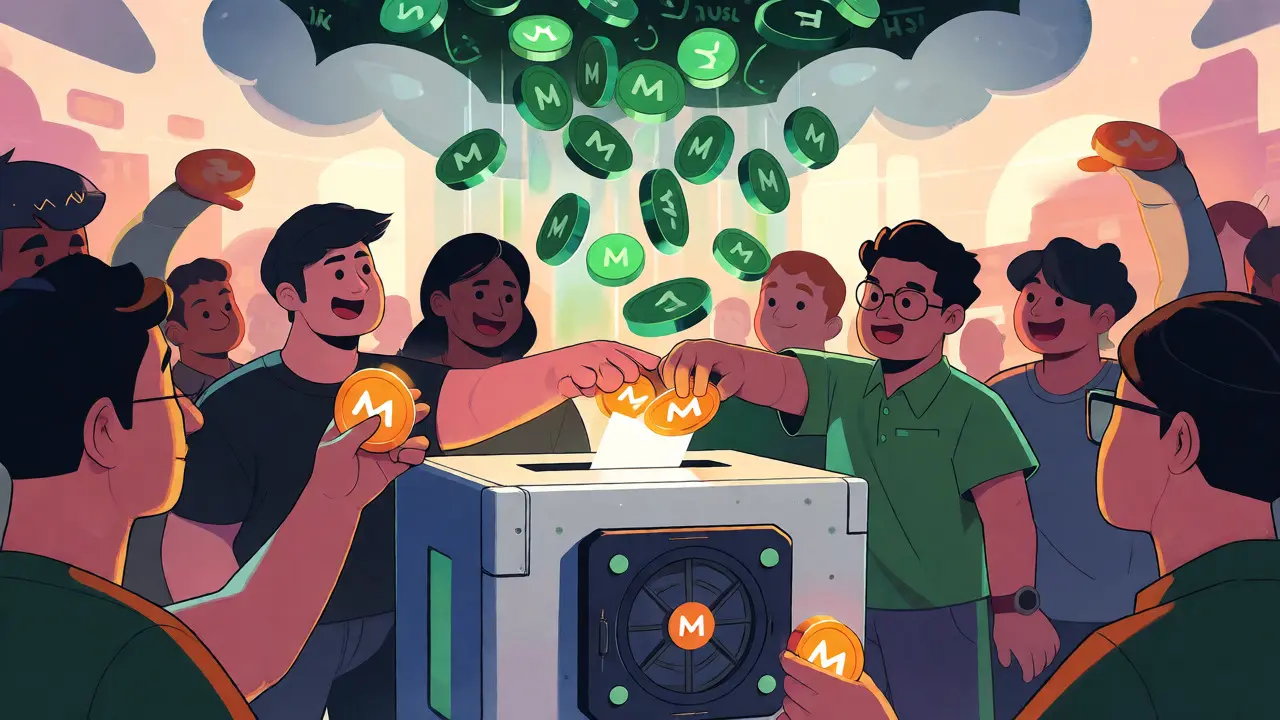
How to Claim Your Airdrop Step-by-Step
If you want to participate, you need to act fast. These campaigns usually run on tight schedules. Here is the practical workflow to ensure you don't miss out.
- Open a MEXC Account: You need a verified account on the MEXC exchange. If you already trade there, you are halfway done.
- Acquire MX Tokens: Buy or transfer enough MX tokens to cover your desired voting amount. Remember, you need at least 10 votes' worth, but more votes mean a larger share of the pool.
- Navigate to Kickstarter: Go to the MEXC Kickstarter section. Look for The HUSL campaign. Ensure you are clicking the correct listing, as multiple campaigns may run simultaneously.
- Cast Your Votes: Enter the amount of MX tokens you wish to commit. Confirm the transaction. Note that these tokens are locked during the voting period. You cannot trade them until the campaign concludes.
- Monitor the Target Rate: The campaign aims for a 500% target voting rate. Keep an eye on progress bars. If the target isn't met, the dynamics of distribution might shift, though the prompt implies standard proportional distribution regardless.
- Wait for Distribution: Once the event closes, your MX tokens unlock within one hour. The HUSL tokens are distributed shortly after. Check your wallet balance.
A common pitfall? Forgetting the asset requirement for the bonus. If you want that extra 10 USDT futures bonus, ensure your total assets on MEXC exceed 1,000 MX tokens throughout the qualification window. Don't withdraw everything immediately after voting if you hope to catch that random draw.
Risks and Reality Checks
Let's be honest: the NFT market has cooled since the 2021 boom. Volatility is high. The HUSL token's low market cap means it can swing wildly on small volume. Buying into a project ranked #3445 carries inherent risk. Liquidity might be thin, meaning selling large amounts of HUSL later could impact the price.
Also, consider the opportunity cost. Locking MX tokens means you can't sell them if the broader market crashes during the campaign period. However, the downside is limited to the temporary illiquidity of MX, not a loss of principal. You still own your MX tokens; they are just frozen. Given that MX itself is a utility token for the exchange, holding it long-term has its own merits beyond this airdrop.
Finally, assess the team's execution. Since launching in 2021, The HUSL has survived multiple bear markets. That resilience is a positive signal. They haven't disappeared. They are actively partnering with exchanges and producers. But survival doesn't guarantee explosive growth. Treat this airdrop as a bonus for participating in a niche ecosystem, not a lottery ticket that will change your life overnight.

Frequently Asked Questions
Do I need to pay gas fees to claim the HUSL airdrop?
Typically, MEXC handles the internal distribution of tokens within its exchange infrastructure, so you do not pay direct Ethereum gas fees to receive the HUSL tokens in your MEXC spot wallet. However, if you choose to withdraw the HUSL tokens to a personal Web3 wallet like MetaMask later, you will incur network withdrawal fees.
Can I unstake my MX tokens early if I change my mind?
No. The terms of the MEXC Kickstarter program state that MX tokens used for voting are temporarily locked for the duration of the campaign. They are only unlocked within one hour after the official conclusion of the event. Plan your liquidity needs accordingly before committing.
What happens if the 500% voting target is not met?
While the campaign sets a target voting rate of 500%, historical data from similar MEXC Kickstarters suggests that rewards are generally distributed proportionally to votes cast, regardless of hitting the exact target multiplier. However, failure to meet targets can sometimes affect the final listing announcement timeline, so monitor official MEXC announcements closely.
Is The HUSL token tradable immediately after the airdrop?
Listing details are announced separately after the Kickstarter concludes. While HUSL is already trading on some exchanges, new listings or increased volume on MEXC may occur post-campaign. Always check the specific trading pair availability on MEXC once the tokens arrive in your account.
Who qualifies for the 10 USDT Futures Bonus?
This bonus is reserved for 500 randomly selected users who maintain total assets exceeding 1,000 MX tokens during the campaign period. It is separate from the main HUSL token airdrop and is credited as a futures trading bonus, not spot cash, within seven working days after the event ends.
Final Thoughts on the Music-NFT Intersection
The HUSL airdrop is more than just free tokens. It is a test case for whether blockchain can genuinely empower creators. If you are already a holder of MX tokens, the friction to participate is near zero. The potential upside of sharing a $50,000 pool outweighs the minor inconvenience of locking funds for a few days. Even if the HUSL token remains a micro-cap asset, the experience of engaging with a DeFi music platform offers insight into where digital ownership might head next. Don't overthink it. Vote, lock, and see what happens. The music industry is listening, and right now, the blockchain is speaking.