RUNE Token: What It Is, How It Works, and Where It Fits in Crypto
When you hear RUNE token, the native asset of THORChain, a decentralized cross-chain liquidity network. Also known as THORChain token, it’s not just another crypto — it’s the fuel that lets you swap Bitcoin for Ethereum, or Solana for BNB, without relying on centralized exchanges or risky bridges. Unlike most tokens that sit on one blockchain, RUNE operates across dozens of chains, making it one of the few crypto assets built for true interoperability.
THORChain, the network behind RUNE, works by locking up your crypto in a smart contract and releasing the equivalent asset on another chain — all without a middleman. This is done using a network of node operators who stake RUNE to secure the system. If you want to swap BTC for ETH, you’re not trading with another person — you’re interacting with a pool of liquidity backed by RUNE. That’s why RUNE isn’t just a currency; it’s collateral, governance token, and security deposit all in one. Without enough RUNE staked, the network can’t safely handle large swaps. That’s why its value isn’t just about speculation — it’s tied directly to how much trust the system has.
Related to this are cross-chain swaps, the ability to move assets between blockchains without trusted intermediaries, and DeFi, decentralized finance systems that remove banks from financial services. These concepts show up again and again in the posts below — from bridge hacks that wiped out millions, to DEXs like Aerodrome and Uniswap that let you trade directly from your wallet. RUNE’s whole purpose is to solve the very problems those posts warn about: centralization, theft, and broken bridges.
You’ll also find posts about blockchain interoperability, how different blockchains can communicate and share value — something THORChain does better than most. While other projects promise cross-chain solutions, many still rely on centralized relays or single points of failure. THORChain’s model is different: no custodians, no oracles, no trusted third parties. Just code, staked RUNE, and a network of independent nodes. That’s why it’s still one of the few cross-chain systems that hasn’t been hacked at its core — even as others collapsed.
What you’ll find in the posts below isn’t just theory. It’s real stories — from people who lost money on fake airdrops to those who used decentralized exchanges safely. You’ll see how projects like MochiSwap and Libre Swap failed because they lacked real liquidity and audits, while others like Aerodrome on Base succeeded by focusing on real user needs. The RUNE token isn’t perfect — it’s volatile, complex, and not for beginners — but it’s one of the few tokens built to fix the broken parts of crypto. If you’ve ever wondered how to swap crypto without trusting anyone, these posts show you what actually works, what doesn’t, and why RUNE still matters.
THORChain (BEP20) Crypto Exchange Review: Native Cross-Chain Swaps Without Wraps
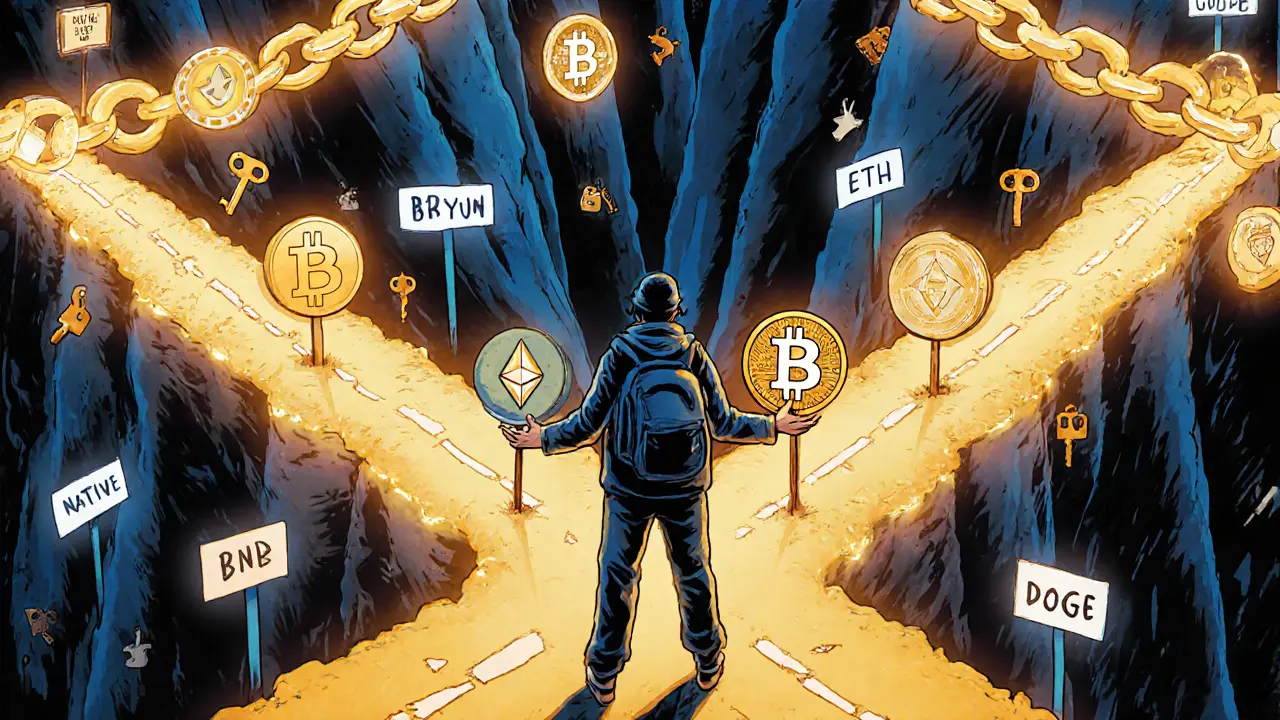

THORChain (BEP20) lets you swap native crypto like BTC and ETH without wrapping or trusting intermediaries. Learn how it works, why RUNE matters, and whether it's safe and worth using in 2025.