Bitcoin Network Operation: How the Blockchain Actually Works and Why It Matters
When you send Bitcoin, you’re not just clicking a button—you’re triggering a global, decentralized machine called the Bitcoin network operation, a peer-to-peer system that verifies and records transactions without banks or central control. Also known as the Bitcoin blockchain, it’s the reason Bitcoin can’t be shut down, hacked, or inflated by a single person. Unlike traditional payment systems, it doesn’t rely on a company or government to approve transactions. Instead, thousands of computers around the world—called nodes—check every transaction against the same rulebook, and only the ones that follow the rules get added.
This system works because of three key pieces: Bitcoin mining, the process where specialized hardware solves complex math puzzles to add new blocks to the chain and earn new Bitcoin, consensus mechanism, the proof-of-work protocol that ensures all nodes agree on the true version of the ledger, and Bitcoin security, the combination of cryptography, economic incentives, and decentralization that makes tampering nearly impossible. If someone tries to cheat—say, by spending the same Bitcoin twice—the network rejects it instantly. Miners won’t validate it. Nodes won’t store it. And the attacker loses their investment in hardware and electricity.
What keeps this system alive isn’t magic—it’s economics. Miners spend millions on electricity and machines because they’re rewarded in Bitcoin. That reward halves roughly every four years, making mining harder and scarcer over time. But even as the rewards shrink, the network grows stronger because more people rely on it. Every transaction, every block, every new miner adds another layer of protection. That’s why Bitcoin has survived over a decade of hacks, bans, and hype—it’s not just software. It’s a self-sustaining ecosystem.
You don’t need to understand the math behind SHA-256 or the details of Merkle trees to use Bitcoin. But if you want to know why it’s still standing while thousands of other coins have vanished, you need to understand how the network operates. The posts below dig into real-world cases: how nodes handle forks, why mining pools dominate the hash rate, how wallet security ties into network integrity, and what happens when a country tries to block Bitcoin traffic. This isn’t theory. These are the live, working parts of the most resilient digital money system ever created.
How Bitcoin's Peer-to-Peer Network Operates
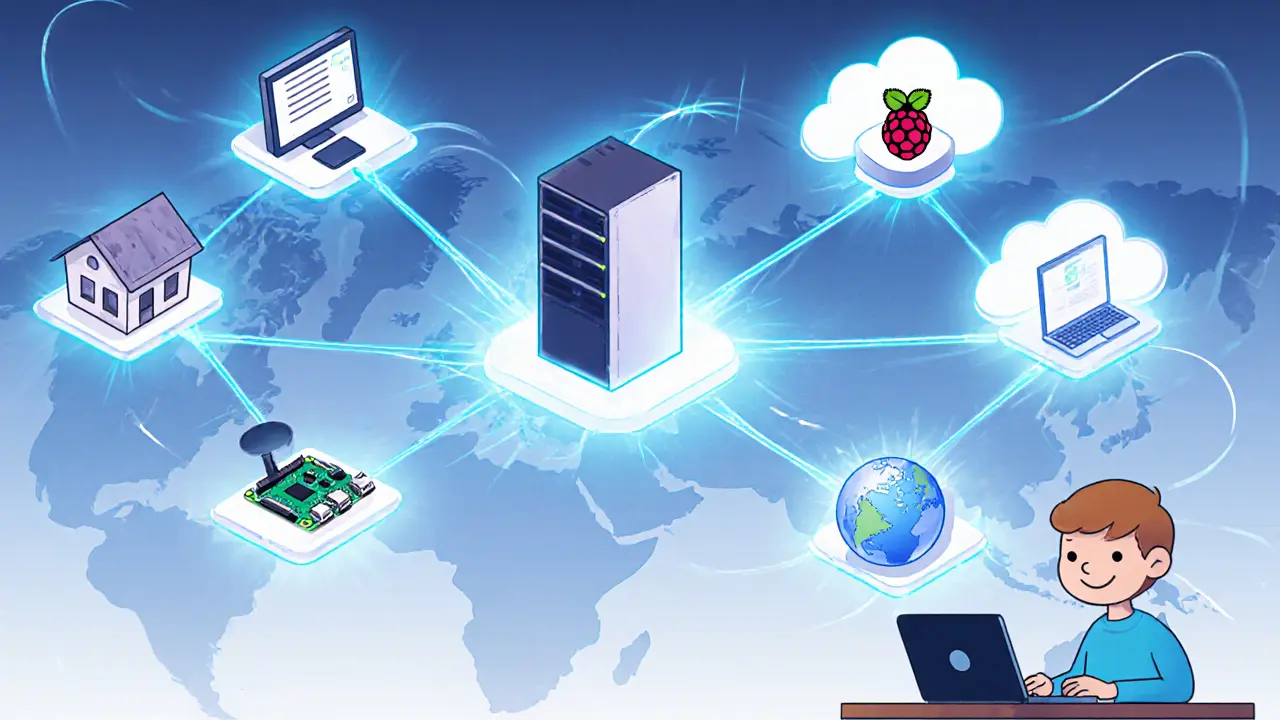

Bitcoin's peer-to-peer network operates without banks or central servers, using thousands of nodes worldwide to verify transactions and maintain the blockchain. This decentralized design ensures security, censorship resistance, and resilience against shutdowns.