Bitcoin Mining Difficulty: What It Is and Why It Matters
When you hear about Bitcoin mining difficulty, a dynamic measure that adjusts how hard it is to find a new Bitcoin block based on total network computing power. It’s not just a number—it’s the heartbeat of Bitcoin’s security and decentralization. Every 2,016 blocks, roughly every two weeks, this number changes automatically. If more miners join and the network gets faster, difficulty rises to keep block times steady at 10 minutes. If miners leave, difficulty drops so the network doesn’t slow down. This self-correcting system is what keeps Bitcoin running without a central authority.
This system relies on something called the Bitcoin hash rate, the total computational power being used to mine Bitcoin across the globe. When the hash rate spikes—like during a bull market or when new mining farms come online—the difficulty climbs with it. That means miners need better hardware, more electricity, and sharper efficiency just to break even. On the flip side, when prices drop and miners shut down rigs, difficulty falls, giving survivors a better shot at rewards. It’s a constant tug-of-war between supply, cost, and reward. Without this adjustment, Bitcoin would either become too easy to mine (leading to inflation) or too hard (slowing down transactions and hurting adoption). The mining difficulty adjustment, the automated process that recalibrates mining complexity every two weeks. It’s what makes Bitcoin resilient against sudden changes in miner participation. This isn’t just technical trivia—it’s what keeps the network secure. The higher the difficulty, the more computing power it would take to launch a 51% attack. That’s why Bitcoin’s security grows stronger over time, even as individual miners come and go.
What you’ll find in the posts below isn’t just theory. You’ll see real examples of how mining difficulty affects profitability, how global events like energy regulations or hardware bans shift the network, and why some crypto projects fail to replicate Bitcoin’s stability. You’ll also learn how to read difficulty trends to anticipate market moves, why mining pools matter, and what happens when miners in one country get shut down. This isn’t about guessing prices—it’s about understanding the invisible mechanics that keep Bitcoin alive.
Future of Adaptive Mining Difficulty in Blockchain Networks
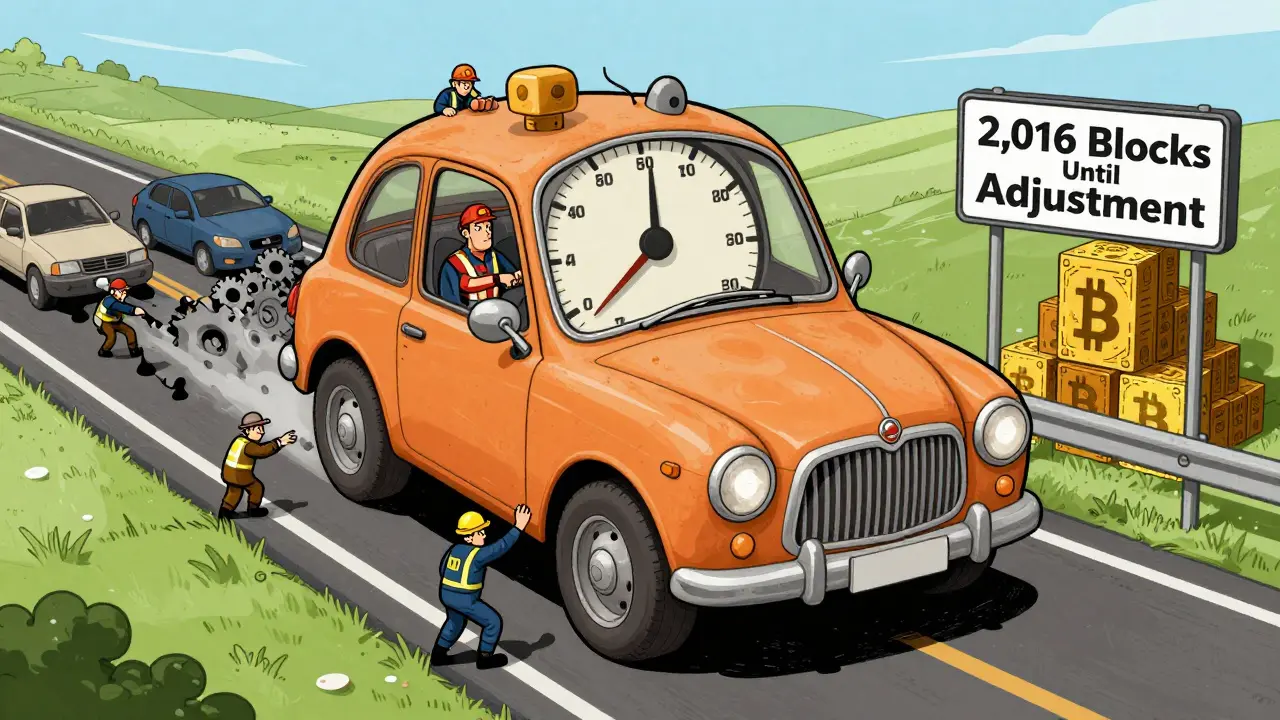

Adaptive mining difficulty is transforming blockchain networks by replacing slow, two-week adjustments with real-time tuning. It improves security, cuts energy waste, and stabilizes block times - but adoption faces resistance from miners and conservative networks like Bitcoin.