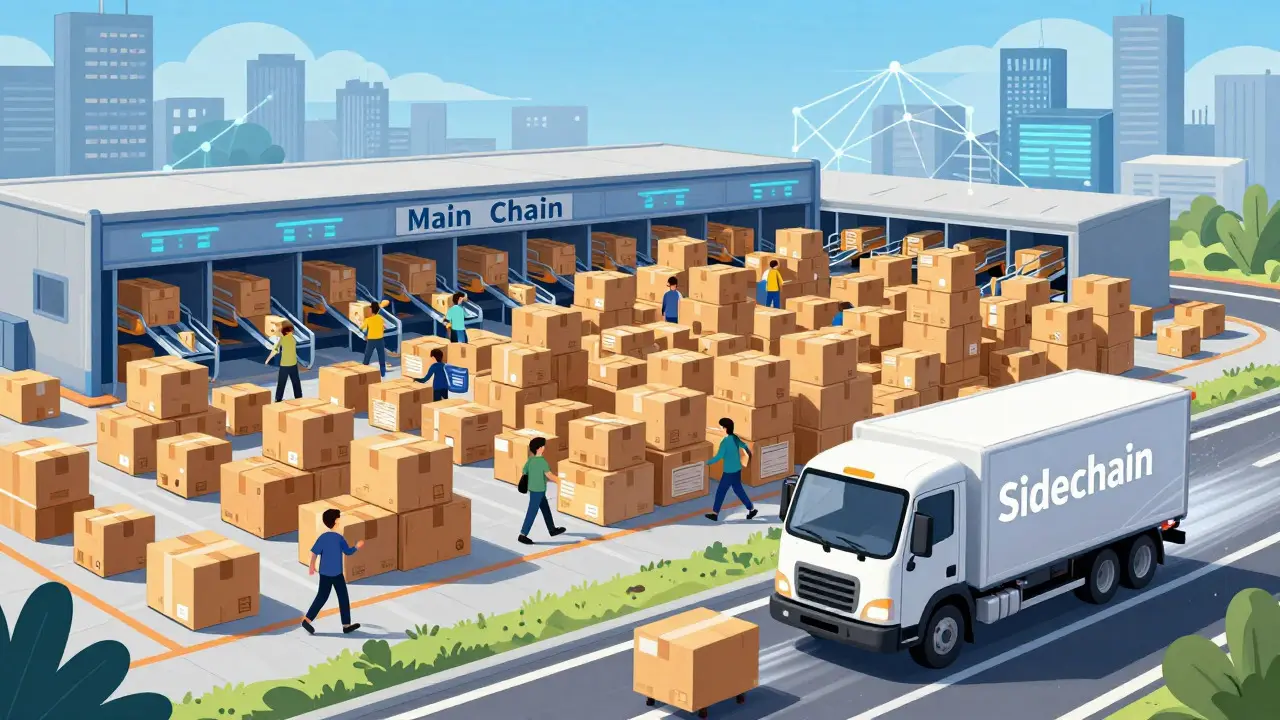

Imagine you are trying to send a package through the postal service. The main sorting facility is huge, secure, and reliable, but it’s also incredibly slow because it handles every single letter and box in the country. Now imagine there is a smaller, specialized delivery truck that picks up packages from your neighborhood, sorts them quickly, and delivers them locally before syncing back with the main facility. That is essentially how sidechains work in the world of blockchain.
Sidechains are independent blockchains that run parallel to a main blockchain (like Bitcoin or Ethereum). They are connected via a mechanism called a two-way peg, which allows digital assets to move securely between the main chain and the sidechain. This setup solves one of the biggest problems in crypto today: congestion. When the main network gets too busy, transactions become slow and expensive. Sidechains offer a way out by handling transactions separately, keeping the main chain light and fast.
How Sidechains Work: The Two-Way Peg Mechanism
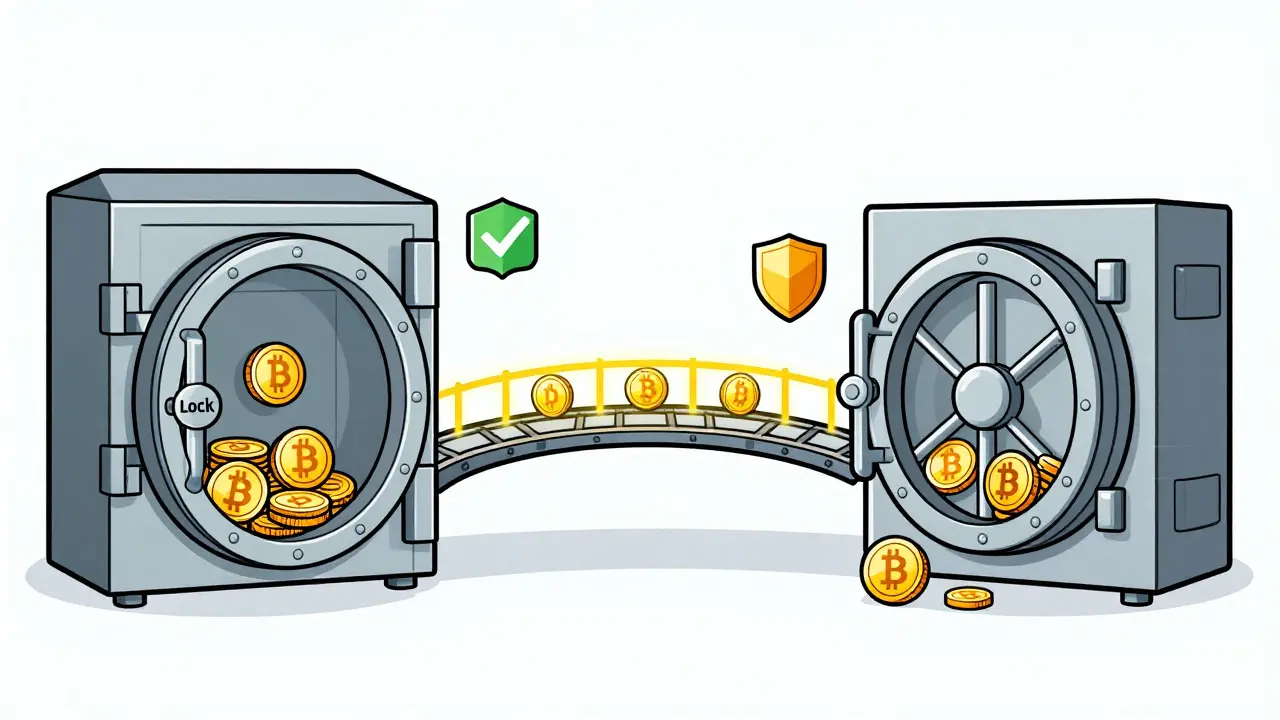
To understand the benefits, you first need to grasp the mechanics. A sidechain is not just a copy of the main chain; it has its own rules, consensus mechanisms, and validators. The bridge between them is the two-way peg. Think of this as an escrow service. When you want to move Bitcoin from the main Bitcoin network to a sidechain like Liquid Network, your Bitcoin is locked in a special address on the main chain. In return, you receive an equivalent amount of tokens on the sidechain.
This process relies on cryptographic proofs, often using Simplified Payment Verification (SPV), to ensure the transfer is legitimate. According to Horizen Academy's documentation, these proofs typically require six blockchain confirmations to be considered secure. Once you are done using the sidechain, you can reverse the process. The sidechain tokens are burned (destroyed), and the original Bitcoin is unlocked on the main chain. This flexibility is what makes sidechains so powerful for specific use cases.
Key Benefits of Using Sidechains
Why do developers and enterprises choose sidechains over sticking to the mainnet? The answer lies in three core advantages: speed, cost, and flexibility.
- Scalability: Main chains like Ethereum have limited throughput, often capping at 15-30 transactions per second (TPS). Sidechains can handle thousands. For example, Polygon PoS achieves average transaction finality in just 2.1 seconds, compared to Ethereum's 13-15 seconds. Some gaming-focused sidechains like Immutable X process up to 9,000 TPS.
- Lower Costs: High demand on mainnets drives up gas fees. During peak times, sending a simple transaction on Ethereum could cost $1.50 or more. On Polygon PoS, that same transaction might cost $0.0001. This difference is massive for microtransactions or high-frequency applications.
- Customization: Because sidechains are independent, they can use different consensus mechanisms. While Bitcoin uses Proof-of-Work (PoW), Liquid Network uses a federated model with 15 functionaries. This allows projects to tailor their security and performance needs without changing the main chain's protocol.
Real-World Use Cases for Sidechains
Theory is fine, but where are sidechains actually being used? Here are some concrete examples that show their value in action.
1. Fast Bitcoin Transactions with Liquid Network
Launched in October 2017 by Blockstream, Liquid Network was Bitcoin's first production sidechain. It allows exchanges and institutions to settle trades instantly and privately. Instead of waiting for hours for Bitcoin confirmations, traders can move assets on Liquid in seconds. It also supports "confidential transactions," which hide the amount and type of asset being transferred, adding a layer of privacy that isn't native to the Bitcoin mainnet.
2. Enterprise Identity and Supply Chain with Rootstock
Rootstock, launched in February 2018, brings smart contract functionality to Bitcoin. Former Bitcoin Core lead developer Dr. Gavin Andresen noted that sidechains like Rootstock represent the most practical path for Bitcoin to support complex applications without altering its core protocol. Companies use this for supply chain tracking and digital identity verification, leveraging Bitcoin's security while enjoying Ethereum-like programmability.
3. Gaming and NFTs with Immutable X
Gaming requires speed. If a player wants to trade an in-game item, they don't want to wait 15 seconds or pay high fees. Immutable X, a sidechain focused on non-fungible tokens (NFTs), processes thousands of transactions per second with zero gas fees for users. This makes it viable for mass-market gaming applications where frictionless user experience is critical.
| Sidechain | Parent Chain | Consensus Model | Avg. Transaction Finality | Primary Use Case |
|---|---|---|---|---|
| Liquid Network | Bitcoin | Federated (15 Functionaries) | Seconds | Institutional Trading, Privacy |
| Polygon PoS | Ethereum | Proof-of-Stake | 2.1 Seconds | dApps, Enterprise Solutions |
| Rootstock | Bitcoin | Proof-of-Work (merged mining) | ~10 Minutes | Smart Contracts on Bitcoin |
| Immutable X | Ethereum | ZK-Rollup (Sidechain hybrid) | Instant | NFTs, Gaming |
Sidechains vs. Layer-2 Solutions: What's the Difference?
You will often hear sidechains compared to Layer-2 (L2) solutions like Optimistic Rollups or zk-Rollups. They both aim to scale blockchains, but they differ significantly in security and architecture.
Layer-2 solutions inherit the security of the main chain. If Ethereum is secure, then an L2 built on top of it is equally secure. Sidechains, however, have their own independent security models. As Vitalik Buterin, Ethereum co-founder, stated in January 2023, "sidechains are useful for specific applications but cannot provide the same security guarantees as true Layer-2 solutions."
This independence is a double-edged sword. On one hand, it gives sidechains more freedom to innovate. Indodax's 2023 study found that sidechains support 78% more diverse consensus algorithms than L2s. On the other hand, it introduces risk. The Ronin Network hack in March 2022, which resulted in a $625 million loss, exploited the sidechain's validator threshold. This event highlighted that while sidechains offer flexibility, they may sacrifice some of the decentralized security that makes blockchains attractive in the first place.
Challenges and Risks to Consider
Despite the benefits, sidechains are not without flaws. Understanding these risks is crucial for anyone looking to build on or invest in sidechain ecosystems.
- Security Trade-offs: Because sidechains have fewer validators than mainnets, they are potentially easier to attack. Chainalysis' 2023 assessment noted that sidechains like Polygon PoS maintain only 65-70% equivalent security compared to Ethereum's base layer.
- Bridging Complexity: The two-way peg is the weakest link. Setting up secure bridges requires specialized cryptographic knowledge. Reddit's Community Points system faced criticism for its complex bridging process, including a 72-hour withdrawal period that frustrated users.
- Validator Incentives: Keeping validators honest and online is hard. A survey by the Blockchain Council in August 2023 found that 68% of sidechain projects struggled to sustain validator participation without offering substantial token rewards.
- Fragmentation: Dr. Emin Gün Sirer, founder of Avalanche, argues that sidechains create fragmentation. With dozens of different sidechains, liquidity and users are spread thin, undermining the network effects that make blockchains valuable.
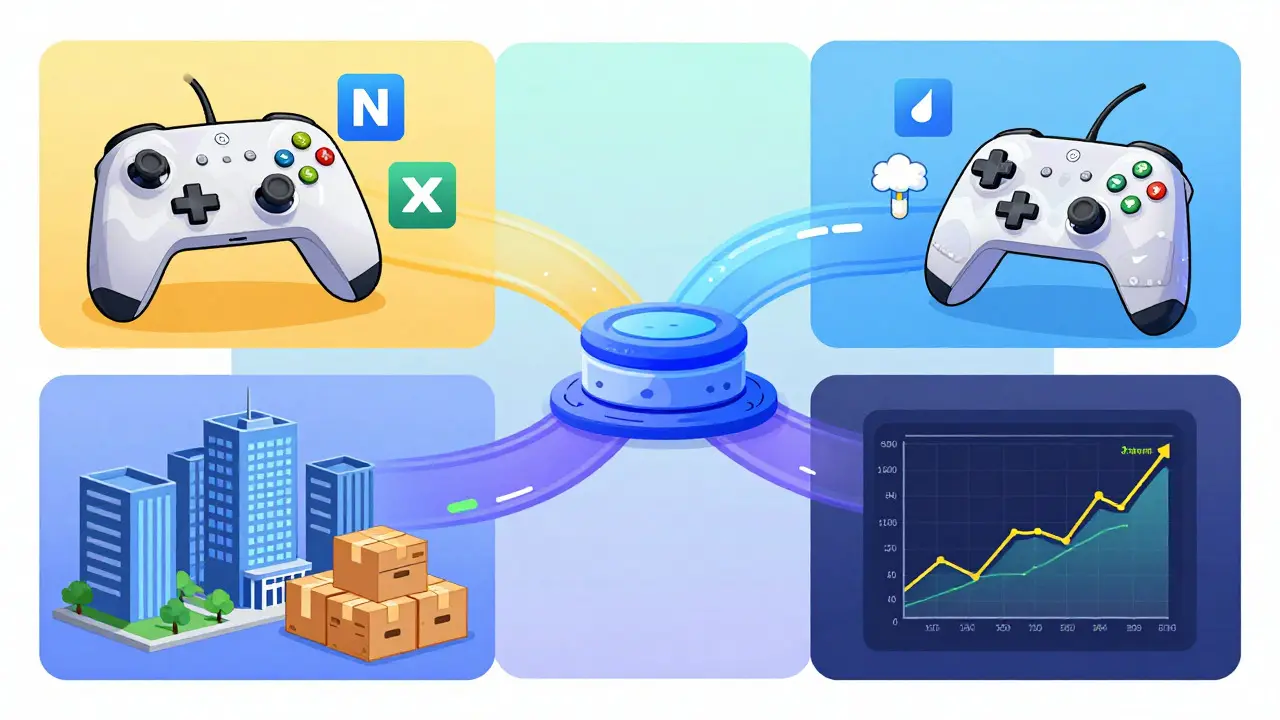
The Future of Sidechains: Evolution and Consolidation
The landscape is shifting. Many projects originally labeled as sidechains are evolving into Layer-2 solutions to address security concerns. Polygon announced in October 2023 that it would transition from a pure sidechain model to a zk-Rollup-based Layer-2 solution. This move acknowledges the market's preference for stronger security guarantees.
However, sidechains are not disappearing. Gartner predicts that sidechain adoption will grow at a 34% compound annual growth rate (CAGR) through 2026, particularly for enterprise applications. Why? Because enterprises often need customized consensus mechanisms that general-purpose L2s don't provide. For example, a supply chain consortium might want a permissioned sidechain where only verified partners can validate transactions.
Innovations like Cosmos' Inter-Blockchain Communication (IBC) protocol are also helping. By allowing 32 sidechains to communicate seamlessly, IBC reduces the isolation problem. According to Cosmos' internal metrics, this shared security model reduces individual security overhead by 60%. As interoperability improves, sidechains may become less about isolated silos and more about interconnected, specialized networks.
Conclusion: Are Sidechains Right for You?
If you are building an application that requires high throughput, low costs, and custom logic, sidechains remain a compelling option. They offer a pragmatic middle ground between the rigidity of mainnets and the complexity of building a new blockchain from scratch. However, if maximum security and decentralization are your top priorities, you might lean toward Layer-2 solutions or stick to the mainnet.
The key is to match the technology to the job. Use sidechains for specialized tasks-like private trading, gaming, or enterprise data management-and rely on the main chain for settlement and ultimate security. As the ecosystem matures, expect to see more hybrid models that blend the best of both worlds.
What is the main difference between a sidechain and a Layer-2 solution?
The primary difference lies in security. Layer-2 solutions inherit the security of the main blockchain, meaning they are as secure as the parent chain. Sidechains have their own independent consensus mechanisms and validators, which offers more flexibility but generally provides lower security guarantees than the main chain or Layer-2s.
Are sidechains safe to use?
Sidechains are relatively safe, but they carry higher risks than mainnets due to their independent security models. The safety depends heavily on the robustness of the two-way peg bridge and the number of validators. Major hacks, like the Ronin Network incident, highlight the importance of choosing well-established sidechains with strong audit histories.
How does the two-way peg work?
A two-way peg acts as a bridge. To move assets from the main chain to a sidechain, the assets are locked in a smart contract or multi-signature wallet on the main chain. An equivalent amount of tokens is then minted on the sidechain. To return, the sidechain tokens are burned, and the original assets are released from the lock on the main chain.
Which sidechains are currently the most popular?
Some of the most widely used sidechains include Liquid Network (for Bitcoin trading), Polygon PoS (for Ethereum scaling), Rootstock (for Bitcoin smart contracts), and Immutable X (for NFTs and gaming). Each serves a specific niche within the broader blockchain ecosystem.
Do sidechains have transaction fees?
Yes, but they are typically much lower than mainnet fees. For example, while Ethereum mainnet fees can exceed $1.50 during peak times, Polygon PoS transactions often cost fractions of a cent ($0.0001). Some sidechains, like Immutable X, even offer zero gas fees for end-users.
Categories
Popular Articles