

It used to be simple. If you wanted to use Bitcoin or Ethereum in Russia, you had to operate in the shadows. The Central Bank of Russia (CBR) is the nation's primary financial regulator that has historically maintained a hostile stance toward decentralized digital assets spent years telling everyone that cryptocurrencies were too risky, too anonymous, and ultimately useless for real commerce. But if you think the rules just got relaxed because the world changed, you’re mistaken. In fact, the opposite is happening.
As we move through 2026, the CBR isn’t opening the floodgates. It is building a dam. The current regulatory framework is a masterclass in controlled restriction. The bank allows crypto to exist, but only in specific, heavily monitored corridors designed to serve state interests-primarily bypassing international sanctions-while crushing domestic adoption. For businesses, investors, and everyday users, understanding this dual-track system is no longer optional; it is a matter of legal survival.
The "CryptoBasel" Era: Stricter Capital Rules for Banks
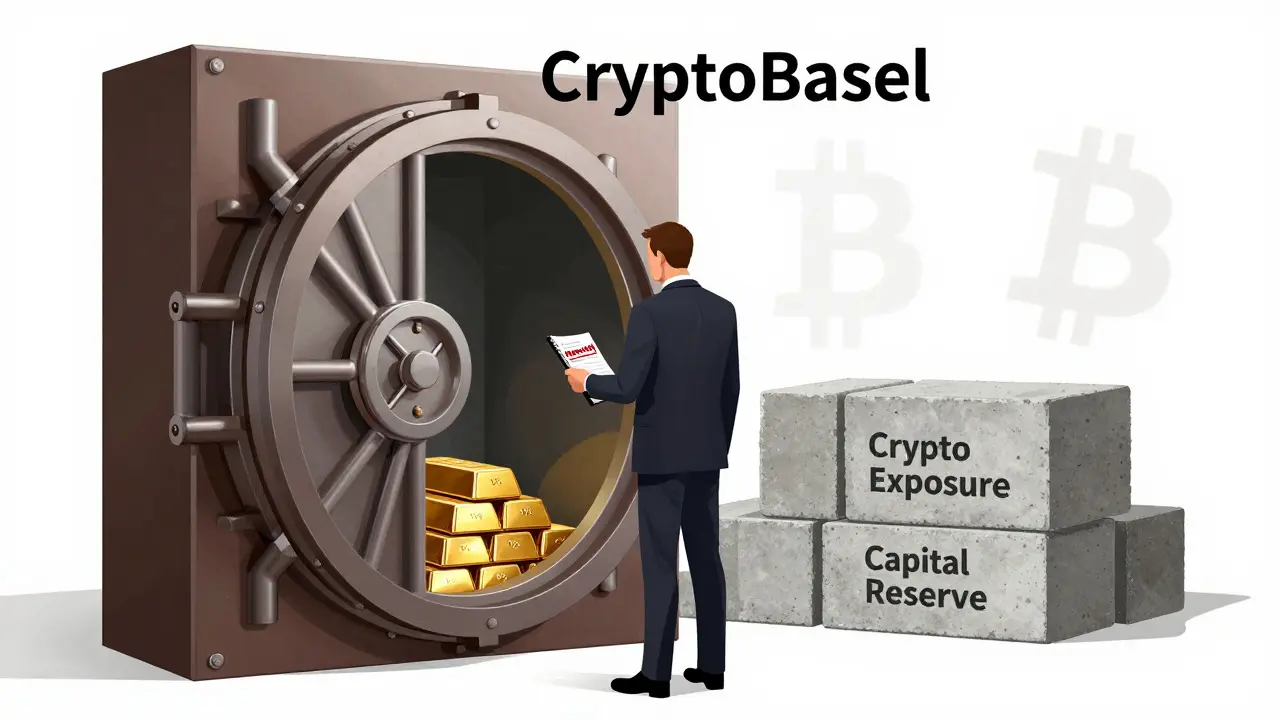
If you work with money in Russia, you know that banks are cautious by nature. But when it comes to crypto, they have been terrified. That fear is now codified into law. Starting in full effect in 2026, the CBR has introduced what industry experts like Andrey Tugarin of GMT Legal call "CryptoBasel." This isn't a new idea; it is the formalization of extreme conservatism using international banking standards.
Under these new capital requirements, any Russian bank engaging with cryptocurrency faces severe limitations. The most critical rule is the 1% cap on digital asset transactions relative to a bank's total capital. Let’s break that down. If a bank has $1 billion in capital, it can only hold or facilitate up to $10 million in crypto-related exposure. For most institutions, this number is effectively zero. It means banks will not touch retail crypto services unless they are forced to, and even then, they will do so with one hand tied behind their backs.
This stems from an informational letter issued in May 2025 (IN 03-23/87), which recommended that banks fully cover any crypto investments with their own assets. Essentially, for every ruble of investor money exposed to crypto volatility, the bank must back it with a ruble of its own core capital. Why? Because the CBR views cryptocurrencies as highly risky assets that threaten monetary stability. They want to ensure that if Bitcoin crashes, the Russian banking system doesn’t crash with it.
- Capital Coverage: Banks must back crypto exposures 1:1 with their own funds.
- Transaction Cap: Digital asset activity cannot exceed 1% of a bank’s total capital.
- Loan Restrictions: Loans extended to cryptocurrency firms are heavily restricted or banned entirely.
For the average person, this means your local Sberbank branch won’t suddenly offer a "Buy Bitcoin" button. The institutional appetite for crypto remains frozen under the weight of these compliance costs.
The International Trade Loophole vs. Domestic Ban
Here is where the Russian approach gets interesting. While the CBR slams the door on domestic crypto payments, it cracked open a window for international trade. This split personality is driven by necessity. Western sanctions have made traditional SWIFT transfers difficult and expensive for many Russian companies. To keep goods moving, the government needed a workaround.
In the summer of 2024, legislation was passed permitting digital currency payments in international trade. This created a critical loophole. A Russian manufacturer exporting machinery to Asia can now legally accept payment in cryptocurrency. However, this permission comes with strings attached. The transaction must occur outside the standard domestic payment infrastructure, and it is subject to intense scrutiny.
Crucially, the ban on cryptocurrency settlements between residents inside Russia remains absolute. You cannot buy groceries with USDT. You cannot pay your neighbor for lawn care with Litecoin. The CBR argues that allowing domestic crypto payments would undermine the ruble and enable capital flight. So, you have a paradox: crypto is forbidden at home but encouraged abroad, provided it helps the national economy survive external pressure.
| Activity Type | Status | Key Restrictions |
|---|---|---|
| Domestic Payments (Person-to-Person) | Banned | No legal tender status; strict liability for violations. |
| International Trade | Permitted | Limited to cross-border transactions; requires reporting. |
| Bank Investment | Restricted | Capped at 1% of bank capital; high reserve requirements. |
| Retail Trading | Allowed (with conditions) | Must use licensed platforms; KYC mandatory. |
The Experimental Legal Regime (ELR): A Gilded Cage
You might have heard about the Experimental Legal Regime (ELR) is a special legal framework in Russia that allows limited testing of innovative financial technologies under strict government supervision. It sounds promising, right? A sandbox where innovation can flourish? Not exactly. Think of it more as a gilded cage.
The ELR creates a controlled environment for cryptocurrency activities, but participation is restricted to "especially qualified" investors. These aren’t just anyone with savings. These are entities that meet high financial thresholds and pass stringent vetting processes. The goal is to allow the state to study how crypto works without letting the general public get involved.
However, the CBR has simultaneously proposed introducing a ban on cryptocurrency settlements between residents who are *outside* the ELR. This establishes liability for violations. If you try to settle a deal in crypto without being part of this exclusive club, you risk legal penalties. This dual approach allows controlled experimentation while preventing widespread domestic crypto adoption. It keeps the technology visible to regulators but invisible to the masses.
Surveillance State: KYC, AML, and De-anonymization
If the CBR hates one thing, it’s anonymity. Cryptocurrencies were built to be pseudonymous, but in Russia, that feature is treated as a bug. The compliance requirements under the current framework are exceptionally comprehensive, drawing heavily on international anti-money laundering (AML) standards.
Financial institutions must implement robust AML measures. The CBR has issued methodological recommendations specifically targeting peer-to-peer (P2P) transactions, which are often used to bypass formal channels. Mandatory Know Your Customer (KYC) requirements apply to all qualified investors. There is no such thing as a private wallet in the eyes of the Russian regulator anymore.
Perhaps the most significant development is the creation of a digital platform for de-anonymization of cryptocurrency users. Developed in collaboration with the Ministry of Digital Development, this system aims to link blockchain addresses to real-world identities. Combined with reporting requirements for crypto transactions exceeding 600,000 rubles to tax authorities, the net is closing tight. Every transaction must be recorded. All participants must undergo KYC and AML compliance procedures.
This positions Russia among the most restrictive major economies regarding cryptocurrency regulation. It is not enough to just follow the rules; you must prove you are following them, constantly, to a centralized authority.

Stablecoins and the Road Ahead
While spot trading and mining face hurdles, stablecoins are getting their own spotlight. Deputy Finance Minister Ivan Chebeskov confirmed that Russia aims to finalize new rules for stablecoins by the end of 2025, with implementation continuing into 2026. The Ministry of Finance and the Central Bank are working jointly on these frameworks.
The goal is to align stablecoin regulation with international standards, as emphasized during the Moscow Financial Forum. The rhetoric suggests a desire to "benefit businesses and citizens" and improve Russia’s position in the global crypto market. However, there is a tension here. The Ministry of Finance sees potential utility in stablecoins for trade, while the CBR sees systemic risk. The result will likely be a tightly regulated instrument, possibly linked to the ruble or other hard currencies, but strictly controlled to prevent capital flight.
Looking forward, the CBR plans to consolidate cryptocurrency infrastructure under state control following ELR implementation. Rosfinmonitoring has discussed establishing regulation for Virtual Asset Service Providers (VASPs), including exchanges and brokers. The message is clear: integrate into the state-regulated system or face blocking. This extends to miners, platforms, and intermediaries alike. It is a binary choice: compliance or elimination.
What This Means for You
If you are a business owner looking to expand into Russia, understand that crypto is not a free-for-all. It is a tool for international settlement, tightly leashed. If you are an individual investor, expect higher fees, stricter identity checks, and limited access through traditional banks. The era of wild west crypto trading in Russia is over. We are now in the era of bureaucratic oversight.
The CBR’s strategy is defensive. It wants to neutralize the threat of crypto to the ruble while harnessing its utility for sanctioned trade. For everyone else, the path is narrow, monitored, and expensive. Keep your records straight, verify your counterparties, and remember: in Russia, privacy is a privilege, not a right.
Can I use cryptocurrency to pay for goods in Russia?
Generally, no. The use of cryptocurrency as a means of payment between residents within Russia is prohibited. However, digital currency payments are permitted in international trade settlements, allowing Russian companies to receive crypto from foreign partners.
What is the 1% capital cap for banks?
Starting in 2026, Russian banks are limited to holding or facilitating digital asset transactions equivalent to no more than 1% of their total capital. This rule, part of the "CryptoBasel" framework, is designed to minimize systemic risk by limiting institutional exposure to volatile crypto markets.
Who can participate in the Experimental Legal Regime (ELR)?
Participation in the ELR is restricted to "especially qualified" investors who meet high financial thresholds and pass stringent vetting. It is not open to the general public. Settlements outside this regime are increasingly restricted and carry liability risks.
How does the Russian government track crypto transactions?
The government uses a combination of mandatory KYC (Know Your Customer) requirements, AML (Anti-Money Laundering) reporting, and a digital de-anonymization platform developed with the Ministry of Digital Development. Transactions over 600,000 rubles must be reported to tax authorities.
Are stablecoins regulated differently in Russia?
Yes, specific regulations for stablecoins are being finalized by the Ministry of Finance and the Central Bank. The goal is to align with international standards while maintaining strict oversight to benefit international trade without destabilizing the domestic currency.