
Are you staring at a screenshot of Mars Exchange, a cryptocurrency trading platform often confused with several unrelated and frequently flagged entities, wondering if your money is safe? You are not alone. The name "Mars" has become a lightning rod for confusion in the crypto world. Unlike established giants like Coinbase or Binance, there is no single, globally recognized, top-tier exchange simply called "Mars Exchange." Instead, this title acts as an umbrella for a fragmented landscape of platforms-some barely functional, others outright scams.
If you clicked this review hoping to find a hidden gem with low fees and high volume, brace yourself. The reality is far less exciting and significantly more dangerous. As of late 2025, regulatory bodies worldwide have issued warnings about multiple Mars-branded entities. This guide cuts through the noise to tell you exactly what these platforms are, why regulators hate them, and whether you should keep your hands off your wallet.
The Identity Crisis: Which Mars Are We Talking About?
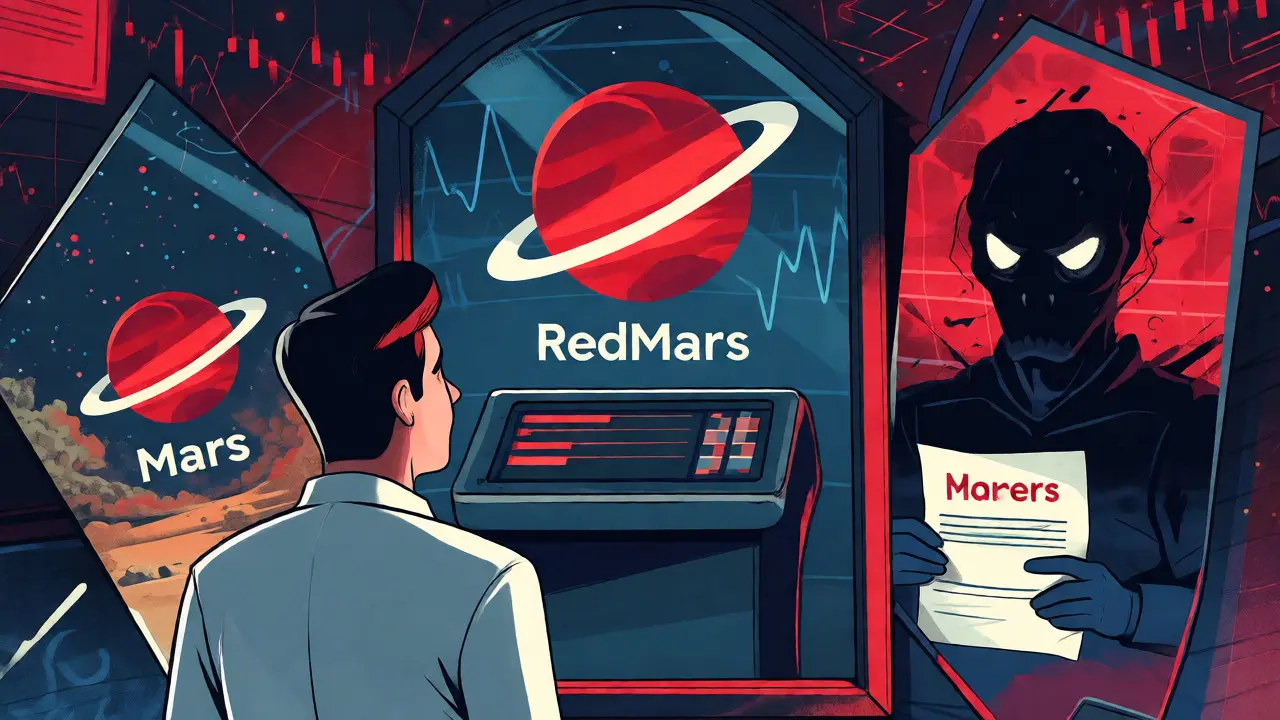
Before you deposit a single cent, you need to identify which specific entity you are dealing with. "Mars Exchange" is not a monolith; it is a brand name shared by at least three distinct operations, each with a different risk profile. Confusing them can lead to catastrophic financial errors.
- Mars Ecosystem: A legitimate but tiny cryptocurrency exchange founded in 2021. It ranks near the bottom of global traffic charts (506th out of 612 tracked exchanges). Its monthly visits hover around 80-100, indicating virtually zero user adoption.
- RedMars: Primarily a forex broker offering MetaTrader 5 (MT5) access. While not strictly a crypto-only exchange, it allows some crypto pair trading. It is regulated but lacks the depth and liquidity of major players.
- Mars Tech Limited / The Big Mars: These are the red flags. Mars Tech Limited was added to the New Zealand Financial Markets Authority (FMA) warning list in April 2025 as a fake investment platform. "The Big Mars" appears on DataVisor’s list of known fake crypto exchanges.
Most users searching for "Mars Exchange" are likely encountering one of the latter two-the unregulated or fraudulent entities that use aggressive marketing to lure in beginners. If your platform promises guaranteed returns or uses a generic website template identical to dozens of other sites, you are likely looking at a scam operation rather than a genuine exchange.
Regulatory Warnings: Why Authorities Are Skeptical
In the crypto world, regulation is your safety net. When that net is missing-or worse, when authorities actively warn against a platform-you need to pay attention. The regulatory history of Mars-branded platforms is troubling.
The most significant recent development involves Mars Tech Limited. Investigations revealed that this entity falsely claimed regulation by both the UK’s Financial Conduct Authority (FCA) and Cyprus’ CySEC. However, neither authority had any record of licensing this company. The FMA in New Zealand explicitly labeled it a "fake investment platform," noting its use of common scam templates where only the logo changes between iterations.
| Platform Name | Regulatory Status | Key Warning Source | Risk Level |
|---|---|---|---|
| Mars Tech Limited | Unregulated / Fake Claims | NZ FMA (April 2025) | High (Scam Alert) |
| The Big Mars | Unregulated | DataVisor (2024 List) | High (Fake Exchange) |
| Mars Ecosystem | No Government Regulation | FxVerify | Medium-High (Low Liquidity) |
| RedMars | Licensed (Forex Focus) | Various Forex Regulators | Medium (Niche Utility) |
This lack of oversight means that if Mars Tech or similar entities disappear overnight-as many do-you have no recourse. There is no insurance fund, no government-backed compensation scheme, and no clear legal path to recovery. For the average investor, this isn't just a minor inconvenience; it's a total loss scenario.

User Experience and Traffic Reality Check
A healthy crypto exchange buzzes with activity. Look at the numbers for Mars Ecosystem, the closest thing to a "real" Mars exchange, and the picture becomes grim. According to SimilarWeb data from 2025, the site attracts only about 81 monthly visits. That’s fewer people than visit a small local bakery on a Tuesday morning.
Why does this matter? Low traffic equals low liquidity. In trading terms, liquidity ensures you can buy or sell assets at the price you see. With such minimal user engagement, spreads (the difference between buy and sell prices) tend to widen significantly. You might see Bitcoin listed at $60,000, but when you try to execute a trade, the actual cost could be much higher due to slippage. Furthermore, the bounce rate sits at 40%, with an average time on site of nearly zero seconds. Users arrive, realize the platform looks empty or feels untrustworthy, and leave immediately.
Compare this to industry leaders. Major exchanges process billions in daily volume. They have robust customer support teams responding within minutes. Mars Ecosystem’s community feedback is sparse, mostly consisting of questions about withdrawal delays rather than praise for features. If you cannot find real-time user reviews on Reddit or Trustpilot, that silence is deafening-and usually bad news.

Features and Fees: Do They Compete?
Let’s assume you ignore the warnings and decide to test the waters. What do you actually get? For Mars Ecosystem, the answer is: very little. The interface is basic, lacking advanced charting tools, API access for bots, or staking options. It operates essentially as a simple spot trading venue without the ecosystem features modern traders expect.
RedMars offers a slightly better technical package because it leverages MetaTrader 5 (MT5). If you are a technical trader familiar with MT5, you’ll appreciate the 21 timeframes and algorithmic trading capabilities. However, RedMars is primarily a forex broker. Its crypto offerings are limited to roughly 50 pairs, compared to hundreds available on dedicated crypto exchanges.
Fee structures also raise eyebrows. While advertised fees may look competitive, the effective cost is higher due to poor execution quality. Hidden costs often emerge during withdrawals, where fixed fees eat into smaller balances. Additionally, RedMars requires steep minimum deposits, creating a barrier to entry for casual investors who just want to dip their toes in. There are no Islamic accounts, no PAMM (Percentage Allocation Management Module) options, and no copy-trading features, making it a "no-frills" environment that fails to serve diverse trading styles.
The Verdict: Should You Trade Here?
Here is the hard truth: for 95% of crypto users, Mars-branded platforms are not worth the risk. The combination of regulatory warnings, negligible traffic, and ambiguous corporate identities creates a perfect storm of uncertainty.
Avoid Mars Tech Limited and "The Big Mars" entirely. These entities have been flagged by reputable fraud detection agencies and government regulators. Their business model relies on opacity and aggressive sales tactics rather than transparent trading services.
Proceed with extreme caution regarding Mars Ecosystem. While it hasn’t been officially banned, its lack of regulation and tiny user base make it a fragile platform. If the exchange suffers a technical failure or runs out of operating capital, your funds could be stuck indefinitely. There is no compelling reason to choose Mars Ecosystem over established alternatives like Kraken, Coinbase, or even mid-tier exchanges like Bybit or OKX, which offer superior security, liquidity, and customer service.
Consider RedMars only for specific forex needs. If you are already an experienced forex trader using MT5 and specifically want to trade crypto-fiat pairs through a broker relationship, RedMars might suffice. But do not treat it as a primary crypto holding venue.
Is Mars Exchange a scam?
It depends on which "Mars" you mean. Mars Tech Limited and "The Big Mars" are widely considered scams or fake platforms, having received official warnings from regulators like the NZ FMA. Mars Ecosystem is a legitimate but extremely low-traffic exchange that is not necessarily a scam, but carries high risk due to lack of regulation and liquidity.
Is Mars Exchange regulated?
Most Mars-branded entities lack meaningful regulation. Mars Tech Limited falsely claimed FCA and CySEC regulation. Mars Ecosystem operates without government oversight. RedMars has some forex licenses but is not a fully regulated crypto exchange in major jurisdictions like the US or EU.
What are the fees on Mars Exchange?
Fees vary by entity. Mars Ecosystem charges standard trading fees but suffers from wide spreads due to low liquidity. RedMars charges forex-style spreads and commissions. Always check the current fee schedule directly, as promotional rates often hide long-term costs.
Can I withdraw my money easily?
Withdrawal reliability is a major concern. User reports indicate delays and occasional blocks, particularly on unregulated Mars entities. Because there is no regulatory protection, if a withdrawal is denied, you have little leverage to force payment.
Does Mars Exchange have a mobile app?
Mars Ecosystem’s web presence is minimal, and a dedicated, well-reviewed mobile app is largely absent or poorly rated. RedMars users typically access the platform via the MetaTrader 5 desktop or mobile application, which is robust but complex for beginners.