

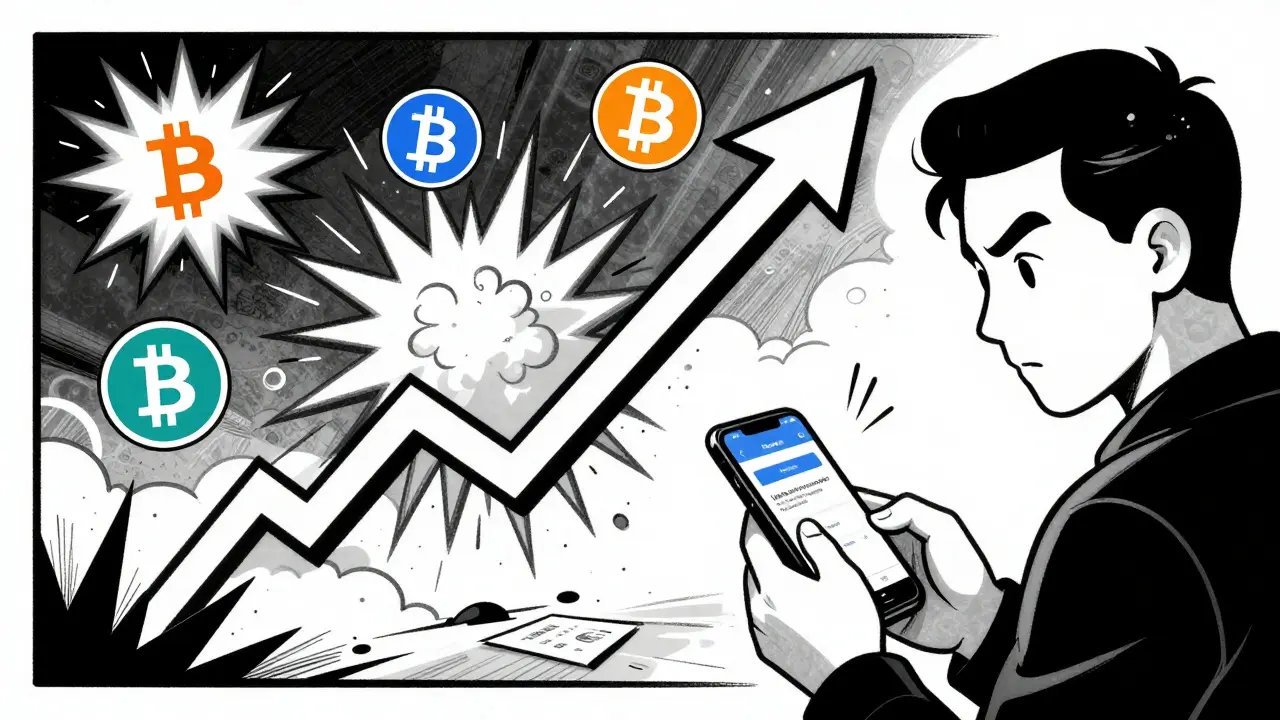
Iran saw a record $4.18 billion in cryptocurrency outflows in 2024, a 70% jump from the previous year. This massive capital flight, documented by Chainalysis, wasn't driven by hackers or governments-it was ordinary citizens trying to protect their savings from economic collapse. With the Iranian rial losing almost 90% of its value since 2018 and inflation hitting 40-50%, Bitcoin became a lifeline for many Iranians.
Why Did Iranians Flee to Cryptocurrency?
The Iranian economy has been in freefall for years. U.S. sanctions tightened in 2018, crippling oil exports and banking access. By 2024, the rial was worth just 10% of its pre-sanctions value. Hyperinflation meant prices doubled every few months. People couldn't trust their savings in banks, so they turned to Bitcoin. Chainalysis found that 70% of the outflows happened during geopolitical crises. For example, when Israel bombed Iran's embassy in Damascus on April 9, 2024, Bitcoin transactions spiked by 35% the next day. The same happened during September-October 2024 conflicts. Iranians used Bitcoin as a hedge against both economic and political instability.
How Bitcoin Dominated Iran's Crypto Exodus
Unlike other sanctioned nations, Iran's crypto outflows were mostly in Bitcoin. Chainalysis data shows Bitcoin made up over 80% of the $4.18 billion. Stablecoins like USDT were used less, partly because Iranian exchanges restricted them. Smaller transactions under $1,000 accounted for most of the activity. This wasn't institutional money-it was everyday people moving life savings. A teacher in Tehran might convert $500 to Bitcoin before a currency devaluation. A shopkeeper might use Bitcoin to buy supplies from Turkey when banks blocked international transfers.
Global Comparisons: Iran vs. Russia, Venezuela, and North Korea
| Country | Type of Activity | Scale | Key Differences |
|---|---|---|---|
| Iran | Retail-driven capital flight | $4.18B outflow | High relative to GDP, citizen-led |
| Russia | Sanctions evasion | $2.5B transactions | Mixed retail and institutional, state-backed |
| Venezuela | Hyperinflation hedge | $1.2B outflow | Similar to Iran but lower volume |
| North Korea | State-sponsored theft | $1.5B stolen | Criminal activity, not wealth preservation |
Russia's crypto activity was more institutional. They used Bitcoin to bypass sanctions on oil sales. Venezuela's outflows were similar to Iran's but smaller. North Korea, however, focused on hacking exchanges to steal funds. Iran's case stands out because it's driven by ordinary citizens-not governments or criminals.
Expert Insights on Iran's Crypto Strategy
Chainalysis Director of Research Kim Grauer noted that Iran's outflows "show deepening distrust in government" rather than coordinated evasion. OFAC analysts confirmed that Iranian users are getting smarter at hiding transactions. They use decentralized exchanges and mixers to avoid detection. But this also means tracking exact outflows is harder. Academic studies show traditional sanctions are losing power. When banks cut off access, people find digital alternatives. Iran's crypto adoption proves that sanctions alone can't stop capital flight in the digital age.
Real Stories: Iranians Using Crypto to Survive
On Persian-language Reddit forums, users shared how Bitcoin saved their families. One student in Shiraz told us he used Bitcoin to pay tuition in Turkey when banks blocked wire transfers. A small business owner in Isfahan switched to Bitcoin for imports, avoiding 30% fees from traditional remittance services. Telegram groups with over 100,000 members exchange tips on accessing exchanges via VPNs. Many call Bitcoin "digital gold" or "escape money" during crises. These aren't tech enthusiasts-they're teachers, shopkeepers, and students using crypto out of necessity.
Challenges and Technical Barriers
Despite the surge, using crypto in Iran isn't easy. The government cracked down on domestic exchanges like Nobitex in late 2024, forcing users to rely on foreign platforms. Accessing these requires VPNs, which often get blocked. Power outages disrupt mining operations. Mobile payment systems are limited, so users need stable internet. Learning curves are steep-many spend weeks learning to use wallets and exchanges. Yet, the desperation outweighs the hassle. As one user put it, "It's risky, but keeping rials is riskier."
What's Next for Iran's Crypto Future
With sanctions still in place, crypto outflows will likely keep growing. Chainalysis predicts a 20-30% increase in 2025. Iran's government is trying to control this by launching a state digital currency, but citizens don't trust it. Meanwhile, Russia and China are using crypto for trade with Iran, creating new bypass routes. Global regulators are struggling to keep up. As long as Iran's economy stays unstable, Bitcoin will remain a lifeline. For ordinary Iranians, it's not about ideology-it's about survival.
Why did Iran see such a large cryptocurrency outflow in 2024?
The $4.18 billion outflow was driven by Iranian citizens trying to preserve wealth amid economic collapse. The Iranian rial lost nearly 90% of its value since 2018 U.S. sanctions, with inflation hitting 40-50%. Geopolitical tensions, like the April and September 2024 conflicts with Israel, triggered spikes in Bitcoin usage as a hedge against instability. Unlike government-led evasion, this was primarily ordinary citizens moving personal savings.
How does Iran's crypto activity compare to other sanctioned countries?
Iran's outflows were proportionally higher than Russia or Venezuela. Russia's activity was more institutional (e.g., oil sales), while Venezuela's was smaller in volume. North Korea focused on hacking and theft, not wealth preservation. Iran stands out because it's citizen-driven, with Bitcoin dominating over stablecoins, and a higher relative impact on the economy.
What role did Bitcoin play in Iran's crypto outflows?
Bitcoin made up over 80% of the $4.18 billion outflow. Iranians preferred Bitcoin over stablecoins due to limited access to stablecoin trading on domestic exchanges. Smaller transactions under $1,000 were most common, showing it was everyday people converting savings. Bitcoin's decentralized nature made it harder for authorities to block compared to traditional banking.
How did geopolitical events affect Iran's crypto usage?
Events like Israel's bombing of Iran's embassy in Damascus on April 9, 2024, caused Bitcoin transaction spikes of 35% the next day. Similar surges happened during September-October 2024 conflicts. Google Trends data matched these spikes with increased searches for "Iran Israel," showing how quickly Iranians reacted to crises by moving money to Bitcoin.
What challenges do Iranians face when using cryptocurrency?
Government crackdowns forced users to rely on foreign exchanges, requiring VPNs which often get blocked. Power outages disrupt mining, and mobile payment systems are limited. Learning curves are steep-many spend weeks mastering wallets and exchanges. Despite this, the desperation of economic collapse makes crypto a necessary risk for many Iranians.
Comments (8)

- Jacque Istok
- February 7, 2026 AT 00:31 AM
The Iranian rial has lost nearly 90% of its value since 2018, with inflation hitting 40-50%. Chainalysis data shows 70% of the $4.18B outflows happened during geopolitical crises. When Israel bombed the embassy, Bitcoin transactions spiked 35%. It's not about tech-it's survival. But the government's crackdowns make it hard. Foreign exchanges, VPNs, power outages... but people keep using it. 'Rials are riskier,' one user said. True.

- David Bain
- February 7, 2026 AT 19:07 PM
It is imperative to contextualize the phenomenon of cryptocurrency outflows within the broader framework of economic sovereignty and capital flight dynamics. The Iranian case exemplifies a confluence of structural economic fragility and geopolitical pressures, wherein the adoption of Bitcoin functions as both a hedge against hyperinflation and a mechanism for circumventing sanctions.
Notably, the 70% spike in outflows during crises such as the April 9 embassy bombing underscores the reactive nature of this behavior. The decentralized and pseudonymous characteristics of Bitcoin render it an optimal tool for individuals seeking to preserve wealth in the face of systemic collapse.
However, this transition is not without its challenges; the reliance on foreign exchanges necessitates technical proficiency and resilience against state-imposed barriers. Ultimately, this represents a paradigm shift in how individuals navigate macroeconomic instability, transcending traditional financial systems.

- Freddie Palmer
- February 7, 2026 AT 20:38 PM
It's interesting to see how Bitcoin has become such a critical tool for Iranians, especially given the economic situation; the rial's devaluation is staggering, with a 90% loss since 2018, and inflation at 40-50%, so people are understandably turning to Bitcoin as a safe haven; Chainalysis data really highlights this, showing that 70% of the outflows happened during geopolitical crises, like when Israel bombed the embassy in Damascus, causing a 35% spike in transactions the next day; it's not just about the tech, though-people are using it for practical reasons, like paying tuition or buying imports when banks block transfers; but there are challenges too, like government crackdowns on exchanges, needing VPNs, power outages, and the steep learning curve; still, it's clear that for many, Bitcoin is a lifeline, even if it's not perfect; the sustainability of this approach is uncertain, but it's currently aiding survival; also, the fact that smaller transactions under $1,000 account for most activity shows it's everyday people, not institutions; and compared to other sanctioned nations like Russia and Venezuela, Iran's case is unique because it's driven by citizens, not governments or criminals; North Korea steals money, but Iranians are just trying to protect their savings; the government's crackdowns on domestic exchanges like Nobitex have forced people to rely on foreign platforms, which requires using VPNs, but those often get blocked; power outages disrupt mining operations, and mobile payment systems are limited, so users need stable internet; learning curves are steep, many spend weeks mastering wallets and exchanges; yet, the desperation outweighs the hassle; as one user put it, 'It's risky, but keeping rials is riskier.'

- Alex Garnett
- February 8, 2026 AT 01:37 AM
Iran's reliance on Bitcoin is laughable. A nation that can't even manage its own currency is looking to crypto for salvation. The U.S. sanctions are justified, and this outflow is just a symptom of their own incompetence. Chainalysis data? Please. The real issue is Iran's government, not Bitcoin. They should fix their own economy instead of blaming external factors. This isn't about survival-it's about poor governance. The fact that ordinary citizens are using Bitcoin is a sign of weakness, not strength. We shouldn't support this kind of behavior. Sanctions work, and Iran needs to learn its lesson.

- aryan danial
- February 8, 2026 AT 07:58 AM
Iranians using Bitcoin is a fascinating case study in economic desperation but it's not unique other sanctioned nations like Venezuela and Russia have similar patterns but Iran's case is more pronounced due to the sheer scale relative to GDP the government's crackdowns on exchanges like Nobitex have forced people to use foreign platforms which is a hassle but necessary the real issue is the lack of trust in the rial which has lost 90% of its value since 2018 inflation at 40-50% means savings evaporate quickly during crises like the embassy bombing Bitcoin transactions spiked 35% showing how quickly people react the problem is the government's inability to stabilize the economy crypto is a symptom not the cause but the situation is dire for ordinary people who have no other options

- Ryan Chandler
- February 8, 2026 AT 20:08 PM
Imagine this: a teacher in Tehran, watching her life savings vanish as the rial crashes. She converts $500 to Bitcoin, a digital lifeline. A shopkeeper in Isfahan uses it to buy supplies from Turkey when banks block transfers. This isn't just technology-it's human resilience. The April embassy bombing sent Bitcoin transactions soaring 35% overnight. People aren't tech geeks; they're ordinary folks doing whatever it takes to survive. Bitcoin is their escape route, their digital gold. It's heartbreaking, yet inspiring. The world should see this as a cry for help, not a threat. This is the real story of Iran's crypto exodus-not data points, but people fighting for their future. Every transaction represents a family's struggle to stay afloat. From students paying tuition to small business owners sourcing goods, Bitcoin is the thread holding society together. It's not about ideology; it's about survival. And in that, there's a profound strength that deserves recognition.

- Ajay Singh
- February 10, 2026 AT 09:02 AM
Bitcoin is the only option left for many Iranians.

- Oliver James Scarth
- February 11, 2026 AT 17:51 PM
It is undeniable that the Iranian regime's economic mismanagement has precipitated this cryptocurrency exodus; however, the reliance on Bitcoin is a testament to the populace's resourcefulness in the face of adversity. The data from Chainalysis is illuminating-70% of outflows coincide with geopolitical crises, such as the April embassy bombing incident, which triggered a 35% transaction surge. While sanctions remain a critical tool, this phenomenon underscores the evolving nature of financial sovereignty in the digital age. It is prudent to recognize that Bitcoin serves as both a shield against inflation and a conduit for circumventing state-imposed barriers. Nevertheless, the underlying issues require systemic reform rather than reliance on decentralized currencies. This situation is a stark reminder of the consequences of poor governance.