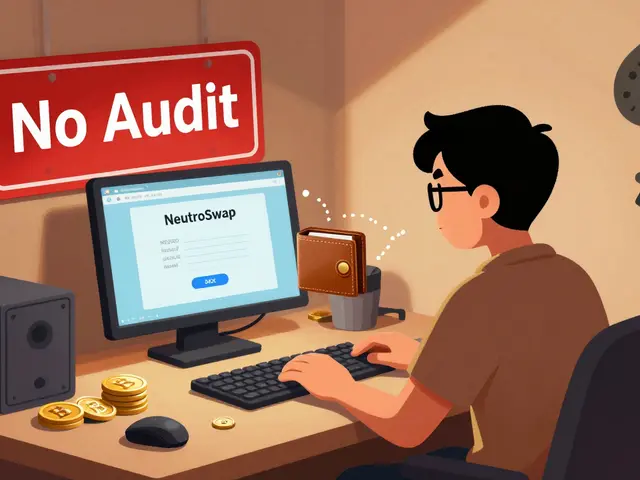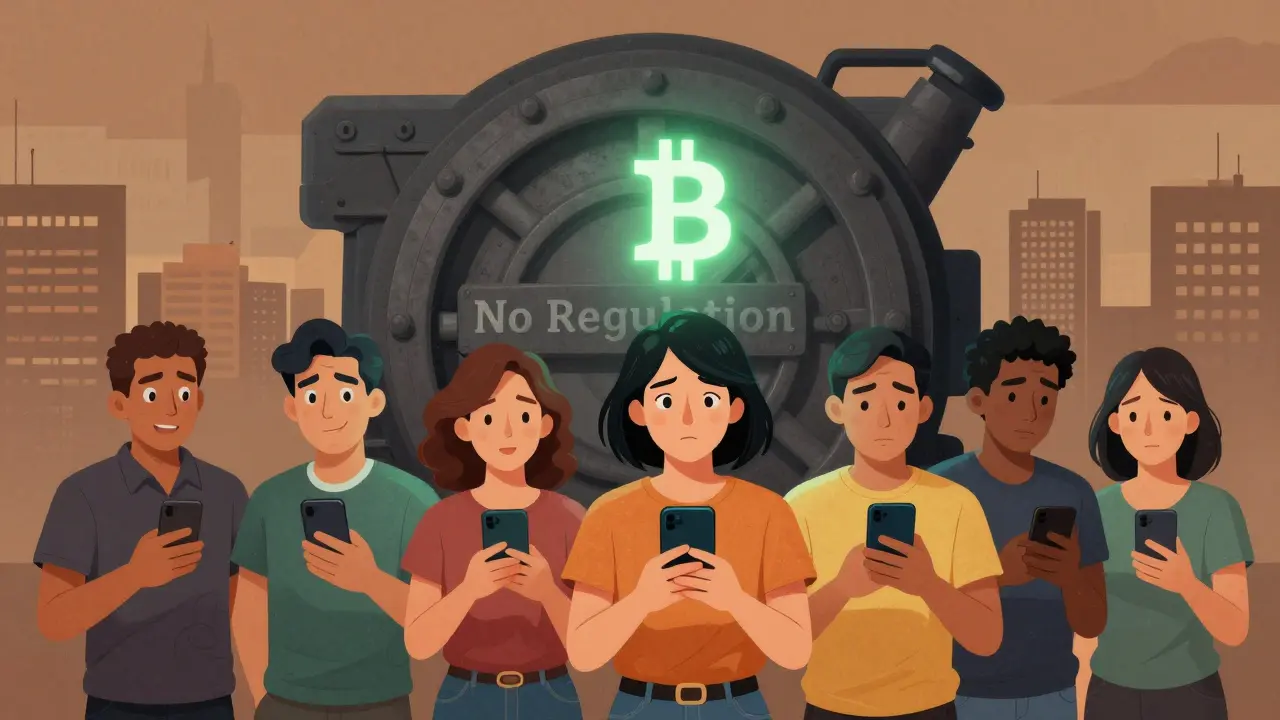

Colombia doesn’t ban cryptocurrency. But it also doesn’t protect you if something goes wrong. That’s the reality for over 1.2 million Colombian crypto users in 2025. You can buy Bitcoin on Binance, send Ethereum to a friend using Nequi, or trade altcoins through LocalBitcoins - all without breaking any law. But if a platform disappears, your funds vanish with no legal recourse. There’s no official rulebook. No government agency watching over you. And no clear way to report fraud.
Colombia’s Crypto Gray Zone
Cryptocurrencies aren’t illegal in Colombia, but they’re not officially recognized either. The Central Bank of Colombia made this clear back in 2018 and still repeats it today: cryptoassets are not legal tender. That means no business has to accept Bitcoin or Ethereum as payment. If you try to pay your rent in Dogecoin, your landlord can say no - and there’s nothing you can do about it.
The same goes for banks. The Financial Superintendency of Colombia (SFC) says crypto isn’t a security. That means banks, investment firms, and insurance companies can’t offer crypto products. No crypto ETFs. No crypto savings accounts. No regulated trading platforms. If you want to trade, you go to global exchanges like Binance or Kraken - not your local bank.
There’s no law that defines what cryptocurrency is. No statute. No decree. No regulatory body assigned to oversee it. That’s not a loophole - it’s a vacuum. And in that vacuum, the market has grown anyway.
Who’s Running the Show?
With no official rules, nine major exchanges operate freely in Colombia. Binance leads the pack with 68% of the market share, according to Kaiko Research. Others include Kraken, Bitso, CryptoMarket, and Paxful. These platforms handle around $120 million in trades every month. In Q1 2025 alone, Colombian users traded $1.45 billion in crypto - making Colombia the fifth-largest crypto market in Latin America.
Most users rely on local payment methods to buy crypto. Nequi, Daviplata, and Bancolombia are the top three ways to deposit Colombian pesos (COP) onto exchanges. Over 87% of positive user reviews mention fast COP deposits as the main reason they stick with a platform. But here’s the catch: these platforms aren’t licensed by any Colombian authority. They follow international rules - like KYC and AML checks - because they have to, not because Colombia requires it.
What Happens When Things Go Wrong?
The biggest danger in Colombia’s unregulated crypto space? Fraud with no backup.
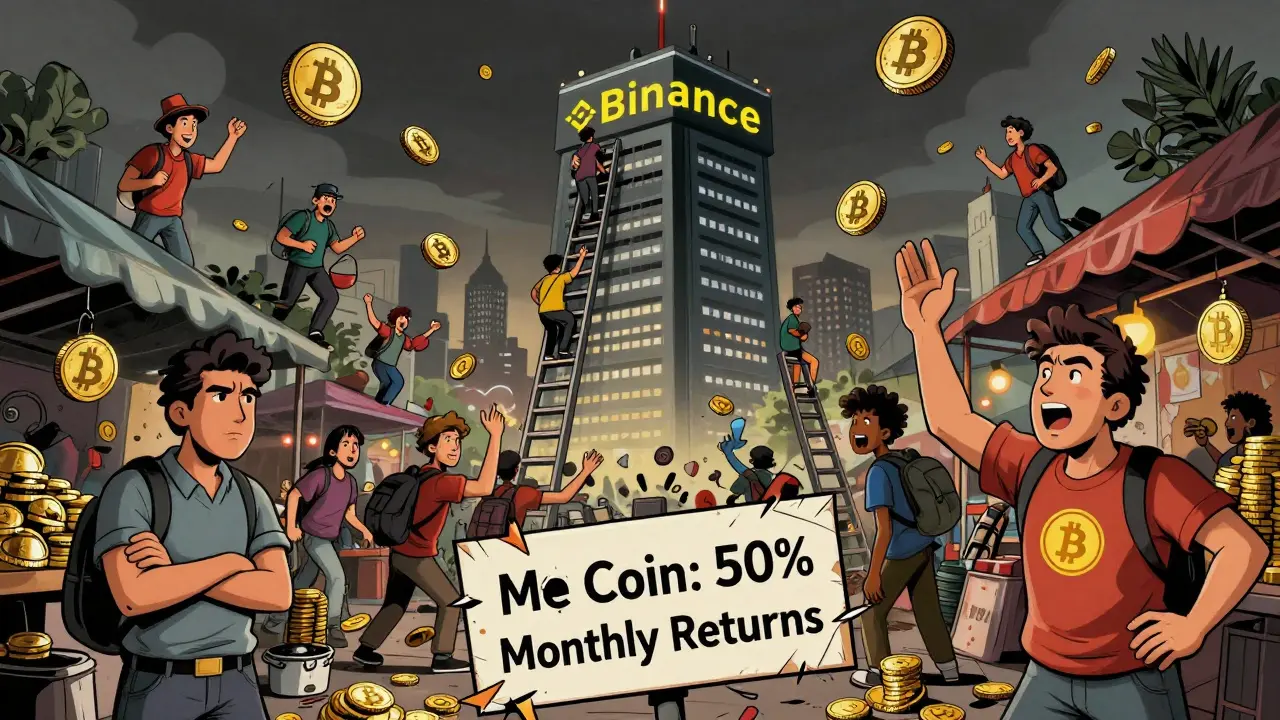
The Me Coin scandal in 2018 still haunts the market. A local platform promised 50% monthly returns - a classic Ponzi scheme. When it collapsed, $60 million vanished. The founders disappeared. Victims had no legal path to recover their money. No police unit was created. No court case was filed under crypto-specific laws. There weren’t any.
Today, similar risks persist. On Trustpilot, users report losing Bitcoin after sellers on LocalBitcoins vanished after receiving COP payments. Reddit threads are full of stories about frozen withdrawals during market crashes. One user, AnaCrypto2023, lost 2.5 BTC - worth over $150,000 at the time - because the platform didn’t have insurance or legal accountability.
Unlike Japan or Brazil, where exchanges must be licensed and hold user funds in segregated accounts, Colombian platforms operate like private businesses with zero oversight. If they fail, you fail with them.
Taxes: The Silent Rule
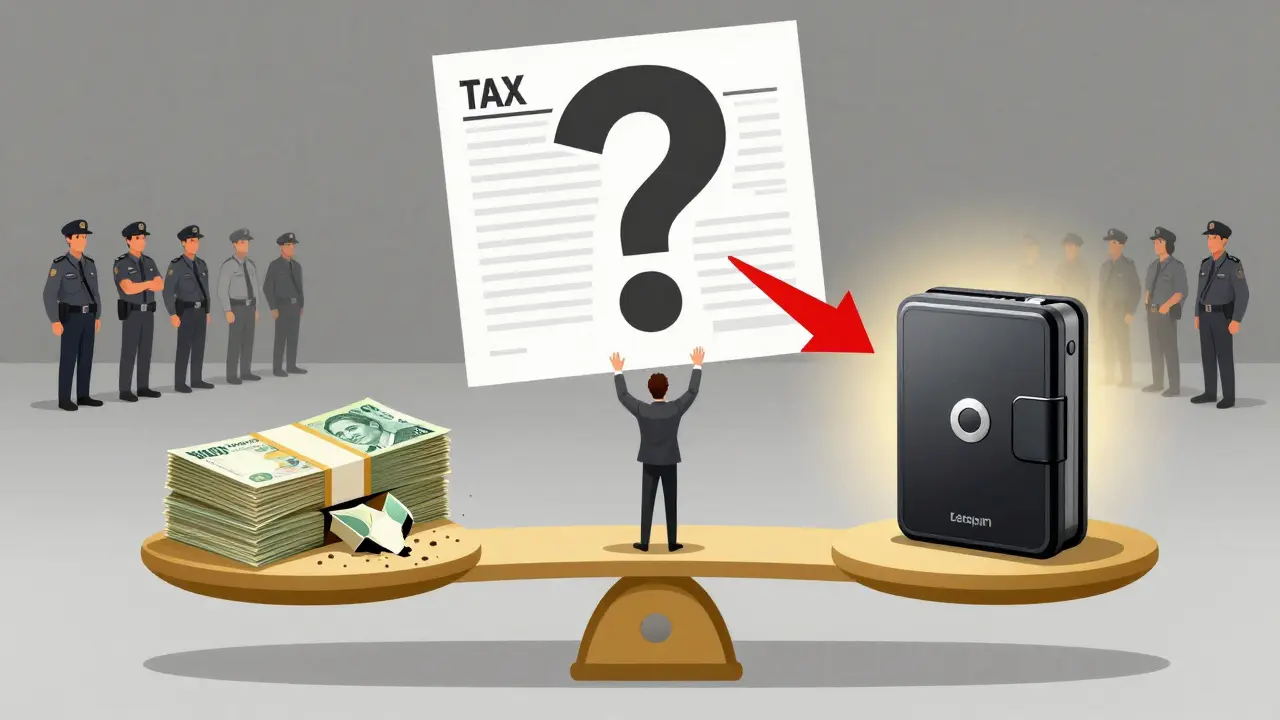
Even though the government doesn’t regulate crypto, it still wants its cut.
The DIAN - Colombia’s tax authority - doesn’t have specific crypto rules. But it does say that any profit from selling crypto counts as income. If you bought Bitcoin for 5 million COP and sold it for 12 million COP, that 7 million COP gain is taxable. The rate? Up to 39%, depending on your total annual income.
Here’s the problem: no one knows how to report it. There’s no official form. No guidance on how to track transactions across multiple exchanges. The DIAN estimates $120 million in unreported crypto gains in 2024 - but they’re not auditing users. They’re just watching.
Most Colombians using crypto don’t file taxes on it. Not because they’re trying to cheat - because they don’t know how. The lack of clarity is a legal gray area that could become a problem later.
Who’s Using Crypto in Colombia?
Colombia’s crypto users aren’t tech bros in Silicon Valley. They’re everyday people.
78% are male. 62% are between 25 and 34 years old. 85% have a university degree. That’s not random. It’s a reaction to economic pressure.
Two main reasons drive adoption: remittances and inflation. Over 63% of crypto use is for sending money to family abroad. Sending $500 via Western Union costs $30 and takes days. Sending it via Bitcoin? $2 in fees, seconds to arrive. For people with relatives in the U.S. or Spain, crypto is faster and cheaper.
Another 29% use crypto to protect savings from inflation. The Colombian peso lost 14% of its value in 2024. Many turned to stablecoins like USDT as a digital savings account - not for speculation, but for survival.
Only 12% of Colombian businesses accept crypto now - down from 18% in 2023. Why? Because without legal clarity, merchants fear future tax penalties or regulatory crackdowns. It’s safer to stick with pesos.
What’s Coming Next?
Colombia is at a crossroads.
Bill 325 of 2024, introduced in Congress, proposes creating a legal framework for digital assets. It would require exchanges to register with the government, follow AML rules, and report suspicious activity. Sounds reasonable, right? But industry groups are fighting it. The Fintech Colombia Association argues that regulation will kill the organic growth that’s made Colombia a crypto hotspot in Latin America.
Experts are split. 82% of analysts surveyed by Kaiko predict Colombia will adopt a light-touch model - like Thailand or the Philippines - where exchanges must comply with anti-money laundering rules, but crypto itself remains unregulated as property. That means you can still trade freely, but platforms will have to verify your identity and block criminals.
There’s no timeline. No promise. The Central Bank says it’s “monitoring global developments.” That’s diplomatic code for “we’re watching, but we’re not acting yet.”
How to Stay Safe in Colombia’s Crypto Market
If you’re using crypto in Colombia, treat it like cash - but with extra risk.
- Use global exchanges: Binance, Kraken, and Bybit have better security and customer support than local-only platforms.
- Never leave crypto on an exchange. Move it to a private wallet - like Ledger or Trezor - after buying.
- Keep records of every transaction. Use a spreadsheet or a free tool like Koinly to track buys, sells, and transfers.
- Don’t trust “guaranteed returns.” If it sounds too good to be true, it is. Me Coin taught that lesson the hard way.
- Use local payment methods like Nequi and Daviplata - they’re fast, reliable, and widely supported.
- Assume you have no legal protection. If something goes wrong, the government won’t step in.
Community resources help. Telegram groups like “Crypto Colombia Oficial” have 48,000 members. YouTube channels like “CriptoYa” have over 125,000 subscribers teaching how to trade safely. Universidad Nacional de Colombia even offers free blockchain courses since 2023.
The Bottom Line
Colombia’s crypto scene is thriving - not because of the government, but despite it. People are using digital money because it works better than the system they have. It’s faster for remittances. It’s more stable than pesos during inflation. It’s accessible to anyone with a phone and a Cédula.
But freedom without protection is dangerous. You can trade crypto in Colombia today. But if you lose money, you’re on your own. No insurance. No refunds. No legal backup.
Until the government steps in - and that could take years - the rule is simple: know the risks. Secure your assets. Don’t trust platforms blindly. And never invest more than you can afford to lose.
Is cryptocurrency legal in Colombia?
Yes, cryptocurrency is legal in Colombia. You can buy, sell, and hold Bitcoin, Ethereum, and other digital assets without breaking any law. However, they are not legal tender, meaning no one is required to accept them as payment, and they are not regulated by any government agency.
Can I use crypto to pay for goods and services in Colombia?
You can, but only if the business agrees to accept it. There is no legal requirement for stores, restaurants, or service providers to take crypto. Only about 12% of Colombian businesses currently accept it, mostly small online shops or freelancers. Most transactions still happen in Colombian pesos.
Do I have to pay taxes on crypto gains in Colombia?
Yes. The DIAN (Colombia’s tax authority) treats crypto profits as income. If you sell Bitcoin for more than you paid, the gain is taxable. Rates go up to 39% depending on your total income. There’s no official form for reporting, so you must track your transactions manually and include them in your annual tax return.
Are crypto exchanges regulated in Colombia?
No. There is no Colombian regulatory body overseeing cryptocurrency exchanges. Platforms like Binance and LocalBitcoins operate without licenses. They follow international rules like KYC to stay operational globally, but they’re not accountable to Colombian authorities. This means no protection if a platform shuts down or freezes your funds.
What happened with Me Coin?
Me Coin was a fraudulent crypto investment scheme that promised 50% monthly returns. In August 2018, it collapsed, and its founders disappeared with $60 million from investors. Because there was no regulation, victims had no legal way to recover their money. It remains the largest crypto fraud case in Colombian history and a warning for anyone chasing high returns.
Will Colombia regulate crypto in the future?
It’s likely. A bill (Bill 325 of 2024) is under review in Congress to create a basic regulatory framework for digital assets. Experts predict Colombia will adopt a light-touch model - requiring exchanges to follow anti-money laundering rules but not banning or heavily controlling crypto itself. No timeline has been set, but regulation could come within the next 2-3 years.

Comments (5)

- Helen Pieracacos
- December 20, 2025 AT 12:52 PM
So let me get this straight - you can lose $150K in crypto and the government’s like, ‘lol good luck’? 🤡

- Dustin Bright
- December 22, 2025 AT 08:06 AM
Man, I feel you. I used Nequi to buy some BTC last year and thought I was being smart… then the platform froze withdrawals during the dump. No emails answered. No refunds. Just silence. I still check my wallet like it’s gonna magically reappear 😔
Now I only use Binance + Ledger. No exceptions. The peace of mind? Worth every second of the extra steps.

- Sophia Wade
- December 24, 2025 AT 06:15 AM
The absence of regulation isn’t freedom - it’s abandonment. Colombia’s crypto ecosystem is a living experiment in libertarianism without the safety net. The state has outsourced financial sovereignty to global corporations that answer to no one, while citizens are left to navigate a minefield of unenforceable contracts and phantom liabilities.
This isn’t innovation. It’s institutional negligence dressed up as market efficiency. The fact that 85% of users are university-educated speaks volumes: they’re not chasing get-rich-quick schemes - they’re fleeing a broken monetary system. And yet, the government watches, calculates tax revenues, and does nothing to protect them. The real crime isn’t fraud - it’s the moral hazard of permitting chaos while profiting from its consequences.

- Melissa Black
- December 25, 2025 AT 21:06 PM
DIAN’s stance is a classic regulatory arbitrage play - tax the gains but don’t define the asset. This creates systemic friction: users can’t comply because compliance is undefined. The result? De facto tax evasion by design, not intent.
What’s needed isn’t heavy-handed regulation but a declarative framework: classify crypto as property, mandate transaction reporting via API integration with exchanges, and provide a standardized tax form (Form 8949-equivalent). No licensing. No custody rules. Just clarity. The market will self-organize around predictability - not fear.
Also, stop calling it ‘crypto.’ It’s digital assets. Terminology matters. If you can’t name it, you can’t regulate it. And if you can’t regulate it, you can’t protect users.

- Steve B
- December 26, 2025 AT 22:05 PM
Interesting how you frame this as a ‘freedom’ narrative. But freedom without accountability is just anarchy with Wi-Fi. The fact that 68% of the market is controlled by Binance - a company headquartered in a tax haven with zero physical presence in Colombia - reveals the true power structure. Local users are not participants; they are data points and liquidity sources.
And yet, you praise Telegram groups and YouTube channels as ‘community resources.’ Who funds those? Who moderates them? Are they affiliated with the exchanges? The real question isn’t whether regulation will come - it’s whether the people will ever realize they’ve been sold a rigged game disguised as empowerment.
Post-Comment
Categories
Popular Articles