
The Myth of the Ban
If you have been following the headlines from the Caribbean over the last few years, you might have heard conflicting stories about Cuba cryptocurrency prohibition is a common misconception regarding the legal status of digital assets on the island. Many assume that due to its strict political system and historical isolation, Cuba has banned Bitcoin and other digital coins. The reality is quite the opposite. In fact, Cuba became one of only two countries in the world to officially recognize cryptocurrencies as legal payment methods back in August 2021. This was not a move driven by tech enthusiasm, but by sheer economic necessity.
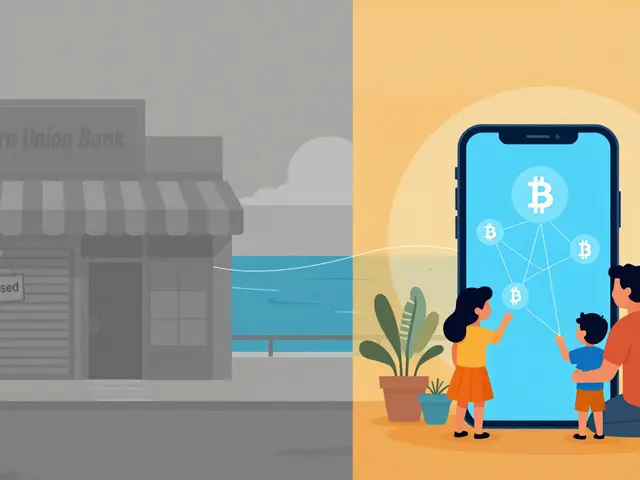
For decades, Cubans lived under a financial stranglehold created by U.S. sanctions. These restrictions made it nearly impossible for ordinary citizens to access global banking services. You could not use PayPal. You could not swipe a Visa or Mastercard at most international online stores. When Western Union shut down its operations on the island in 2020, closing over 400 locations, the lifeline for receiving money from family abroad snapped tight. People needed a way to send and receive value without going through traditional banks that were either blocked or too expensive to use. Crypto filled that gap.
Resolution 215: The Turning Point
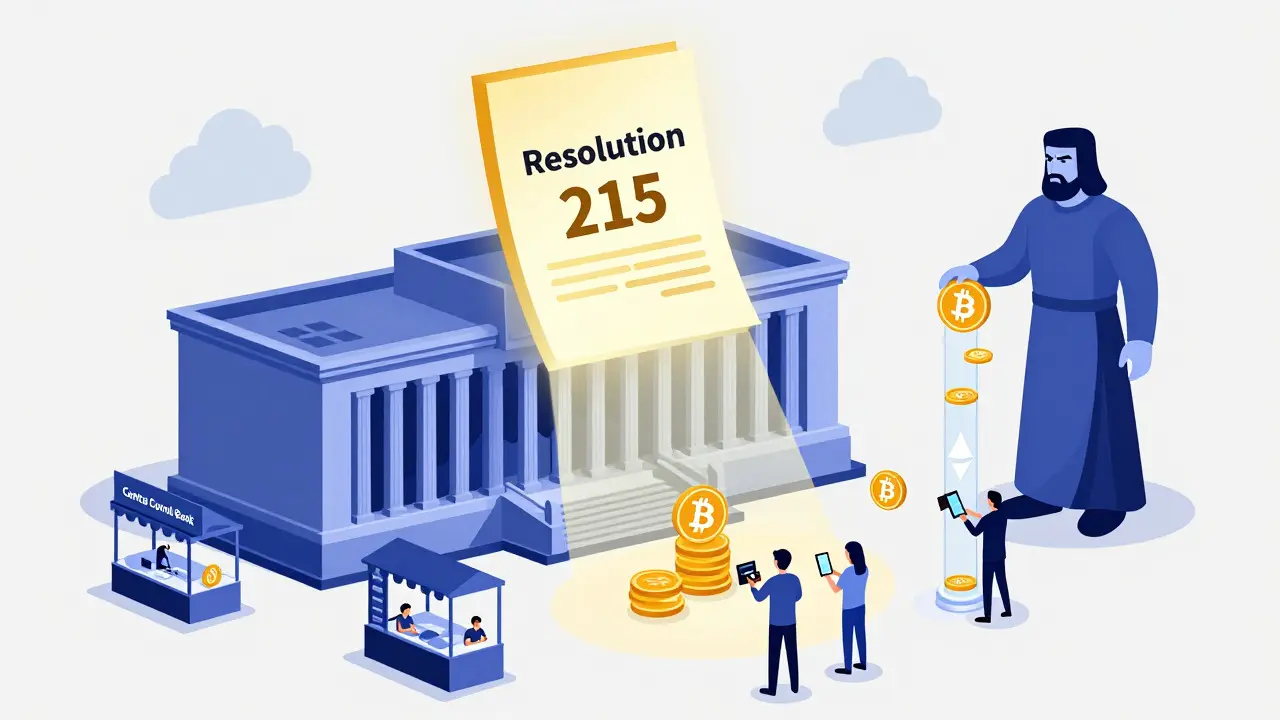
The game changed when the Cuban government published Resolution 215 is a regulatory decree issued by the Council of Ministers of Cuba in August 2021. This resolution granted the Central Bank of Cuba is the primary monetary authority responsible for regulating digital currencies and licensing service providers. the power to regulate digital currencies. Instead of banning them, the state decided to bring them into the light. The logic was simple: if people are already using Bitcoin to survive the economic pressure, the government should control how it happens rather than fighting a losing battle against underground usage.
This framework allows businesses and individuals to use cryptocurrencies legally, provided they follow specific rules. It marked a massive shift from the "legal gray area" that existed around 2020. Before this, using crypto wasn't explicitly illegal, but there were no protections, no licenses, and no clear guidelines. Now, there is a structured path for participation. The central bank evaluates applications based on legality and socioeconomic interest, issuing initial one-year licenses to virtual asset service providers.
How the Licensing System Works
You cannot just open a crypto exchange in Havana today without permission. The system is designed to keep oversight tight. If you want to offer services like exchanging fiat currency for Bitcoin, managing wallets for clients, or facilitating payments, you need a license from the Central Bank. This applies to both local companies and foreign entities wanting to operate within the island's borders.
The requirements are strict. Providers must comply with anti-money laundering (AML) rules and perform customer due diligence. Think of it like opening a bank account; you have to prove who you are and where your money comes from. The central bank looks for signs of suspicious activity and requires regular reporting. This helps the government maintain some level of control over capital flows, which is crucial in an economy where the state still plays a dominant role. As of 2025, any business accepting crypto as payment must hold this license and adhere to the compliance framework.
| Method | Accessibility | Cost/Fees | Reliability |
|---|---|---|---|
| Western Union / MoneyGram | Low (Many branches closed) | High | Moderate |
| Traditional Bank Transfers | Very Low (Sanctions block many) | Very High | Low |
| Cryptocurrency | Medium (Requires internet/license) | Variable (Network fees) | High (Decentralized) |
Who Is Using Crypto in Cuba?
So, who is actually using these tools? Estimates suggest that between 100,000 and 200,000 Cubans are actively using cryptocurrencies like Bitcoin is the most widely used digital currency in Cuba for remittances and savings., Ethereum is a blockchain platform used for smart contracts and secondary trading in Cuba., and even newer networks like Avalanche. That represents about 1% to 2% of the population. While that number sounds small compared to the United States or Europe, remember that widespread mobile internet access in Cuba is a very recent development. For a country that only recently connected millions of people to the web, this adoption rate is explosive.
Most users are not day-traders trying to get rich quick. They are families separated by migration. A son living in Miami sends Bitcoin to his mother in Santiago de Cuba because sending dollars via traditional channels is slow, expensive, or impossible. Others use it to buy goods from international online retailers that accept crypto payments, bypassing the inability to use credit cards. It is a tool for survival and connection.
The Role of U.S. Sanctions
To understand why crypto matters so much here, you have to look at the U.S. Economic Sanctions are restrictions imposed by the United States government that limit financial transactions with Cuba since 1962.. These sanctions, codified in regulations like the Cuban Assets Control Regulations (CACR), have isolated the island financially for over sixty years. They freeze Cuban assets under U.S. jurisdiction and strictly limit what American banks can do with Cuban money. This creates a bottleneck. If you try to wire money from a U.S. bank to a Cuban bank, it often gets stuck or rejected.
Cryptocurrency operates outside this traditional banking network. It does not care about borders or embargoes. This makes it incredibly attractive for circumventing financial restrictions. However, it also creates tension. The U.S. government watches these flows closely, fearing that crypto could be used to prop up the regime or facilitate illicit trade. Despite this, the practical benefit for ordinary citizens outweighs the geopolitical risks. The money moves faster and cheaper than any alternative.

Challenges and Infrastructure Gaps
It is not all smooth sailing. Living in Boulder, Colorado, I take reliable high-speed internet for granted. In Cuba, connectivity can be spotty. Trying to confirm a Bitcoin transaction when your internet drops out every ten minutes is frustrating. Education is another hurdle. Not everyone understands private keys, seed phrases, or wallet security. Scams exist, and without strong consumer protection laws, victims have little recourse.
Then there is the issue of liquidity. You might have Bitcoin, but how do you turn it into pesos to buy groceries? Licensed exchanges help, but they can be overwhelmed. Peer-to-peer (P2P) markets have sprung up, where people meet face-to-face to swap cash for crypto. This works, but it carries physical risk. The infrastructure is improving, but it is still far behind what we see in developed economies.
Future Outlook: Regulation vs. Restriction
Looking ahead, does Cuba plan to ban crypto again? Unlikely. Industry analysts believe the current framework will expand. The government sees the "socioeconomic interest" clearly. Digital assets provide a way for the country to participate in the global economy without fully relying on the dollar-dominated banking system. As internet infrastructure improves and more Cubans learn how to use these tools, adoption will likely grow.
The relationship between Cuban regulation and U.S. policy remains the wildcard. If sanctions ease, the urgency for crypto might drop slightly. If they tighten, crypto becomes even more critical. Either way, Cuba has set a precedent. It shows that even heavily restricted nations can find ways to integrate into the digital financial world. For anyone studying global finance or blockchain adoption, Cuba is a fascinating case study in resilience and adaptation.
Is Bitcoin legal in Cuba?
Yes, Bitcoin is legal in Cuba. Since August 2021, the government has recognized cryptocurrencies as valid payment methods under Resolution 215, allowing licensed providers to operate and citizens to use digital assets for transactions and remittances.
Do you need a license to use crypto in Cuba?
Individuals do not need a license to simply hold or use Bitcoin for personal transactions. However, businesses and service providers that facilitate exchanges, manage wallets, or accept crypto as payment must obtain a license from the Central Bank of Cuba.
Why did Cuba legalize cryptocurrency?
Cuba legalized cryptocurrency primarily to address economic isolation caused by U.S. sanctions. With limited access to traditional banking services like PayPal and Western Union, crypto provides a vital channel for remittances and international commerce.
What are the main challenges for crypto users in Cuba?
Key challenges include unreliable internet infrastructure, lack of widespread financial literacy regarding blockchain technology, and difficulties in converting cryptocurrency back into local currency (CUP) due to limited liquidity options.
Can Americans send crypto to Cuba?
While technically possible, sending crypto to Cuba involves navigating complex U.S. sanctions regulations. The U.S. Treasury Department monitors these transactions closely. Individuals should consult legal experts to ensure compliance with the Cuban Assets Control Regulations before transferring funds.
Comments (9)

- Jack Delasquez
- August 7, 2026 AT 17:24 PM
Man this is huge!! finally some good news from the caribbean 🇨🇺 i mean like really big deal. people always think its all banned but nah they just needed a way to get money without the us blocking it. its wild how crypto saves lives basically. keep that energy going guys! 💪

- Harman Singh
- August 8, 2026 AT 09:35 AM
honestly why should we care about cuba? they are just another failed state trying to look cool with tech. its not like they have any real economy or anything worth saving. everyone ignores the fact that their infrastructure is trash and now they want to use bitcoin? please. its just more chaos for the world to deal with.

- Qolbina Islami
- August 8, 2026 AT 16:00 PM
THIS IS A DISASTER!!!; The US sanctions are there for a REASON;; and now Cuba is using Bitcoin to bypass them?!; It’s an insult to American taxpayers;; who fund these regimes indirectly by letting them access global finance;; Wake up people!!!; This isn’t progress;; it’s evasion;;; We need stricter rules NOW!!!; Not less!

- SUBHAM CHOUDHURY
- August 8, 2026 AT 19:59 PM
I think it's actually quite inspiring to see how resilient people can be when faced with such heavy restrictions. It shows that technology can bridge gaps where politics fails. Maybe if other countries looked at this as a lesson in adaptation rather than threat, we could all learn something valuable about financial inclusion. Let's support innovation wherever it blooms gently.

- Joy Kwant
- August 10, 2026 AT 18:02 PM
You people are so naive thinking this helps the average Cuban. The government will just seize it all eventually because that’s what they do. They don’t care about your ‘resilience’ or your ‘innovation’. They care about control. And crypto makes it easier for them to track and tax every single penny you try to save. It’s morally bankrupt to celebrate this.

- Rita Dutta
- August 12, 2026 AT 07:51 AM
oh honey, u really think the govt cares about ur little wallet security? lol. its not about morality, its about survival of the fittest in a digital jungle. the matrix is glitching and cubans are exploiting the backdoor. kool aid drinkers aside, this is pure evolutionary pressure on finance. dont let the sheeple narrative fool u into thinking regulation = safety. it never is.

- Paul Smith
- August 12, 2026 AT 09:22 AM
Hey friends! 👋 It's really interesting to see how different cultures adapt to new tech. I've traveled a bit and seen how remittances change families' lives. In many places, sending money home is a huge burden. If crypto makes that easier for moms in Santiago de Cuba, that's a win for humanity! 🌍💸 Let's stay open-minded about cross-cultural solutions!

- Rodmun Tarnowski
- August 13, 2026 AT 21:18 PM
This is indeed a fascinating development!!!!; One must consider the broader implications for international law;;;; How will other sanctioned nations react???; Will Iran follow suit???; The precedent set here could reshape global diplomacy;;;; We must remain vigilant yet optimistic about these technological shifts!!!!!

- Matthew Smith
- August 14, 2026 AT 17:54 PM
the concept of value is fluid anyway. money is just a story we agree on. if cubans agree on bitcoin then it has value. whether the state likes it or not is irrelevant to the underlying truth of human exchange. freedom flows through code now. interesting times.