
If you live in Doha or anywhere else in Qatar and have been trying to figure out where you stand with cryptocurrency, the answer is rarely simple. For years, the message from regulators was a hard "no." But as we move through 2026, the landscape has shifted into something more nuanced. You still cannot buy Bitcoin or trade Ethereum on local exchanges, but you might be able to invest in tokenized real estate or bonds. This dual-track system is confusing, but understanding it is crucial for avoiding legal trouble while exploring digital finance.
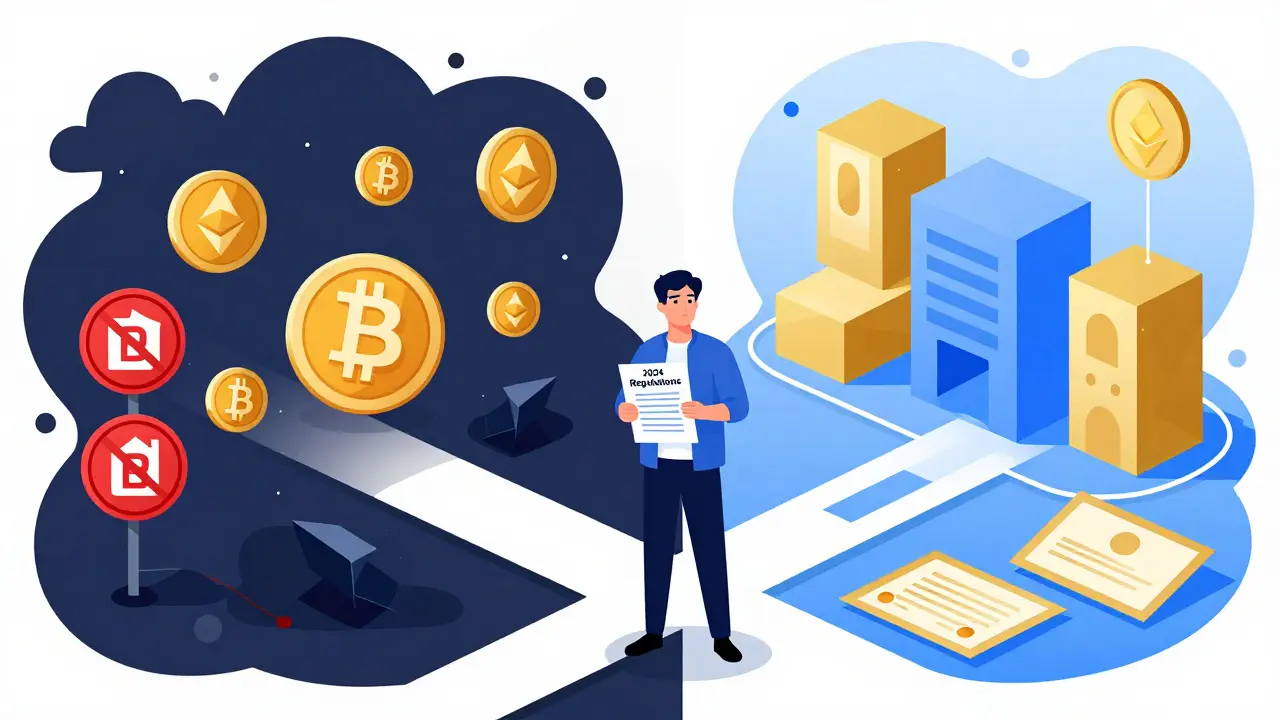
The core issue isn't just about banning money; it's about control and risk. The Qatar Financial Centre Regulatory Authority (QFCRA) has drawn a bright line in the sand. On one side are speculative assets like Bitcoin, which are banned. On the other are asset-backed tokens, which are strictly regulated and permitted. Knowing which side your investment falls on is the most important step any resident can take.
The New Reality: Digital Assets Regulations 2024
To understand what you can and cannot do today, you have to look at the framework introduced in September 2024. The Digital Assets Regulations 2024 and the accompanying Investment Token Rules 2024 marked a major policy shift. Before this, the rules were largely prohibitive. Now, there is a structured legal pathway for certain types of digital assets, provided they meet strict criteria.
This framework creates two distinct categories:
- Permitted Tokens: These are digital representations tied to verified rights with a basis in real-world assets. Think tokenized shares, bonds, sukuk (Islamic financial certificates), commodities, or real estate. These are legal if handled by licensed providers.
- Excluded Tokens: This category includes cryptocurrencies like Bitcoin, stablecoins, and Central Bank Digital Currencies (CBDCs). These are classified as currency substitutes and are completely excluded from the regulatory framework. In practical terms, this means they remain illegal for trading and exchange within the jurisdiction.
The distinction matters because it changes how the law views ownership. For permitted tokens, the regulations presume that the person controlling the token's transferability is its legal owner unless proven otherwise in QFC courts. This legal clarity does not exist for excluded tokens, leaving holders without recourse if things go wrong.
What Is Strictly Banned for Residents?
Let’s get straight to the point: traditional cryptocurrency activities are heavily restricted. If you are looking to trade Bitcoin, hold Tether (USDT) in a domestic wallet, or use a local exchange to swap fiat for crypto, you are operating outside the law.
The ban is not new, but it has been reinforced. Back in February 2018, the Central Bank of Qatar banned all banks from trading cryptocurrencies. By December 2019, the QFCRA issued an alert limiting Virtual Asset Service Provider (VASP) services for assets acting as currency substitutes. In 2020, the prohibition expanded to cover all virtual asset services within the Qatar Financial Centre.
In 2026, these bans remain in effect. The QFCRA explicitly confirmed that virtual assets subject to the 2019 alert remain "Excluded Tokens" under the new 2024 framework. This means:
- You cannot legally access Bitcoin trading platforms based in Qatar.
- Stablecoin transactions are prohibited.
- Cryptocurrency wallet services offered by domestic entities are illegal.
- Financial institutions are banned from dealing in these currencies.
The government justifies these restrictions based on risks including money laundering, illicit financing, and the high volatility associated with unbacked digital assets. The goal is to protect the national financial system from speculative bubbles and criminal activity.
How Permitted Tokens Work: The Three-Step Process
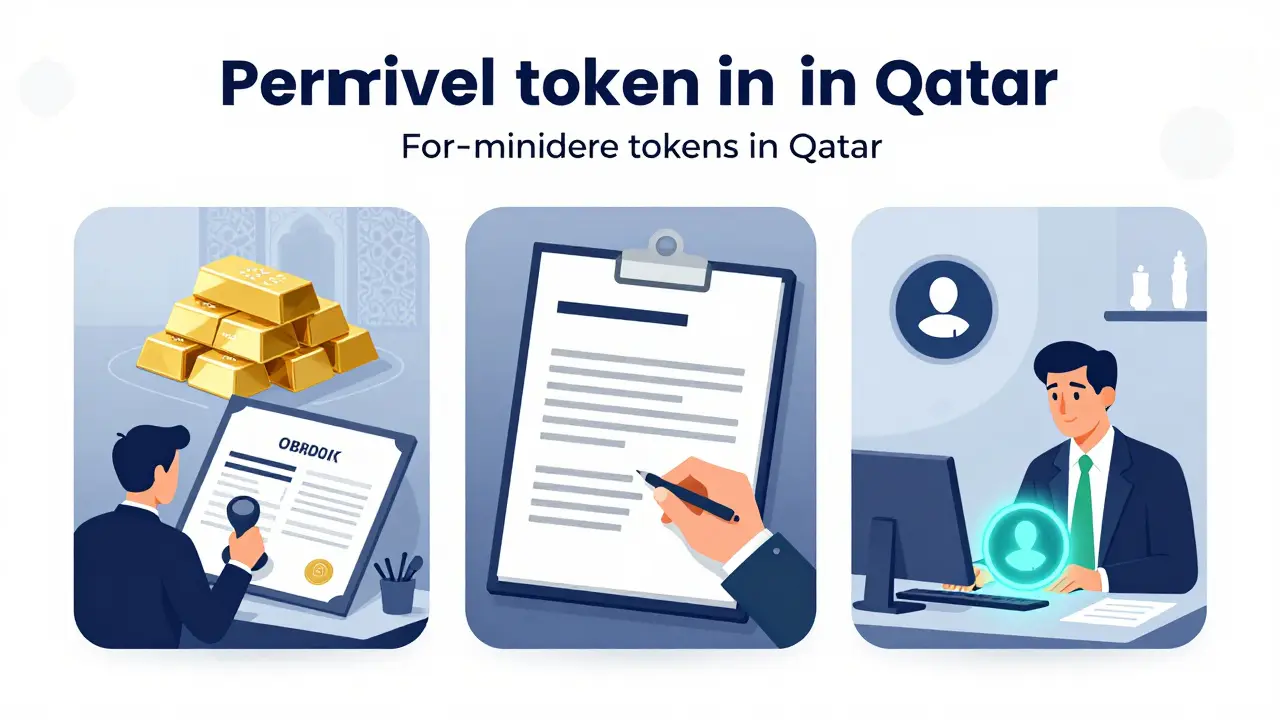
If you are interested in blockchain technology but want to stay compliant, your focus must shift to Permitted Tokens. These are not speculative coins; they are digital receipts for real-world value. The process for creating and holding these tokens is rigid and involves three mandatory steps.
- Validation: A validator issues a certificate verifying asset ownership. This ensures that the underlying asset-whether it’s a share of stock or a piece of real estate-actually exists and belongs to the issuer.
- Formal Request: The asset owner makes a formal request for tokenization. This is a legal step that initiates the conversion of the physical or traditional financial asset into a digital format.
- Token Generation: A licensed token generator creates the token on specific digital infrastructure. Only entities with proper licenses from the QFCRA can perform this step.
Residents engaging with these assets must work through licensed token service providers. You cannot simply download an app and start buying tokenized gold on your own. Every transaction must flow through the regulated channel. This structure ensures that every token has a clear audit trail and legal backing.
| Feature | Excluded Tokens (e.g., Bitcoin) | Permitted Tokens (e.g., Tokenized Bonds) |
|---|---|---|
| Legal Status | Banned / Illegal | Legal with License |
| Backing | None (Speculative) | Real-World Assets (RWA) |
| Ownership Rights | No Legal Recourse | Legally Recognized |
| Providers | None Domestic | Licensed QFC Providers |
| Use Case | Store of Value / Currency | Investment / Finance |
Compliance and Anti-Money Laundering Risks
A common misconception is that because cryptocurrencies are "excluded" from the Digital Assets Framework, they are ignored by the law. This is dangerous thinking. While there are no specific AML (Anti-Money Laundering) procedures for crypto businesses because those businesses are banned, the broader laws still apply to individuals.
Law No. 20 of 2019 on Combating Money Laundering and Terrorism Financing defines "funds" broadly. It includes assets obtained through "electronic and digital" systems. This means that even if you hold Bitcoin in a foreign wallet, moving funds related to it through the Qatari banking system could trigger scrutiny. Banks are required to monitor for suspicious activities, and since crypto is seen as a high-risk vector for illicit financing, transactions linked to digital currencies may be flagged or blocked.
For businesses, compliance in Qatar means refraining from offering prohibited services. There is no license you can get to operate a Bitcoin exchange. The primary compliance mandate is adherence to the prohibition. For those working with permitted tokens, however, detailed public guidance on customer due diligence and record-keeping is emerging, though it remains less accessible than in more mature markets.
Practical Implications for Daily Life
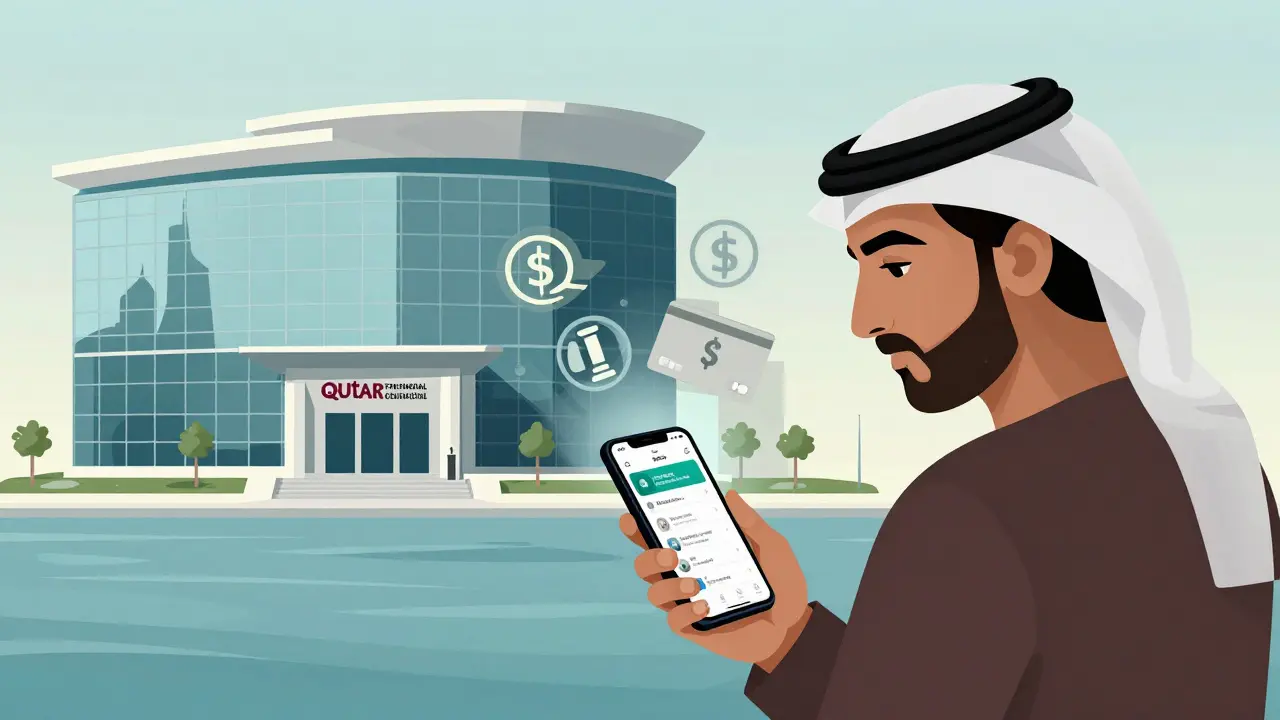
So, what does this mean for you as a resident? If you are an individual investor, your options are limited but growing. You cannot use crypto for everyday payments or as a hedge against inflation in the way people do in some other countries. However, the new framework opens doors for sophisticated investments.
You can now participate in the tokenization of real estate, commodities, and corporate bonds. This is particularly relevant given Qatar’s substantial holdings in these sectors. Imagine owning a fraction of a commercial property in Doha via a token, with all the legal protections of traditional ownership but the ease of digital transfer. This is the future the QFC is building.
However, you must be vigilant. Many international apps still allow users to sign up from Qatar. Just because an app works on your phone doesn’t mean it’s legal. Using offshore exchanges to trade excluded tokens carries significant risk. If you lose access to your funds, or if the platform is shut down, you have no local legal protection. The QFCRA has made it clear that they will not assist residents who engage with excluded tokens.
Future Outlook: Will Crypto Ever Be Legal?
Industry experts suggest that Qatar’s cautious stance reflects broader regional concerns about regulatory control. The country is prioritizing stability over speculation. While other Gulf states have experimented with more permissive frameworks, Qatar has chosen a path of controlled innovation.
The emphasis on real-world asset tokenization suggests that Qatar sees blockchain as a tool for efficiency in traditional finance, not as a replacement for fiat currency. Future developments will likely expand the list of permitted asset classes and refine licensing procedures. However, the explicit classification of cryptocurrencies and stablecoins as "Excluded Tokens" indicates that this prohibition will persist for the foreseeable future.
Qatar’s participation in regional digital currency initiatives, including potential CBDC development, may influence policy. But remember, CBDCs are also currently excluded from the private digital asset framework. The government wants to keep monetary policy tight. Until there is a fundamental shift in global attitudes toward decentralized finance, Qatar residents should expect the same restrictive environment to continue.
Can I buy Bitcoin in Qatar legally?
No. Bitcoin is classified as an "Excluded Token" under the Digital Assets Regulations 2024. Trading, exchanging, or providing custody services for Bitcoin is prohibited within the Qatar Financial Centre and by domestic financial institutions.
What are permitted tokens in Qatar?
Permitted tokens are digital representations tied to verified real-world assets, such as tokenized shares, bonds, sukuk, commodities, or real estate. They must be issued through licensed providers following a strict validation and generation process.
Is it illegal to hold crypto in a personal wallet?
While personal ownership laws are less explicit than business bans, the prohibition on trading and exchange services makes acquiring crypto difficult. Furthermore, using domestic banks to fund crypto purchases violates Central Bank directives. Holding excluded tokens offers no legal protection if disputes arise.
Who regulates digital assets in Qatar?
The Qatar Financial Centre Regulatory Authority (QFCRA) and the Qatar Financial Centre (QFC) Authority jointly regulate digital assets under the Digital Assets Regulations 2024. The Central Bank of Qatar also enforces bans on banks dealing in cryptocurrencies.
Can I invest in tokenized real estate?
Yes, if you work through a licensed token service provider operating within the QFC. Tokenized real estate is considered a permitted token, provided it follows the mandatory validation and generation steps outlined in the 2024 framework.
Comments (8)

- Sylvia Mossman
- June 4, 2026 AT 14:56 PM
This whole 'nuanced' approach is just regulatory capture dressed up in fancy language. They aren't protecting you from risk; they are protecting their own banks from competition.
Let's be real here. The distinction between 'permitted tokens' and 'excluded tokens' is arbitrary nonsense designed to funnel wealth into the hands of those with licenses. You think tokenized real estate is safer than Bitcoin? Please. At least Bitcoin doesn't have a counterparty risk where some QFCRA-approved entity can freeze your assets because they feel like it. This isn't innovation, it's control. And anyone who thinks this dual-track system is fair is delusional.

- Lee Paige
- June 4, 2026 AT 23:27 PM
Sylvia makes a point that most people ignore because they are too busy chasing yield. The government knows exactly what it is doing. By banning decentralized assets, they maintain total visibility over capital flows. If you hold BTC on an offshore exchange, sure, it's technically outside their direct reach, but try moving that money back into the Qatari banking system without triggering AML flags under Law No. 20. It's impossible.
The 'permitted tokens' are just a way for them to monetize blockchain tech while keeping the dangerous stuff-the stuff that actually threatens state power-locked out. It's not about safety. It's about sovereignty. They want the efficiency of the ledger without the anonymity of the network. Don't fall for the marketing hype about 'digital receipts.' It's a leash.

- Alexis Abster
- June 5, 2026 AT 01:01 AM
I honestly think there is a silver lining here if we look at the bigger picture! Imagine the stability this could bring to the local economy. Yes, I know, losing access to Bitcoin feels terrible right now, but think about the potential for tokenized sukuk and real estate!
It opens up investment opportunities for everyday residents who previously couldn't afford large commercial properties in Doha. We can finally democratize wealth creation through fractional ownership. It’s exciting! Instead of gambling on volatile coins, we can build tangible assets together. Let's embrace this new era of secure, regulated finance. It’s going to be great for everyone in the long run!

- Karthikeyan S
- June 6, 2026 AT 13:49 PM
u/2547 you are so naive 😂😂. Think about it really hard. Who do you think benefits from 'fractional ownership'? The same oligarchs who already own everything. You think you're getting a piece of the pie? No, you're just paying fees to the licensed providers who are friends with the regulators.
I've analyzed the transaction costs for these permitted tokens and they are astronomical compared to just buying BTC on a P2P platform abroad. But hey, keep dreaming about your 'tangible assets' while the system extracts value from your labor. It's tragic how easily people accept their own subjugation when it's wrapped in corporate speak. 📉🤡

- Dinesh Pattigilli
- June 7, 2026 AT 17:29 PM
The grammatical structure of the post is adequate but the substance is lacking for the discerning investor. Most of you clearly do not understand the sophisticated nuances of Islamic finance regulations. Tokenized sukuk is not merely 'real estate'; it is a Sharia-compliant instrument that aligns with ethical investment principles.
To equate this with speculative garbage like Bitcoin shows a profound lack of financial literacy. The QFCRA has implemented a framework that mirrors the most advanced jurisdictions in Europe. Those who complain about restrictions simply lack the intellectual capacity to navigate complex regulatory environments. One must appreciate the elegance of the three-step validation process. It is pure genius.

- Madhu Menon
- June 8, 2026 AT 01:50 AM
There is a philosophical tension here between freedom and order that Qatar is trying to resolve. Blockchain was born from a desire for absolute autonomy, yet the state requires predictability. The 'Excluded Tokens' represent chaos, while 'Permitted Tokens' represent order.
Is it truly possible to have both? Perhaps the answer lies not in choosing one side, but in understanding that the digital realm is becoming the new public square. In this square, laws are written in code, but enforced by men. The tragedy is that we lose the magic of the unknown. We trade the wild west for a gated community. Is safety worth the loss of wonder?

- Caitlin Donahue
- June 8, 2026 AT 10:36 AM
i mean its kinda confusing tbh. i just want to save my money without getting in trouble. seems like if u stick to the licensed apps ur ok? idk i dont follow all the politics stuff much lol

- Brad Ranks
- June 8, 2026 AT 21:31 PM
Wait, hold on. Did anyone else notice that the Central Bank banned crypto in 2018, but now in 2026 they are talking about CBDCs being 'excluded' too? That sounds suspiciously like they are preparing to launch their own digital currency and want to kill off any competitors before they even start.
This isn't about protecting us from scams. This is about clearing the board for a state-controlled digital wallet. Once they roll out the CBDC, they will track every single purchase you make. Your coffee, your groceries, your rent. All monitored. The 'protection' narrative is just smoke and mirrors. Wake up people!