
You clicked on this Beeblock crypto exchange review because you heard the name somewhere. Maybe it was in a Facebook ad, a Telegram group, or from a friend who swore they made money there. You want to know if it is legit. Here is the hard truth right now: as of late 2025 and early 2026, Beeblock does not appear to be a recognized, regulated cryptocurrency exchange. It is missing from major industry directories like CoinGecko, CoinMarketCap, and regulatory lists in the US, UK, and Singapore.
This isn't just about missing paperwork. In the crypto world, if an exchange isn't listed on the big trackers, it's a massive red flag. Legitimate platforms like Coinbase or Kraken have public proof-of-reserves, clear fee structures, and regulatory licenses. Beeblock has none of that visible footprint. If you are thinking about depositing your savings here, stop. Read on to understand why this platform raises so many alarms and what you should do instead.
The Missing Data Problem
Why can't I find any real data on Beeblock? That's the first question every skeptical investor asks. When you search for established exchanges, you get pages of information. You see their trading volume, their number of users, their security audits, and their regulatory status. For Beeblock, the search results come back empty or filled with generic crypto articles that don't even mention the name.
Industry verification through CoinGecko's exchange directory and the Blockchain Association's member list confirms no registered cryptocurrency exchange operates under the name 'Beeblock' recently. This absence is critical. Major exchanges undergo rigorous evaluation across multiple dimensions, including withdrawal limits, fee structures, and insurance coverage. No such data exists for Beeblock in any authoritative industry comparison. If a platform doesn't want to share its basic stats, it usually means they have something to hide.
Think about it this way. Would you eat at a restaurant that has no menu, no health inspection certificate, and no online reviews? Probably not. The same logic applies to your money. A lack of digital footprint suggests that Beeblock might be a new entity trying to fly under the radar, or worse, a fake platform designed to take deposits and disappear.
Regulatory Red Flags
Crypto regulation is messy, but it's still important. In the United States, the SEC registers specific exchanges. In the UK, the FCA oversees them. In Singapore, the MAS grants licenses. As of recent counts, there are roughly 32 registered exchanges with the SEC, 18 with the FCA, and 23 licensed institutions with the MAS. Beeblock appears on none of these lists.
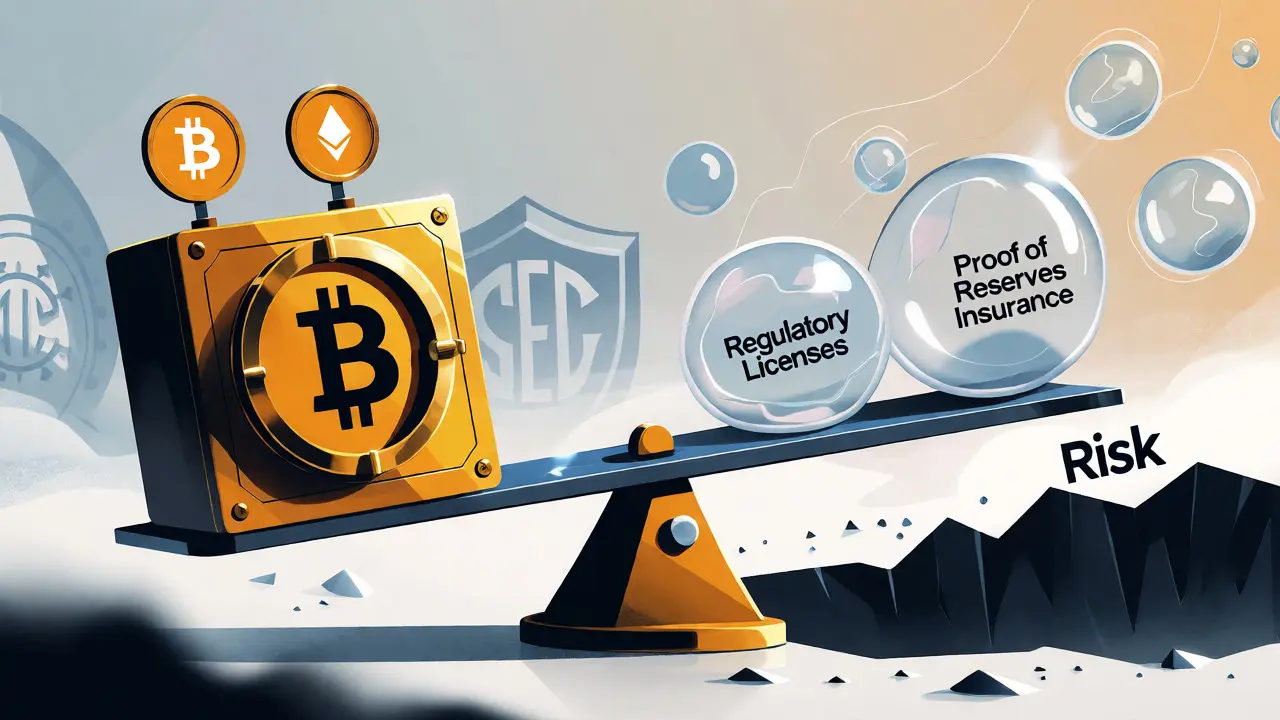
This isn't just bureaucratic noise. Regulatory bodies enforce rules that protect you. They require anti-money laundering (AML) checks, know-your-customer (KYC) procedures, and regular audits. Without a license, an exchange has no legal obligation to keep your funds separate from their own operating capital. If they go bankrupt, you are an unsecured creditor. You might never see your Bitcoin again.
| Feature | Beeblock | Coinbase | Kraken |
|---|---|---|---|
| SEC Registration | Not Found | Registered | Registered |
| FCA License | Not Found | Licensed | Licensed |
| Proof of Reserves | Unknown/None | Published Quarterly | Published Annually |
| User Base Verification | Unverified | Verified Public Company | Verified Private Entity |
The table above highlights the stark contrast. While Coinbase and Kraken publish their reserves and hold official licenses, Beeblock remains a ghost. This opacity is dangerous. You cannot verify if the coins you think you own actually exist on their servers.
Security Risks and Hacks
Security is the biggest concern with unknown exchanges. History is littered with platforms that looked good until they didn't. Remember Mt. Gox? Or more recently, the Bybit hack in February 2025 where $1.5 billion in ETH was stolen? Even large, secure exchanges face threats. But they have teams dedicated to fighting them.
Fireblocks, a leading digital asset infrastructure provider, released a report identifying emerging exchange threats. Supply chain attacks account for 22% of breaches, and API key vulnerabilities cause 37% of unauthorized withdrawals. Established exchanges invest millions in cold storage solutions, where 95-98% of assets are kept offline. Do you know if Beeblock uses cold storage? There is no public evidence that they do.
If Beeblock is a small or new operation, they likely lack the resources for top-tier security. They might store everything in hot wallets, which are connected to the internet and vulnerable to hackers. One bad day could wipe out your entire portfolio. And unlike bank deposits, crypto losses on unregulated exchanges are rarely insured. Gemini, for example, maintains $350 million in crime insurance. Does Beeblock have a single dollar of insurance? We don't know.
Is It a Scam or Just New?
It is possible Beeblock is a brand-new startup that hasn't hit the news yet. However, new exchanges usually launch with marketing campaigns, press releases, and partnerships. They try to build trust quickly. If Beeblock has been around for months without appearing on Trustpilot, Reddit, or CryptoSlate, that is suspicious.
Sometimes, names get confused. Could you mean Bitblock? Bitblock was shut down in 2021 after regulatory action. Or maybe you are thinking of Binance, which has a massive presence? Misunderstandings happen. But if you definitely saw the name "Beeblock," treat it with extreme caution.
Scams often use names that sound technical or similar to famous brands. "Block" is a common suffix in blockchain companies. Adding "Bee" might make it sound friendly or unique. But in crypto, uniqueness doesn't equal safety. Many Ponzi schemes used catchy names before collapsing. Check the domain age. If the website was created last week, run away. If it claims to have existed for years but has no history, that is also a lie.

What To Do Before Depositing
Don't put a single cent into Beeblock until you check these five things. First, look for a physical address. Not a PO Box, but a real office location. Call them. See if anyone answers. Second, check their social media. Are people posting complaints? Are the comments turned off? Third, look for independent reviews. Not testimonials on their site, but posts on Reddit or Twitter from strangers.
Fourth, test the withdrawal process. If you already deposited a small amount, try to withdraw it immediately. Scam exchanges often let you deposit easily but block withdrawals with excuses like "tax fees" or "verification errors." Fifth, compare fees. If their fees are too good to be true, they probably are. Legitimate exchanges need to cover their costs. Extremely low fees often signal a bait-and-switch tactic.
If you are unsure, stick to the giants. Coinbase, Kraken, and Binance have processed trillions of dollars in trades. They have survived market crashes, hacks, and regulatory scrutiny. Their track records give you peace of mind. You can sleep at night knowing your keys are managed by professionals with reputations on the line.
Alternatives to Consider
If you are looking for a reliable place to trade, here are three solid alternatives that are fully verified and regulated. These platforms offer transparent pricing and robust security measures.
- Coinbase: Best for beginners. It is user-friendly, publicly traded, and highly regulated. Fees are higher, but the ease of use and security are worth it for most people.
- Kraken: Great for intermediate traders. It offers lower fees than Coinbase and strong security features. It has a long history of reliability and excellent customer support.
- Binance: Ideal for advanced users. It has the highest liquidity and lowest fees. However, it faces regulatory challenges in some countries, so check availability in your region.
Each of these options has a clear path to help. They provide educational resources, clear fee calculators, and responsive support teams. You won't be left guessing about where your money is going.
Is Beeblock crypto exchange legitimate?
As of current industry reports, Beeblock does not appear to be a legitimate, regulated cryptocurrency exchange. It lacks registration with major financial authorities like the SEC or FCA and is absent from trusted directories like CoinGecko and CoinMarketCap.
Can I trust Beeblock with my funds?
Trusting Beeblock is risky due to the lack of transparency. There is no public evidence of proof-of-reserves, insurance coverage, or cold storage implementation. Unregulated exchanges pose a high risk of loss due to fraud or hacking.
Where can I find reviews for Beeblock?
Independent reviews for Beeblock are scarce or non-existent on major platforms like Trustpilot, Reddit, and CryptoSlate. Most mentions may come from self-promotional sources or paid advertisements rather than organic user feedback.
What are safer alternatives to Beeblock?
Safer alternatives include Coinbase, Kraken, and Binance. These exchanges are well-regulated, have published security audits, and maintain significant insurance coverage or reserve proofs to protect user assets.
How do I spot a crypto exchange scam?
Red flags include lack of regulatory licenses, no physical address, blocked withdrawal attempts, overly aggressive marketing, and absence from reputable crypto tracking sites. Always verify an exchange's standing on CoinGecko or CoinMarketCap before depositing.