
Remember when interacting with decentralized finance felt like decoding ancient hieroglyphs? You had to know exact contract addresses, slippage tolerances, and complex routing paths just to swap tokens. Aperture Finance is a revolutionary DeFi protocol that replaces complex interfaces with a natural language chatbot powered by an Intents infrastructure. Instead of clicking through endless menus, you simply tell the system what you want to achieve-like "I want to earn yield on my ETH"-and a network of solvers executes the best path for you.
This shift in user experience isn't just about convenience; it's about access. By abstracting away the technical friction, Aperture aims to bring mainstream users into the crypto ecosystem. But before the platform fully launched its public features, it rewarded early adopters with a significant APTR token airdrop. If you participated in their testnet or engagement campaigns, you might be wondering if your claim went through, how much value you actually hold, and what this token can do for you now. Let’s break down exactly how the distribution worked, the economics behind the token, and where things stand today in 2026.
How the Aperture Finance Airdrop Worked
The initial phase of the Aperture Finance campaign was designed to identify genuine users rather than bots farming points. The core mechanic revolved around accumulating qualifying points through active engagement with the platform’s beta features. This wasn't a simple "connect wallet and wait" scenario. Participants needed to interact with the Intents infrastructure, testing the natural language processing capabilities and providing feedback on execution quality.
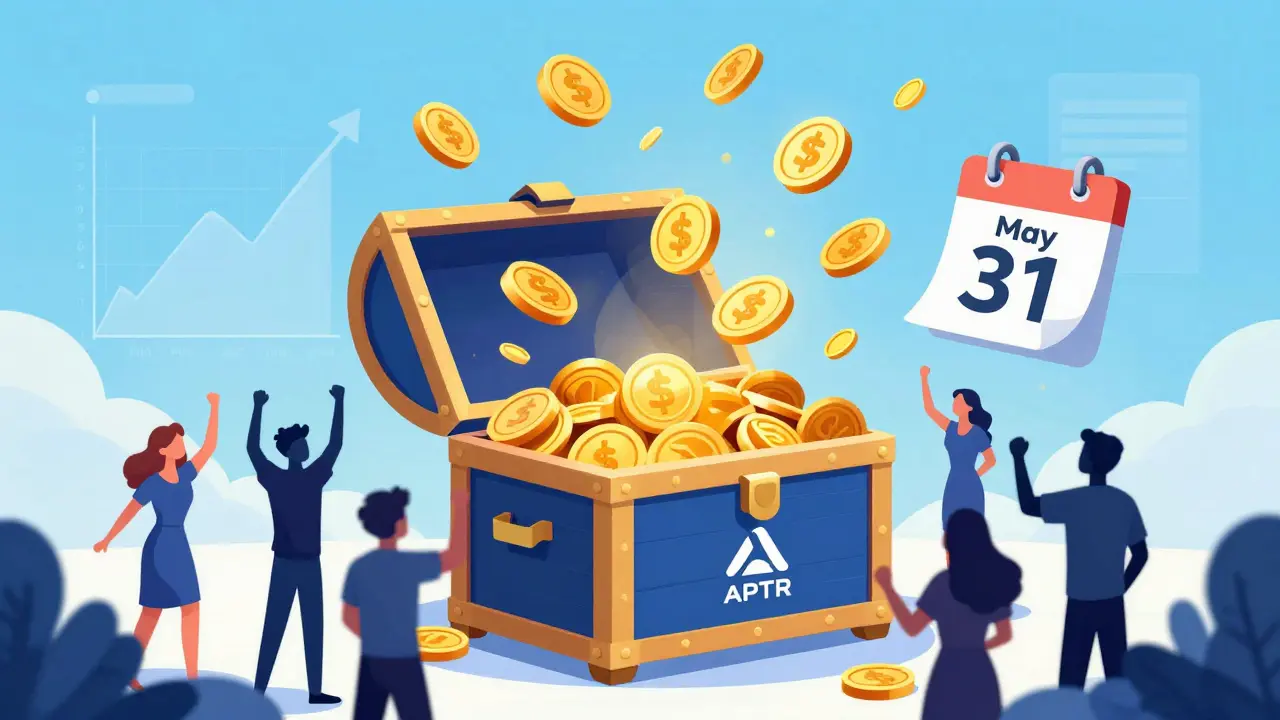
On May 31, 2024, at 10:00 UTC, the official distribution window opened. This date marked the end of the snapshot period and the beginning of the claiming phase. Eligible users were required to visit the official Aperture Finance claim page. The process involved connecting a compatible cryptocurrency wallet, signing a message to verify ownership, and switching the network to Arbitrum. Why Arbitrum? Because APTR tokens are native to this Layer 2 Ethereum scaling solution, which offers lower gas fees and faster transaction speeds compared to the main Ethereum chain.
If you missed the initial window or didn't see your balance update immediately, don't panic. Sometimes, eligibility verification takes time due to high server load during peak claiming hours. However, as of mid-2026, the primary distribution phase is considered complete. Any remaining unclaimed tokens typically revert to the community pool or are burned, depending on the specific smart contract logic defined by the team. For those who successfully claimed, the tokens were unlocked immediately, meaning there were no vesting periods or cliff delays holding back your assets.
Understanding APTR Tokenomics and Allocation
To understand the value of your airdrop, you need to look at the bigger picture of how the APTR supply is structured. Total supply management is critical in DeFi to prevent inflationary pressure that could dilute holder value. Aperture Finance allocated 7% of the total APTR token supply specifically for this airdrop campaign. This is a substantial portion, signaling that the project prioritizes community growth over purely financial fundraising.
Let’s compare this to other allocation rounds to see where the airdrop recipients stand:
| Allocation Category | Price per Token (USD) | Vesting Schedule | Unlock Status |
|---|---|---|---|
| Airdrop Recipients | $0.00 (Free) | N/A | 100% Unlocked Immediately |
| Seed Round Investors | $0.015 | 5% at TGE, 6-month cliff, 24-month vesting | Partially Locked |
| Strategic Round Investors | $0.035 | 5% at TGE, 3-month cliff, 18-month vesting | Partially Locked |
| Public Sale Participants | $0.045 | N/A | 100% Unlocked Immediately |
Notice the difference in unlock status. While seed and strategic investors have long vesting periods designed to align their interests with the project's long-term success, airdrop recipients got full liquidity from day one. This creates an interesting dynamic. Early adopters can sell immediately, potentially creating short-term selling pressure. However, it also means you have full control over your assets without waiting months for tokens to release. The seed round raised $1.8 million at a $15 million valuation, while the strategic round brought in $3.5 million at a $35 million valuation. These figures provide a baseline for understanding the project's capitalization at launch.
The Technology Behind the Token: Intents and Solvers
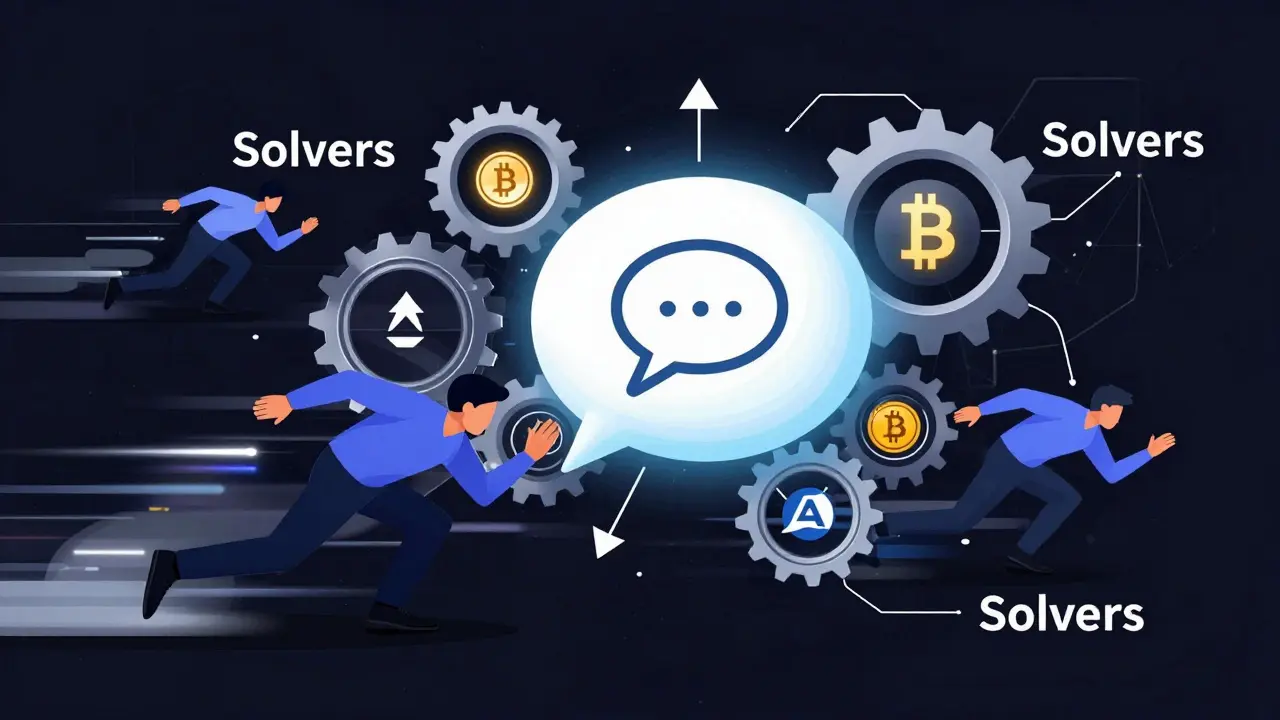
Why should you care about the technology powering APTR? Because the token's utility is tied directly to the adoption of this new architecture. Traditional DeFi relies on Automated Market Makers (AMMs) where users manually manage positions. Aperture introduces the concept of Intents. An intent is a declaration of desire, not a specific instruction. You say "I want to buy Bitcoin," and the system finds the best route across multiple exchanges, aggregators, and liquidity pools.
This is handled by a network of Solvers. Think of solvers as competitive executors. They race to fulfill your intent in the most efficient way possible. The solver that provides the best price and speed gets the job done and earns a fee. The APTR token plays a crucial role here. It can be used to pay for premium solver services, govern the parameters of the intent engine, and stake for security within the protocol. As more users adopt the chatbot interface, the demand for solver capacity increases, which theoretically drives up the utility and value of the APTR token.
Earning More APTR: Liquidity Provider Programs
If you missed the initial airdrop or want to increase your holdings, Aperture Finance has continued to offer earning opportunities through specialized programs. One of the most notable is the Uniswap V3 Private Beta program. This initiative targets experienced liquidity providers who understand the complexities of concentrated liquidity.
Uniswap V3 allows LPs to allocate capital within specific price ranges, increasing capital efficiency but requiring constant monitoring. Aperture automates this. Their tools offer automated rebalancing, prescheduled position closures, and auto-compounding features. By participating in this beta, users could earn up to 66,666 APTR tokens, valued at approximately $10,000 at certain market peaks. This isn't free money; it requires locking up capital and taking on impermanent loss risk. However, the automation reduces the time commitment significantly.
Beyond liquidity provision, the platform incentivized community growth through referrals and content creation. Referring a friend earned you 25% of their airdrop allocation, capped at 16,666 APTR. Content creators who produced high-quality educational guides on LP strategies received bonuses of 3,333 APTR. These mechanisms helped build a knowledgeable user base capable of navigating the sophisticated tools Aperture provides.
Market Performance and Price Predictions
Since its distribution, the APTR token has seen significant volatility, typical of new DeFi projects. Analytical platforms like CoinLore have generated various price predictions based on historical data and market sentiment. While past performance never guarantees future results, these projections offer a glimpse into analyst expectations.
Forecasts for late 2025 suggested potential prices ranging from $0.0469 to $0.0784, representing massive percentage increases from the initial low basis. Long-term models extended to 2030 projected targets as high as $0.1762. These numbers sound impressive, but context matters. The crypto market is highly speculative. Factors such as broader regulatory changes, competition from other intent-based protocols, and general macroeconomic conditions will heavily influence APTR's trajectory. Always conduct your own research (DYOR) and never invest more than you can afford to lose.
Step-by-Step: How to Check Your Claim Status
Even though the main event is over, verifying your status is essential. Here is how you can check if you received your tokens:
- Visit the Official Dashboard: Navigate to the Aperture Finance website. Ensure you are on the legitimate URL to avoid phishing sites.
- Connect Your Wallet: Use the same wallet address you used during the qualification period. MetaMask, Coinbase Wallet, and other Web3 wallets work well.
- Select the Correct Network: Switch your wallet to the Arbitrum One network. If you try to view balances on Ethereum Mainnet, you won't see anything.
- Check Token Balance: Look for APTR in your asset list. If it doesn't appear automatically, add the APTR contract address manually using a block explorer like Arbiscan.
- Review Transaction History: Go to Arbiscan.io, paste your wallet address, and filter by "Token Transfers." Search for APTR. If there is a transfer from the Aperture distributor contract to your wallet, you have successfully claimed your airdrop.
Risks and Considerations for Holders
Holding any new DeFi token comes with risks. First, consider Impermanent Loss if you decide to provide liquidity with your APTR. When the price of APTR diverges from the paired asset (like ETH), you may end up with less value than if you had just held the assets separately. Second, be aware of Smart Contract Risk. Although Aperture undergoes audits, bugs can still exist. Never approve unlimited spending allowances for unknown contracts. Third, monitor the Vesting Schedules of large holders. As seed and strategic investors begin unlocking their tokens after their cliff periods, increased sell pressure could impact the price. Stay informed by following official announcements on Discord and Telegram.
Future Roadmap and Ecosystem Growth
Aperture Finance isn't stopping at Uniswap V3 integration. The roadmap includes expanding the Intents infrastructure to support additional Decentralized Exchanges (DEXs) beyond the current scope. This multi-chain ambition aims to create a universal layer for executing complex financial goals regardless of the underlying blockchain. Enhanced natural language processing capabilities are also in development, allowing for even more nuanced instructions like "Hedge my portfolio against a 10% drop in BTC using options." Success depends on building a robust solver network and maintaining strict security standards. As the ecosystem grows, the APTR token will likely play an increasingly central role in governance and fee structures.
Is the Aperture Finance airdrop still open?
The initial major airdrop distribution concluded on May 31, 2024. While the primary campaign is closed, Aperture Finance continues to offer earning opportunities through its liquidity provider programs and referral systems. New users should focus on engaging with the platform's beta features and providing liquidity to earn APTR tokens rather than waiting for another mass airdrop.
Which network is APTR token on?
The APTR token is deployed on the Arbitrum network, which is a Layer 2 scaling solution for Ethereum. To view or trade your APTR tokens, you must switch your wallet to Arbitrum One. Transactions on this network are generally faster and cheaper than on the Ethereum mainnet.
What is the vesting schedule for airdropped APTR tokens?
Airdropped APTR tokens are 100% unlocked immediately. Unlike seed or strategic investor allocations, which have cliffs and multi-year vesting periods, airdrop recipients have full control over their tokens from the moment they claim them. There are no lock-up periods for community participants.
How does Aperture Finance differ from traditional DEXs?
Traditional DEXs require users to manually select routes, set slippage, and manage transactions. Aperture uses an Intents-based architecture with a natural language chatbot interface. Users declare their goals, and a network of solvers competes to execute the best outcome. This abstracts away technical complexity and optimizes for price and efficiency automatically.
Can I earn APTR by providing liquidity on Uniswap V3?
Yes, Aperture Finance offers a private beta program for Uniswap V3 liquidity providers. By using their automated rebalancing and management tools, participants can earn APTR rewards. Top performers in the beta program have earned up to 66,666 APTR tokens. This requires locking capital and accepting impermanent loss risk.
Comments (8)

- Johan Otto
- July 9, 2026 AT 15:32 PM
Wow another airdrop guide. So dramatic. I claimed mine and it was fine.

- Anuj Kashyap
- July 10, 2026 AT 03:28 AM
The irony of using AI to explain how to avoid complex interfaces is not lost on me 🤔 We are essentially trading one form of abstraction for another, just with more marketing buzzwords attached. It is fascinating how we convince ourselves that natural language is simpler than clicking buttons when the backend is still doing the heavy lifting anyway 😂

- Tracy Marshall
- July 10, 2026 AT 15:29 PM
i dont trust this at all. these projects always rug pull eventually. the vesting schedules for investors are locked but the airdrop is free so they can dump on us little guys. its a trap designed by the elite to steal our money. stay away from arbitrum scams (y)

- Guy Davis
- July 11, 2026 AT 21:08 PM
typo in ur post maybe? u say 100% unlocked but then talk about risks. seems sketchy. why should i care about solver networks when i cant even trust the contract code. typical deif bs.

- KEITH WONG
- July 13, 2026 AT 18:54 PM
listen up folks. if you didnt claim this already you are dumb. the price predictions are fake hype but the tech is real enough for now. stop complaining and go check your wallet on arbiscan. dont be a noob 🚀📉

- Natalie Lucas
- July 13, 2026 AT 23:16 PM
hey everyone! i love how easy this sounds. i might try adding liquidity later since the auto rebalancing thing sounds cool. lets get those APTR tokens yall! good vibes only ✨

- Curtis Johnson
- July 14, 2026 AT 20:55 PM
look i know some of you are worried about the impermanent loss and smart contract risks which is totally valid. but think about the potential here. if the intents architecture actually works as described it could change everything. let's keep the discussion respectful and help each other verify claims instead of spreading fear. we are all in this together right?

- Steven Briggs
- July 15, 2026 AT 20:41 PM
i just checked my balance. nothing there. guess i missed the snapshot or did something wrong. whatever.