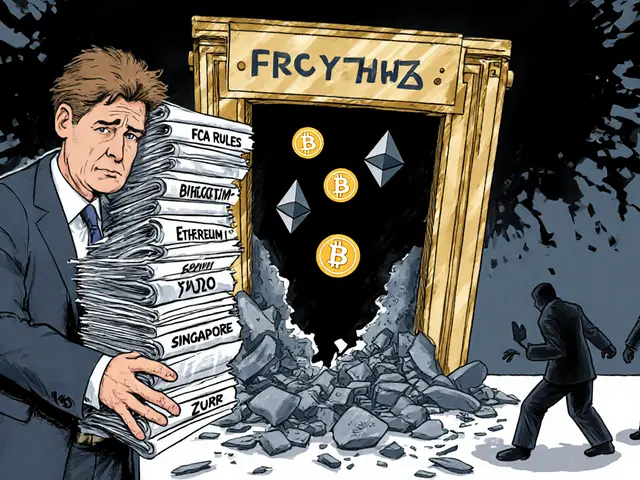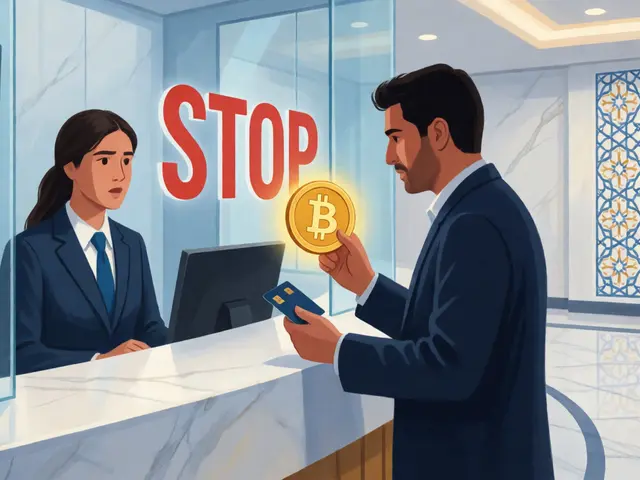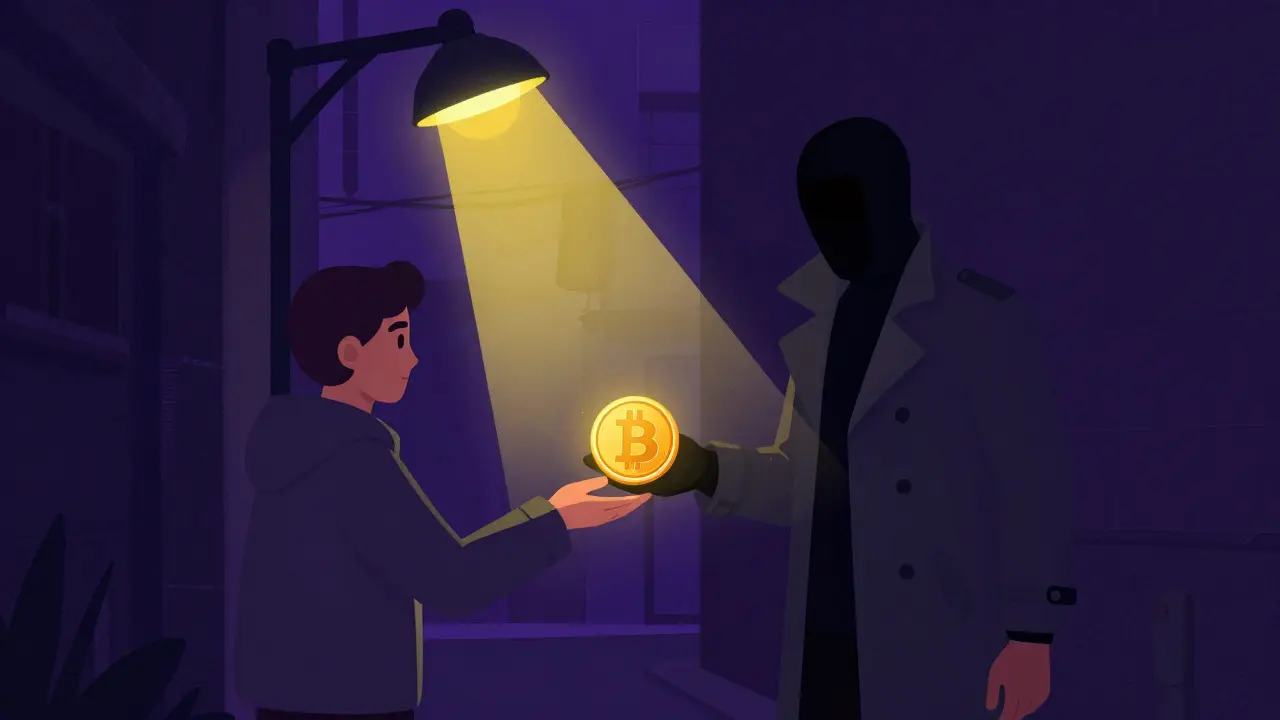

Imagine trying to buy a gold bar in a city where owning gold is a crime. You wouldn't find it at a retail store; you'd find it in a dimly lit alley, and you'd pay double the global spot price just for the privilege of owning it. This is exactly how underground crypto market premiums is the price gap that emerges when the cost of cryptocurrency in a restricted zone exceeds the global average market price . When a government slams the door on legal exchanges, the demand doesn't vanish-it just goes subterranean, and the price tags start climbing.
The Mechanics of the "Risk Tax"
Why does a Bitcoin cost more in a banned jurisdiction than it does on a major exchange in New York or London? It comes down to a simple economic reality: the underground crypto market premiums act as a risk tax. In a free market, liquidity is high and risk is low. In a banned zone, every single transaction carries the threat of jail time or asset seizure.
When you buy crypto through a covert channel, you aren't just paying for the coin; you're paying for the seller's willingness to risk their freedom. These premiums are driven by three main factors:
- Supply Chokepoints: With legal ramps shut down, the only way to get assets is through a handful of trusted intermediaries who can charge whatever they want.
- Operational Danger: If a trader in Egypt or Afghanistan faces a high probability of arrest, they will bake that risk into the price.
- Liquidity Drying Up: Small, private pools of crypto are far more volatile than global markets, leading to wider bid-ask spreads.
Case Study: The Most Restrictive Regimes
Not all bans are created equal. Some countries simply discourage trading, while others treat it as a high crime. The severity of the law directly impacts how high the black market premium climbs.
China is the world's most aggressive crypto restrictor, having passed sweeping legislation on May 30, 2025, that criminalizes the mere personal ownership of digital assets . By betting entirely on the digital yuan (their state-backed CBDC), the Chinese government has pushed everything into the shadows. While data is hard to track, the absolute ban on holding assets creates a perfect storm for massive premiums, as users must rely on high-risk P2P networks to maintain their portfolios.
In Afghanistan , the approach is different. The Taliban regime banned crypto on both religious and economic grounds, labeling it "haram" under Sharia law. Here, the ban is enforced by Da Afghanistan Bank . Because the financial system is already fragile, any underground activity is incredibly risky, which theoretically pushes premiums even higher than in more stable banned economies.
| Jurisdiction | Primary Restriction | Enforcement Body | Theoretical Premium Driver |
|---|---|---|---|
| China | Total Ownership Ban | State Legislation | High (Criminalization of holding) |
| Afghanistan | Religious/Economic Ban | Da Afghanistan Bank | Very High (Extreme fragility/Sharia law) |
| Egypt | Blanket Trading Ban | Police/Anti-Crypto Units | Moderate to High (Active arrests) |
| India | Strict Compliance/Tax | Financial Intelligence Unit | Low to Moderate (Regulatory friction) |
When "Legal" Markets Drive Users Underground
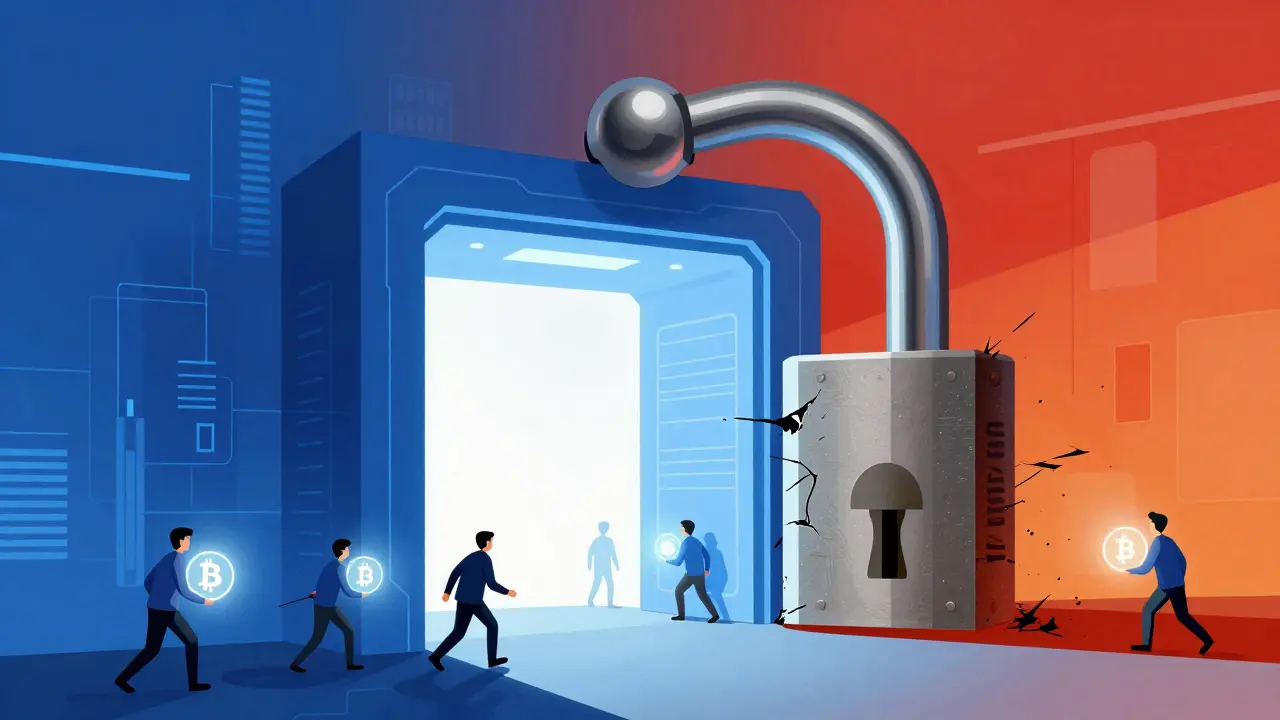
It's a mistake to think that only absolute bans create premiums. Often, it's the "gray area" regulations that push people into the black market. When compliance becomes so expensive or invasive that the average person can't meet the requirements, they look for an unlicensed operator.
Take India, for example. The Financial Intelligence Unit (FIU) didn't ban crypto entirely, but they hit non-compliant platforms with $9.5 million in fines in 2024. When the government makes it nearly impossible for exchanges to operate legally, users move to P2P (peer-to-peer) markets. These markets don't have the same oversight, but they do have "convenience premiums" because the sellers are providing a service that avoids the red tape.
We see the same trend in South Africa and the Philippines. When regulators blacklist unlicensed exchanges or freeze millions in funds, the remaining "safe" channels become overcrowded. This bottleneck creates a pricing inefficiency where the local cost of a coin rises simply because the legal supply has been choked off.
The Tech That Fights the Ban
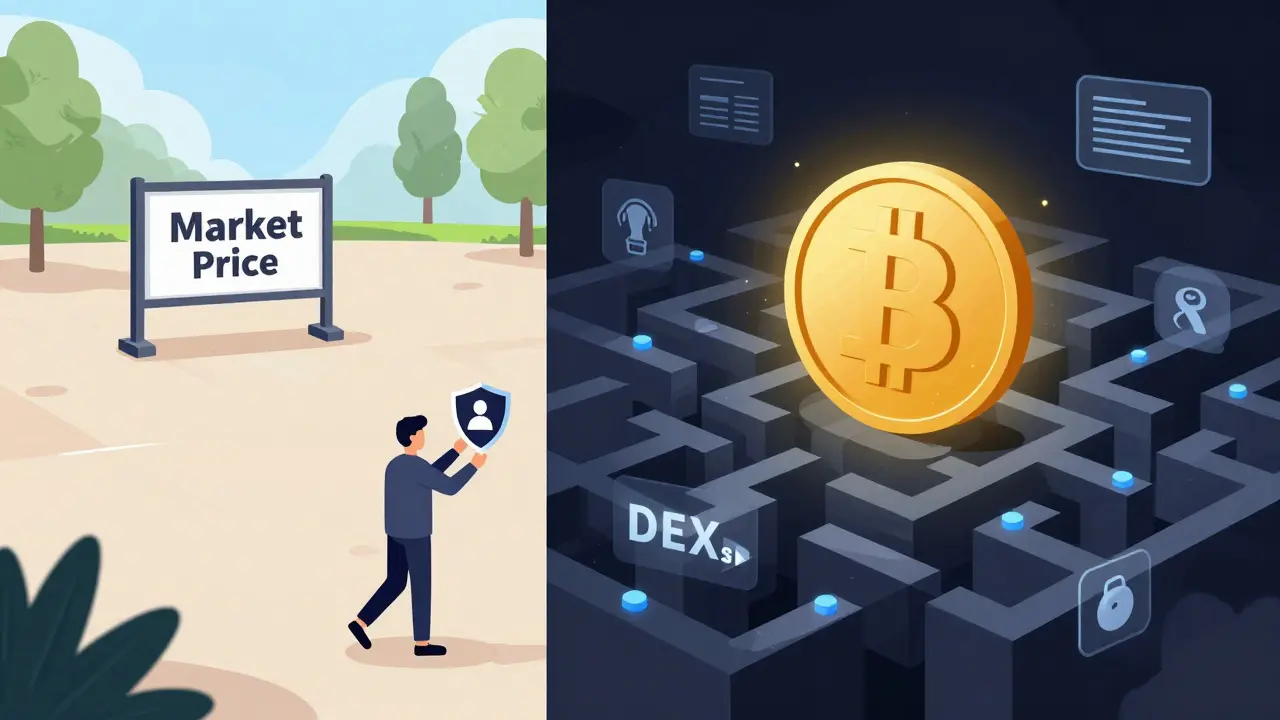
How do people even trade in these environments? They use tools that remove the middleman. Decentralized Exchanges (DEXs) are the primary weapon here. Since a DEX doesn't have a central office for the police to raid, it's much harder to shut down. However, getting "on-ramp" cash into a DEX in a banned country still requires a human partner, which is where the premium is usually charged.
Privacy is the other big driver. Coins like Monero or Zcash often command a higher premium in banned zones than Bitcoin does. Why? Because Bitcoin's ledger is public. If a government can track your wallet, they can find you. Privacy coins hide the sender and receiver, making them far more valuable to someone living under a regime that arrests crypto holders.
Predicting the Future of Global Premiums
As we move through 2026, the gap between the "official" price and the "street" price is likely to widen. The Financial Action Task Force (FATF) has seen nearly 100 jurisdictions pass crypto laws recently. This creates a fragmented world. We are seeing the rise of "regulatory arbitrage," where traders move assets between a low-premium zone (like the US) and a high-premium zone (like China) to make a profit.
But this is a dangerous game. The more the government tracks the flow of money, the more they tighten the noose. When enforcement effectiveness increases-meaning the police actually catch people-the premium usually spikes. The risk is higher, so the price goes up. Conversely, in countries where the ban is "on paper only" and officials are easily bribed, the premiums remain low because the actual risk of trading is negligible.
Why are crypto premiums higher in banned countries?
Premiums rise because of increased operational risks, limited supply of available coins, and the cost of using covert P2P networks. Sellers charge a premium to compensate for the risk of arrest or asset seizure.
Which cryptocurrencies are most popular in banned jurisdictions?
While Bitcoin remains a primary store of value, privacy-focused coins like Monero are highly prized because they hide transaction details, making them harder for governments to track compared to public ledgers.
How do people trade crypto if exchanges are banned?
Most users turn to P2P (peer-to-peer) trading, where they buy and sell directly with other individuals via encrypted messaging apps, or use Decentralized Exchanges (DEXs) that operate without a central authority.
Does a high premium mean a market is healthy?
No, a high premium is usually a sign of market inefficiency and high risk. It indicates that the local population is desperate for the asset but lacks safe, legal ways to acquire it.
What is the role of the FATF in this?
The Financial Action Task Force (FATF) sets global standards for anti-money laundering (AML). When countries adopt these strict standards, it often pushes non-compliant users toward underground markets, indirectly influencing premiums.
Comments (9)

- Sara Ellis
- April 20, 2026 AT 07:41 AM
it is just like everything else in life man if you want something the world makes it hard to get which just makes it more special in the end

- Robert Mosolygo
- April 22, 2026 AT 01:24 AM
The naive assumption here is that these "premiums" are merely organic economic shifts. In reality, they are calculated maneuvers by globalist entities to trap dissident populations into traceable P2P networks. The FATF isn't just setting standards; they are architecting a digital panopticon where every single transaction is a breadcrumb leading straight to a black site. If you believe the price hike is just about "risk tax," you are ignoring the systemic orchestration designed to flush out the last remnants of financial privacy before the Great Reset is fully implemented. It is an elaborate honey pot designed to identify exactly who is daring to bypass the state-mandated CBDCs.

- Kyle Bush
- April 23, 2026 AT 05:55 AM
USA is the only place doing this right! 🇺🇸 Who cares about some banned countries when we have the strongest economy on earth? 🚀 Let them pay their premiums while we keep winning! 💰💥

- Doc Coyle
- April 24, 2026 AT 16:57 PM
Actually it is pretty obvious that people just enjoy the thrill of breaking the law. It is not a mystery why the price goes up when you are doing something wrong. Basic economics.

- Lisa Camp
- April 26, 2026 AT 05:46 AM
STOP COMPLAINING AND START TRADING! If the risk is high the reward is higher! Get after it and stop waiting for a legal way to get rich! ⚡️⚡️

- Mike Word
- April 27, 2026 AT 11:53 AM
The part about Monero is really interesting. I wonder how different these underground markets operate across various cultures, specifically if the trust mechanisms in Egypt differ from those in India.

- Clair Geary
- April 29, 2026 AT 07:57 AM
such a wild ride seeing how people find ways around the rules
its like a digital treasure hunt but with way higher stakes lol

- Sarah Ingrams
- May 1, 2026 AT 04:25 AM
must be so scary to risk everything just for a coin

- Ellie Drews
- May 1, 2026 AT 10:54 AM
It's really sad that people have to go through this, but it's great that tech provides some kind of escape for those in tough regimes. Let's just hope they stay safe while navigating these waters.