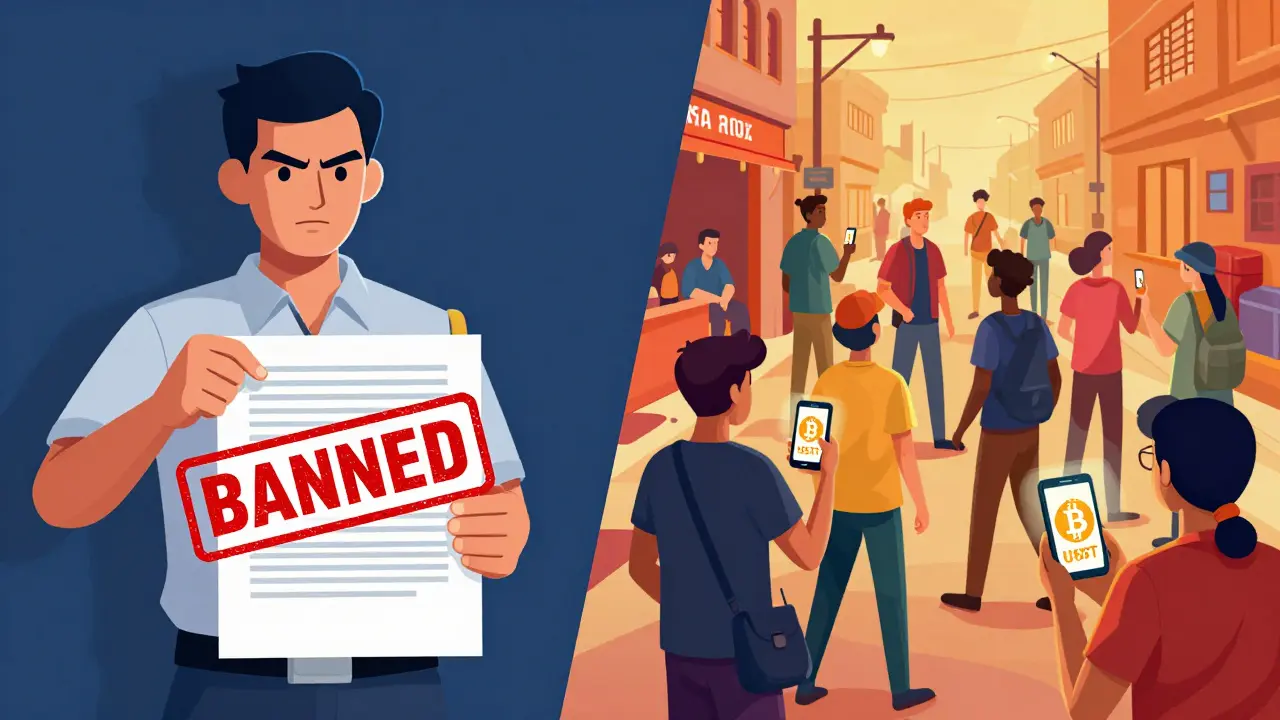

Imagine trying to buy a digital asset in a country where the government says it doesn't exist. That is the daily reality for over 600,000 people in Bangladesh. They are actively trading on platforms like Binance, moving millions of dollars in value every day, all while operating in direct defiance of one of the world's strictest financial prohibitions. It sounds like a scene from a spy movie, but it is just Tuesday morning in Dhaka.
Bangladesh sits in a unique and contradictory position. On paper, it is one of only ten nations globally-alongside China, Egypt, and Nepal-that maintains a total ban on cryptocurrency. Yet, on the ground, a massive shadow economy thrives. This isn't just about tech-savvy teenagers buying Bitcoin; it involves freelancers getting paid, businesses settling cross-border invoices, and ordinary citizens seeking protection against currency inflation. How does this happen? And what happens when the net closes?
The Legal Paradox: Banned by Silence
To understand why 600,000 people are risking their assets, you first have to look at the law-or rather, the lack of a specific criminal code for crypto. Bangladesh does not have a single law that explicitly says "possessing Bitcoin is a crime." Instead, the prohibition is woven into older, broader financial statutes. The Bangladesh Bank, the central monetary authority of Bangladesh responsible for regulating the nation's currency and financial system issued its first warning in 2014. By 2016, they had escalated this to a clear stance: virtual currencies violate the Foreign Exchange Regulation Act of 1947, a legacy legislation governing foreign currency transactions in Bangladesh, now used to prohibit crypto trading as an unauthorized exchange mechanism and the Money Laundering Prevention Act of 2012, legal framework empowering authorities to freeze assets and prosecute individuals involved in suspicious financial activities including unregulated digital asset transfers.
This creates a legal grey zone that is terrifyingly vague. The central bank states that cryptocurrencies lack official recognition. If something isn't recognized, can you own it? Can you trade it? The Financial Intelligence Unit (FIU) monitors these flows, treating any crypto transaction as a potential money laundering risk. The result? No one knows exactly when they might cross the line from "investor" to "criminal," so everyone walks on eggshells.
Here is the kicker: In 2020, the same government released a National Blockchain Strategy, acknowledging that blockchain technology is essential for digital transformation. They want the tech without the token. They want the ledger without the liberty. This contradiction leaves citizens confused and regulators frustrated.
How the Underground Market Actually Works
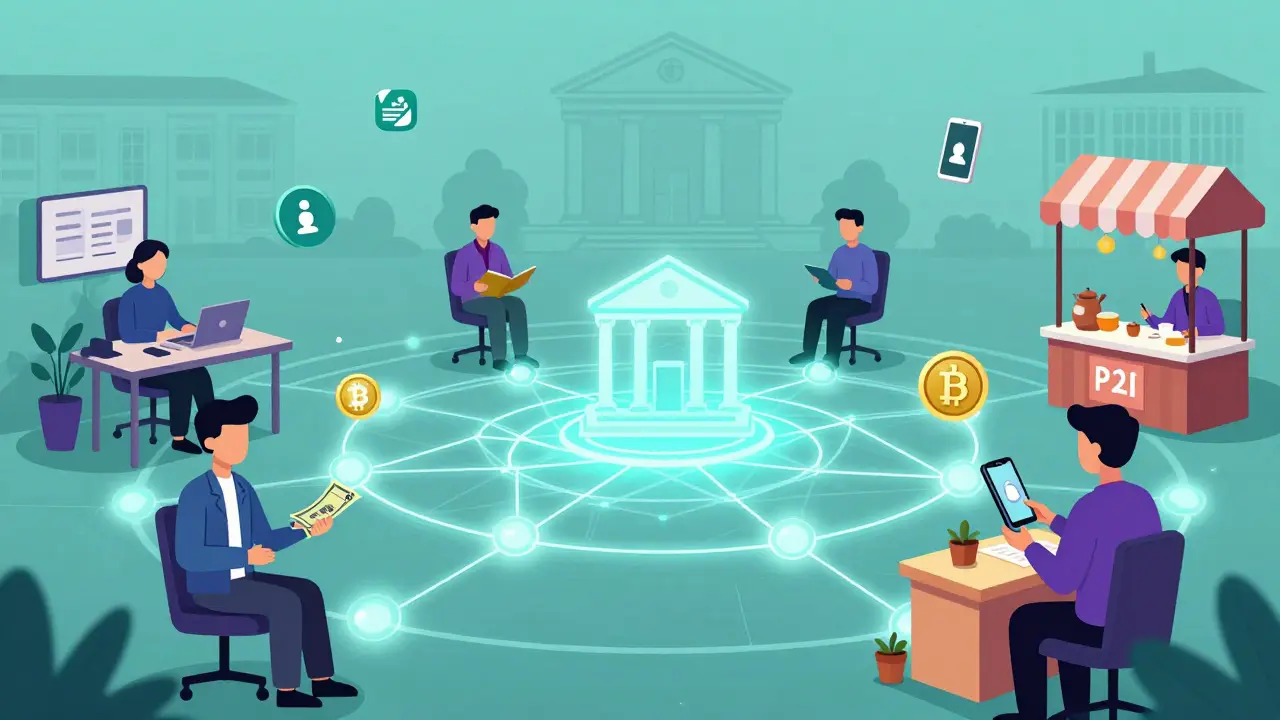
If you cannot use your bank card to buy Bitcoin, how do 600,000 people get access? The answer lies in ingenuity and risk. The underground ecosystem in Bangladesh has evolved into a sophisticated network that bypasses traditional banking rails entirely.
The most common method is Peer-to-Peer (P2P) trading via local agents. You don't send money to Binance directly. Instead, you find a trusted local trader-often advertised on social media or Telegram groups. You transfer Bangladeshi Taka (BDT) to their local bank account via bKash, Nagad, or standard bank transfer. Once they confirm receipt, they release USDT (Tether) or Bitcoin from their escrow wallet on the platform. These agents charge a small commission, often 1-3%, but they provide a crucial service: anonymity and speed.
Another route involves credit cards. Some users still manage to process transactions in US dollars through international payment gateways. However, this is dangerous. Banks can track these fund movements. If a bank sees a recurring charge to a crypto-related merchant category code (MCC), they may flag the account, freeze funds, or even close the relationship. Most savvy users avoid this route because the trail is too easy to follow.
Then there is the app store paradox. Despite the ban, apps like Binance and KuCoin remain accessible on the Google Play Store and Apple App Store in Bangladesh. There is no technical block on the software itself. The government relies on financial chokepoints rather than internet censorship to enforce the ban. This means anyone with a smartphone and a data connection can download the tools needed to trade. The barrier is not access; it is funding.
| Method | Risk Level | Traceability | Speed |
|---|---|---|---|
| P2P Local Agents | High (Counterparty Risk) | Medium (Bank Transfer Logs) | Fast (Minutes) |
| Credit/Debit Card | Very High (Account Freeze) | High (Direct Bank Link) | Instant |
| Crypto ATMs (Rare) | Extreme (Physical Surveillance) | High (ID/KYC Required) | Slow (Verification) |
The Risks: More Than Just Losing Money
When you operate outside the law, the risks multiply. For the average Bangladeshi user, the fear isn't just market volatility-it's regulatory retaliation. The Bangladesh Bank has explicitly warned that holding, trading, or facilitating virtual currency transactions violates anti-money laundering laws. This means your bank account could be frozen without prior notice if suspicious patterns are detected.
Consider the case of cross-border payments. Many Bangladeshi freelancers work for clients in the US or Europe. Traditionally, they receive payments via PayPal or Wise, which then face heavy restrictions or closures in Bangladesh. Crypto offers a lifeline. But if a freelancer receives $5,000 in USDT and tries to convert it to Taka through informal channels, they are technically engaging in illegal foreign exchange activity under the 1947 Act. The penalty isn't just a fine; it can include imprisonment.
Taxation adds another layer of complexity. There is no specific crypto tax regime in Bangladesh. However, the National Board of Revenue treats crypto gains under the general provisions of the Income Tax Ordinance of 1984. This means you are expected to declare these profits. But how do you declare income from an asset the government says doesn't legally exist? Most users simply don't report it, creating a massive blind spot in national revenue collection.
Why People Keep Coming Back
If the risks are so high, why do 600,000 people stay? The answer is simple: necessity. The Bangladeshi Taka has faced significant depreciation pressure in recent years. When your local currency loses value rapidly, people look for stores of value. Gold is traditional, but it is illiquid and hard to move. Bitcoin and stablecoins like USDT offer a way to preserve purchasing power and move wealth across borders quickly.
Furthermore, the gig economy is booming. A developer in Chittagong coding for a Dubai startup needs a way to get paid that doesn't involve weeks of banking delays and 5% conversion fees. Crypto solves this friction. The demand is driven by real economic pain points, not just speculation. As long as traditional banking remains slow, expensive, and restrictive for international flows, the underground crypto market will thrive.
User experiences reveal a community built on trust networks. Since there is no legal recourse if a P2P agent scams you, reputation becomes everything. Online forums and WhatsApp groups serve as rating agencies. Users share blacklists of bad actors and recommend reliable traders. This social enforcement mechanism fills the void left by absent legal protections.
The Expert Debate: Ban vs. Regulate
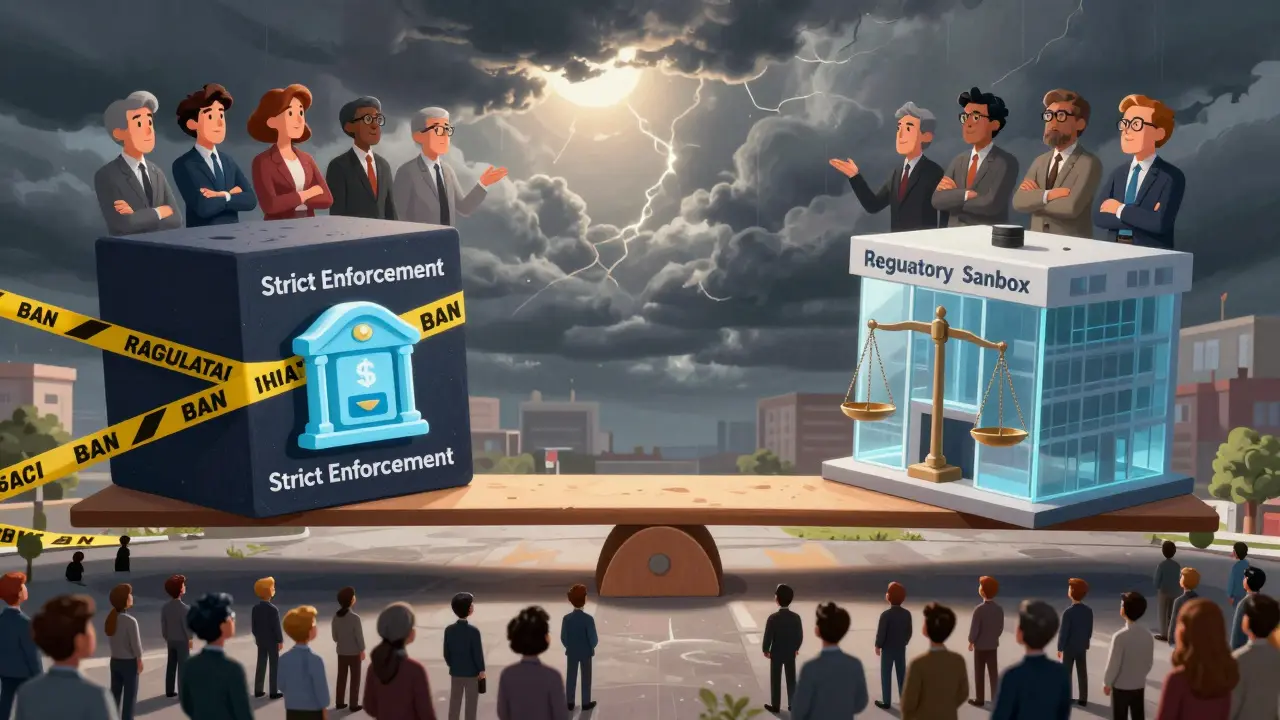
Not everyone agrees with the current approach. Dr. B M Mainul Hossain, a professor at Dhaka University and director of its Institute of Information Technology, argues that "banning is not a solution." He points out that sitting back and doing nothing ignores the reality of digital globalization. "Cryptocurrency operates legally in many countries," he notes. "Bangladesh should explore monitoring and regulation frameworks rather than prohibition."
This view is gaining traction among academics and some policymakers. The argument is that a blanket ban drives activity underground, making it harder to monitor for money laundering and terrorism financing. If crypto were regulated, transactions would be transparent, taxable, and safer for consumers. Currently, the government chases shadows. A regulated market would bring those shadows into the light.
However, the government remains cautious. Their primary concerns are capital flight and financial instability. They fear that widespread crypto adoption could undermine the sovereignty of the Taka and destabilize the banking sector. Until they see a model that protects these interests while allowing innovation, the ban likely stays in place.
What Comes Next?
The status quo is unsustainable. With 600,000 active users, the market is too large to ignore indefinitely. Global trends are shifting. Neighboring India has moved towards severe restriction but acknowledges crypto as an asset class. Indonesia and Russia have adopted similar nuanced approaches. Bangladesh is increasingly isolated in its total ban.
We are likely to see three possible outcomes in the near future:
- Stricter Enforcement: The government may partner more closely with banks to automatically flag and freeze accounts involved in P2P trades, raising the cost of participation.
- Regulatory Pilot: Inspired by the National Blockchain Strategy, a sandbox environment could be created for licensed crypto exchanges, bringing the market above ground.
- Status Quo Continues: The ban remains, but enforcement becomes selective, targeting large-scale operations while ignoring individual retail traders.
For now, the 600,000 users continue to navigate this tightrope. They are part of a global movement that refuses to be stopped by borders or bans. Whether this leads to reform or repression remains to be seen, but one thing is clear: you cannot ban an idea whose time has come.
Is it illegal to own Bitcoin in Bangladesh?
While there is no specific law criminalizing mere ownership, the Bangladesh Bank considers any involvement in cryptocurrency transactions-including holding, trading, or facilitating-as a violation of the Foreign Exchange Regulation Act of 1947 and anti-money laundering laws. This creates a de facto ban where ownership is risky due to associated transaction requirements.
Can I use my Bangladeshi bank card to buy crypto on Binance?
Technically, some transactions may go through, but it is highly discouraged and risky. Banks monitor for suspicious international charges related to crypto merchants. Using a local bank card can lead to account freezes, closure, or legal scrutiny under anti-money laundering regulations. Most users prefer P2P methods to avoid direct bank links.
How do people in Bangladesh actually buy crypto?
The most common method is Peer-to-Peer (P2P) trading. Users connect with local agents via platforms like Binance P2P. They send Bangladeshi Taka to the agent's local bank account or mobile wallet (like bKash), and the agent releases crypto from escrow. This avoids direct international bank transfers and provides a layer of anonymity.
What happens if the government catches me trading crypto?
Consequences can range from having your bank accounts frozen to facing prosecution under the Money Laundering Prevention Act of 2012. Penalties depend on the scale of transactions and whether authorities deem it a threat to financial stability. Small retail traders are less likely to face jail time compared to large-scale operators, but asset seizure is a real risk.
Will Bangladesh legalize cryptocurrency in the future?
There is growing pressure for regulation rather than total prohibition. Experts like Dr. B M Mainul Hossain advocate for a balanced framework. Given the success of blockchain initiatives and the sheer number of users, a shift towards regulated licensing for exchanges is possible, though a full legalization akin to El Salvador is unlikely in the short term.
Are there any safe ways to invest in crypto from Bangladesh?
No method is completely "safe" given the legal ban. However, using reputable P2P platforms with strong escrow services reduces counterparty risk. Avoiding direct bank card purchases minimizes immediate detection risk. Always be aware that any profit made is technically taxable under general income tax laws, though reporting mechanisms are unclear.