
It sounds contradictory, doesn't it? How can a country with strict financial controls and past bans on digital assets suddenly find itself sitting at the top of the global cryptocurrency adoption charts? As of mid-2026, Pakistan ranks between 3rd and 4th globally in crypto usage. This isn’t just a statistical anomaly; it’s a story of necessity, regulatory evolution, and millions of citizens finding new ways to manage their money.
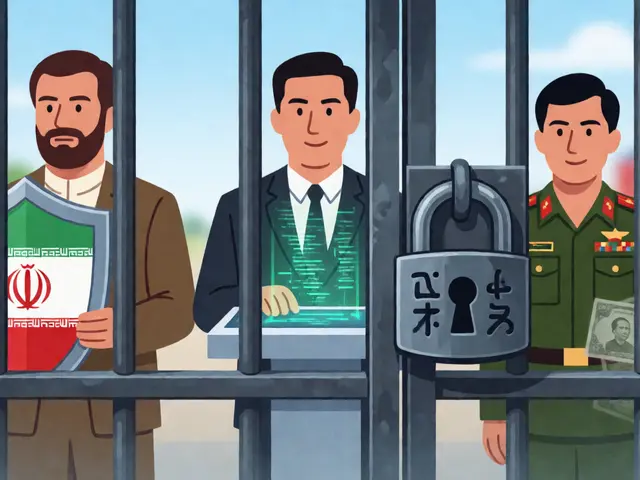
If you’ve been following the news from South Asia, you might remember that not long ago, the State Bank of Pakistan (SBP) treated cryptocurrencies with suspicion. Back in 2018, they declared digital currencies were not legal tender and effectively banned banks from facilitating transactions. Yet, today, the narrative has flipped completely. With approximately 20 million citizens holding digital assets worth an estimated $20-25 billion, Pakistan has become a powerhouse in the blockchain space. But what actually changed?
The Shift From Ban to Regulation
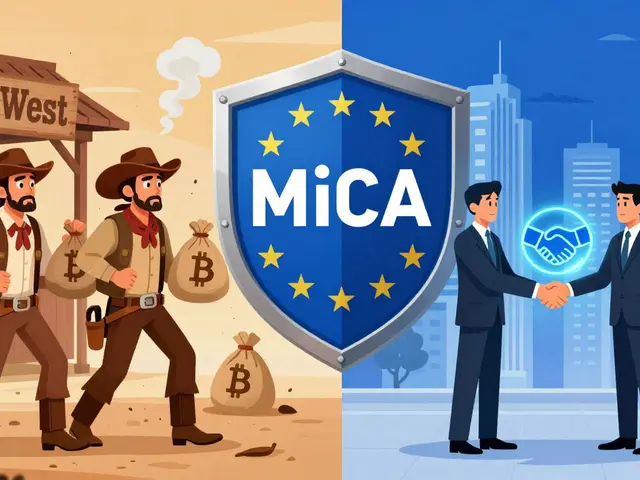
The most critical factor driving this surge is the shift from prohibition to structured regulation. For years, the lack of clear rules kept institutional players away while pushing retail users into the shadows. That changed dramatically in 2024 and 2025. The government realized that banning crypto wasn’t stopping its use-it was just making it harder to tax and monitor.
In July 2025, Pakistan established the Pakistan Virtual Assets Regulatory Authority. This body provides the legal clarity that investors and businesses had been waiting for. Alongside this, the creation of the Pakistan Crypto Council, led by CEO Bin Saqib, signaled high-level political commitment. These moves didn't just lift restrictions; they created a framework for growth. When rules are clear, people feel safer putting their savings into digital wallets.
What Drives the Rankings: Utility Over Speculation
When we talk about rankings, it’s important to understand how they are calculated. The Chainalysis Global Crypto Adoption Index is one of the most cited metrics. In their October 2025 report, Pakistan jumped six spots to land in 3rd place globally, trailing only India and the United States. Other methodologies might place Pakistan slightly lower, around 9th, depending on whether they measure transaction volume or ownership rates. However, the consensus is clear: Pakistan is a top-tier adopter.
But why are people buying? According to Kim Grauer, chief economist at Chainalysis, the adoption in emerging markets like Pakistan is driven by utility, not speculation. People aren't just buying Bitcoin hoping it will moon overnight. They are using stablecoins-cryptocurrencies pegged to the US dollar-to protect their savings from inflation. With local currency fluctuations affecting purchasing power, holding USDT or USDC offers a sense of stability that traditional bank accounts no longer provide.
| Rank | Country | Primary Driver | Regulatory Status |
|---|---|---|---|
| 1 | India | Retail investment & tech ecosystem | Regulated |
| 2 | United States | Institutional inflows & ETFs | Regulated |
| 3 | Pakistan | Remittances & inflation hedging | Newly Regulated (2025) |
| 4-5 | Vietnam / Nigeria | Peer-to-peer trading | Mixed/Evolving |

Remittances: The Silent Engine
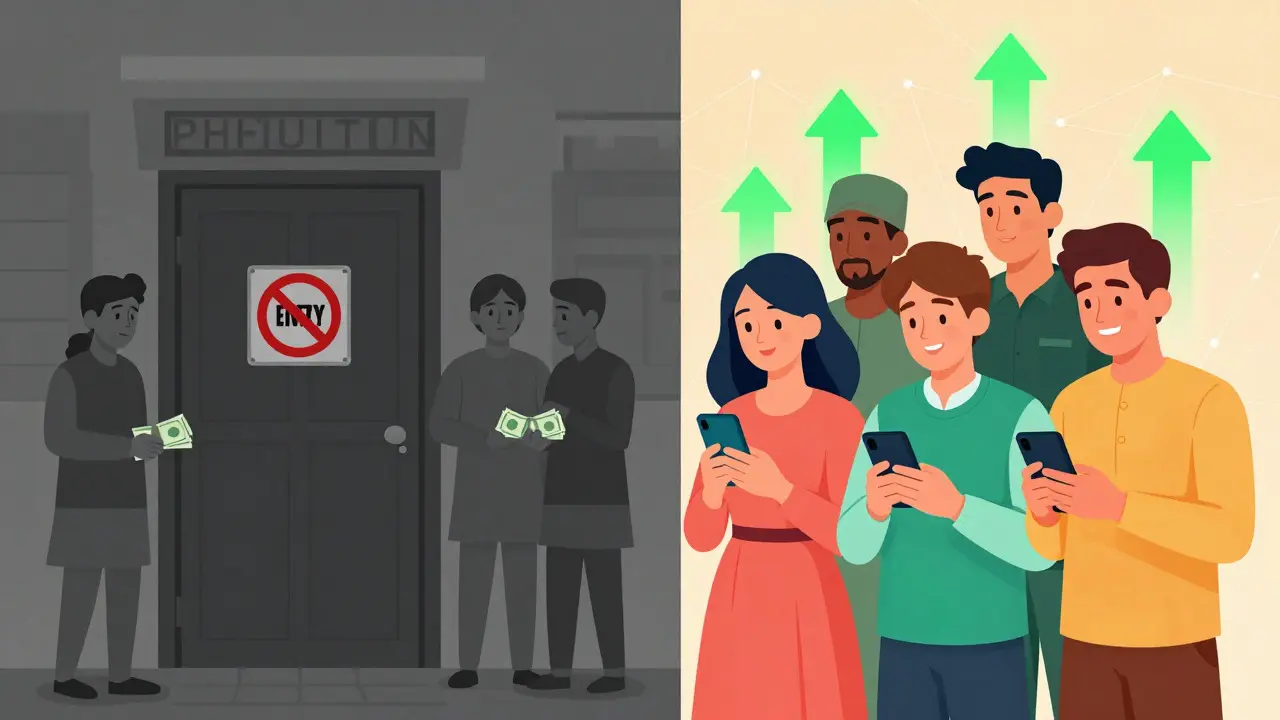
One of the biggest drivers for crypto adoption in Pakistan is remittances. Millions of Pakistanis work abroad, sending billions of dollars home every year. Traditional banking channels often come with high fees, slow processing times, and significant exchange rate losses. Cryptocurrency offers a faster, cheaper alternative.
Imagine a construction worker in Dubai wanting to send money to his family in Lahore. Instead of going through multiple banks and losing 5-7% in fees and spread, he can convert his earnings to a stablecoin and transfer it instantly via a decentralized exchange. His family can then swap it back into Pakistani Rupees locally. This peer-to-peer flow bypasses traditional friction points. While the SBP initially worried about capital flight, the reality is that crypto is keeping money within the informal economy more efficiently than before.
Geopolitics and Strategic Partnerships
Pakistan’s rise isn’t happening in a vacuum. The country is actively positioning itself as a friendly jurisdiction for blockchain innovation, particularly in relation to the United States. In June 2025, Finance Minister Muhammad Aurangzeb and Crypto Council CEO Bin Saqib held discussions with Michael Saylor, whose firm MicroStrategy holds over $62 billion in Bitcoin. These talks focused on financial resilience and attracting foreign investment.
More controversially, in August 2025, the Pakistan Crypto Council signed an agreement with World Liberty Financial, a venture linked to the Trump family. This partnership aims to accelerate blockchain adoption but has raised eyebrows regarding conflicts of interest. It highlights a broader trend: nations are competing for crypto-friendly status, and Pakistan is leveraging diplomatic ties to secure its place in the global ledger. Whether these partnerships deliver tangible benefits or remain symbolic remains to be seen, but they underscore the strategic importance of crypto in modern geopolitics.

Challenges Remain: Infrastructure and Education
Despite the impressive rankings, challenges persist. Internet penetration is improving, but rural areas still face connectivity issues. More importantly, financial literacy regarding blockchain technology is low. Many users rely on third-party intermediaries to buy and sell crypto, which introduces counterparty risk. If a local exchange collapses, users can lose everything.
Furthermore, the regulatory framework is new. The Pakistan Virtual Assets Regulatory Authority is still building its enforcement capabilities. There is a risk that regulations could tighten again if political winds change or if international pressure mounts. The key for Pakistan is to maintain the momentum of utility-driven adoption while protecting consumers from scams and volatility.
Looking Ahead: Sustainability of Growth
Is this growth sustainable? The data suggests yes, provided the focus remains on real-world use cases. Global crypto adoption grew by 172% in 2024, and Pakistan is capturing a disproportionate share of this expansion. Projections indicate that Bitcoin users alone could reach 1.1 billion by 2030. With a population of 230 million, Pakistan is well-positioned to tap into this wave.
The transition from a hostile environment to a regulated one has unlocked potential that was previously suppressed. By focusing on stablecoins for savings and remittances, Pakistan has found a niche that serves immediate economic needs. As long as the regulatory bodies continue to provide clarity rather than confusion, the country is likely to maintain its top-10 global position throughout 2026 and beyond.
Is cryptocurrency legal in Pakistan in 2026?
Yes, as of 2026, cryptocurrency is legally recognized and regulated in Pakistan. The establishment of the Pakistan Virtual Assets Regulatory Authority in July 2025 marked the end of the previous ban era. While it is not considered legal tender (you cannot pay taxes directly with Bitcoin), owning and trading digital assets is permitted under the new regulatory framework.
Why does Pakistan rank so high in crypto adoption?
Pakistan's high ranking is driven by practical utility. Citizens use stablecoins to hedge against inflation and facilitate low-cost remittances from abroad. Additionally, the recent regulatory clarity has encouraged both retail and institutional participation, boosting transaction volumes significantly compared to previous years.
How did the State Bank of Pakistan change its stance?
The State Bank of Pakistan shifted from a prohibitive stance in 2018 to a supportive regulatory approach in 2024-2025. Recognizing that bans were ineffective, the government created the Pakistan Crypto Council and the Virtual Assets Regulatory Authority to oversee the industry, aiming to integrate crypto into the national economy safely.
What are the risks for crypto users in Pakistan?
Risks include market volatility, potential regulatory changes, and reliance on unregulated local exchanges. Users should be cautious of scams and ensure they use reputable platforms. Additionally, internet infrastructure issues in rural areas can hinder access to digital services.
Who leads the Pakistan Crypto Council?
The Pakistan Crypto Council is led by CEO Bin Saqib. The council works closely with the government and international partners to promote blockchain adoption and coordinate policy development within the country.
Comments (5)

- Heather Austin
- July 24, 2026 AT 00:47 AM
the stablecoin angle is actually the most logical part of this whole narrative. when your local currency loses value faster than you can spend it holding usdt or usdc isn't really a speculative move its just survival math. i've seen similar patterns in other emerging markets where people bypass traditional banking because the fees and delays are just too painful for daily transactions

- Ella Collinson
- July 24, 2026 AT 12:00 PM
while the adoption metrics are undeniably impressive from a quantitative standpoint one must critically evaluate the underlying structural vulnerabilities inherent in such rapid decentralization. the reliance on peer-to-peer intermediaries introduces significant counterparty risk which often goes unmitigated in nascent regulatory frameworks. furthermore the geopolitical maneuvering involving entities like World Liberty Financial suggests a potential misalignment between stated economic resilience goals and actual operational transparency. without robust institutional safeguards the current surge may merely represent a liquidity bubble rather than sustainable financial inclusion.

- Ran Tao
- July 25, 2026 AT 14:24 PM
oh please spare me the doom and gloom 🙄 everyone loves to act like they’re the only ones who see the ‘risks’ while ignoring that millions of people are literally getting paid and sending money home for the first time in their lives. yeah sure there’s volatility but have you tried paying 7% in fees to send $50 to your mom? 🤡 this isn’t about ‘structural vulnerabilities’ it’s about people finding a way around a broken system. stop acting like you’re so much smarter than the average joe trying to survive inflation 💅

- Lisa Chong
- July 27, 2026 AT 12:58 PM
it is obvious that the globalist elites are pushing this agenda to erode national sovereignty and create a surveillance state under the guise of financial freedom. the sudden shift in regulation by the state bank of pakistan is not coincidental but rather a coordinated effort to integrate the population into a digital ledger controlled by foreign interests. one must question why these specific partnerships with controversial figures are being celebrated as progress when clearly the goal is to strip citizens of their privacy and control over their own assets. beware the false promise of decentralization for it is merely a new form of centralized oppression disguised with blockchain jargon.

- Mark Tuason
- July 28, 2026 AT 09:03 AM
It is certainly an interesting development to observe how regulatory clarity has impacted adoption rates in Pakistan. The data presented regarding remittances provides a compelling argument for the utility of stablecoins in regions with high inflation. While the risks mentioned by others are valid, the practical benefits for the average citizen seem to outweigh the theoretical concerns at this stage.