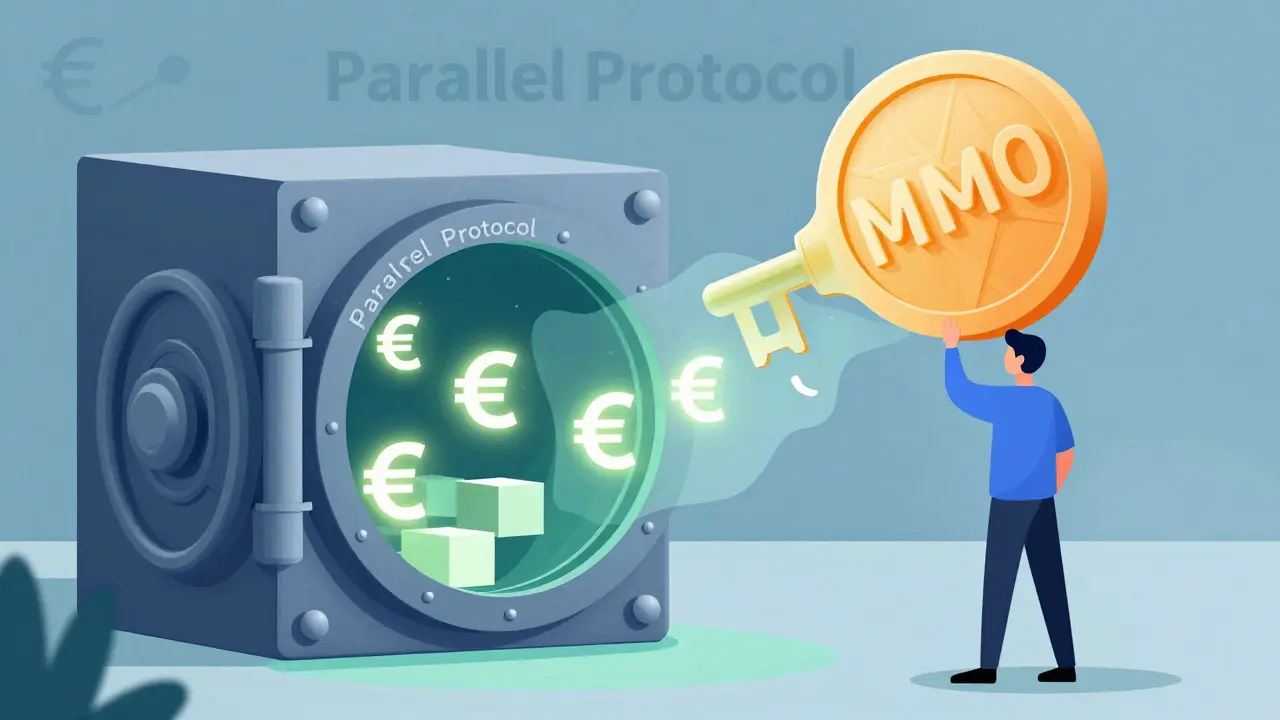

Imagine a world where you can borrow money using cryptocurrency as collateral, but instead of getting US Dollars or Bitcoin, you receive a digital token pegged to the Euro. That is the core promise of the Mimo Governance Token, also known by its ticker symbol MIMO. It is the decision-making currency for the Parallel Protocol, a decentralized finance platform designed specifically for European users seeking a non-custodial, euro-pegged stablecoin called PAR. While the concept sounds straightforward, the reality of MIMO in the current market landscape is far more complex and risky than most newcomers realize.
If you are looking at MIMO because you saw it listed on an exchange or heard about "governance tokens" generally, you need to pause. This isn't just another governance coin like UNI or COMP. MIMO operates within a very specific niche: providing liquidity for a Euro-denominated asset in a market dominated by Dollar-pegged options. But here is the catch-despite its unique angle, the project faces severe challenges regarding liquidity, code originality, and market adoption. Before you consider buying or locking these tokens, let's break down exactly what they do, how they work, and why experts are raising red flags.
The Core Function: How MIMO Powers the Parallel Protocol
To understand MIMO, you first have to understand what it governs. The Parallel Protocol is a decentralized lending platform that allows users to mint PAR, a stablecoin algorithmically pegged to the Euro. Unlike traditional banks, there is no central authority holding your assets. Instead, users deposit cryptocurrencies like Ethereum or Wrapped BTC as collateral into smart contracts. In return, the protocol mints PAR tokens for them to use.
This is where MIMO comes in. It is not just a speculative asset; it has functional utility within this ecosystem. Holders of MIMO can lock their tokens to gain voting power. Think of it like a corporate shareholder meeting, but instead of owning shares in a company, you own influence over the code itself. What can you vote on? Critical parameters that keep the system alive:
- Collateralization Ratios: Deciding how much collateral is needed to mint a certain amount of PAR. If you want €100 worth of PAR, do you need to lock up €150 worth of Bitcoin? Or €200? MIMO holders decide this safety margin.
- Interest Rates: Adjusting the cost of borrowing PAR to maintain stability.
- Treasury Management: Voting on how the protocol's reserves are used during emergencies.
- System Upgrades: Approving changes to the smart contract logic.
The mechanism uses a "lock-up" model. You don't just hold MIMO to vote; you must lock it for a specific duration. The longer you lock, the more voting weight you get. This design encourages long-term commitment rather than short-term speculation. Additionally, MIMO serves as an emergency recapitalization tool. If the protocol faces a shortfall, new MIMO tokens can be minted and sold to raise funds and restore stability. This creates a direct link between the health of the PAR stablecoin and the value of the MIMO token.
Technical Reality: Multi-Chain Presence vs. Forked Code
From a technical standpoint, MIMO aims for accessibility by operating across multiple blockchain networks. Initially launched on Ethereum as an ERC-20 token in March 2021, the team later expanded to Polygon and Fantom to reduce transaction costs and increase speed. This multi-chain approach theoretically makes it easier for users with different preferences to participate in governance.
However, there is a significant controversy surrounding the project's technical foundation. Independent analyses, including reports from Stack Money, indicate that 100% of the Mimo Governance code repositories are forked from other existing projects. In the crypto world, "forking" means copying and modifying existing code. While many successful projects start as forks, relying entirely on copied code without substantial original innovation raises questions about the team's technical expertise and the long-term security of the protocol. When everything is borrowed, who is actually maintaining the underlying architecture?

Market Performance: The Stark Numbers
Let's talk about the numbers, because they tell a sobering story. MIMO had an all-time high price of around $0.35. As of mid-2025, the price has plummeted to fractions of a cent, hovering around $0.000462. This represents a decline of over 99% from its peak. Even more concerning is the trading volume. Reports from major data aggregators show near-zero trading volume ($0.00) over 24-hour periods.
Why does volume matter? Liquidity. If you buy MIMO, can you sell it when you want to? With virtually no volume, the answer is often no. You might find yourself holding tokens with no buyers willing to pay the price you need. The market capitalization sits below $1 million, ranking it outside the top 2,800 cryptocurrencies globally. Compare this to established governance tokens like Uniswap (UNI) or MakerDAO (MKR), which have market caps in the billions. MIMO is currently a micro-cap asset with extreme volatility.
| Feature | MIMO (Parallel Protocol) | Uniswap (UNI) | MakerDAO (MKR) |
|---|---|---|---|
| Primary Focus | Euro-pegged stablecoin (PAR) | Decentralized Exchange (DEX) | US Dollar-pegged stablecoin (DAI) |
| Market Cap (Approx.) | < $1 Million | > $4 Billion | > $1 Billion |
| Liquidity | Extremely Low / Near Zero | High | High |
| Code Originality | 100% Forked | Original Development | Original Development |
| Regulatory Risk (EU) | High (MiCA Compliance Issues) | Medium | Medium |
The Regulatory Headwind: MiCA and European DeFi
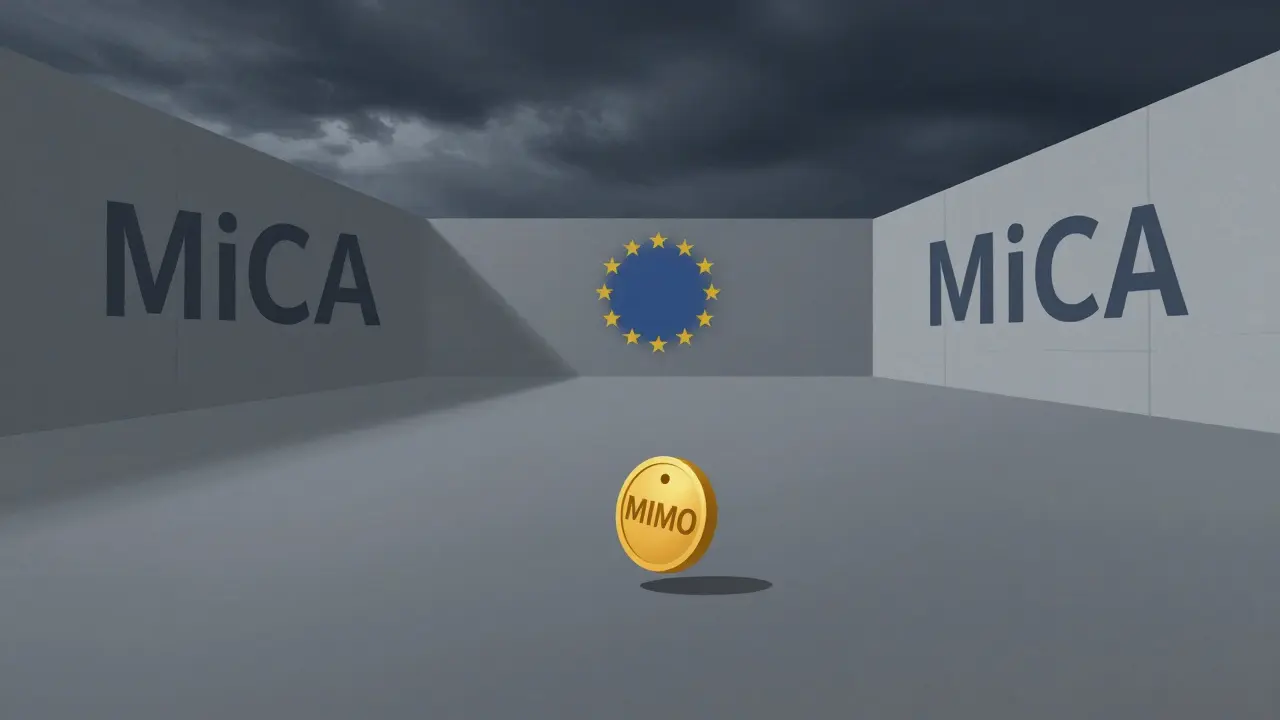
MIMO's biggest selling point was always its focus on Europe. By offering a Euro-pegged stablecoin, it aimed to bridge the gap between traditional European finance and decentralized crypto. However, the regulatory landscape shifted dramatically in June 2025 with the full implementation of MiCA (Markets in Crypto-Assets), the EU's comprehensive crypto regulation framework.
MiCA imposes strict requirements on issuers of asset-referenced tokens and e-money tokens. To operate legally and safely within the EU, stablecoin issuers must demonstrate robust reserve backing, transparency, and compliance mechanisms. Projects like EURS (STASIS) and eURT (Tether) have moved quickly to adapt their frameworks to meet these standards. MIMO, however, lacks the resources, legal team, and market presence to compete in this regulated space. Without clear compliance pathways, European users may hesitate to use PAR due to potential legal risks, further draining demand for the governance token MIMO.
Is MIMO Still Worth Considering? Risks and Realities
So, should you buy MIMO? Let's look at the pros and cons objectively.
The Potential Upside: If you believe deeply in the future of Euro-denominated DeFi and think the Parallel Protocol will somehow overcome its liquidity crisis and regulatory hurdles, MIMO is extremely cheap. A small investment could yield high percentage returns if the project miraculously revives. The multi-chain deployment provides some flexibility, and the governance model is theoretically sound.
The Severe Risks:
- Liquidity Trap: With near-zero volume, exiting your position could be impossible without crashing the price further.
- Code Security: Relying on 100% forked code increases the risk of undiscovered vulnerabilities or bugs inherited from the original projects.
- Regulatory Obsolescence: Failure to comply with MiCA could render the PAR stablecoin unusable for its target demographic.
- Development Stagnation: There are no recent roadmap updates, active GitHub commits, or community growth signals. The project appears dormant.
Expert analysis from platforms like SwissBorg Academy acknowledges MIMO's "long-term vision" but concludes that time will tell if it becomes a major player. Given the current metrics, the odds seem stacked against it. CoinLore's prediction models even forecast a further 50% decline in value by late 2025. For most investors, the risk-to-reward ratio is heavily skewed toward loss.
Conclusion: A Niche Experiment Facing Harsh Market Forces
Mimo Governance Token (MIMO) started with a clear mission: empower European users with a decentralized Euro alternative. It succeeded in building a functional, albeit forked, protocol across multiple chains. However, success in execution does not equal success in the market. MIMO is currently struggling with existential threats: lack of liquidity, regulatory pressure, and competition from better-funded, compliant rivals.
If you are a developer interested in studying how governance tokens interact with stablecoin issuance, MIMO offers an interesting case study. But if you are an investor looking for exposure to DeFi governance, there are significantly safer and more liquid options available. Always remember: in crypto, low price does not mean undervalued. It often means unloved.
What is the main purpose of the MIMO token?
The MIMO token is the governance token for the Parallel Protocol. Its primary purposes are to allow holders to vote on protocol parameters (like interest rates and collateral ratios), manage the treasury, and serve as an emergency recapitalization tool for the PAR stablecoin.
Is MIMO a safe investment in 2026?
No, MIMO is considered a high-risk asset. It has experienced a >99% drop from its all-time high, has near-zero trading liquidity, relies on 100% forked code, and faces significant regulatory challenges under EU MiCA laws. Most experts advise caution.
Which blockchains support the MIMO token?
MIMO operates on multiple networks including Ethereum (ERC-20), Polygon, and Fantom. This multi-chain approach was intended to lower transaction costs and increase accessibility for users.
What is the PAR stablecoin?
PAR is a decentralized stablecoin pegged to the Euro, issued by the Parallel Protocol. Users mint PAR by locking crypto assets as collateral. MIMO holders govern the rules that keep PAR stable.
Why is MIMO's code considered controversial?
Analyses show that 100% of the Mimo Governance code repositories are forked (copied) from other projects. While common in early-stage DeFi, total reliance on forked code raises concerns about original innovation, security auditing, and long-term maintenance capabilities.