Tax Compliance Crypto: What You Need to Know to Stay Legal
When you trade, earn, or spend cryptocurrency, you’re not just using tech—you’re engaging with tax compliance crypto, the legal requirement to report crypto activity to tax authorities. Also known as crypto tax reporting, it’s no longer a gray area. If you bought Bitcoin, staked Ethereum, or got an airdrop, you owe taxes—and governments are catching up fast.
It’s not just about Bitcoin. AML crypto, anti-money laundering rules that force exchanges to verify users and track funds is now standard across most major platforms. That means every deposit, withdrawal, or swap leaves a digital trail. The KYC crypto, know-your-customer checks that link your identity to your wallet isn’t just for security—it’s for tax tracking. Countries like the UK and UAE have tightened these rules because they know crypto isn’t anonymous anymore. Even if you use a no-KYC exchange, your transactions can still be traced on-chain, and tools like Chainalysis make it easy for tax agencies to connect wallets to real names.
And it’s getting more complex. The MiCA regulation, the EU’s comprehensive crypto framework that sets clear rules for reporting, licensing, and transparency is forcing exchanges to automatically report user data to tax authorities. That’s a game-changer. In 2025, if you’re trading on a regulated platform, your tax forms might be sent to you before you even ask. You can’t ignore this. Failing to report a $500 airdrop or a $2,000 swap could mean penalties, audits, or worse. This isn’t theoretical—people are already being fined for undeclared crypto gains.
What you’ll find here isn’t theory. It’s real-world guidance pulled from posts that cover how businesses handle compliance, why some exchanges got banned for skipping rules, and how countries like India and the UAE are enforcing tax laws through blockchain tracking. You’ll see how North Korean hackers evade sanctions (and why that’s a red flag for regulators), how stablecoin issuers are forced to prove their reserves, and why a dead token like LFT still matters if you ever held it. This isn’t about fear—it’s about clarity. You don’t need to be an accountant. You just need to know what counts, what to track, and how to prove it. Let’s get you covered.
Legal Crypto Tax Avoidance vs Illegal Tax Evasion: What You Must Know
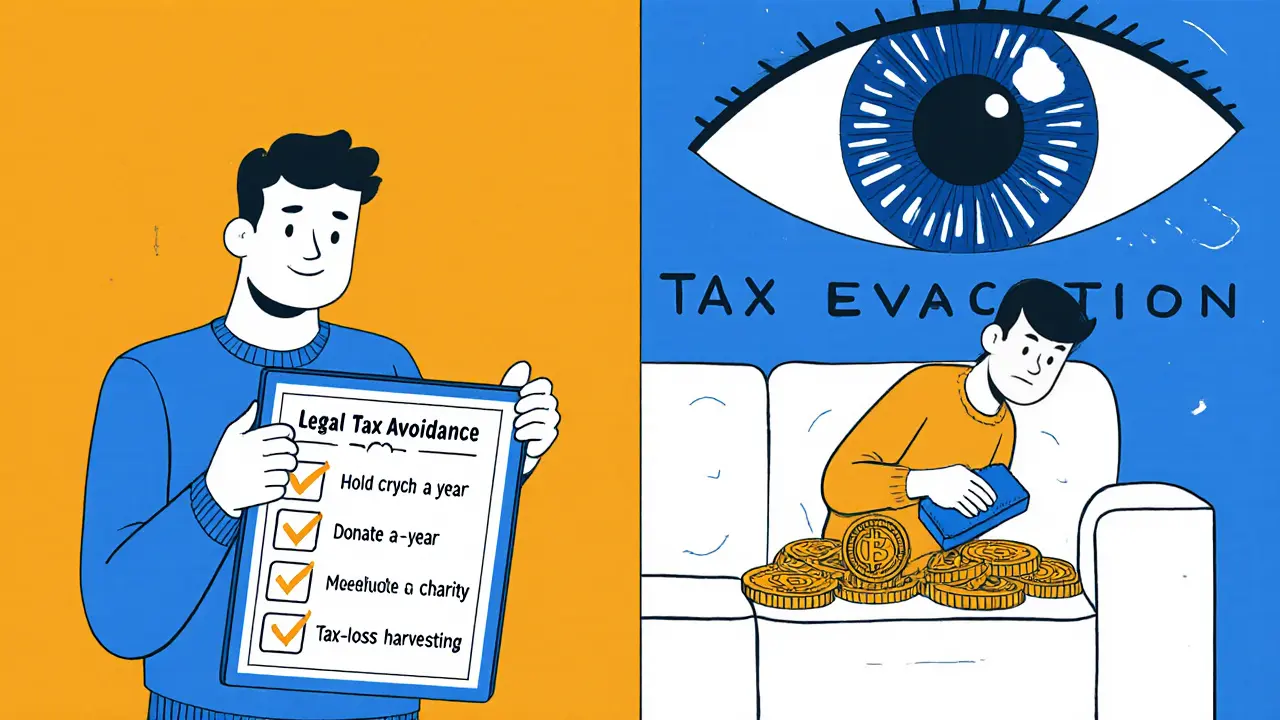

Learn the clear line between legal crypto tax avoidance and illegal tax evasion. Know what’s allowed, what gets you in trouble, and how to stay compliant with IRS rules in 2025.
Categories
Popular Articles