FCA Crypto Rules: What You Must Know About UK Crypto Regulations
When it comes to crypto in the UK, the FCA crypto rules, the regulatory framework set by the UK Financial Conduct Authority to oversee crypto businesses and protect consumers. Also known as UK crypto regulations, it’s not just about compliance—it’s about keeping your money and data safe in a space full of scams and unlicensed platforms. If you’re trading, investing, or running a crypto business in the UK, ignoring these rules isn’t an option. The FCA doesn’t just give advice—it enforces penalties, blocks platforms, and shuts down operations that don’t meet their standards.
The FCA doesn’t ban crypto outright, but it does ban unregistered crypto exchanges, platforms that operate without official approval from the FCA. That means if you’re using a platform like Binance or KuCoin without verifying their UK status, you’re at risk. Only exchanges registered with the FCA—like Coinbase UK, Kraken UK, and Bitpanda—are allowed to offer services to UK residents. Even then, they’re restricted from offering leveraged crypto products like CFDs to retail traders. The FCA also cracks down hard on crypto airdrops, free token distributions that often hide pump-and-dump schemes or phishing traps. If an airdrop asks for your private key, it’s a scam. Period.
For businesses, the rules get even stricter. Any crypto firm offering services in the UK must register with the FCA under the Money Laundering Regulations. That means running full AML/KYC checks, systems that verify user identities and track suspicious transactions to prevent fraud and money laundering, keeping detailed records, and reporting anything odd. Failure to do so can lead to fines, license revocation, or even criminal charges. The FCA also requires clear disclosures about risks—no more vague promises of ‘guaranteed returns’ or ‘10x gains.’
What does this mean for you? If you’re a trader, stick to FCA-registered platforms. Never send crypto to a platform that won’t tell you its FCA registration number. If you’re a developer or startup, don’t skip compliance—building without it is building on sand. The FCA’s rules aren’t meant to stifle innovation. They’re meant to stop people from losing life savings to fake tokens, rigged exchanges, and ghost teams. And if you’re wondering why some crypto projects vanish overnight, it’s often because they never had FCA approval to begin with.
Below, you’ll find real-world examples of what happens when these rules are ignored—from collapsed exchanges to fraudulent airdrops—and what you can do to stay protected. No fluff. No hype. Just what matters when the FCA is watching.
UK Crypto Hub Ambitions: Regulations, Restrictions, and Realities in 2025
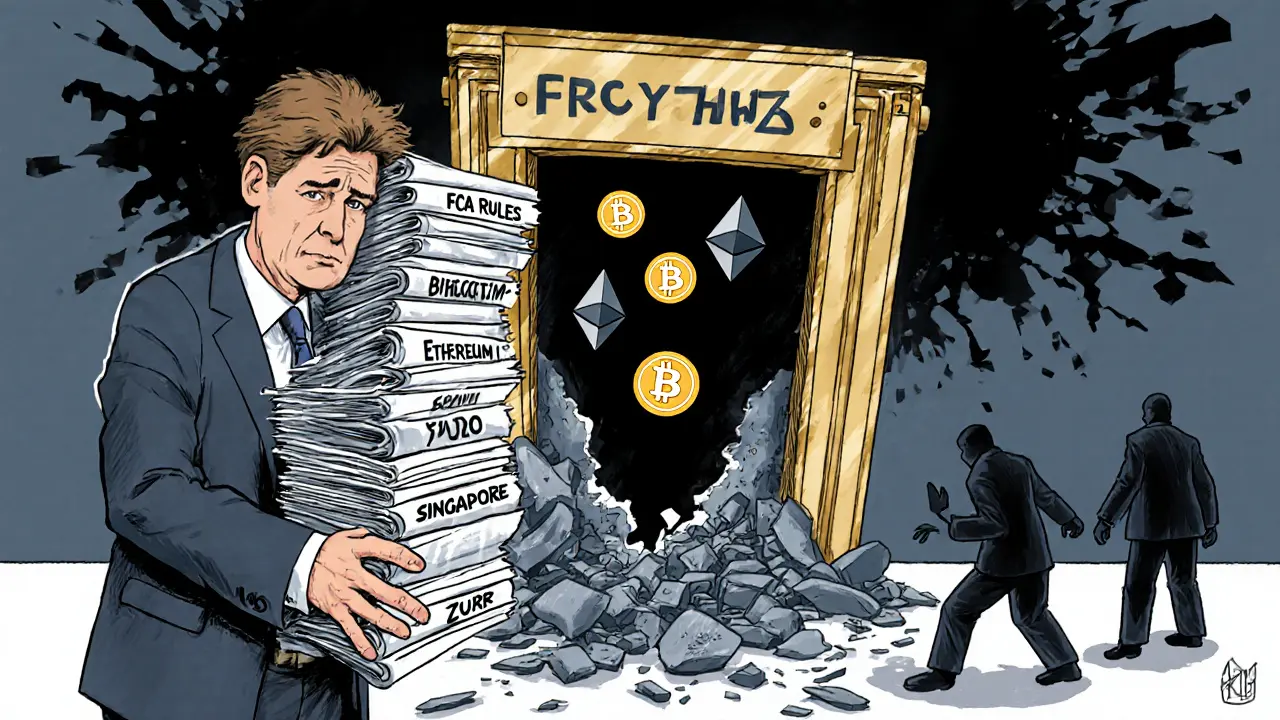

The UK aims to be a global crypto hub with strict regulations to protect consumers, but political shifts and slow implementation are undermining its ambitions. Learn what's allowed, what's banned, and where the UK stands in 2025.