Crypto Tax Evasion: What It Is, Why It Backfires, and What You Actually Need to Know
When you trade, earn, or spend cryptocurrency, you’re creating a taxable event—whether you realize it or not. crypto tax evasion, the deliberate failure to report crypto income or gains to tax authorities. Also known as cryptocurrency tax fraud, it’s not a gray area—it’s a federal offense. The IRS has been tracking crypto since 2014, and today, they use blockchain analysis tools, exchange data sharing agreements, and even AI to trace transactions across wallets and chains. You can’t hide what’s on a public ledger.
People think moving crypto to a non-KYC exchange or using mixers will hide their trail. But blockchain audit, the process of tracing crypto movements on public ledgers for compliance and forensic purposes has gotten too advanced. The Lazarus Group stole $3 billion in crypto, and the U.S. Treasury still tracked most of it. If state-backed hackers can’t fully disappear, what chance does an individual have? Even small trades—like swapping ETH for USDC or buying NFTs with Bitcoin—must be reported as capital gains or income. Skipping this isn’t clever; it’s a ticking time bomb.
IRS crypto, the Internal Revenue Service’s enforcement program for cryptocurrency taxation doesn’t just rely on exchange reports anymore. They cross-reference wallet addresses from airdrops, staking rewards, and even DeFi yields. If you got free tokens from CoinMarketCap’s Learn & Earn campaign, that’s taxable income. If you earned interest on Venus BNB, that’s income too. And if you sold any of it? You owe capital gains. The crypto tax compliance, the legal process of accurately reporting all crypto transactions to tax authorities isn’t about paying more—it’s about avoiding fines that can be 75% of the unpaid tax, plus criminal charges.
Some think countries like the UAE or Singapore are tax havens for crypto. But the UAE’s removal from the FATF grey list wasn’t about ignoring taxes—it was about enforcing them properly. Global banks now demand proof of tax compliance before handling crypto transfers. If you’re trying to dodge taxes while using a regulated exchange like CoinDCX or WazirX, you’re already on their radar. And if you’re using a dead token like LifeTime or BIZZCOIN? The IRS still knows you held it—and if you sold it, they know the value.
You don’t need to be a tax expert to get this right. You just need to track your buys, sells, swaps, and income. Tools exist to help. But pretending it doesn’t matter? That’s how people lose their homes, their savings, and their freedom. The posts below show you exactly what’s being tracked, how enforcement works in real cases, and what steps you can take now to stay safe—not sorry.
Legal Crypto Tax Avoidance vs Illegal Tax Evasion: What You Must Know
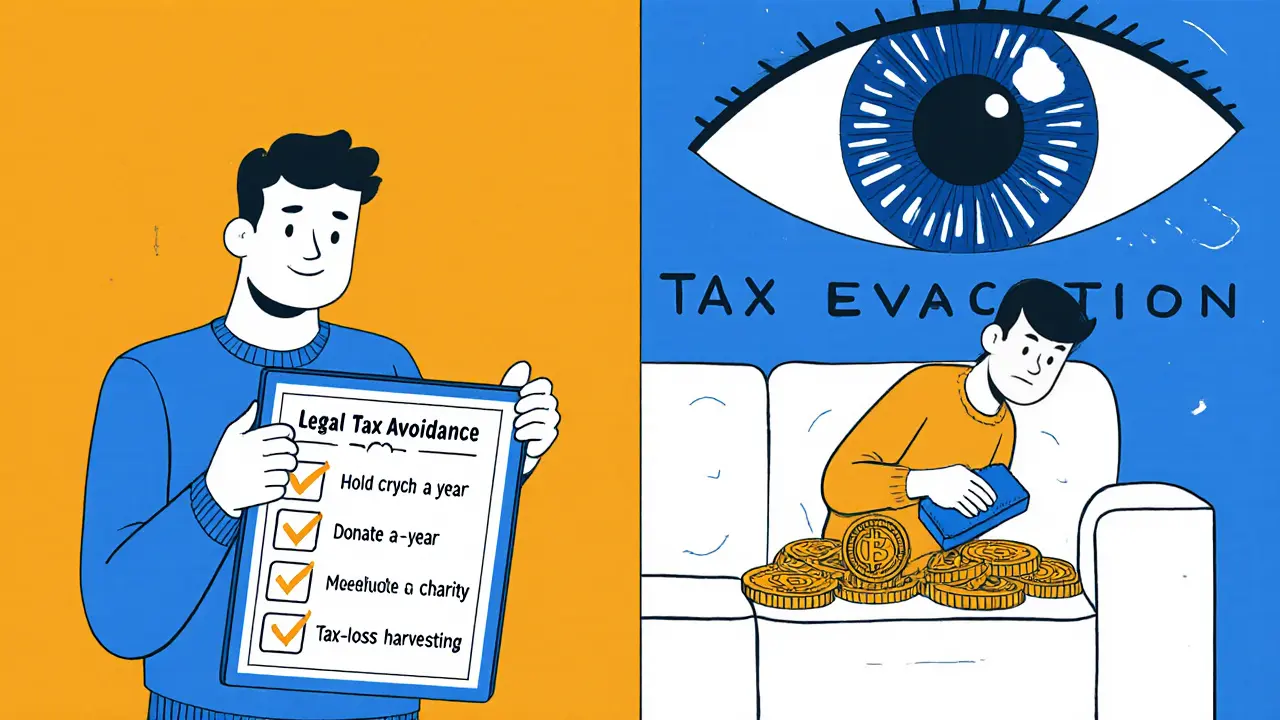

Learn the clear line between legal crypto tax avoidance and illegal tax evasion. Know what’s allowed, what gets you in trouble, and how to stay compliant with IRS rules in 2025.
Categories
Popular Articles