Blockchain Difficulty Adjustment: How Crypto Networks Stay Balanced
When you mine Bitcoin or any other blockchain difficulty adjustment, the automatic process that changes how hard it is to mine new blocks to keep block times consistent. Also known as mining difficulty adjustment, it’s what stops Bitcoin from producing blocks every 2 minutes or once every hour—keeping it locked at roughly 10 minutes. Without this system, the network would either flood with blocks during high mining power or grind to a halt when miners leave. It’s not a manual setting—it’s code running on every node, recalibrating every 2,016 blocks (about every two weeks) based on actual mining speed.
This adjustment doesn’t just matter for Bitcoin. Any coin using proof of work, a consensus method where miners compete to solve complex math puzzles to validate transactions and earn rewards relies on it. Ethereum Classic, Litecoin, and Bitcoin Cash all use variations of the same logic. If too many miners join, the difficulty goes up so rewards stay fair. If miners quit—maybe because prices drop or electricity costs rise—the difficulty drops so mining stays profitable. It’s a self-correcting loop that keeps the network alive even when markets crash or tech changes.
That’s why you see sudden shifts in mining profitability after a difficulty change. Some miners get shut out, others jump in. It’s not about luck—it’s about math. And that math is what makes decentralized networks resilient. You don’t need a central authority to say, "Hey, slow down," because the protocol handles it automatically. This is also why fake coins or low-hash-rate chains can’t last long: they can’t adjust difficulty properly, so blocks come too fast or too slow, breaking trust.
The posts below show how this concept shows up in real crypto stories—like how North Korea’s hacking teams target mining rigs to steal computing power, or how failed projects like Juicebox and LifeTime collapsed because their tokenomics ignored basic network stability. You’ll find deep dives into how Bitcoin’s halving affects mining economics, why cross-chain bridges get hacked when security is weak, and how exchanges like Binance or KuCoin got blocked in places like India because regulators worry about uncontrolled mining and liquidity. This isn’t just theory. It’s the invisible engine behind every secure blockchain.
Future of Adaptive Mining Difficulty in Blockchain Networks
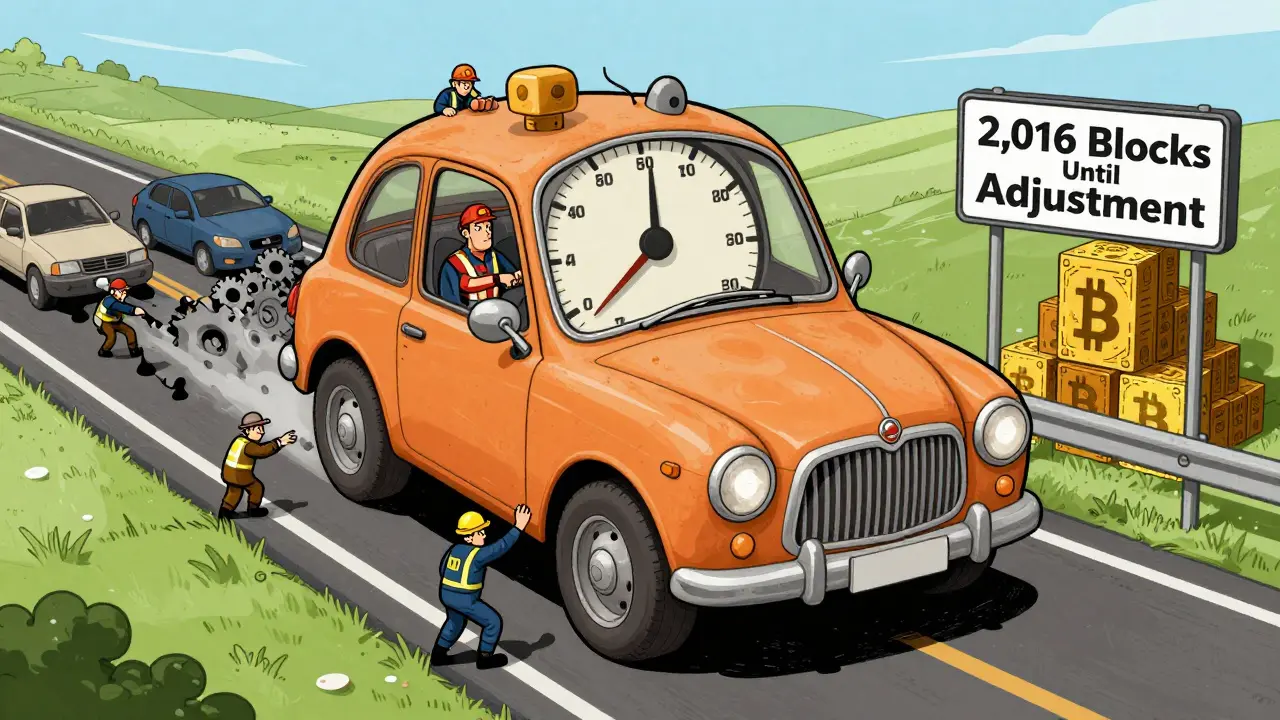

Adaptive mining difficulty is transforming blockchain networks by replacing slow, two-week adjustments with real-time tuning. It improves security, cuts energy waste, and stabilizes block times - but adoption faces resistance from miners and conservative networks like Bitcoin.
Categories
Popular Articles