Bitcoin nodes: What they are, why they matter, and how they keep the network alive
When you hear about Bitcoin nodes, computers that store a full copy of the Bitcoin blockchain and help verify transactions. Also known as full nodes, they are the silent guardians of Bitcoin’s decentralization—no company, no government, no middleman controls them. Every time someone sends Bitcoin, these nodes check if the transaction is real: Is the sender actually holding those coins? Has it already been spent? Is the digital signature valid? If even one node says no, the transaction gets rejected. That’s how Bitcoin stays secure without banks.
Running a Bitcoin full node, a type of Bitcoin node that downloads and validates the entire blockchain history isn’t just for tech experts. It’s a way to take back control. If you rely on a wallet app or exchange to send Bitcoin, you’re trusting them to tell you the truth. But with your own node, you see everything yourself. No guesswork. No hidden fees. No sudden freezes. And when more people run nodes, the network gets harder to attack or censor. That’s why governments and corporations don’t want you to run one—they can’t control what they can’t see.
Blockchain nodes, the general term for computers maintaining distributed ledgers across networks exist in many cryptocurrencies, but Bitcoin’s node system is the oldest, most battle-tested, and most decentralized. Other chains might use lightweight clients or centralized validators, but Bitcoin sticks to the original rule: trust no one, verify everything. That’s why even when other crypto projects crash or get hacked, Bitcoin keeps going—because its nodes keep working.
It’s not just about security. Nodes also help keep transaction fees low and confirmation times predictable. When fewer people run nodes, miners and services gain more power. That’s when you start seeing slow transactions, higher fees, and less transparency. Right now, there are around 5,000 public Bitcoin nodes worldwide. That sounds like a lot—but it’s less than half of what it was five years ago. Many people stopped running them because it seemed too technical, too slow, or too expensive. But hardware costs have dropped. Storage is cheaper than ever. And the stakes? Higher than ever.
You don’t need a supercomputer. A Raspberry Pi, a 1TB hard drive, and a steady internet connection are enough. You’ll sync the blockchain—about 500GB as of 2025—and then just keep it updated. It takes days to start, but after that, it runs quietly in the background. You’ll be helping protect not just your own Bitcoin, but everyone’s. And if you ever need to recover your coins, you’ll know you’re not dependent on a third party.
There’s no reward for running a node—no tokens, no airdrops, no extra Bitcoin. That’s the point. It’s not a game. It’s infrastructure. Like electricity or water, you don’t notice it until it’s gone. And once it’s gone, you can’t just reboot it. You have to rebuild it from scratch.
Below, you’ll find real-world breakdowns of how Bitcoin nodes interact with wallets, exchanges, and mining. You’ll see what happens when nodes go offline, how scams try to trick you into running fake nodes, and why some "Bitcoin" apps are actually just wallets that never talk to real nodes. These aren’t theory pieces—they’re guides written by people who’ve seen the network break, and learned how to fix it.
How Bitcoin's Peer-to-Peer Network Operates
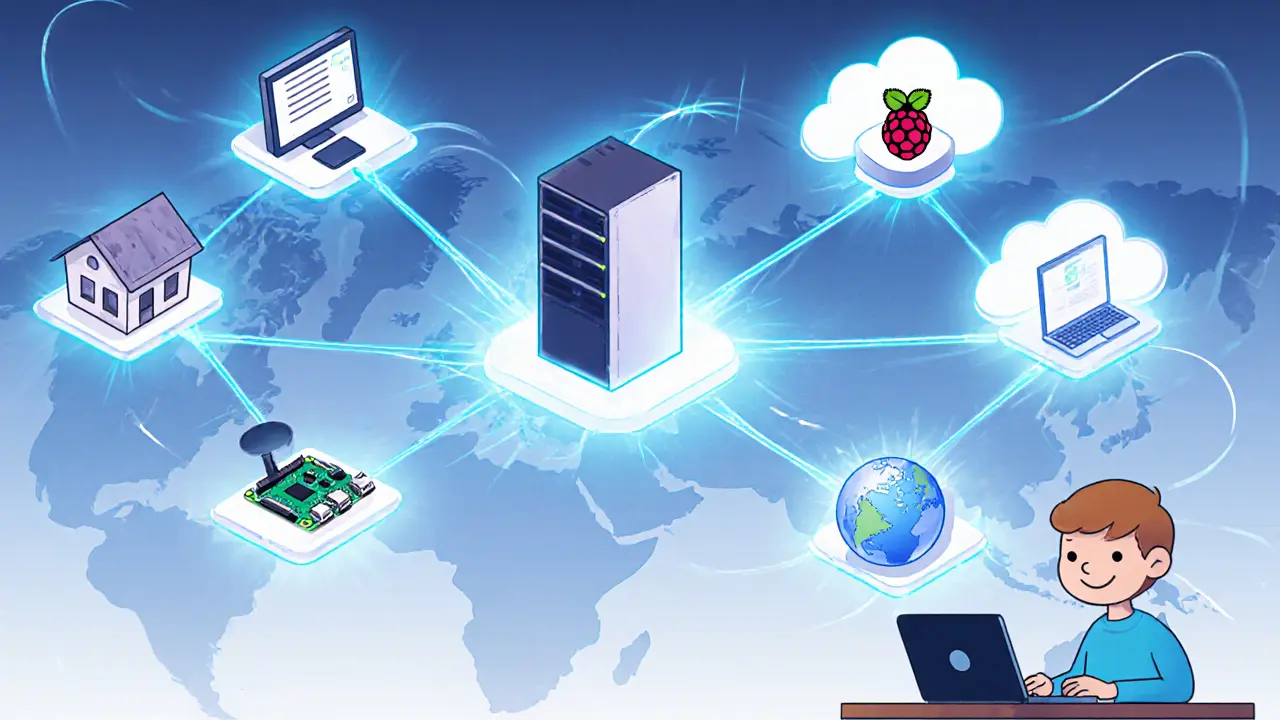

Bitcoin's peer-to-peer network operates without banks or central servers, using thousands of nodes worldwide to verify transactions and maintain the blockchain. This decentralized design ensures security, censorship resistance, and resilience against shutdowns.