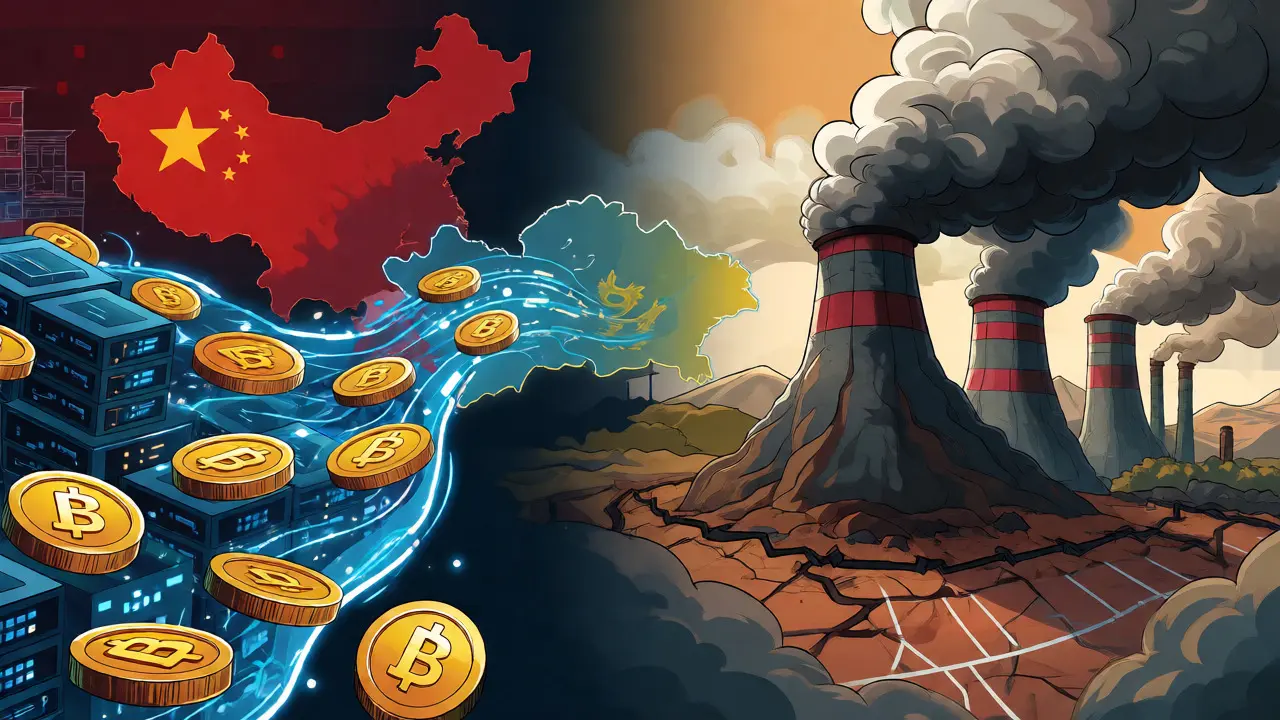

Imagine flipping a switch and realizing the lights are dimming because your neighbor is running a server farm that consumes as much power as a small town. That was the reality in Kazakhstan not long ago. The country went from being a global hub for cheap crypto mining to cracking down hard on it, all because its electrical grid couldn't handle the load. If you've ever wondered why a nation rich in coal would suddenly ban the very industry that promised economic diversification, the answer lies deep within the rusted wires and aging turbines of Kazakhstan's power infrastructure.
The Perfect Storm: Cheap Power Meets Digital Gold
Kazakhstan didn't just stumble into crypto mining; it invited it in with open arms. After China banned cryptocurrency mining in 2021, miners fled north. Why? Because Kazakhstan offered some of the cheapest electricity rates in the world, largely due to its abundant coal reserves. It seemed like a match made in heaven: digital assets needing massive amounts of energy, and a country with plenty of surplus power. But this influx happened faster than anyone anticipated. Within months, mining farms popped up everywhere, from Almaty to the remote regions near the Chinese border. They plugged into the national grid, expecting seamless access to power.
What they didn't expect was how fragile that grid actually was. While the headlines focused on Bitcoin prices soaring, engineers at KEGOC, the national grid operator, were watching warning lights flash red across their control panels. The sudden surge in demand wasn't just a blip; it was a structural shock to a system already struggling under the weight of decades of neglect. Miners were consuming gigawatts of power, often without proper contracts or technical assessments of whether the local transformers could actually handle the continuous load.
A Grid on Life Support
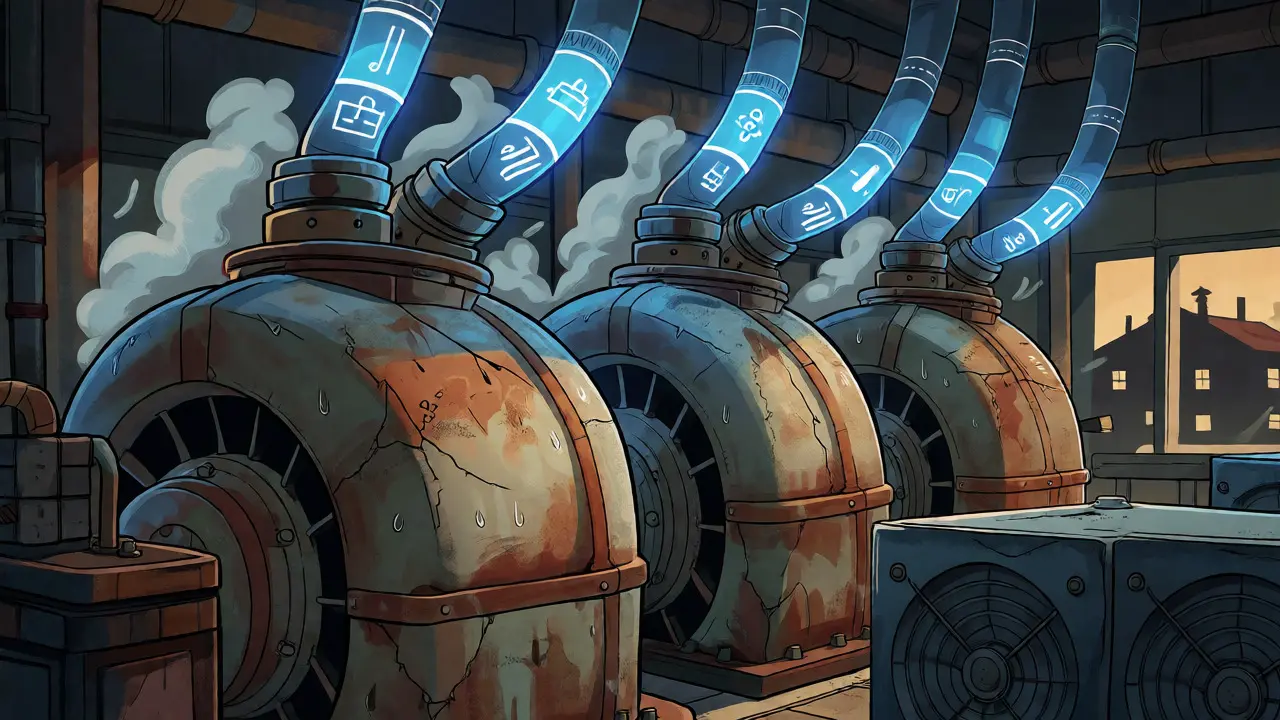
To understand why the ban happened, you have to look at the state of Kazakhstan's energy infrastructure before the miners arrived. The country's Unified Power System (UPS) relies heavily on thermal power plants, mostly burning coal. According to recent data, over one-third of these power plants show wear and tear levels between 70% and 90%. This isn't just old equipment; it's equipment operating beyond its intended lifespan. When you combine aging machinery with a sudden spike in demand, things break. And when they break, they don't just stop working-they fail catastrophically.
Transmission losses are another glaring issue. In many developed economies, electricity loss during transmission hovers around 5-8%. In parts of Kazakhstan, particularly in regional networks, losses reached as high as 18% in 2024. Imagine paying for ten kilowatt-hours of electricity but only getting eight. That inefficiency meant the grid had to generate even more power to meet actual consumption needs. With miners adding thousands of megawatts to the mix, the system simply ran out of headroom. Zhakyp Khairushev, an honored power engineer in Kazakhstan, pointed out that while major cities managed to keep losses below 9%, regional areas faced significantly worse conditions. These regional grids became the first points of failure when mining loads surged.
| Metric | Status/Value | Implication for Crypto Mining |
|---|---|---|
| Power Plant Wear | 70-90% for >33% of plants | High risk of unplanned outages during peak mining hours |
| Transmission Losses | Up to 18% in some regions | Wasted capacity reduces available power for new consumers |
| Renewable Share | ~6% of total generation | Lack of green energy sources led to environmental backlash against mining |
| Tariff Increases | ~50% by April 2025 | Reduced profitability for miners, forcing consolidation |
The Regulatory Crackdown
Faced with rolling blackouts and angry citizens, the Kazakh government acted swiftly. They introduced strict regulations that effectively banned unlicensed mining operations. The logic was straightforward: if you want to mine Bitcoin, you need to prove you have dedicated power capacity that won't strain the public grid. This wasn't just about stopping illegal activity; it was about stabilizing the national energy supply.
The new rules required miners to register with the Ministry of Digital Development, Innovation and Aerospace Industry. More importantly, they had to obtain specific permits for electricity consumption. Those who failed to comply faced heavy fines and confiscation of equipment. The government also imposed higher tariffs for industrial consumers, including miners. By April 2025, tariff increases hit 50% compared to previous years. This move served two purposes: it discouraged low-margin mining operations and generated revenue to fund urgent grid repairs.
But the crackdown wasn't just punitive. It aimed to formalize the sector. Before the ban, a significant portion of mining was done "underground," using subsidized residential electricity rates. This arbitrage-paying household rates for industrial consumption-deprived the grid operator of funds needed for maintenance. By enforcing commercial rates and licensing, Kazakhstan sought to ensure that miners paid their fair share for the resources they consumed.
Environmental Concerns and Public Backlash
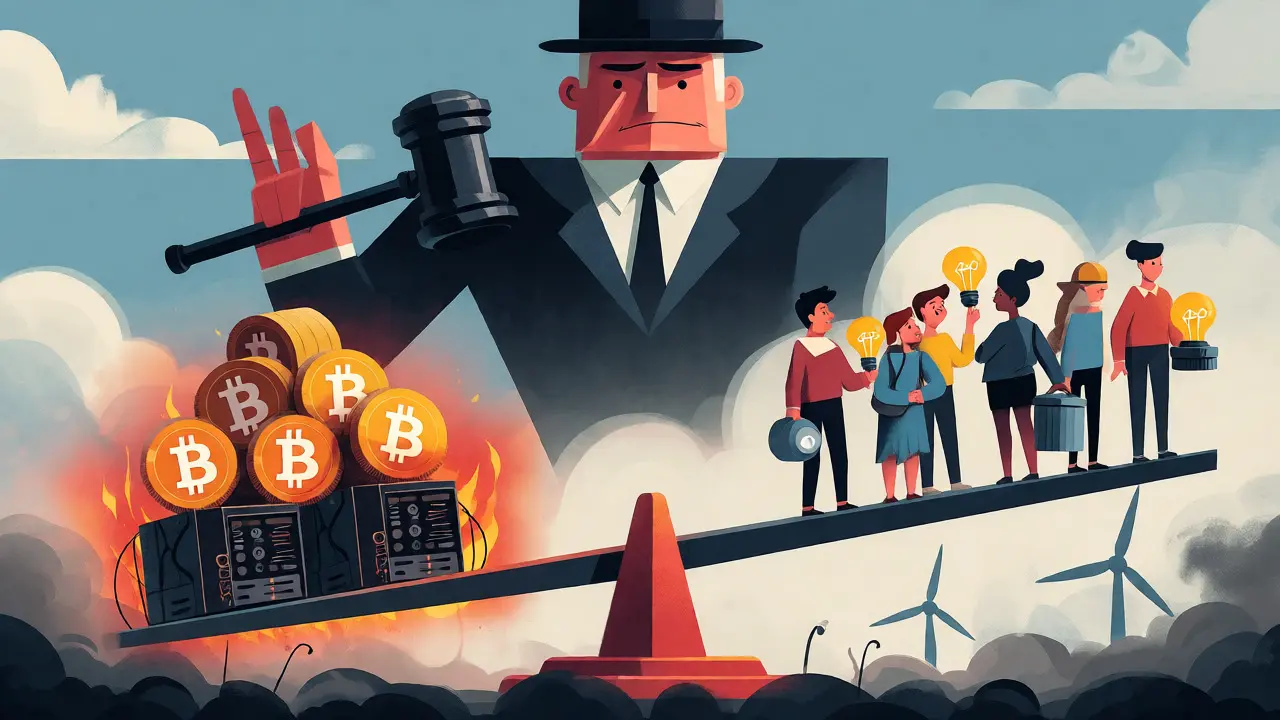
Beyond the technical failures, there was a growing social outcry. Residents in cities like Ekibastuz, home to some of the largest coal-fired power plants in the world, reported worsening air quality. Coal dust and emissions from power plants, running at full tilt to feed the mining rigs, affected daily life. For ordinary citizens, seeing their lights flicker while servers hummed nearby created a sense of injustice. "Why should my heating bill go up so someone else can earn digital currency?" became a common sentiment.
Kazakhstan's renewable energy sector, which accounts for only about 6% of total generation, couldn't offset this carbon footprint. While the government announced plans for three major wind farms, each with a one-gigawatt capacity, these projects are still in development. Until then, the reliance on coal remained absolute. This disconnect between the promise of a "green" blockchain future and the reality of dirty coal-powered mining fueled the political will to restrict the industry.
Looking Ahead: Can the Grid Recover?
Today, Kazakhstan is trying to balance its ambitions. The country wants to remain a player in the global crypto market, but not at the expense of domestic stability. The focus has shifted to attracting large-scale, licensed miners who bring their own power solutions or sign long-term contracts with dedicated generation sources. There is talk of integrating the North-South HVDC Line, a project expected to increase transmission capacity by 2,000 MW by 2029. This line aims to connect the resource-rich south with the industrial north, smoothing out regional imbalances.
However, challenges persist. Distributed generation remains limited because small businesses and households cannot afford the upfront costs of solar or wind installations. Without a robust decentralized energy network, the central grid remains vulnerable to shocks. Furthermore, the inflexibility of coal plants means the system cannot quickly ramp production up or down to accommodate intermittent renewable sources, let alone variable mining loads.
The story of Kazakhstan serves as a cautionary tale for other emerging markets eyeing the crypto boom. Cheap energy attracts miners, but only sustainable infrastructure keeps them. Without modernizing the grid and ensuring transparent pricing, the initial benefits of hosting mining farms can quickly turn into a liability. As we move through 2026, the question isn't whether Kazakhstan will allow mining again-it does, but selectively-but whether it can build a grid resilient enough to support both its people and its digital ambitions.
Why did Kazakhstan ban crypto mining initially?
Kazakhstan restricted crypto mining primarily due to severe energy shortages caused by an overloaded and aging electrical grid. The rapid influx of miners after China's ban in 2021 led to rolling blackouts and infrastructure failures, prompting the government to enforce strict licensing and higher tariffs to stabilize the power supply.
Is crypto mining completely illegal in Kazakhstan now?
No, it is not completely illegal. Mining is permitted for registered entities that hold valid licenses and pay commercial electricity rates. The ban targeted unlicensed operations and those drawing excessive power from residential grids without proper compensation.
How much has the cost of electricity increased for miners in Kazakhstan?
Electricity tariffs for industrial consumers, including licensed miners, saw significant hikes, with reports indicating increases of up to 50% by April 2025 compared to previous years. This was part of a broader strategy to reduce subsidies and fund grid modernization.
What role does KEGOC play in Kazakhstan's energy crisis?
KEGOC is the national grid operator responsible for managing the Unified Power System. During the crisis, KEGOC struggled to balance supply and demand amid rising mining loads and deteriorating infrastructure, highlighting the need for urgent investment in transmission lines and plant maintenance.
Are there plans to improve Kazakhstan's renewable energy capacity?
Yes, the government has committed over $2.6 billion to the renewable sector, including plans for three 1 GW wind farms. However, renewables currently make up only about 6% of total generation, meaning the transition away from coal will take considerable time.