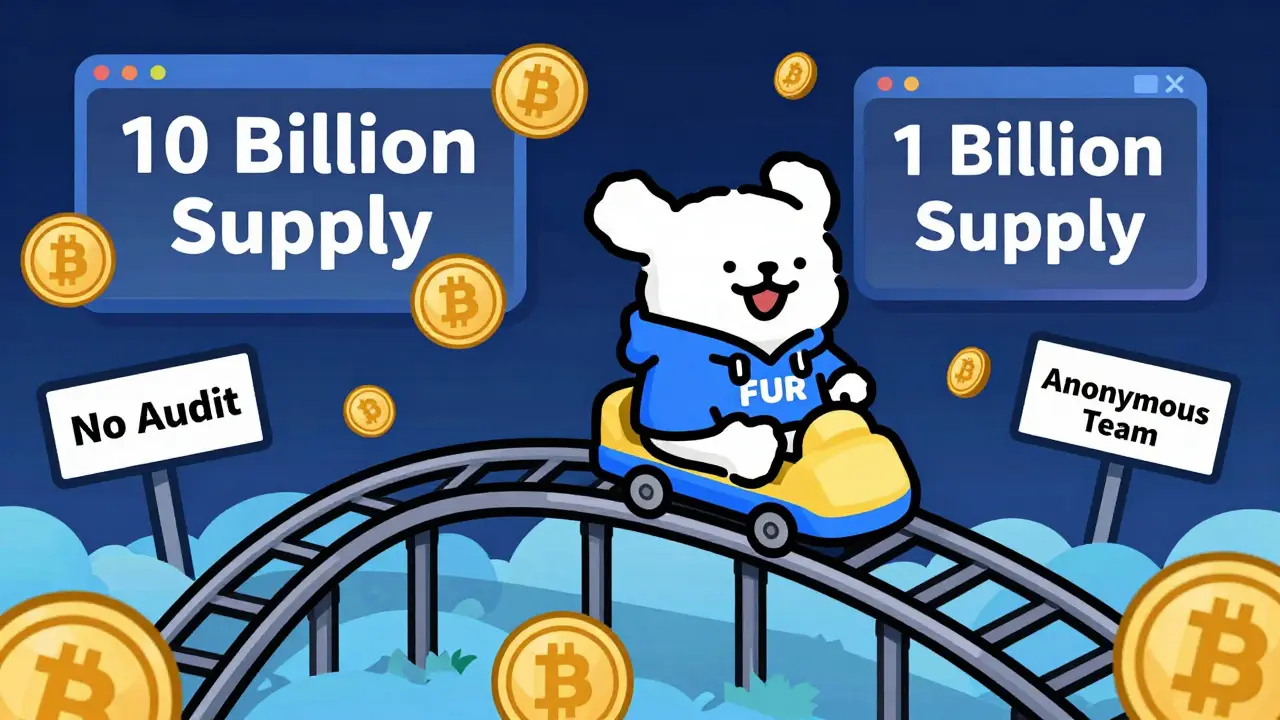

Have you ever seen a cryptocurrency with a name that sounds like a typo or a inside joke and wondered what it actually does? That’s exactly where Furfication (FUR) fits in. It is not a new blockchain technology, nor is it a complex decentralized finance protocol. Instead, Furfication is a low-cap meme coin built on the Base network, driven by community hype rather than technical utility.
If you are looking for the next Bitcoin or Ethereum, this isn’t it. But if you are curious about how these tiny, speculative assets work-and why people still buy them despite the massive risks-this guide breaks down everything we know about FUR as of mid-2026.
The Truth About Furfication: Hype Over Code
Let’s cut through the marketing noise. Most crypto aggregators describe Furfication as part of a "fur logo craze" or a "classic crypto meme party." What does that actually mean for you?
It means the value of FUR comes entirely from social momentum. There is no whitepaper detailing a revolutionary use case. There are no known founders or development teams publicly attached to the project. Unlike projects that build infrastructure, Furfication relies on the idea that if enough people talk about it, the price goes up. This is the definition of a pure meme asset.
While platforms like Bitget might claim it has "innovative technology," they don’t provide any technical specs to back that up. In the world of crypto, when the tech isn’t explained, it usually doesn’t exist beyond a basic smart contract. You are buying into a brand, not a product.
Tokenomics Confusion: The Supply Problem
One of the biggest red flags for any investor is inconsistent data. When you look at Furfication’s supply numbers, things get messy fast. Here is the confusion:
- CoinMarketCap & Crypto.com: Report a maximum supply of 10 billion FUR.
- Bybit & CoinGecko: Show a maximum supply of just 1 billion FUR.
Why does this matter? Because your potential returns depend heavily on which number is real. If there are 10 billion tokens, each one is worth less than if there were only 1 billion. Currently, most sources suggest nearly all tokens are already in circulation, meaning there is no "lock-up" period for developers to dump later. However, without an audited contract address provided by an official team, verifying this yourself is difficult.
| Data Point | Source A (e.g., CoinMarketCap) | Source B (e.g., Bybit) |
|---|---|---|
| Max Supply | 10 Billion FUR | 1 Billion FUR |
| Circulating Supply | ~10 Billion | ~998 Million |
| Market Cap Range | $7k - $12k USD | $7k - $12k USD |
| Network | Base (ERC-20 style) | Base (ERC-20 style) |
This discrepancy is common in micro-cap coins where listings are automated and unverified. Always check multiple sources before trusting a single number.
Price Volatility: Riding the Rollercoaster
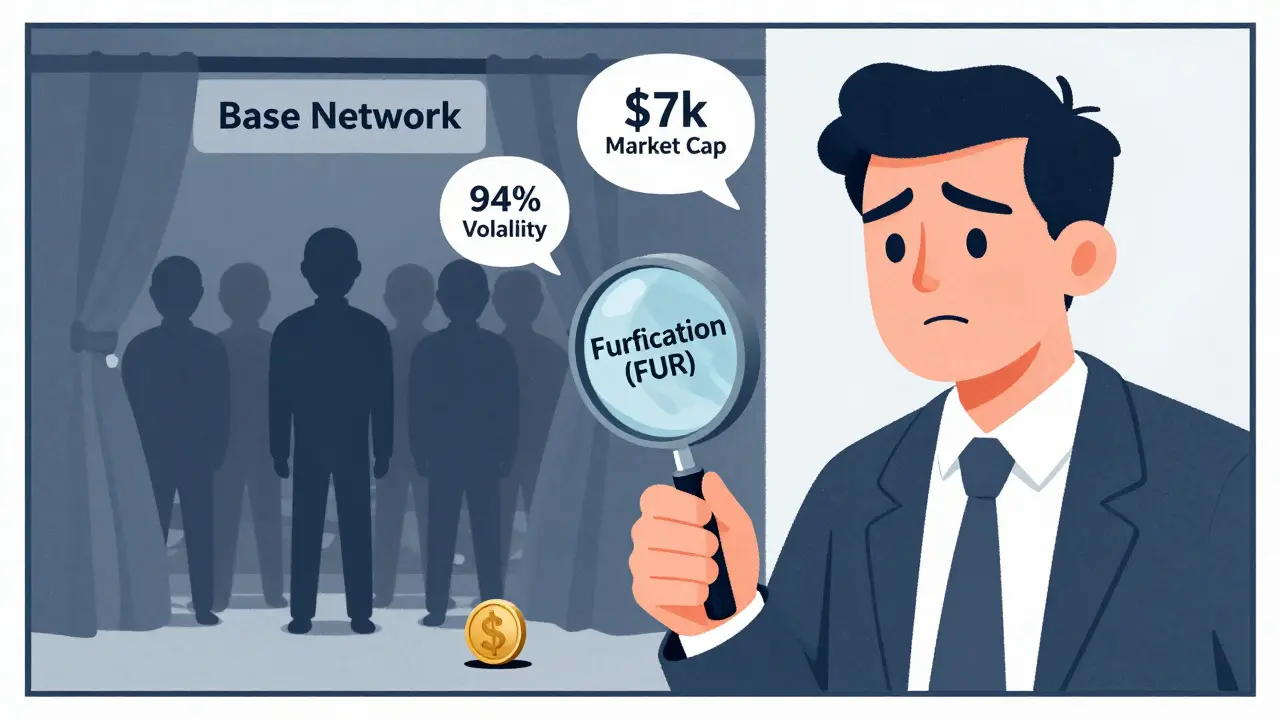
Furfication trades at a fraction of a cent. We are talking prices like $0.00000738 to $0.00057, depending on the day and the exchange. At first glance, such a low price looks "cheap," but that is a psychological trap. A low price does not mean high value; it just means the market cap is tiny.
As of early 2026, FUR’s market capitalization hovered between $7,650 and $12,670 USD. To put that in perspective, that is less money than many people spend on their annual vacation. With a market rank around #11,351, it sits deep in the weeds of the crypto ecosystem.
The volatility is extreme. In one snapshot, CoinGecko recorded a 94.5% increase in 24 hours. In another, Bybit showed a -6.98% drop in the same timeframe. This kind of swing means you could double your money or lose half of it before lunch. For seasoned traders who understand risk management, this can be a playground. For beginners, it is a hazard zone.
Where and How to Buy FUR
You won’t find Furfication on major centralized exchanges like Coinbase Pro or Binance Spot. Instead, it lives in the decentralized world. Here is how access works:
- Use a Web3 Wallet: Platforms like Binance offer a Web3 wallet feature. You need to fund this wallet with stablecoins (like USDT or USDC).
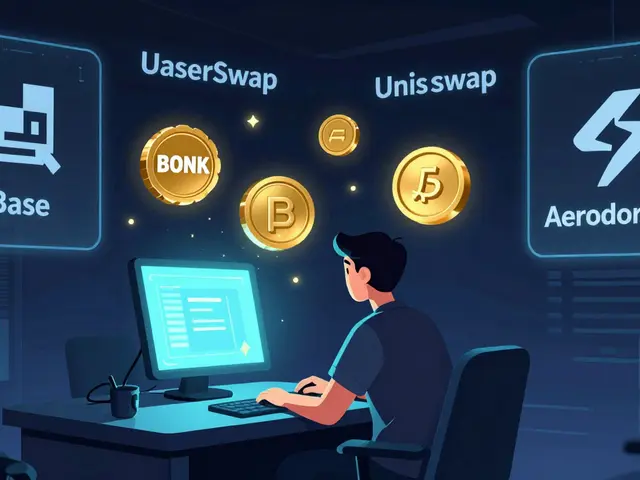
- Connect to Base Chain: FUR is traded primarily on Uniswap V2 running on the Base network. Base is a Layer 2 solution built on Ethereum, known for low fees and fast transactions.
- Swap for FUR: Once connected, you swap your stablecoin for FUR directly on the decentralized exchange (DEX).
Because this process involves interacting with smart contracts directly, you must be careful. Always verify the contract address. Scammers often create fake tokens with the same name to steal funds. Since there is no official team to point you to the right address, rely on reputable aggregators like CoinCodex or CoinGecko to find the correct trading pair.
Is Furfication Safe? The Risk Assessment
Let’s be direct: investing in FUR is highly risky. Here is why:
- No Audits: There is no public record of a security audit for the FUR smart contract. Without an audit, bugs or hidden malicious code could drain liquidity.
- Liquidity Issues: With daily volumes sometimes under $100, selling large amounts of FUR can crash the price instantly. You might own tokens you cannot sell without taking a massive loss.
- Anonymous Team: No one knows who created FUR. If the creators decide to abandon the project, there is no one to hold accountable.
- Regulatory Gray Area: Meme coins often face stricter scrutiny from regulators because they lack economic utility. Future regulations could impact their tradability.
Treat any money you put into FUR as entertainment spending. Assume it will go to zero. If it goes up, great. If it doesn’t, you shouldn’t be able to sleep at night over it.
Frequently Asked Questions
What blockchain is Furfication (FUR) built on?
Furfication operates on the Base network, which is a Layer 2 scaling solution for Ethereum. This allows for cheaper and faster transactions compared to the main Ethereum chain. It is typically traded via Uniswap V2 on Base.
Who created the FUR token?
The identity of the creators is unknown. Like many meme coins, Furfication appears to be a community-driven project without a publicly disclosed founding team or development group. This anonymity adds significant risk to the investment.
Why are there different supply numbers for FUR?
Data aggregators often pull information from different sources or APIs. Some list a max supply of 1 billion, while others say 10 billion. This inconsistency is common in micro-cap tokens and highlights the lack of standardized verification for small projects. Always cross-reference multiple sites.
Can I buy FUR with fiat currency like USD?
Not directly. You generally need to buy a stablecoin (like USDT or USDC) with fiat on a centralized exchange, transfer it to a Web3 wallet compatible with the Base network, and then swap it for FUR on a decentralized exchange like Uniswap.
Is Furfication a good long-term investment?
Highly unlikely. Meme coins with no utility, anonymous teams, and micro-market caps rarely survive long-term. They are designed for short-term speculation based on hype. For long-term growth, established assets with clear use cases and transparent teams are safer choices.

Comments (9)

- Lee Paige
- June 19, 2026 AT 11:54 AM
The discrepancy in supply numbers is not an error, it is a feature of the system designed to obscure the true dilution. The elite use these micro-caps to test liquidity extraction algorithms before deploying them on larger assets. You are not buying a coin; you are providing data for their next rug pull.

- Sylvia Mossman
- June 19, 2026 AT 21:58 PM
Oh please, spare me the conspiracy nonsense. It's just a shitcoin with no utility and anonymous devs who probably lost interest six months ago. People buy this garbage because they think 'cheap price' equals 'high potential,' which is the dumbest fallacy in finance. If you can't do basic math regarding market cap versus token supply, stay away from crypto entirely.

- Caitlin Donahue
- June 20, 2026 AT 04:07 AM
i mean its kinda wild how confused the data is lol like 1b or 10b? thats huge difference. i guess we just trust the vibes?

- Karthikeyan S
- June 21, 2026 AT 00:37 AM
lol u guys are so naive 😂😂 the real joke is thinking there is any value here at all. its pure gambling dressed up as investing. most people here will lose everything and cry about it later. typical herd mentality 📉💀

- Dinesh Pattigilli
- June 22, 2026 AT 10:28 AM
It is absolutely pathetic that people engage with such low-tier assets. The lack of fundamental analysis among retail investors is staggering. One must possess a certain level of intellectual rigor to even consider touching Base chain meme coins without a whitepaper. This is financial illiteracy on display. Do better.

- Alexis Abster
- June 24, 2026 AT 09:42 AM
I feel like everyone is being so harsh! Look, I get it, it's risky. But isn't there something exciting about the community aspect? Maybe someone out there is building something cool under the radar. We should support the dreamers, right? Even if it's just a meme, the joy it brings to some people is real!

- Yogendra Dwivedi
- June 24, 2026 AT 22:43 PM
It is interesting to observe the conflicting data points. Perhaps the issue lies in how different aggregators parse the contract metadata. I wonder if the developers intended to burn a portion of the supply but failed to update the listings. It raises questions about transparency in decentralized ecosystems.

- Brad Ranks
- June 26, 2026 AT 03:04 AM
Drama alert! Someone bought the dip and now they're down 90%. Classic. Meanwhile, I'm sitting here watching the charts go crazy. Up 94% one day, down 7% the next. It's like a rollercoaster designed by a madman. I love it. Who needs stability when you have volatility? Let's gooooo!

- Jessica Lane
- June 27, 2026 AT 08:53 AM
Let us remain vigilant and informed. While the risks are substantial, understanding the mechanics of these speculative assets is crucial for navigating the modern financial landscape. We must empower ourselves with knowledge rather than succumbing to fear or greed. Stay strong, stay curious, and always verify your sources before engaging with any transaction.