Supply Chain Transparency: How Blockchain Makes Tracking Real
When you buy a product, do you really know where it came from? Supply chain transparency, the ability to trace every step of a product’s journey from raw material to customer. It's not about marketing—it's about accountability. And blockchain, a tamper-proof digital ledger that records transactions across many computers is turning this from a dream into reality. No more guesswork. No more hidden middlemen. Just clear, unchangeable records.
Think about food safety, pharmaceuticals, or even luxury goods. One fake medicine, one contaminated batch, one stolen diamond—it all happens because the system is opaque. But when smart contracts, self-executing agreements coded on a blockchain that trigger actions when conditions are met are used to log each handoff, every warehouse scan, and every customs clearance, you get proof. Not claims. Proof. Taraxa (TARA) is one example of a blockchain built specifically to record real-world business actions like supplier deals and logistics data, not just crypto trades. It’s fast, cheap, and works with existing tools. But it’s not magic—it only works if people actually use it. And that’s where adoption still lags.
Blockchain doesn’t fix broken systems by itself. It just makes lying harder. That’s why companies and regulators are starting to care. In insurance, blockchain cuts claims from weeks to minutes by automatically verifying damage reports. In finance, it helps track stolen crypto back to mixers used by North Korean hackers. Even countries like the UAE, after cleaning up their compliance, became global crypto hubs because they proved they could be trusted. Supply chain transparency isn’t just for big corporations. It’s for farmers, artisans, small retailers, and even you—when you want to know if your coffee was fairly traded or your sneakers were made in safe conditions.
What you’ll find below isn’t theory. It’s real projects, real hacks, real failures, and real wins. From how Taraxa records handshake deals to why most crypto airdrops claiming to help supply chains are scams, this collection cuts through the noise. You’ll see what’s working, what’s dead, and what you should avoid. No fluff. Just what matters when you’re trying to track something real in a world full of fake promises.
How Distributed Ledger Technology is Transforming Supply Chain Management
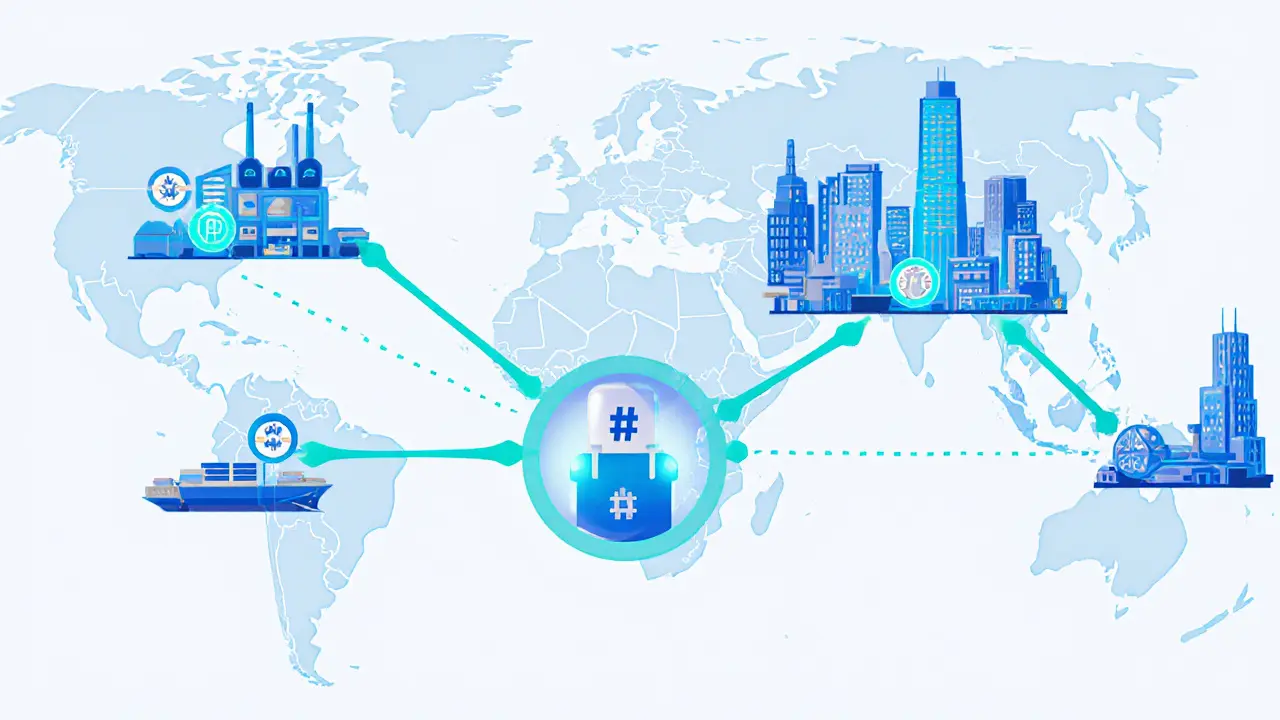

Distributed Ledger Technology is revolutionizing supply chains by enabling real-time traceability, reducing fraud, and cutting administrative costs. From pharmaceuticals to food, companies are using DLT to build transparent, secure, and efficient global networks.