Cryptocurrency Taxes: What You Owe and How to Stay Compliant
When you buy, sell, or trade cryptocurrency, digital assets that operate on decentralized networks and are subject to financial regulations in most countries. Also known as crypto, it’s not cash—it’s property in the eyes of tax authorities like the IRS. That means every time you swap Bitcoin for Ethereum, cash out Litecoin for dollars, or even get a free token from an airdrop, you’ve triggered a taxable event. Most people think crypto is anonymous or untrackable, but the truth is, exchanges report to governments, wallets leave traces, and the IRS has tools to catch you.
Crypto capital gains, the profit or loss you make when selling or trading crypto. Also known as crypto gains, it’s calculated by comparing what you paid for the asset to what you sold it for. If you bought 0.1 BTC for $3,000 and sold it for $5,000, you owe tax on the $2,000 gain. Short-term gains (held less than a year) are taxed like regular income. Long-term gains (held over a year) get lower rates—but only if you can prove when you bought it. Many users lose track because they use multiple wallets or exchanges. One wrong import in your tax software and you’re underreporting.
Crypto tax reporting, the process of documenting every crypto transaction for tax authorities. Also known as crypto filings, it’s not just about your exchange statements. Airdrops, staking rewards, mining income, and even gifts count. If you got 100 $BUSD from the Multigame airdrop, that’s taxable income at the market value when you received it. If you used $100 worth of ETH to buy a NFT, you just triggered a capital gain on that ETH. The same rules apply whether you’re in the U.S., UK, or UAE—each has its own thresholds and forms, but the core principle is the same: if you touched it, you owe tax.
Ignoring crypto taxes doesn’t make them disappear. The UAE’s removal from the FATF grey list meant stricter reporting. India blocks unregistered exchanges precisely because they can’t track transactions. North Korea steals crypto not just for weapons—but because it’s hard to trace. If you’re trading on MochiSwap, Arbidex, or Libre Swap, those platforms don’t report to the IRS. That doesn’t mean you’re safe—it means you’re responsible for tracking everything yourself. The tools exist: CoinTracker, Koinly, ZenLedger. But you still need to know what to track.
Compliance isn’t about fear—it’s about control. You don’t need to be a tax expert. You just need to know what counts, how to record it, and when to act. The posts below show you exactly what triggers a tax event, how to avoid common mistakes, and what happens when you don’t file. Whether you’re holding Bitcoin, earning from staking, or getting airdrops, this collection gives you the facts you need to stay on the right side of the law—without the fluff.
Legal Crypto Tax Avoidance vs Illegal Tax Evasion: What You Must Know
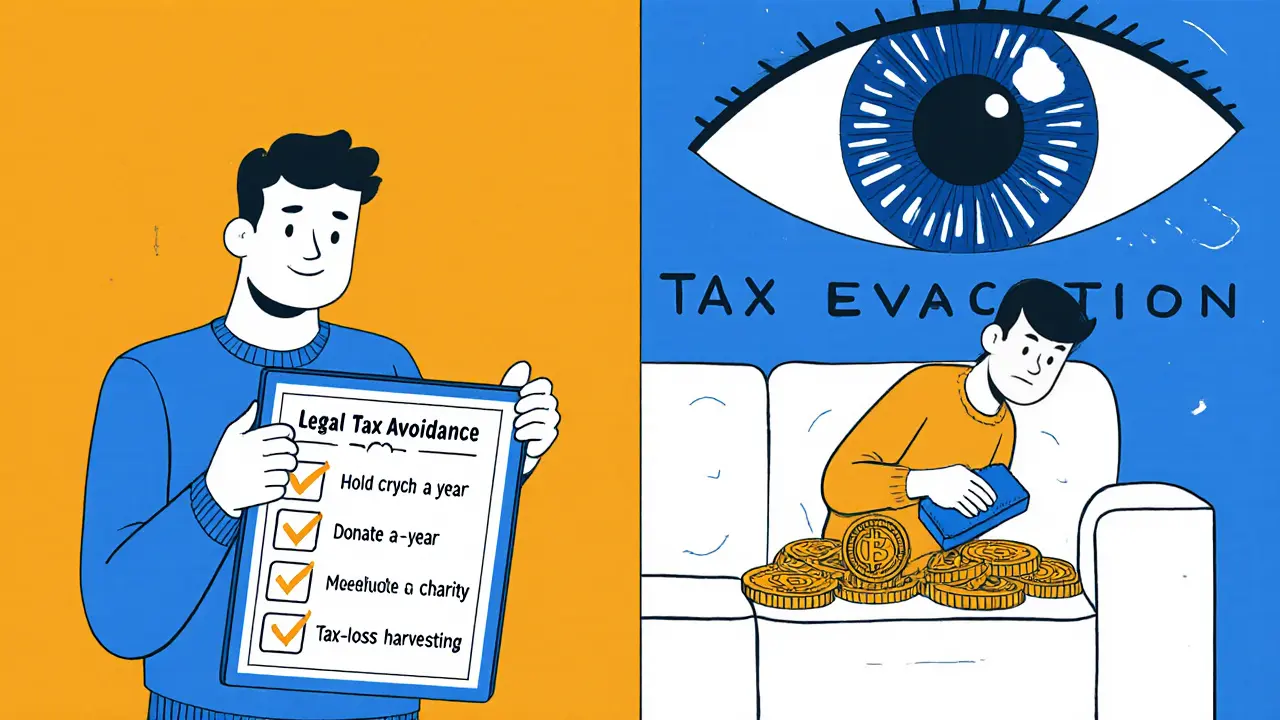

Learn the clear line between legal crypto tax avoidance and illegal tax evasion. Know what’s allowed, what gets you in trouble, and how to stay compliant with IRS rules in 2025.