Banking Restrictions and Crypto: What You Can and Can't Do
When you try to move crypto to a bank account, banking restrictions, rules that limit how financial institutions interact with cryptocurrency businesses. Also known as crypto banking bans, these rules are why many exchanges can't process fiat deposits or withdrawals in certain countries. It’s not that banks hate crypto—they’re scared of fines, lawsuits, and being shut down by regulators. That’s why platforms like Binance got blocked in India, and why FTX Turkey collapsed after operating without a license.
These restrictions don’t just affect big exchanges. They ripple down to you. If your bank sees a transaction to a crypto platform, they might freeze your account, ask for proof of income, or even close it. Countries like the UK and UAE have taken different paths: one with strict rules that still allow business, the other with clear compliance that opened global banking doors. The crypto regulations, government rules that define how digital assets can be traded, taxed, and held. Also known as digital asset laws, they vary wildly from place to place. In places with weak enforcement, like some parts of Latin America or Africa, crypto thrives in the gray zone. But in places with strong rules, like the EU under MiCA or the US with FinCEN, you need KYC, AML checks, and licensed partners to even get started.
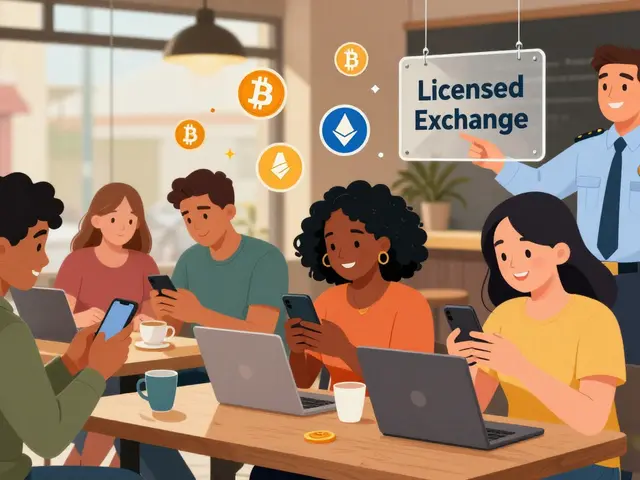
That’s why the difference between a legal exchange and a banned one isn’t just about trust—it’s about paperwork. CoinDCX in India is allowed because it registered with FIU-IND. MochiSwap and Libre Swap? They skip compliance, so banks won’t touch them. And when a country gets removed from the FATF grey list, like the UAE did in 2024, banks suddenly start opening accounts again. financial compliance, the process of following laws to avoid penalties when handling money. Also known as anti-money laundering rules, it’s the invisible gatekeeper between your crypto and your bank. Without it, even the best projects can’t access real-world finance.
What you’ll find below isn’t a list of banned platforms—it’s a look at why they got banned, who’s affected, and how people are working around these walls. From North Korea using stolen crypto to bypass sanctions, to everyday traders in India stuck with only a few licensed exchanges, these stories show the real human cost of banking restrictions. You’ll see how compliance shapes what’s possible—and what’s not.
How Citizens in Banking-Restricted Countries Access Crypto Exchanges


Citizens in countries with banking restrictions use P2P platforms, VPNs, no-KYC exchanges, and gift cards to access crypto. Despite risks like scams and account freezes, crypto offers a lifeline against inflation and financial censorship.