
Burning Coins Doesn't Automatically Boost Prices
Imagine watching your favorite coffee shop permanently seal 10% of its beans in fireproof vaults. Sounds ridiculous, right? Yet in crypto, projects regularly send millions of dollars' worth of tokens to digital "dead ends"-a practice called coin burning. Does this actually push prices up? Not always. While the math seems obvious (fewer coins + steady demand = higher value), reality is messier.
The Mechanics Behind Token Burns
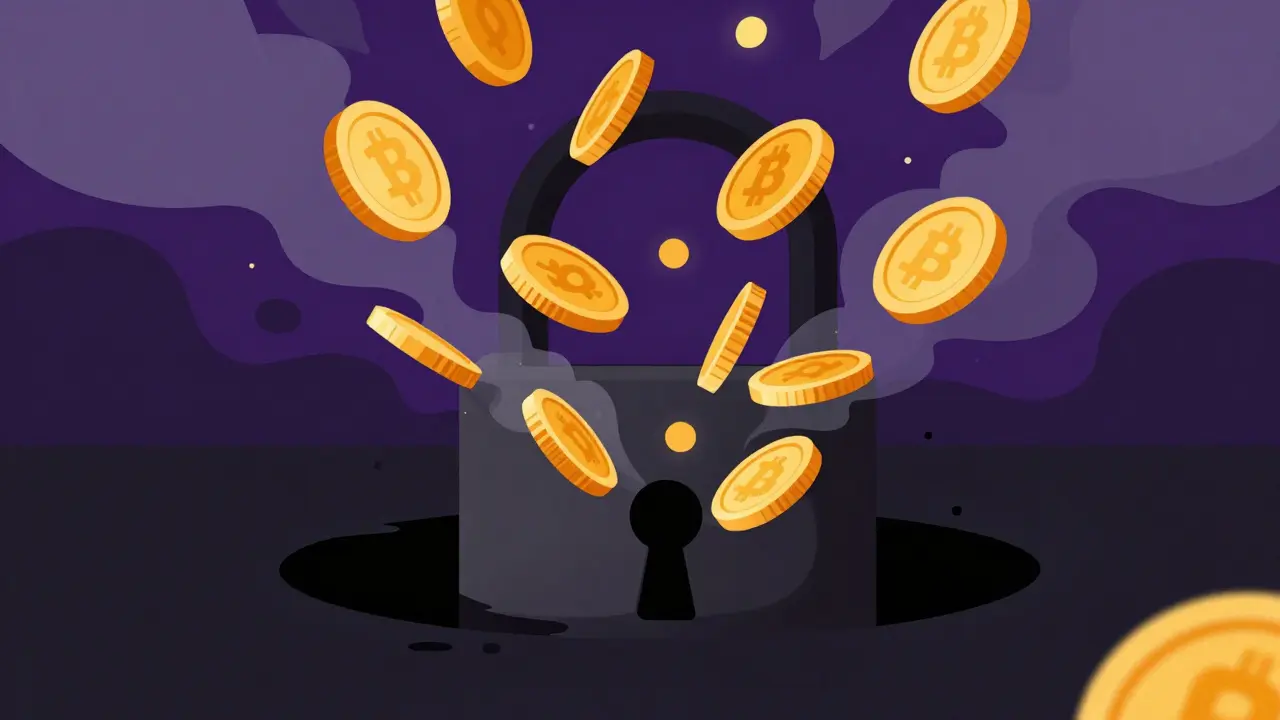
Token burning is the permanent removal of cryptocurrency from circulation by sending it to a non-spendable wallet address. Coin burning involves moving assets to addresses like 0x000...dEaD that lack private keys-making retrieval cryptographically impossible.Unlike physical destruction, blockchain burns leave verifiable traces. When Binance burned $1.2 billion worth of BNB in Q2 2024, every transaction was publicly auditable on Etherscan. Here's how it typically works:
- Holders propose burning a specific quantity
- Smart contracts validate ownership
- Tokens transfer to the burn address
- Network updates circulating supply
This isn't theoretical magic-it's basic economics applied digitally. Fewer available assets mean each remaining unit represents a larger slice of the whole pie. But does that translate to price gains?
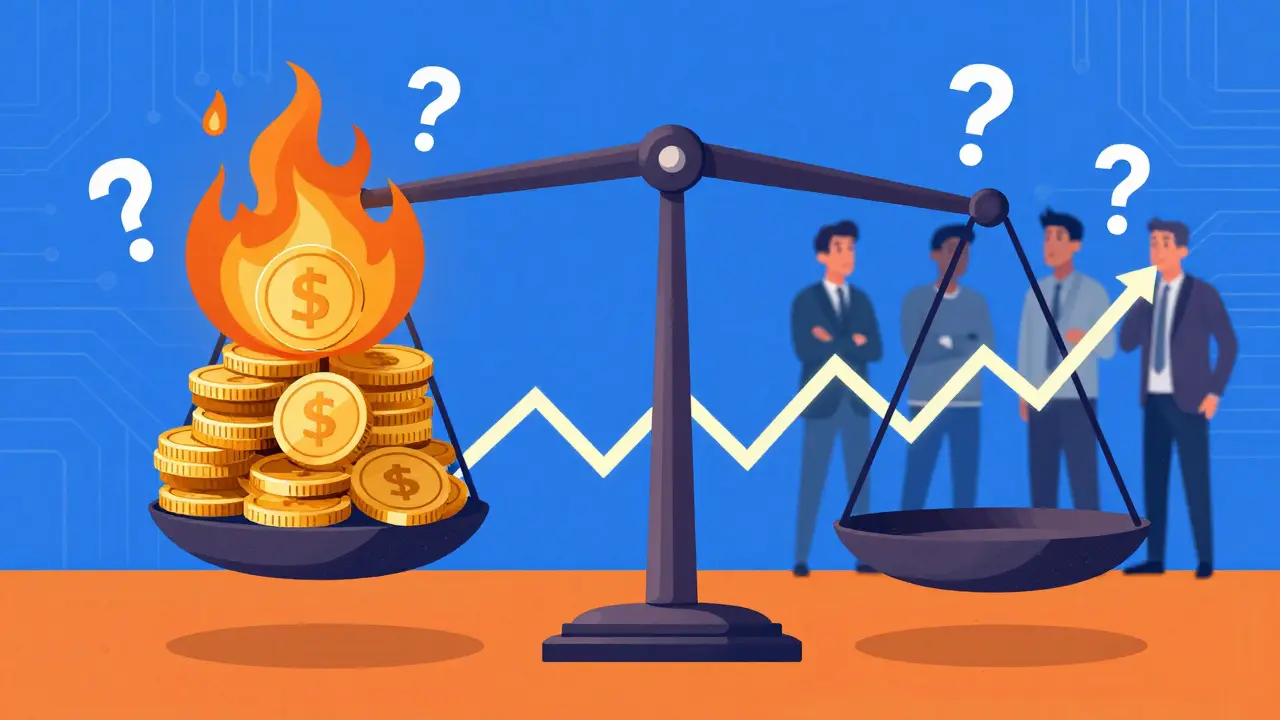
Why Theory ≠ Reality
Crypto.com University notes burns "can potentially increase value," but emphasizes "not guaranteed." Why? Because markets care about more than raw supply numbers. Consider three critical gaps between theory and outcome:
| Factor | Impact Threshold | Real-World Example |
|---|---|---|
| Burn Size | 1-2% minimum supply reduction | Binance's 2023 burns averaged 1.5% of total supply |
| Timing | Bull markets amplify effects | Sep 2024 report showed bear-market burns 63% less effective |
| Transparency | Public verification required | Projects without burn proofs saw 89% lower price impact |
Professor David Yermack's 2024 NYU Stern analysis found only 38% of burns created statistically significant price jumps beyond normal volatility. One standout case: TerraUSD used algorithmic burns to stabilize its peg pre-2022 collapse, demonstrating immediate mechanical impact when integrated into protocol design.
When Burns Actually Move Markets
Dr. Linda Xie of Scalar Capital told CoinDesk that burns work best as "credible signals of commitment." Look at Ethereum post-EIP-1559 implementation:
- Burned 4.1 million ETH worth ~$12.3B (per CoinMetrics)
- Price climbed 387% in 18 months (vs Bitcoin's 127%)
- Causation debated, but correlation undeniable
Meanwhile, Binance's quarterly burns averaged 5.2% immediate spikes-but effects faded to 1.8% after 30 days. Key takeaway: Burns influence short-term sentiment most powerfully. Long-term value still hinges on utility, adoption, and broader market cycles.

Red Flags Before You Invest
Not all burns deserve optimism. Watch for these warning signs:
- Micro-burns: Projects destroying <0.5% supply (72% of ineffective burns fall here)
- Opaque execution: No public verification of burn transactions
- Empty promises: SEC actions now target misleading burn marketing
Reddit's r/CryptoCurrency saw 63% skepticism in Oct 2024 discussions, with users calling quarterly burns "marketing gimmicks." Meanwhile, Trustpilot reviews praised platforms offering real-time burn verification-showing community values transparency over scale.
Your Action Plan
Evaluating burns requires holistic analysis. Ask yourself:
- Is the burn part of a comprehensive tokenomics strategy?
- Does the project have active development outside burn mechanics?
- Are burn events predictable (scheduled) or reactive?
Institutional investors now factor burns into valuation models per Grayscale's 2024 report-but prioritize transparency metrics above raw numbers. Remember: Ethereum's ongoing burn rate varies with network congestion, making it responsive rather than rigid.


Comments (9)

- Sean Carr
- March 31, 2026 AT 14:43 PM
Glad to see someone breaking down the burn mechanics without the hype. It really comes down to utility rather than just tokenomics.

- Lisa Miller
- April 1, 2026 AT 20:54 PM
Really appreciate this breakdown. It is easy to get caught up in the numbers game but we always forget the market sentiment factor.
I hold a bit of ETH and watching EIP-1559 data is fascinating to track over time.

- Justin Smith
- April 2, 2026 AT 16:04 PM
Your observation regarding sentiment is accurate though it often gets overlooked in fundamental analysis. Technically speaking the deflationary pressure only manifests when transaction throughput remains consistent.
If network activity dips the burn rate drops proportionally regardless of price action. Furthermore the verification process you mentioned requires specific node configurations to audit efficiently. Many retail investors rely solely on centralized aggregators which introduces latency.

- Colin Finch
- April 3, 2026 AT 16:03 PM
Fire consumes the physical but data etches history into eternity. We watch coins vanish into the ether while hoping the pie grows larger somehow. It feels alchemical yet grounded in rigid code constraints.

- athalia georgina
- April 4, 2026 AT 05:03 AM
u r so right! i thnk people forget that utiltiy matters more. cant wait to see what happens next tho. hope u got lucky with thier investment choices lol

- joshua kutcher
- April 4, 2026 AT 10:57 AM
I find the transparency aspect most reassuring when evaluating projects. Knowing exactly where tokens go builds trust even if it doesn't guarantee profit.
We tend to ignore the psychological impact on holders during these events too.

- Ashley Stump
- April 4, 2026 AT 19:32 PM
This whole concept is just marketing fluff to move bags onto newbies.

- Disha Patil
- April 6, 2026 AT 18:36 PM
So much drama around the burns every single day. My wallet is so empty and prices still going down it hurts. It seems like nothing ever changes for us regular folks.

- Callis MacEwan
- April 7, 2026 AT 07:52 AM
The correlation between burn events and liquidity pool slippage is often misinterpreted by mainstream analysts focusing solely on supply shock. You mentioned node configurations but failed to address the gas cost implications inherent in high-frequency burn operations. Smart contract efficiency dictates that excessive burning erodes validator incentives if reward structures aren't adjusted concurrently. We observe significant MEV extraction occurring right before announced burn windows which distorts immediate price discovery mechanisms. Market makers anticipate these scheduled events leading to front-running behavior that dampens the net effect on circulating supply. Additionally the narrative surrounding deflationary assets ignores macroeconomic liquidity cycles driven by central bank policies. Risk management protocols rarely account for black swan events triggered by sudden halts in protocol revenue. Regulatory frameworks around asset destruction remain ambiguous across jurisdictions creating compliance liabilities for institutional holders. The notion of immutable burn addresses presupposes perfect blockchain finality which assumes no quantum decryption breakthroughs within standard timeframes. Transaction layer vulnerabilities could theoretically redirect supposed burned assets back into circulation through complex replay attacks. Layer two scaling solutions introduce further complexity regarding how global security models interact with local settlement layers. Tokenomics models usually fail to capture non-linear demand elasticity when prices dip below certain psychological support thresholds. Institutional hedging strategies frequently use synthetic derivatives to offset exposure rather than buying spot assets. Derivatives markets often react inversely to spot market burn events creating temporary arbitrage spreads. Realized volatility metrics show mean reversion patterns that suggest burn-induced spikes are temporary noise in the data. Ultimately the market discounts future cash flows based on probability weighted scenarios not deterministic burn outputs. Most projections regarding value retention assume static adoption curves which historically prove incorrect during broader economic downturns.