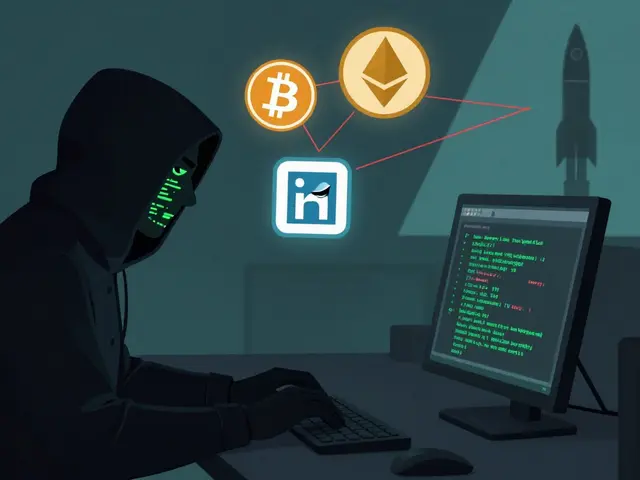
DPRK Hacking: How North Korea Steals Crypto to Fund Weapons
When you hear DPRK hacking, state-sponsored cyberattacks by North Korea targeting cryptocurrency networks to bypass sanctions and fund weapons programs. Also known as North Korean crypto theft, it’s not fiction—it’s a daily reality that’s drained billions from exchanges, wallets, and DeFi protocols. This isn’t random crime. It’s a coordinated, government-run operation with one goal: keep the regime alive when traditional banking shuts it out.
The Lazarus Group, a North Korean cyber unit linked to the country’s military intelligence agency is the main engine behind these attacks. They don’t break into systems with fancy tools—they trick people. Phishing emails, fake airdrops, rigged crypto apps, even fake job offers. Once they get a foothold, they drain wallets, exploit bridge vulnerabilities, and use crypto mixers to hide the trail. The stolen funds? They’re funneled into nuclear missiles, ballistic rockets, and military tech—all while the world watches helplessly.
What makes DPRK hacking so dangerous isn’t just the scale—it’s the precision. They target exactly what’s vulnerable: cross-chain bridges with weak audits, small exchanges with no KYC, and new DeFi projects with no team. You’ll see this pattern in the posts below—stories of hacked platforms, vanished tokens, and scams that mirror North Korea’s tactics. They don’t need to invent new methods. They just copy what works.
And it’s not slowing down. Since 2017, over $3 billion in crypto has vanished into North Korean wallets. That’s more than the entire GDP of some small countries. The sanctions evasion, the use of cryptocurrency to bypass international financial restrictions imposed on North Korea is now their main lifeline. No banks? No problem. They use Bitcoin, Ethereum, and even obscure tokens to buy what they need on the dark web.
What you’ll find here isn’t just theory. These are real cases: hacked exchanges, stolen funds, and the exact tactics used by DPRK hackers. You’ll learn how to spot their fingerprints—fake airdrops, unverified projects, and suspicious wallet movements. You’ll see how they target ordinary users just like you. And you’ll understand why this isn’t just a crypto problem—it’s a global security issue.
OFAC Sanctions on North Korean Crypto Networks: How the U.S. Is Stopping $2.1 Billion in Cyber Theft


In 2025, OFAC crushed North Korean crypto theft networks that stole over $2.1 billion, targeting fake IT workers embedded in U.S. startups. Here's how the scheme works and what companies must do to stay safe.